

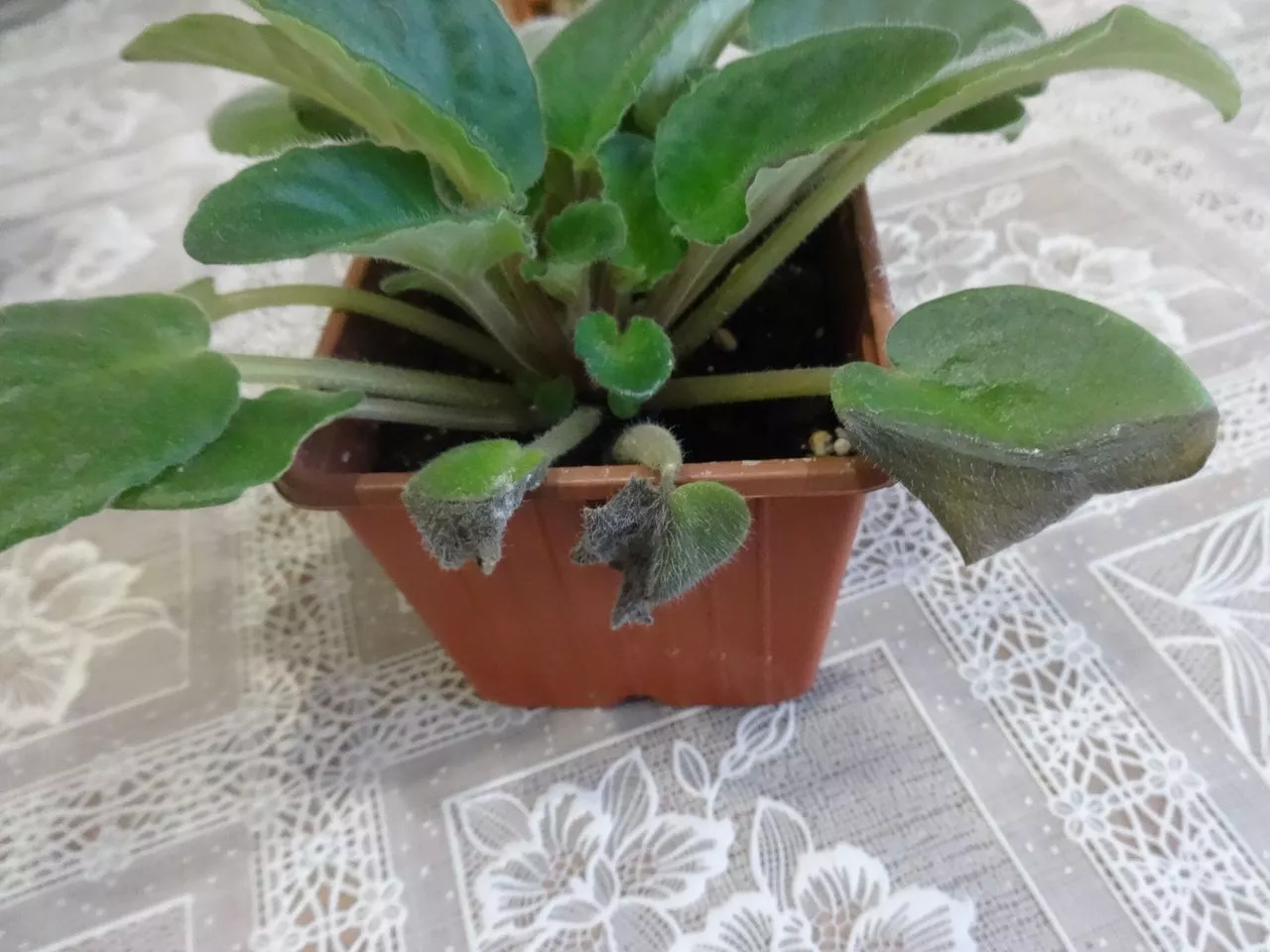
It was November, and winter was coming. But here in Krasnoyarsk, it's already here. There's almost no snow, but temperatures dropped to -20 to -30 degrees Celsius. We had to open the radiators. Today, I dragged all my violets into the kitchen to feed them, and discovered that the leaves on some of them had been cooked by the heat from the radiators. Something needs to be done.
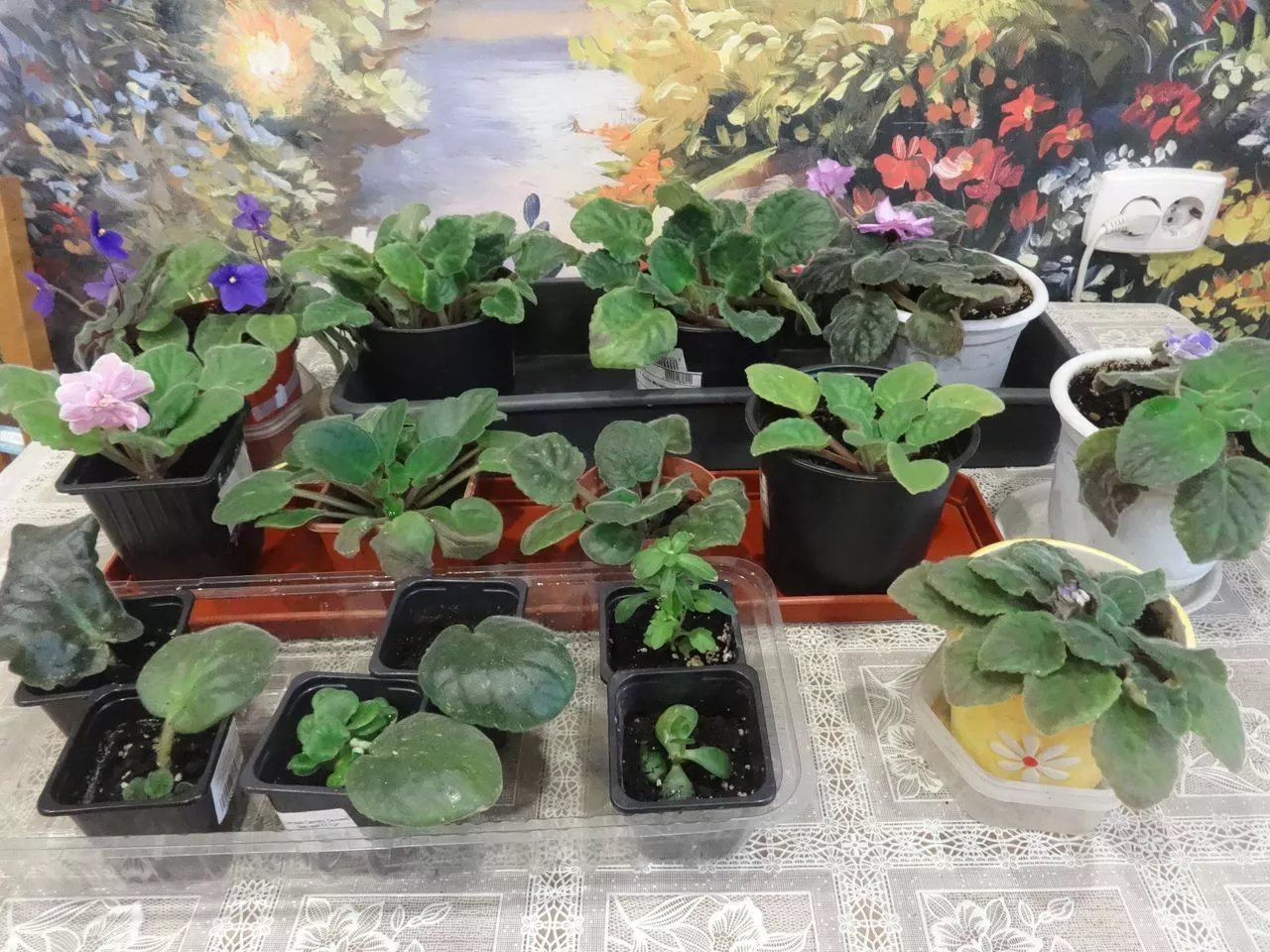
This is a difficult time for indoor plants, especially those kept on windowsills and exposed to the winter elements. Windowpanes and plastic become icy. The soil in pots also becomes cold, and roots can rot if the soil remains damp for too long.
Frosty air from open windows, even if they are micro-ventilated, causes discomfort to flowers, negatively affects the leaves, they become covered with spots, and can even freeze.
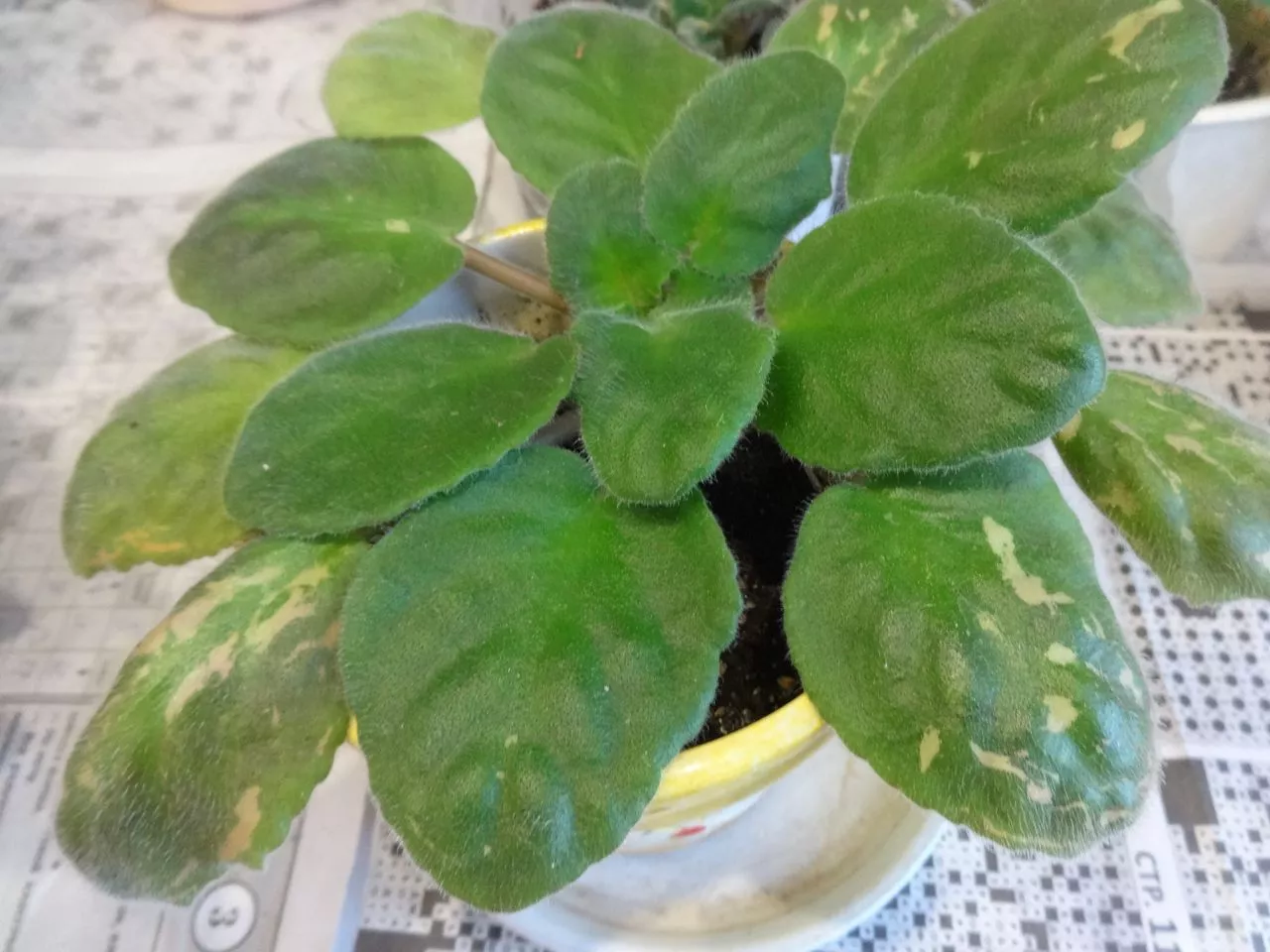
Last winter some of my violets froze and I couldn’t save them.
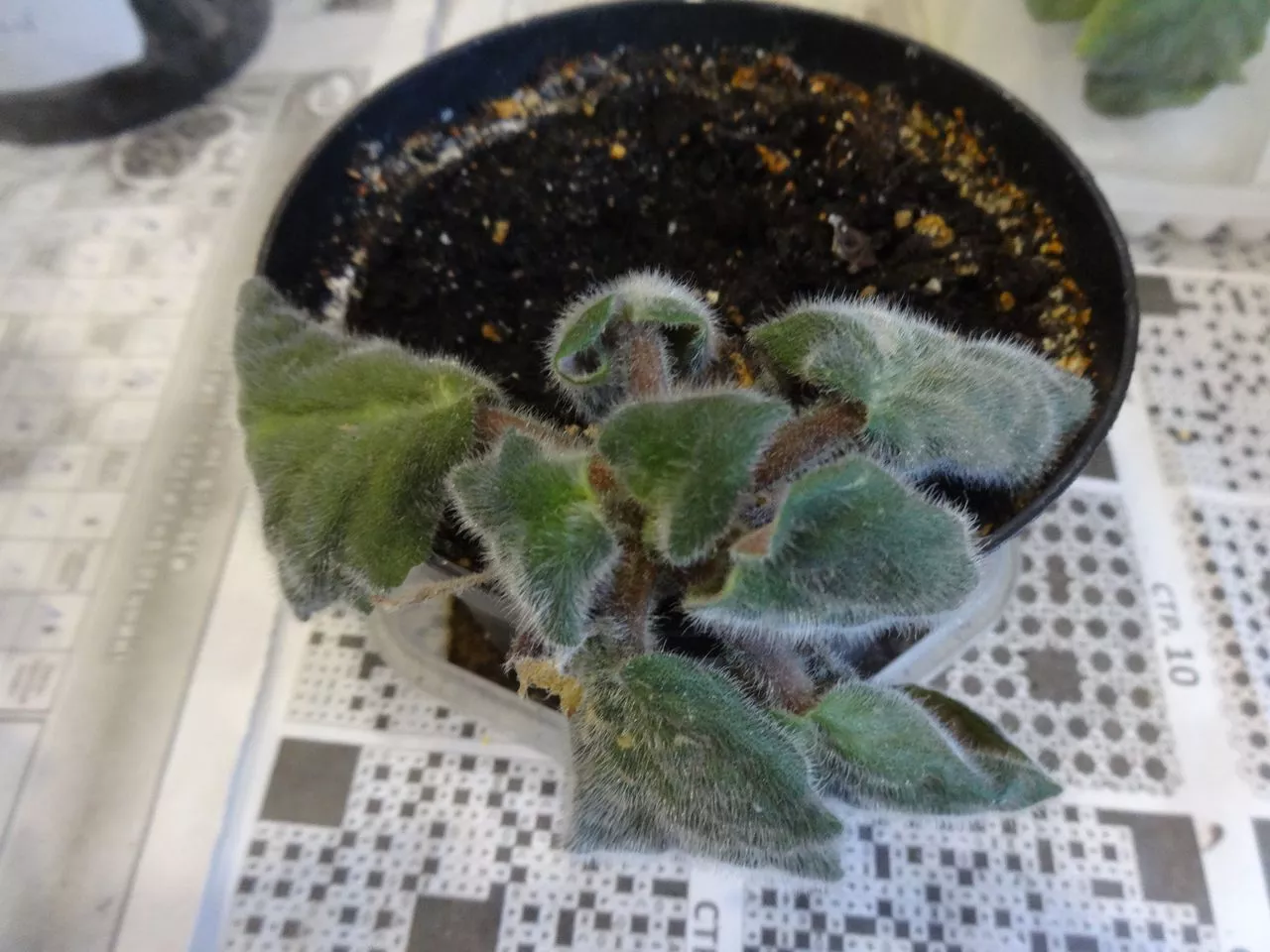
But the heat from radiators is also harmful to flowers. The soil in the pots dries out quickly, and the leaves are cooked and withered by the hot air.
Last year, when there was a severe frost, I covered the windowsills with terry towels and hung wet towels on the radiators to protect against the hot air. Luckily, the severe frost didn't last long.
Of course, you can move the violets to a table near the window, but then you'll need to provide additional lighting. Insufficient light will cause the violets' leaves to stretch.
I temporarily moved one old violet from the windowsill to the table.
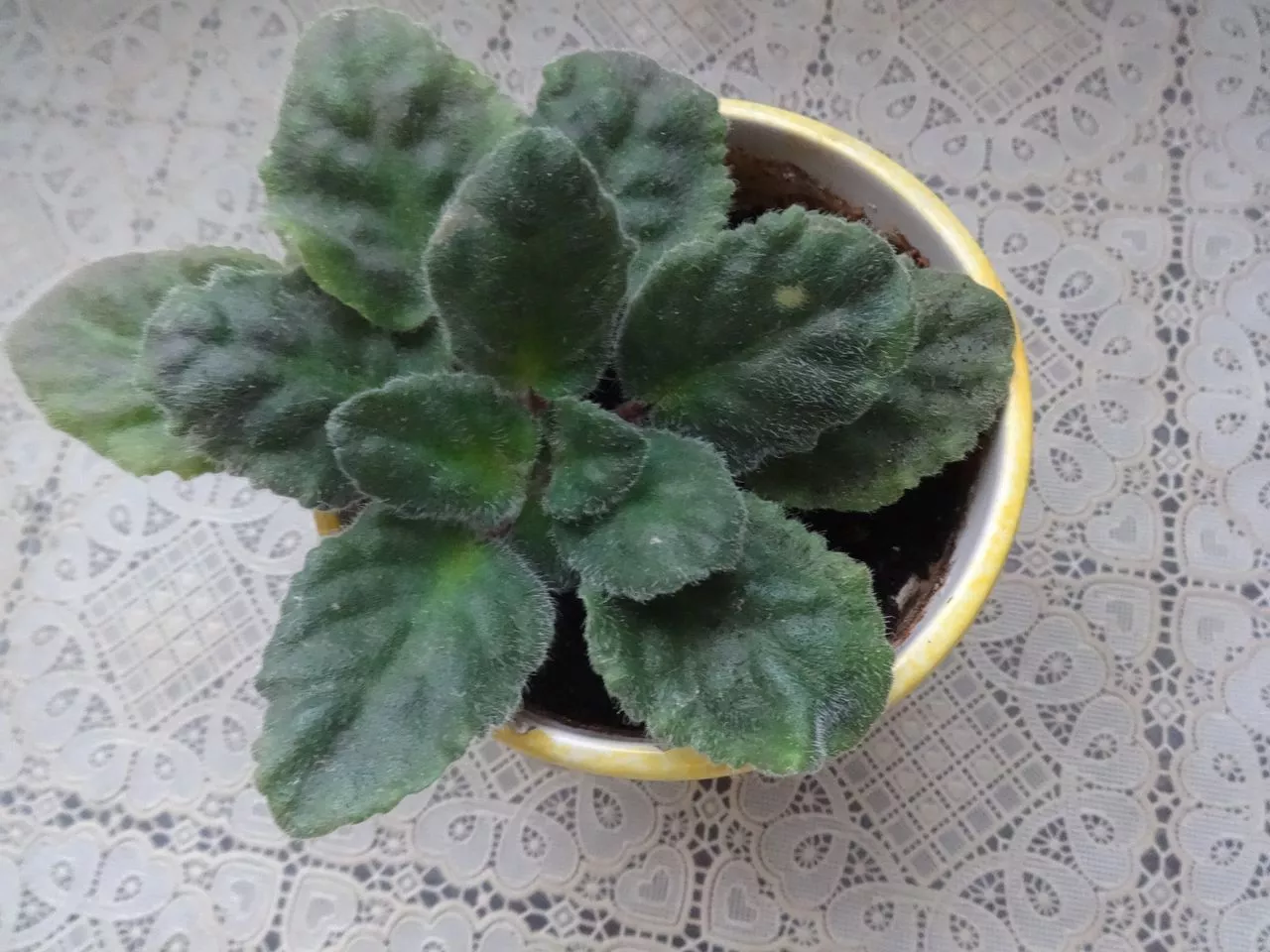
The leaves on its trunk are very dense and small, the petioles are short, and the flower stalks barely break through the leaves. This violet rarely blooms. Perhaps because it's getting less light, its leaves will stretch out, and I'll move it back to the windowsill. It looks different from other violets; perhaps it has some kind of disease.
I don't have many violets at the moment. Four are very old, their stems have long since been bare, so I had to carefully twist them into a circle and cover them with soil. They look like palm trees, with bare stems and leaves on top. And the blooms aren't as profuse as those of younger plants. I plucked the leaves off these violets and placed them in water to root.
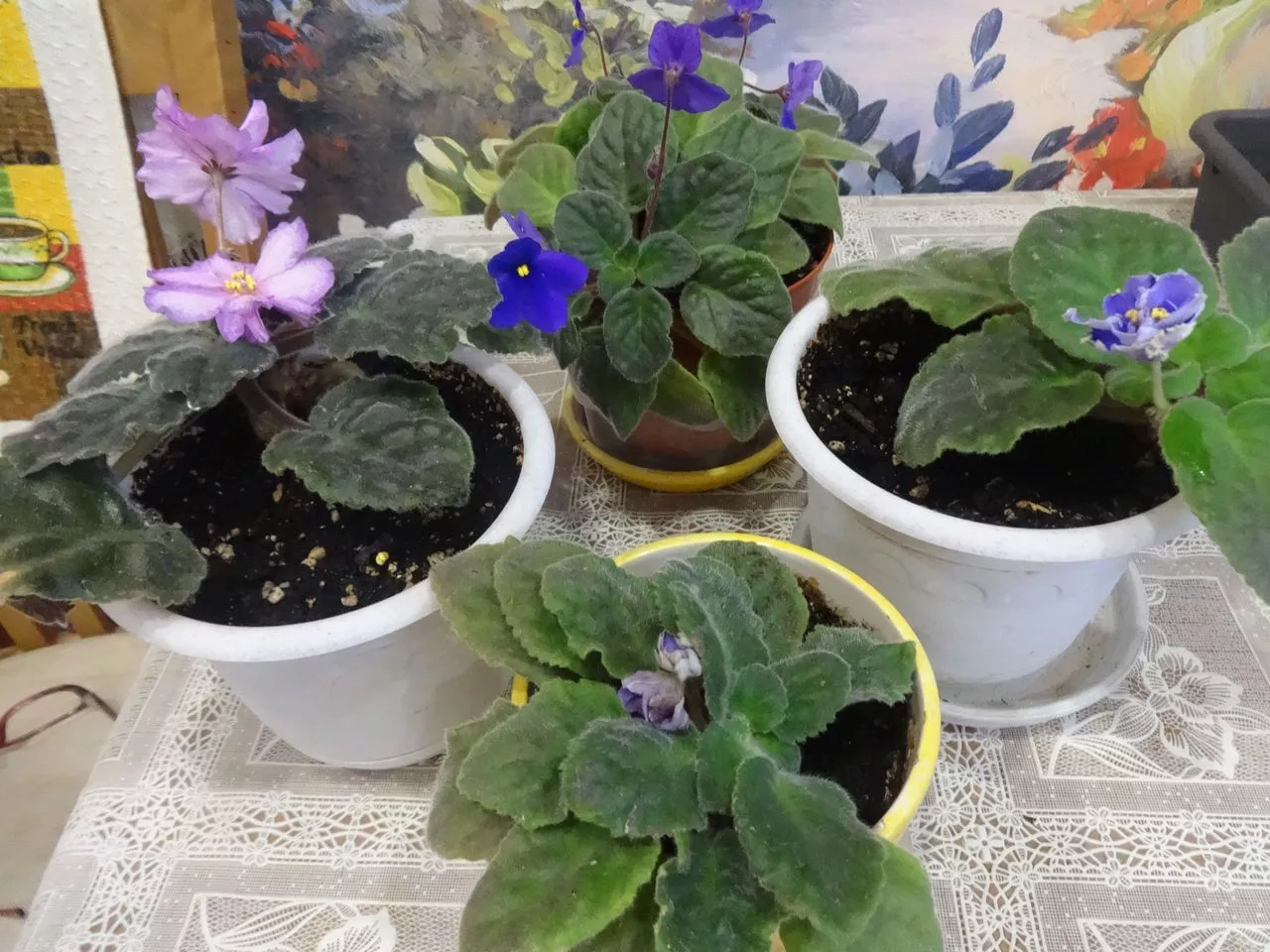
In the summer, I transplanted eight rooted leaves from other violets. Four of them took root, and two of them have formed young rosettes, still very small. Two of them still have no sprouts.
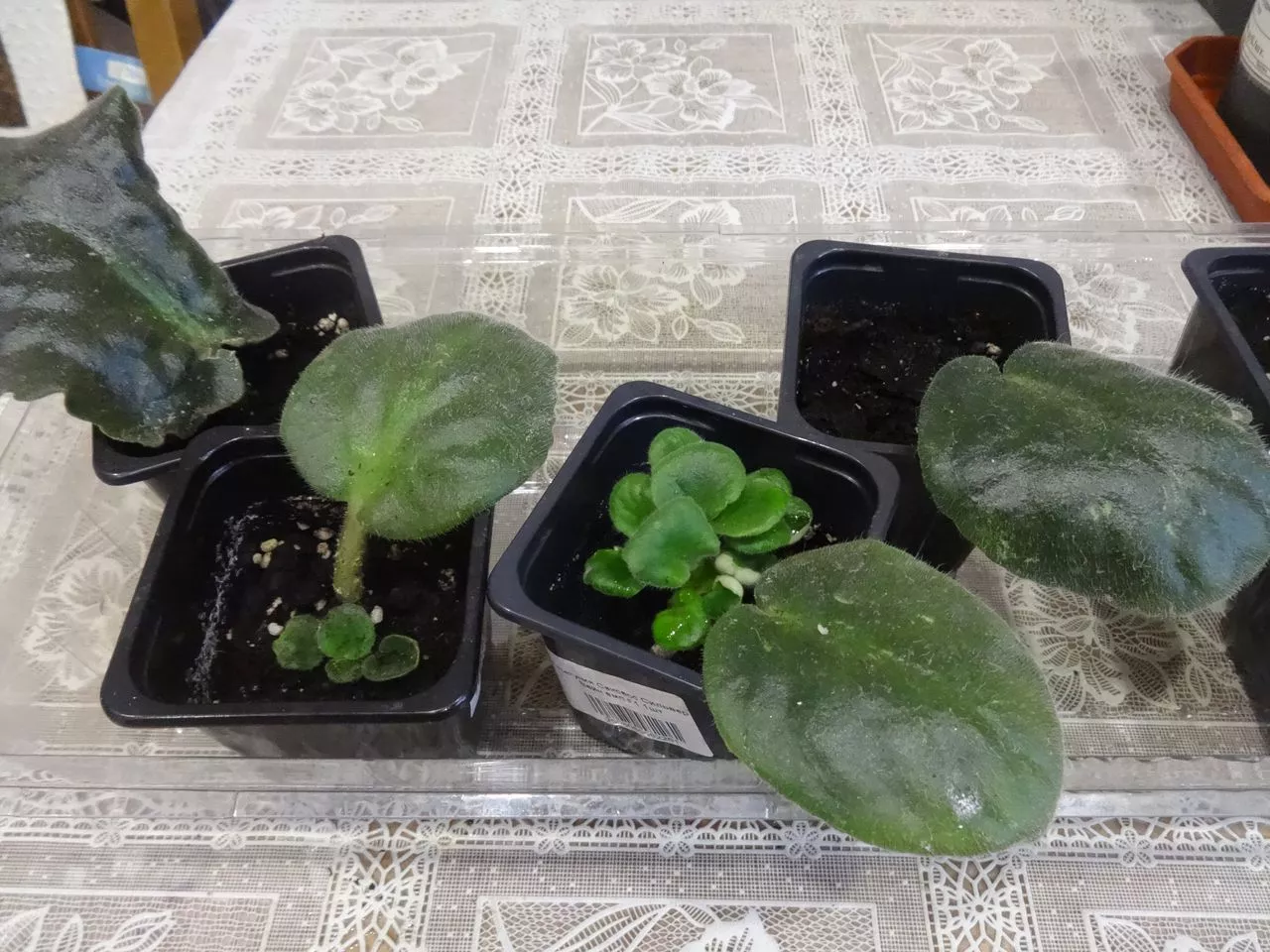
Two violets need to be replanted; there are several rosettes in one pot. I plan to repot them in the next few days.
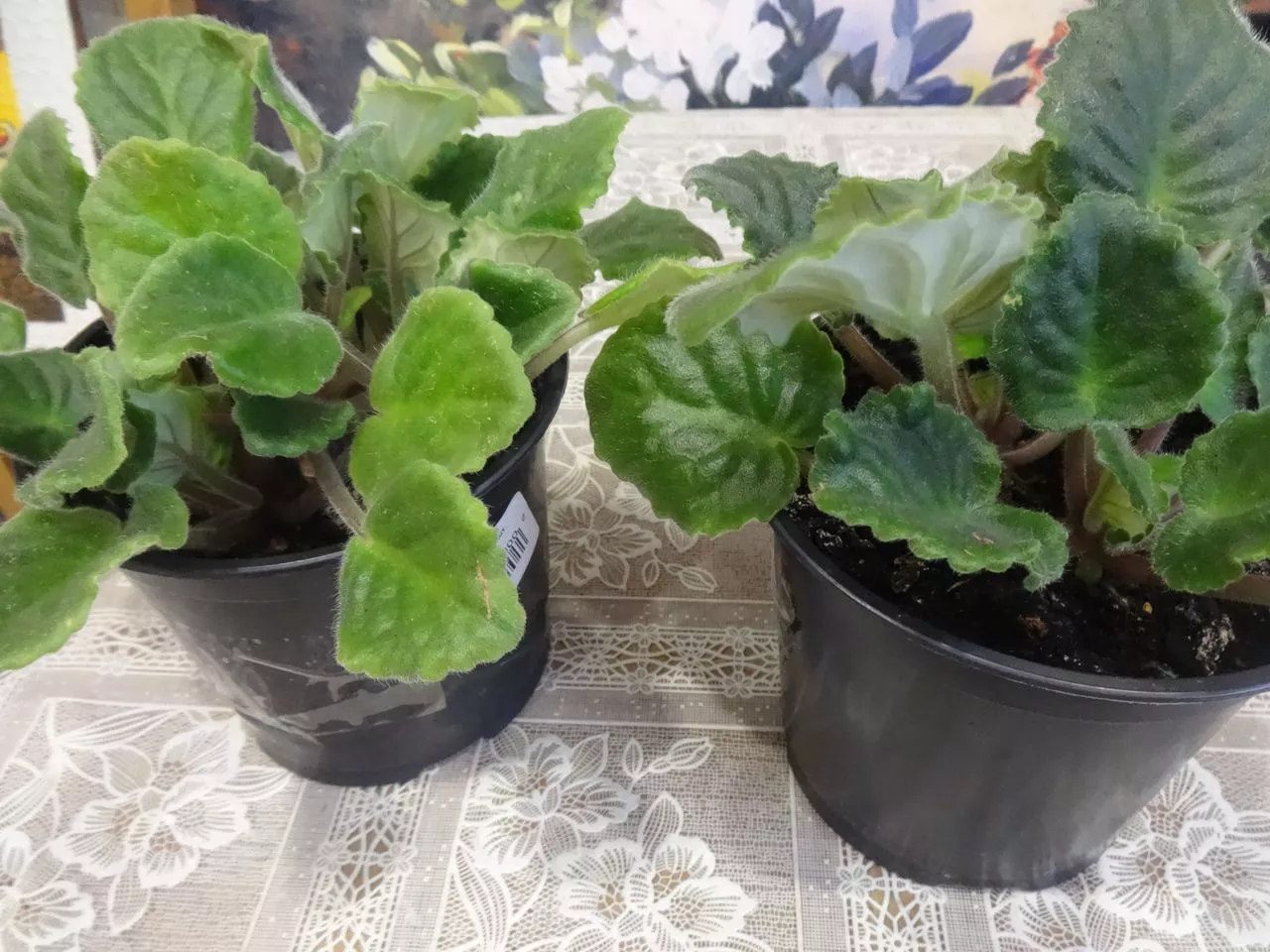
There are four more very young ones. Two of them have bloomed, and two haven't yet. I think three of the violets need to be planted in larger pots.
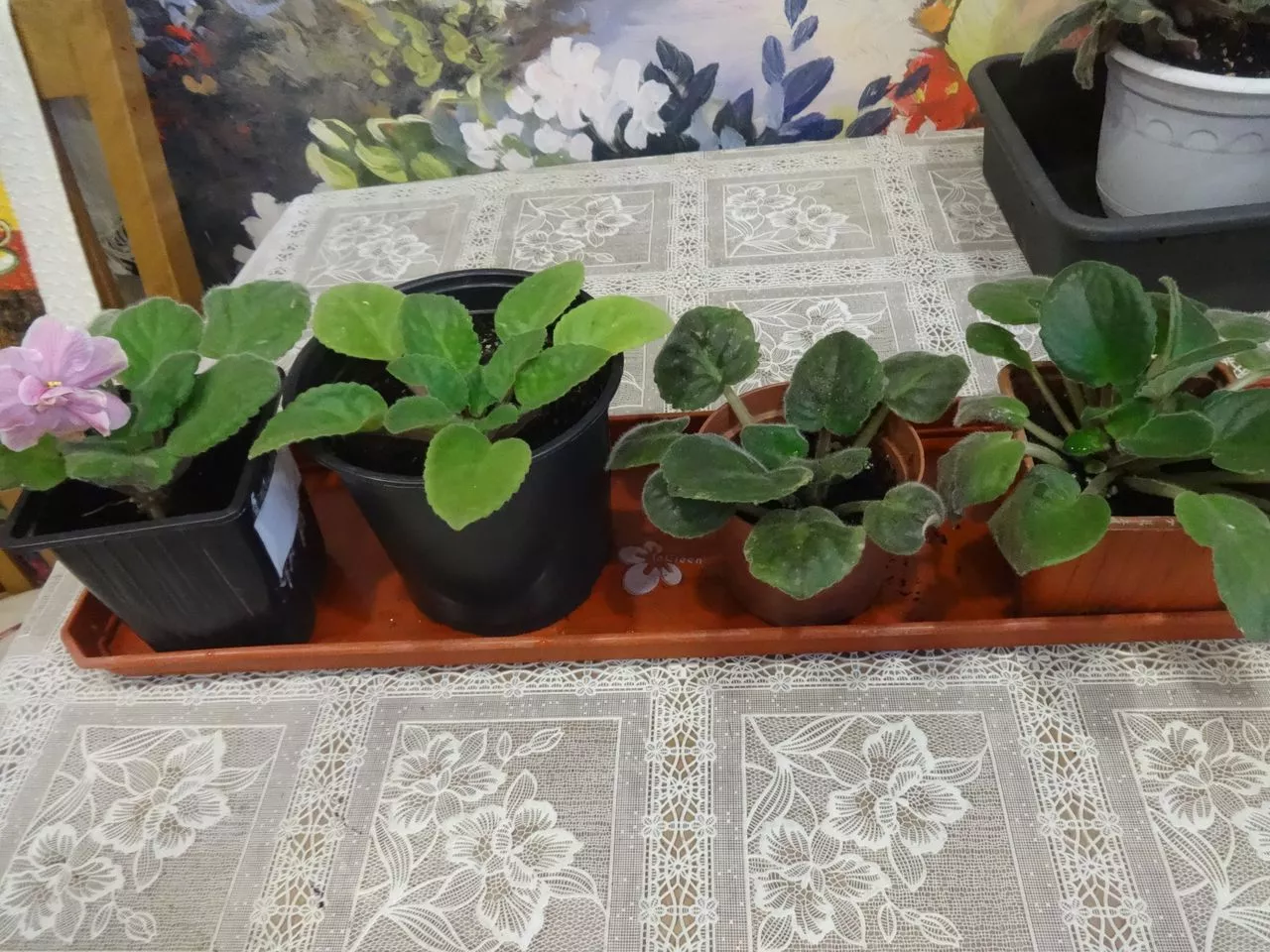
The leaves of the young violets were scorched by the hot air from the radiators, and this one was especially badly damaged.
This is my abnormal capricious violet with pale yellow leaves.
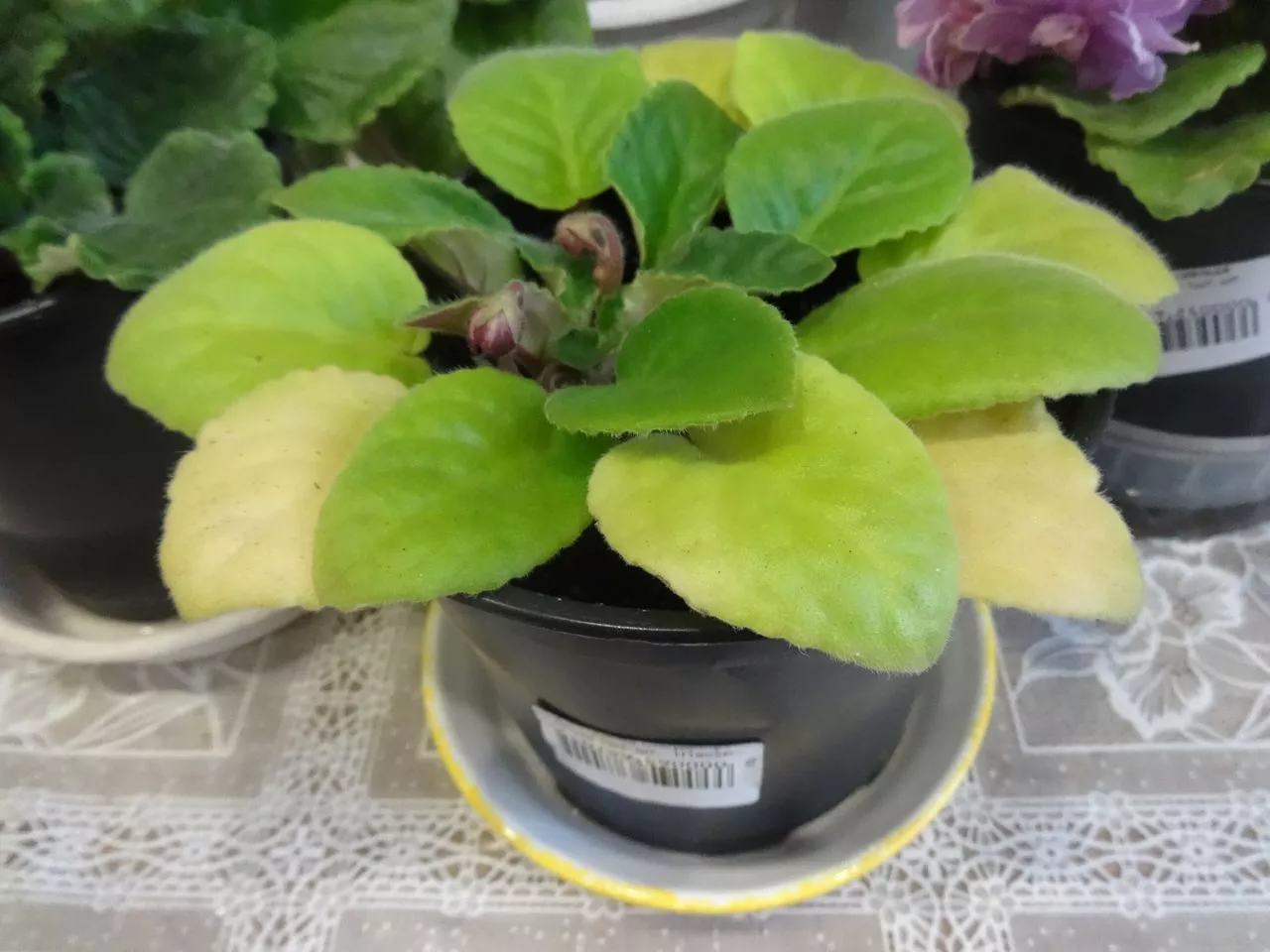
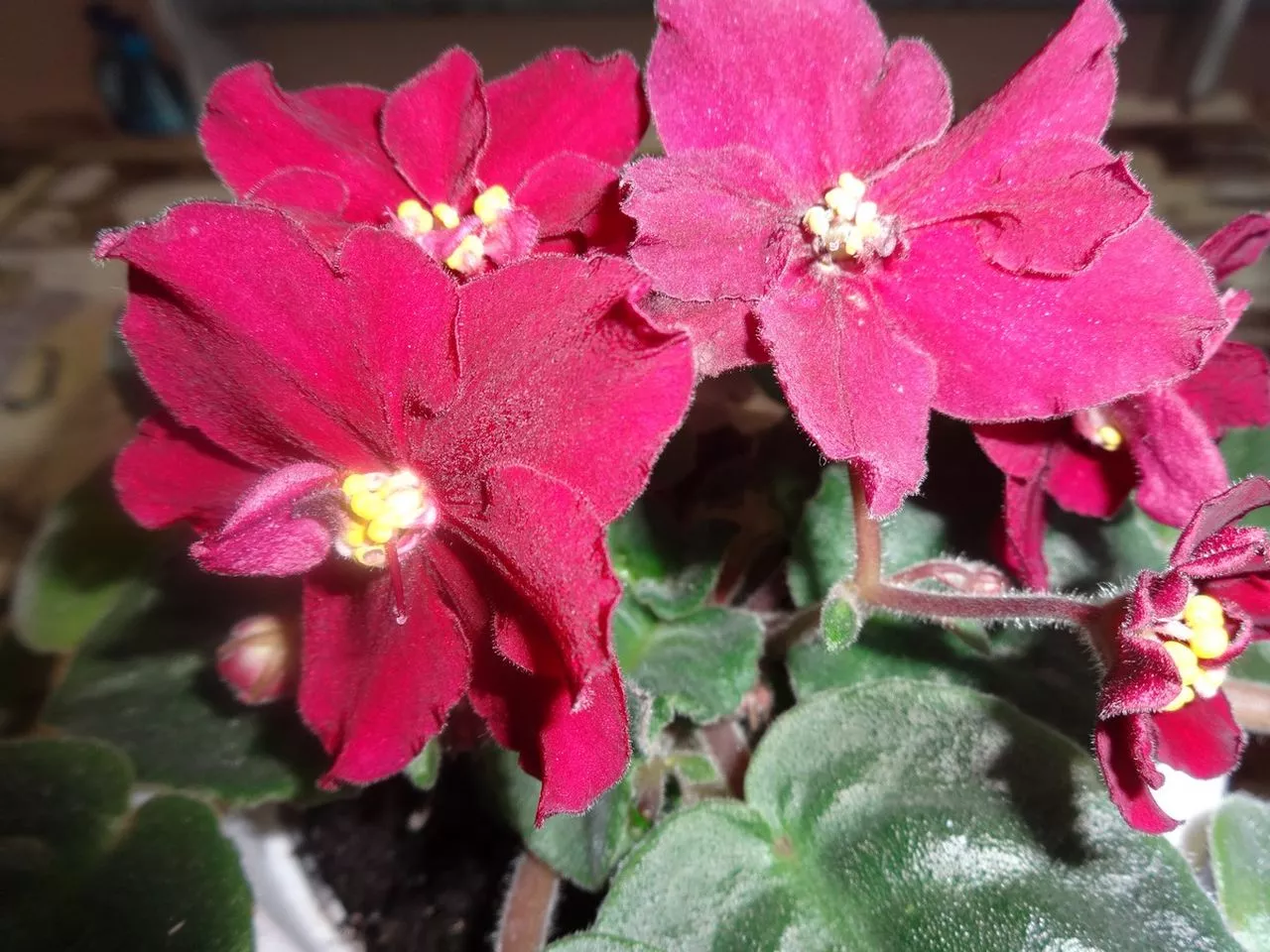
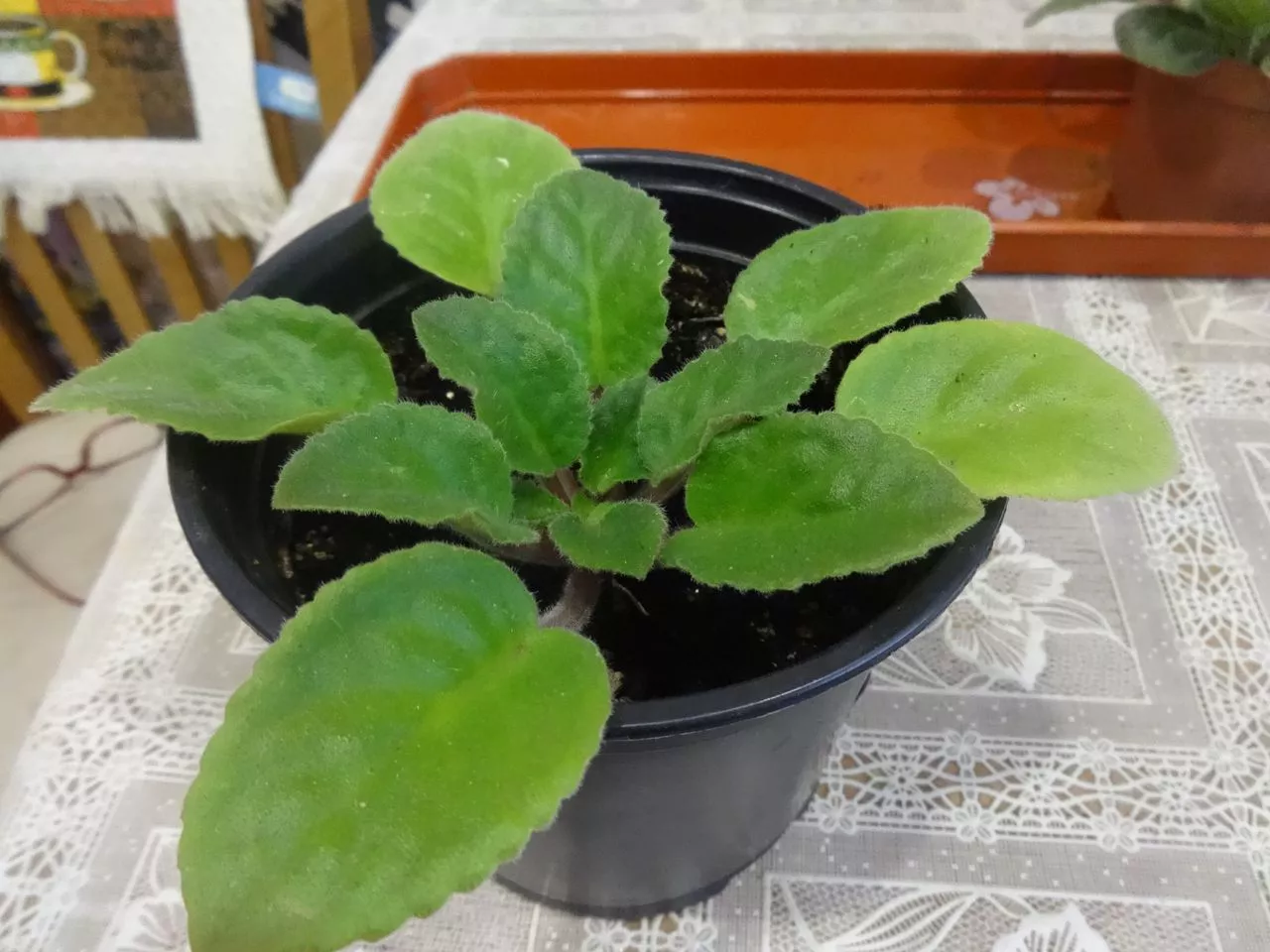
I picked off the pale leaves, fed it, and kept an eye on its watering schedule. Its red flowers faded, and now it's doing just fine.
In winter, violets require more attention. They suffer from the cold from windowsills and windows, and from the heat from radiators. The leaves can freeze or be "cooked" by the hot air.
If you are interested, you can read my note about violets. Saintpaulia or African violet - a fabulously beautiful flower.
In winter, when the frost hits hard, I always move it from the windowsill to the table. I place it close to the ceiling, but so it gets some light and doesn't get too hot from the radiators. But I must admit, on cloudy or sunless days, I have to turn on a 40-watt table lamp. But that doesn't happen every day.