

That evening, my husband brought blueberries—two plastic bags. The berries at the bottom of the bags were bruised, and I realized I urgently needed to make jam. I've never made jam from blueberries, never frozen them, and I can't even imagine how they grow in the forest.
I tried the berry itself, and it reminded me of the chokeberry, only the chokeberry is very sweet, while the blueberry has a different taste. I've also eaten jam made from this berry; my relatives once treated me to a jar of blueberry jam.
Everyone knows that blueberries are great for eye health and visual acuity. Blueberry jam is also beneficial. It contains all kinds of acids, anthocyanins, vitamins, and other substances that aren't destroyed by cooking and have a beneficial effect on our body. Jam strengthens the walls of small blood vessels, lowers cholesterol levels, prevents blood clotting, boosts immunity, and helps fight colds and inflammatory diseases. So, I'm going to make jam.
I love making jam and believe it's healthier to have a spoonful of it with tea than a candy. Jam contains only berries and sugar. Candy contains colorings, thickeners, flavorings, stabilizers—in short, all sorts of E-numbers.
Blueberry jam recipe
- I poured the berries into a bowl, carefully washed them under running water, and removed any small leaves or berries that were too bruised.
- I placed them in small batches in a colander to drain off excess water.
- I weighed the berries to know how much sugar I needed.
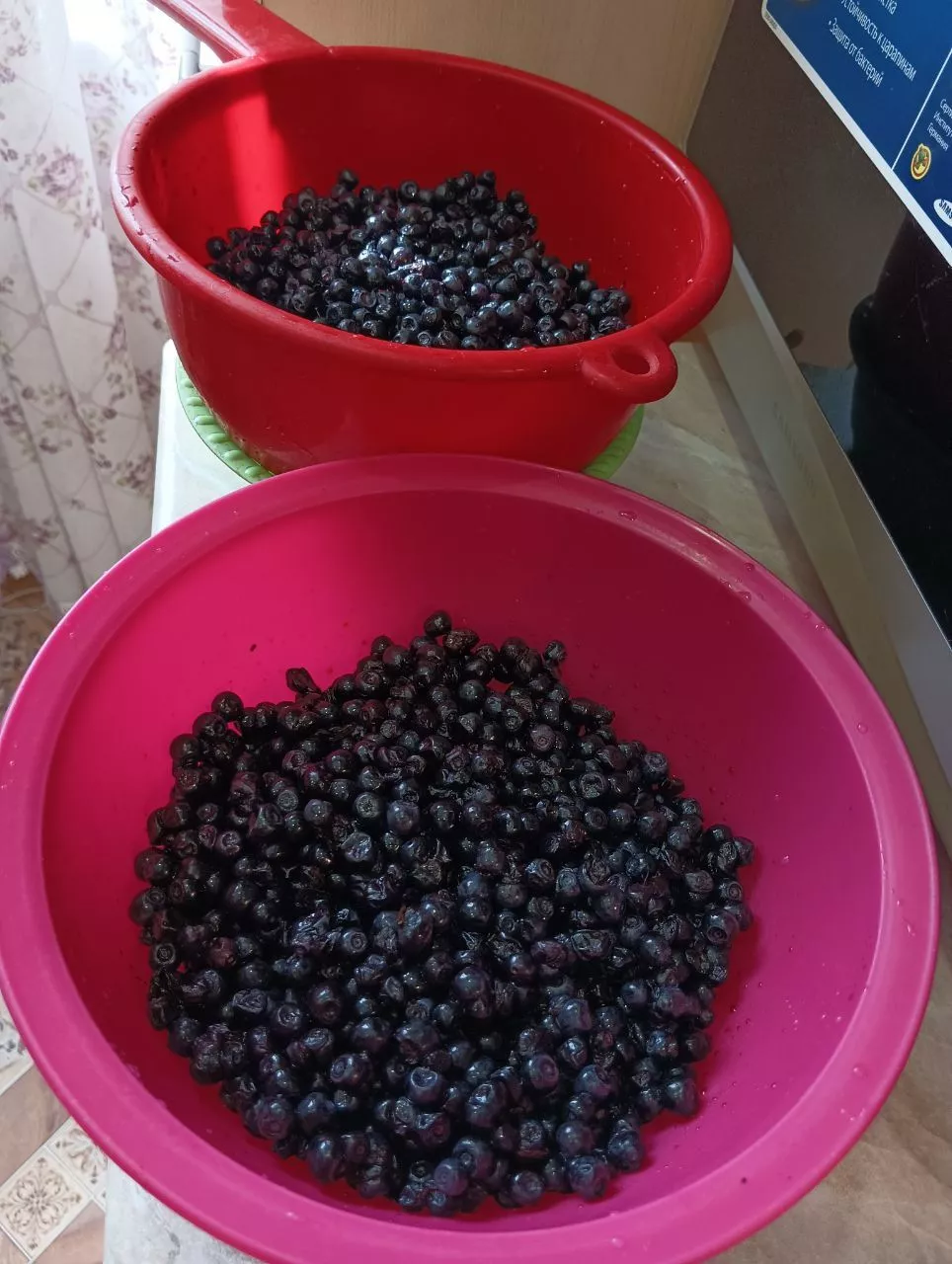
I looked up the sugar consumption rate for blueberry jam online, and everyone does it differently: some add 1200 grams of sugar per 1 kg of berries, others add 700 grams.
I usually add sugar in a 1:1 ratio. I only add more sugar for sour berries. I decided to do it my way.
- I sprinkled the blueberries with layers of sugar in a wide saucepan so that they could steep and release juice.
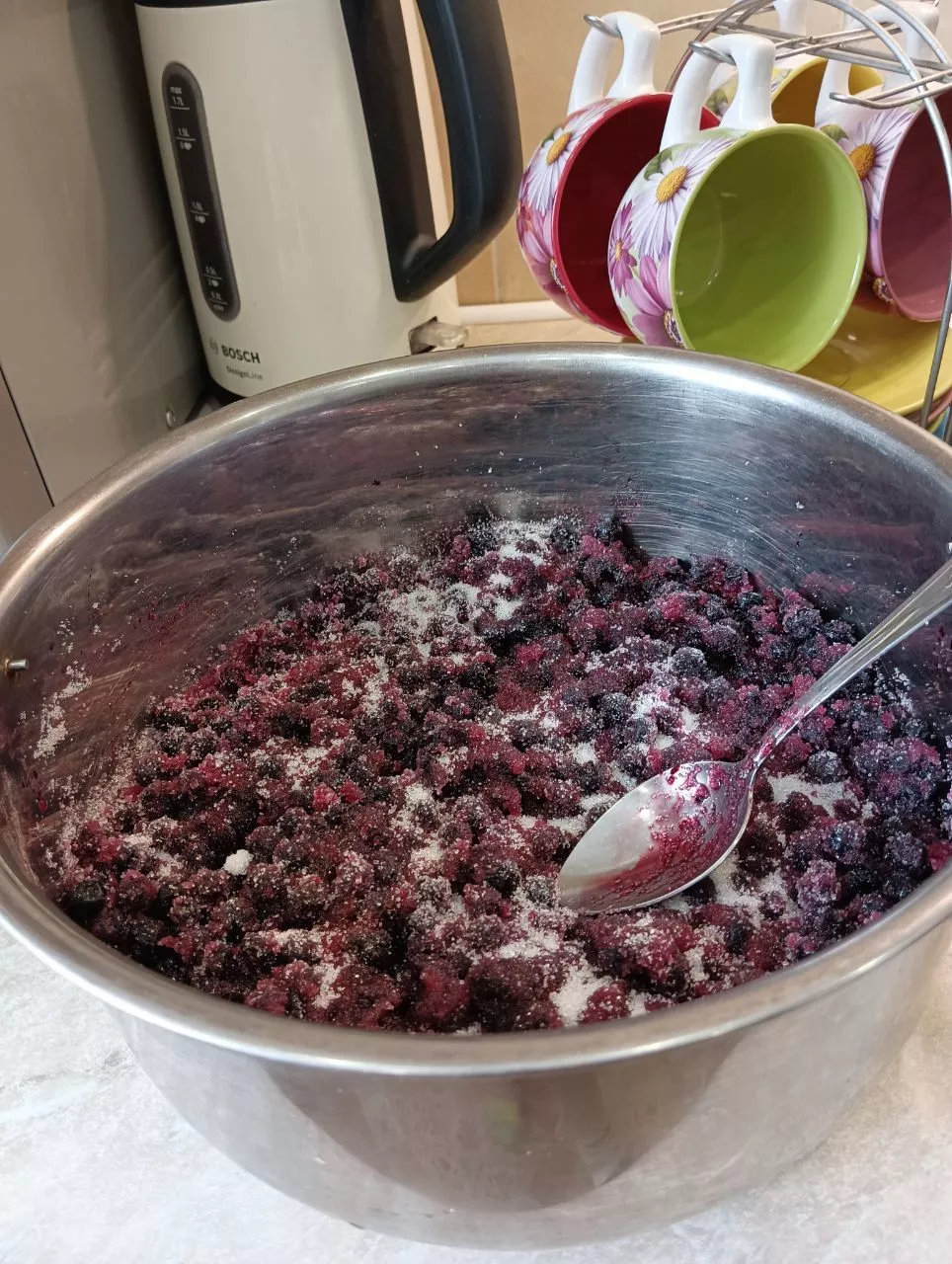
While it was steeping, we went to the dacha to water the tomatoes, peppers and cucumbers in the greenhouses.
- After the dacha, I continued cooking the jam, carefully stirred the mixture, and put the pan on the stove.
- When the jam boiled, I reduced the heat, skimmed off the foam and cooked the jam for about five minutes.
- I turned off the stove and left the pan on the stove overnight. The berries should be thoroughly warmed and soaked in the syrup.
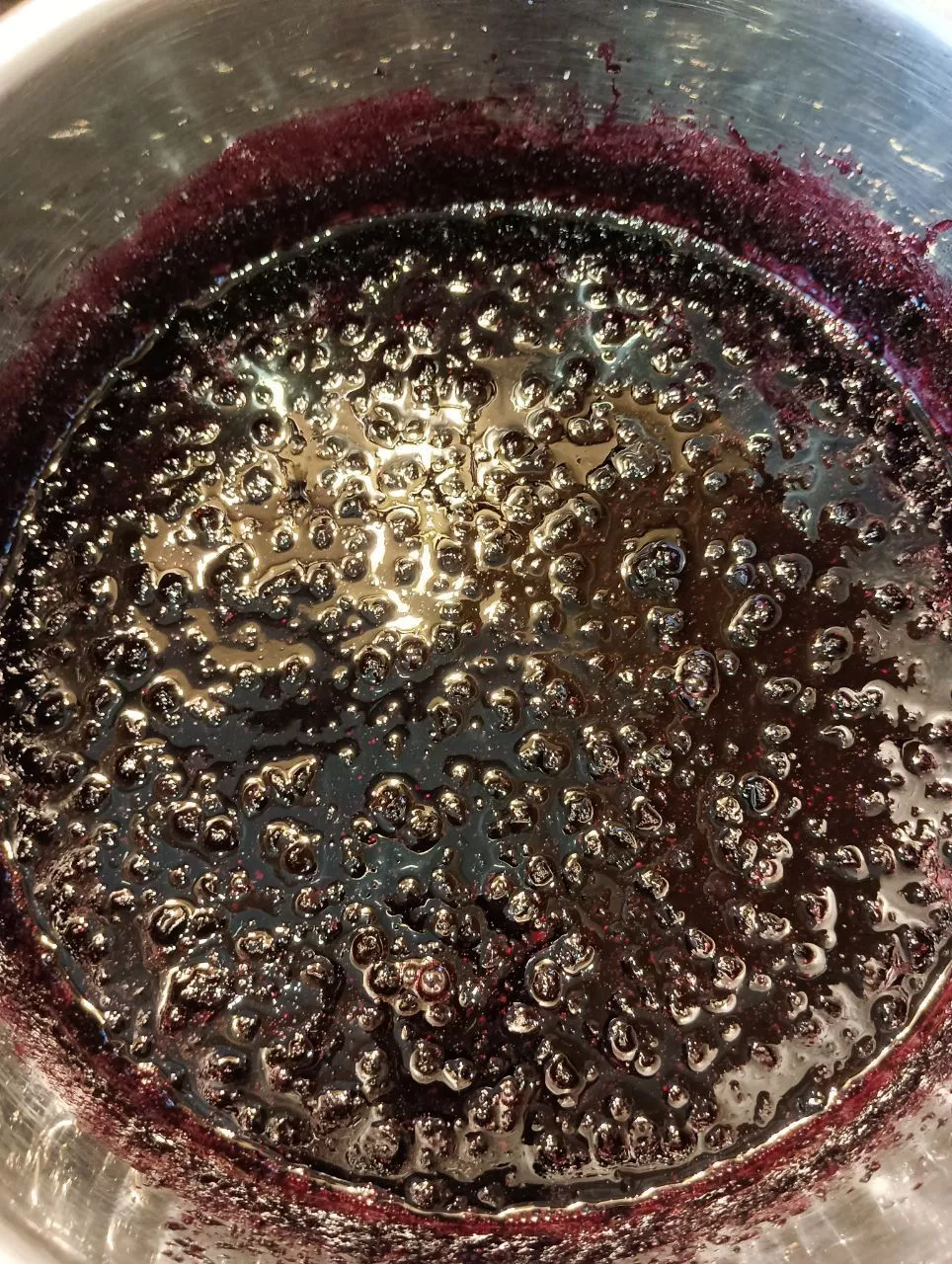
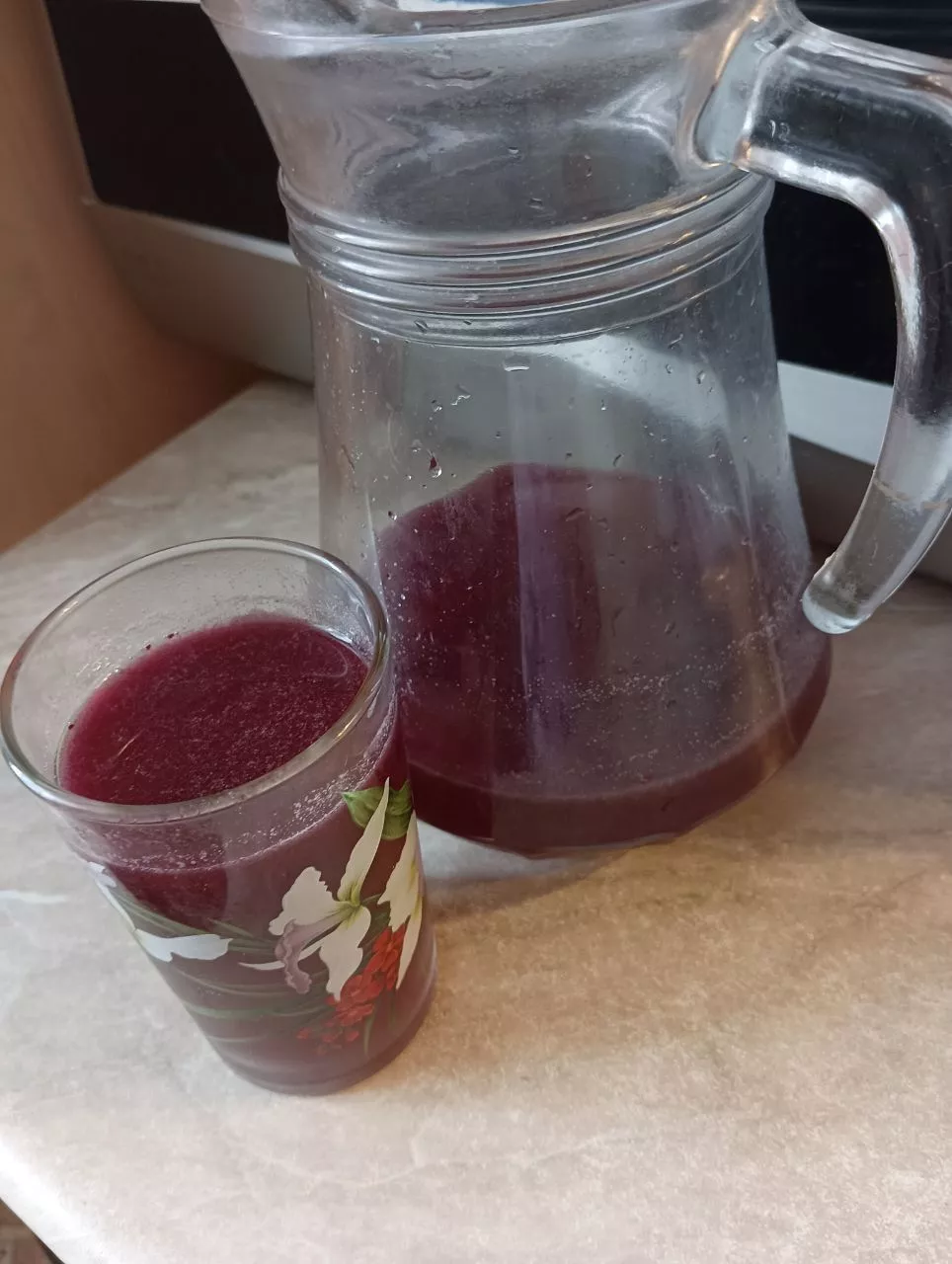
I made some fruit drink from the foam - refreshing and delicious.
- In the morning, I turned the stove back on. The jam wasn't quite thick; the syrup was thin. It needed to simmer for a little while longer. I simmered it for another 5-7 minutes and then returned it to the stove. The jam sat, cooled, and became thick with whole berries, a rich, dark burgundy color, beautiful and delicious.
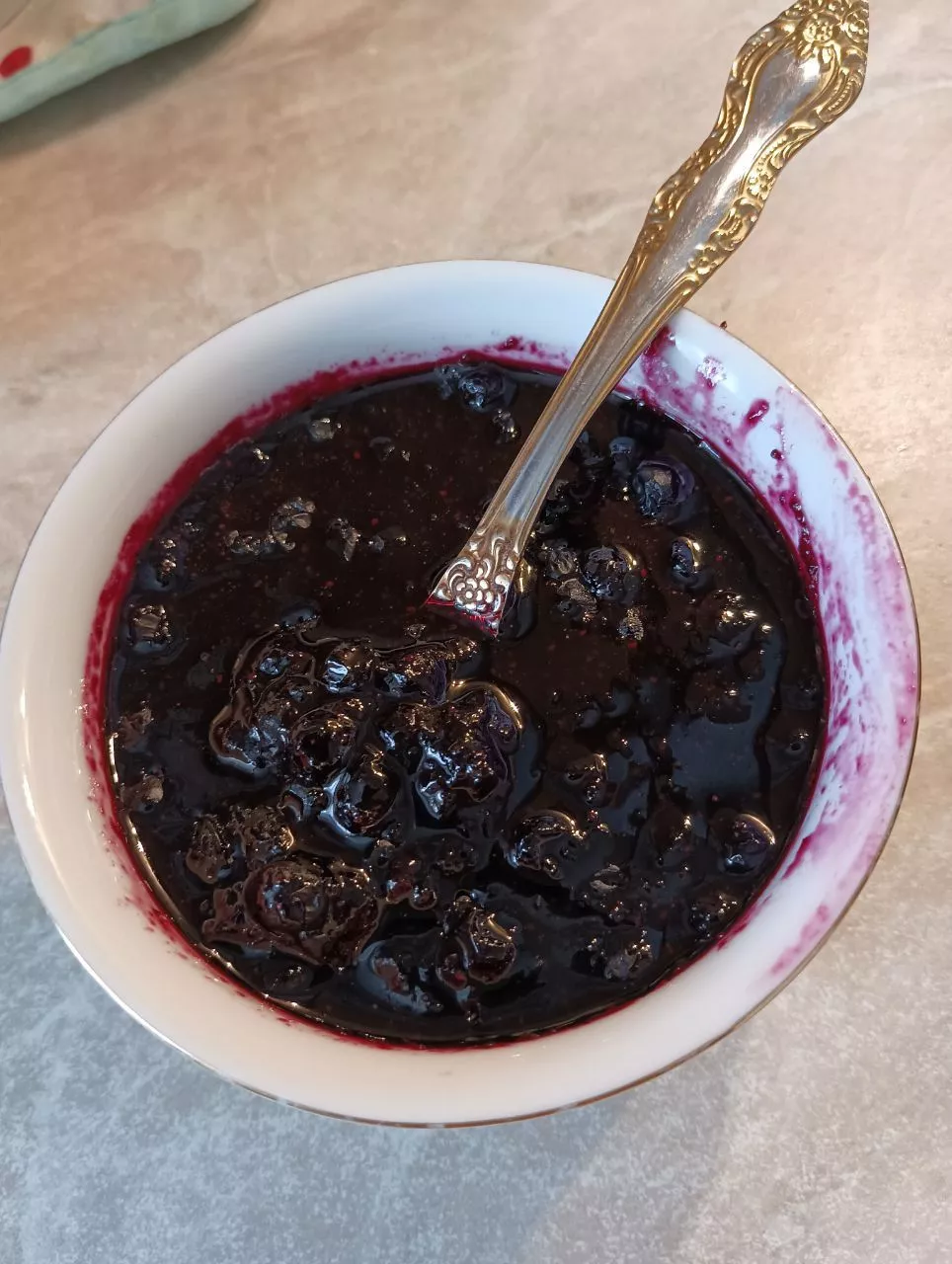
- The finished jam needs to be warmed slightly, brought to a boil, and then poured into clean jars. It's easier to pour when warm. Once the jam had cooled, I sealed the jars with lids.
I never seal hot jam; I let it cool. If I seal it right away, condensation will form under the lid from the hot jam, which can lead to mold.
I got three jars of fragrant blueberry jam.
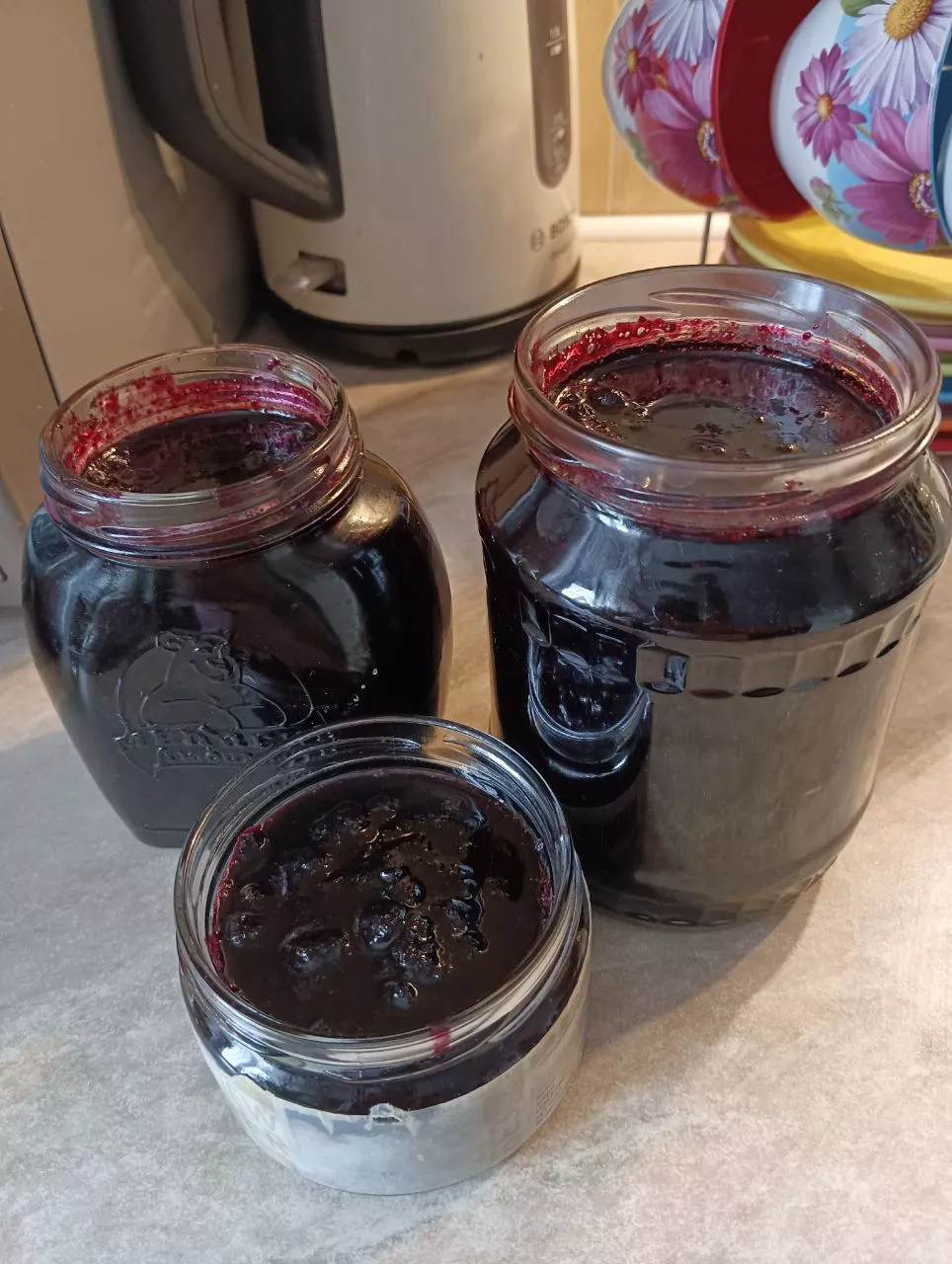
Let's drink tea with healthy blueberry jam on frosty winter evenings.