

At Christmas, in the middle of winter,
When the snow sparkles under the moonlight,
When the trees and hills are white,
I suddenly dreamed about my summer garden.Beautiful ligularias in bloom,
Gorgeous hydrangeas and roses,
How can I protect this beauty?
After all, there is a bitter frost outside.And I found a way out by filming it on my iPhone,
My summer garden, favorite flowers.
There is a photo and the issue is resolved,
I saved my flowers and that's it!
Good afternoon! Happy New Year 2024 and Merry Christmas to you, flower growers, gardeners, and summer residents! Wishing you and your families happiness and prosperity, good health, and bountiful harvests!
Today I was looking at photos of my flowers and I wanted to tell you about ligularias. I wrote about this before. a note about my first ligularia. Now I have three different varieties of ligularia. And I really like them all.
I'll tell you in detail about all my Ligularias, the botanical name for Ligularia. I wanted to describe all my Ligularias in one post, but I decided to write about each variety separately because there are so many photos. They wouldn't fit in one post.
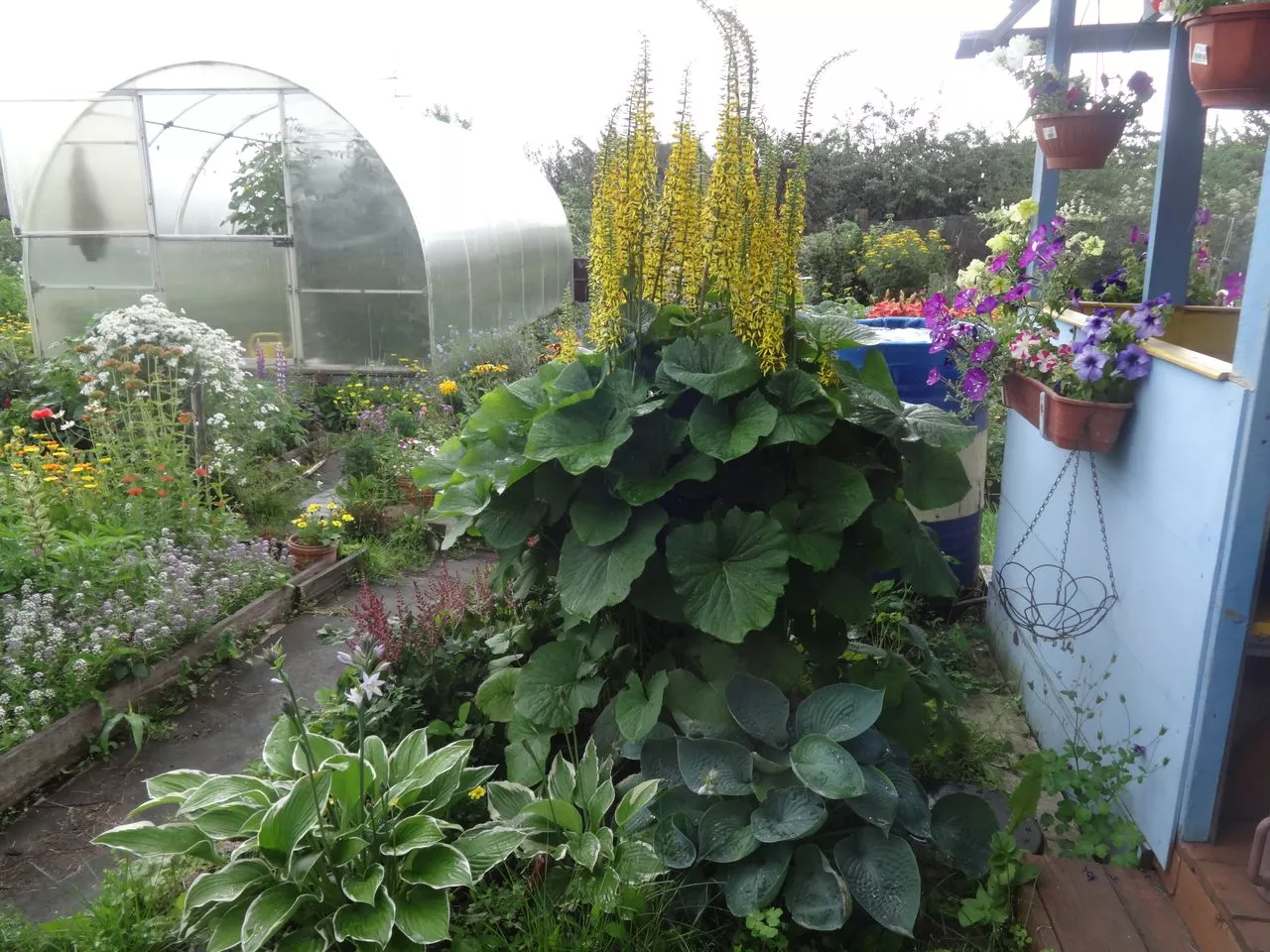
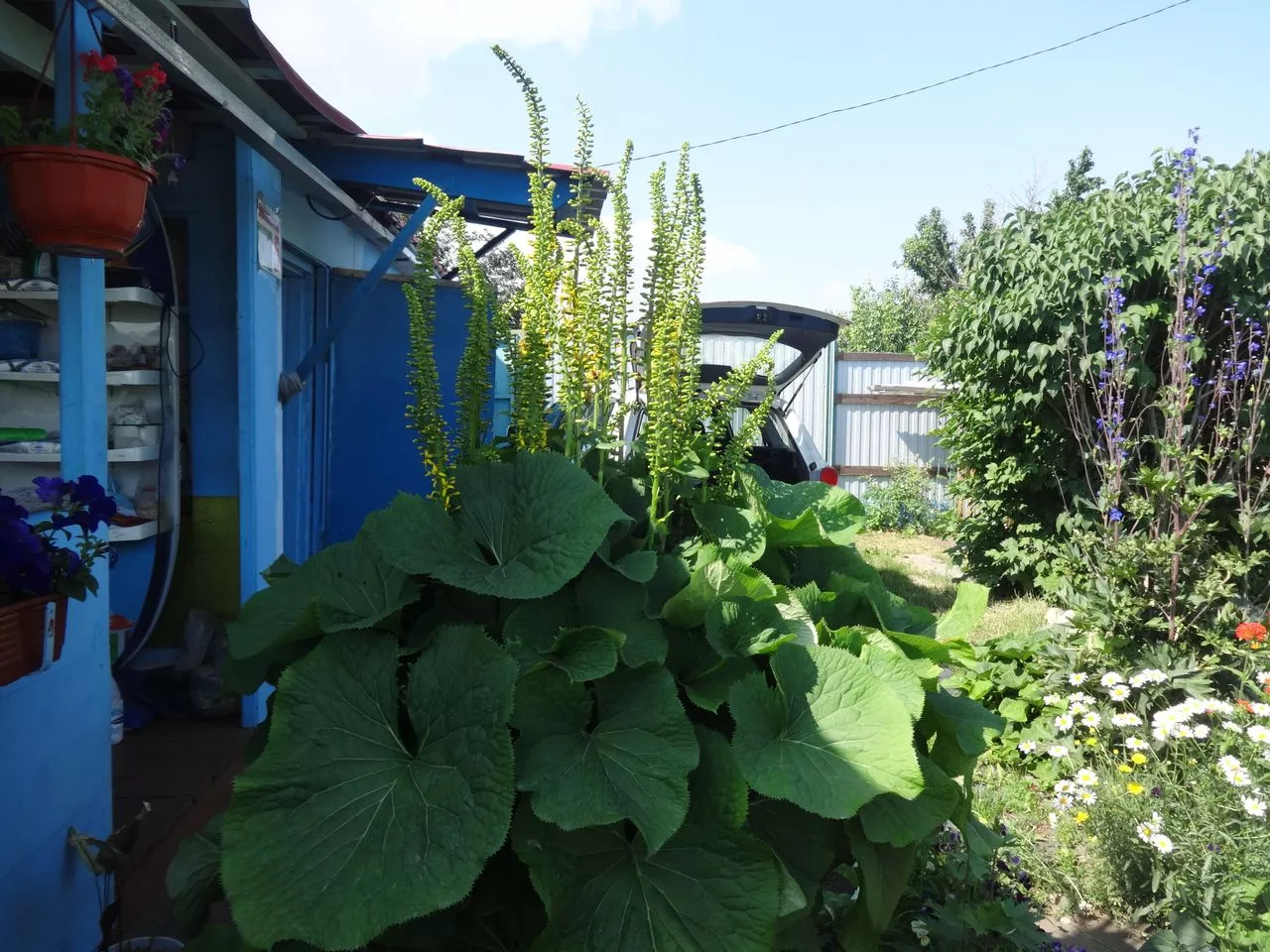
The very first Ligularia is the most vigorous, reaching over two meters in height when in bloom. I used to think it was Ligularia vichiana, but it's more likely Ligularia przewalskii, variety 'Raketa'.
For me, it doesn’t matter what species a particular flower belongs to, as long as it grows well and blooms beautifully.
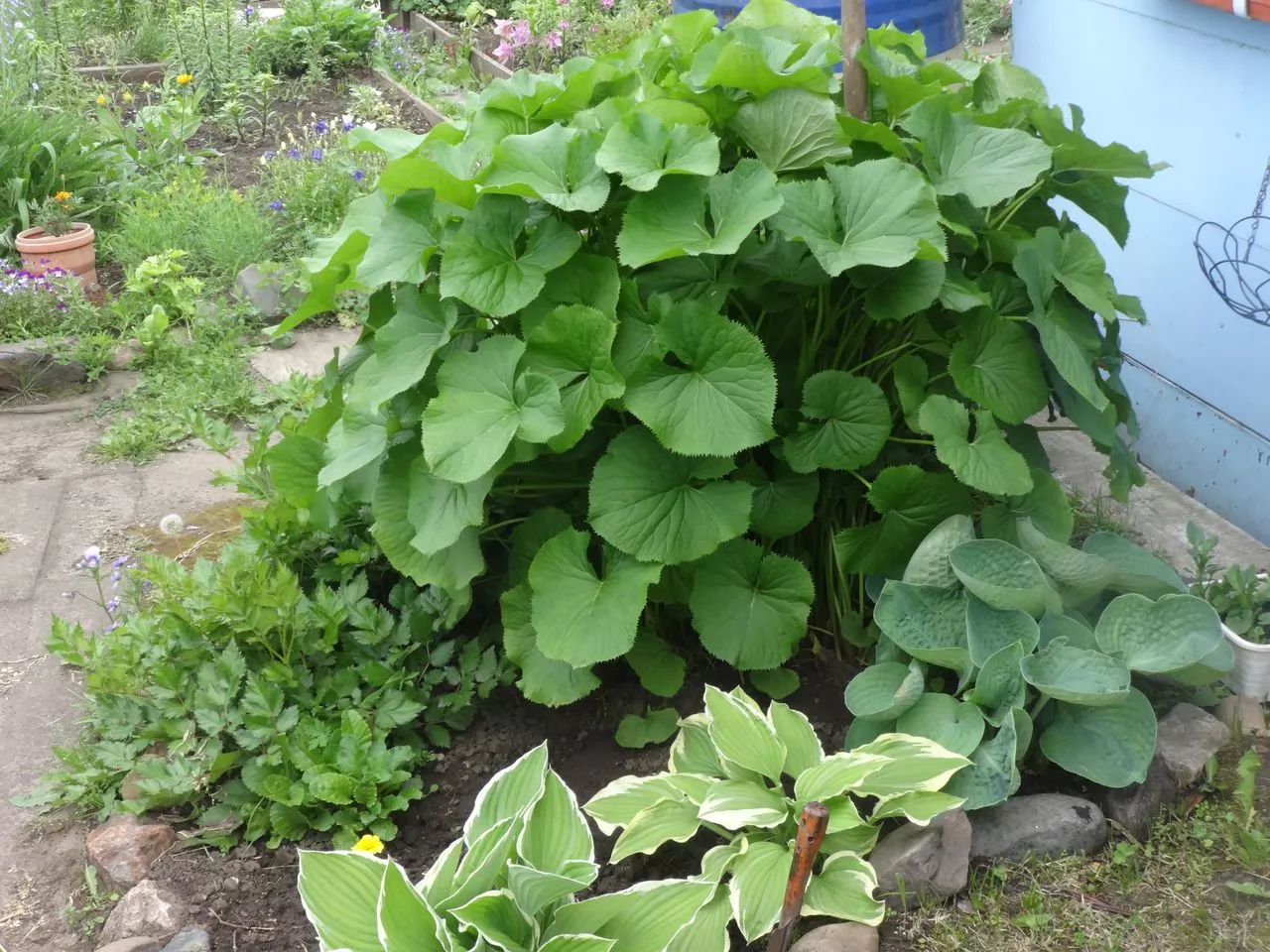
This ligularia has grown quite large and become bushy. Its leaves are large, heart-shaped, and entire, with finely serrated edges. They are as large as burdocks, and stand on strong, tall, green stems.
In autumn the leaves turn crimson.
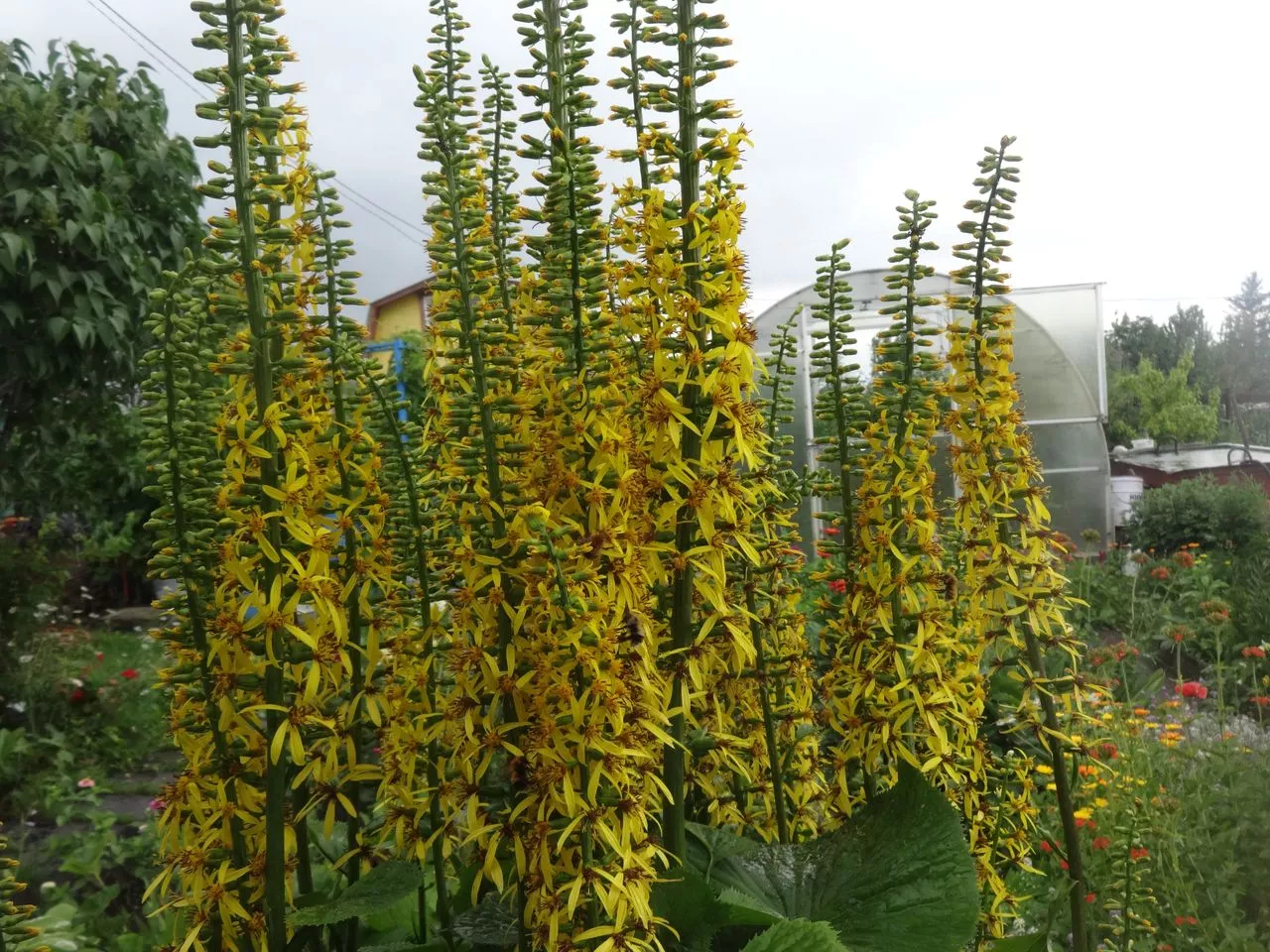
The flower stalks are also strong, long, green, and spike-shaped, covered with small heads of bright yellow, oblong petals. The flowers are numerous on each spike, opening from the bottom up.
During flowering, the ears of corn are covered with bees, buzzing happily as they collect nectar, the humming sound lasting all day. The nectar must be delicious, because even on a rainy day, the bees work until evening.
Here, flowering begins in mid-July and lasts for almost a month.
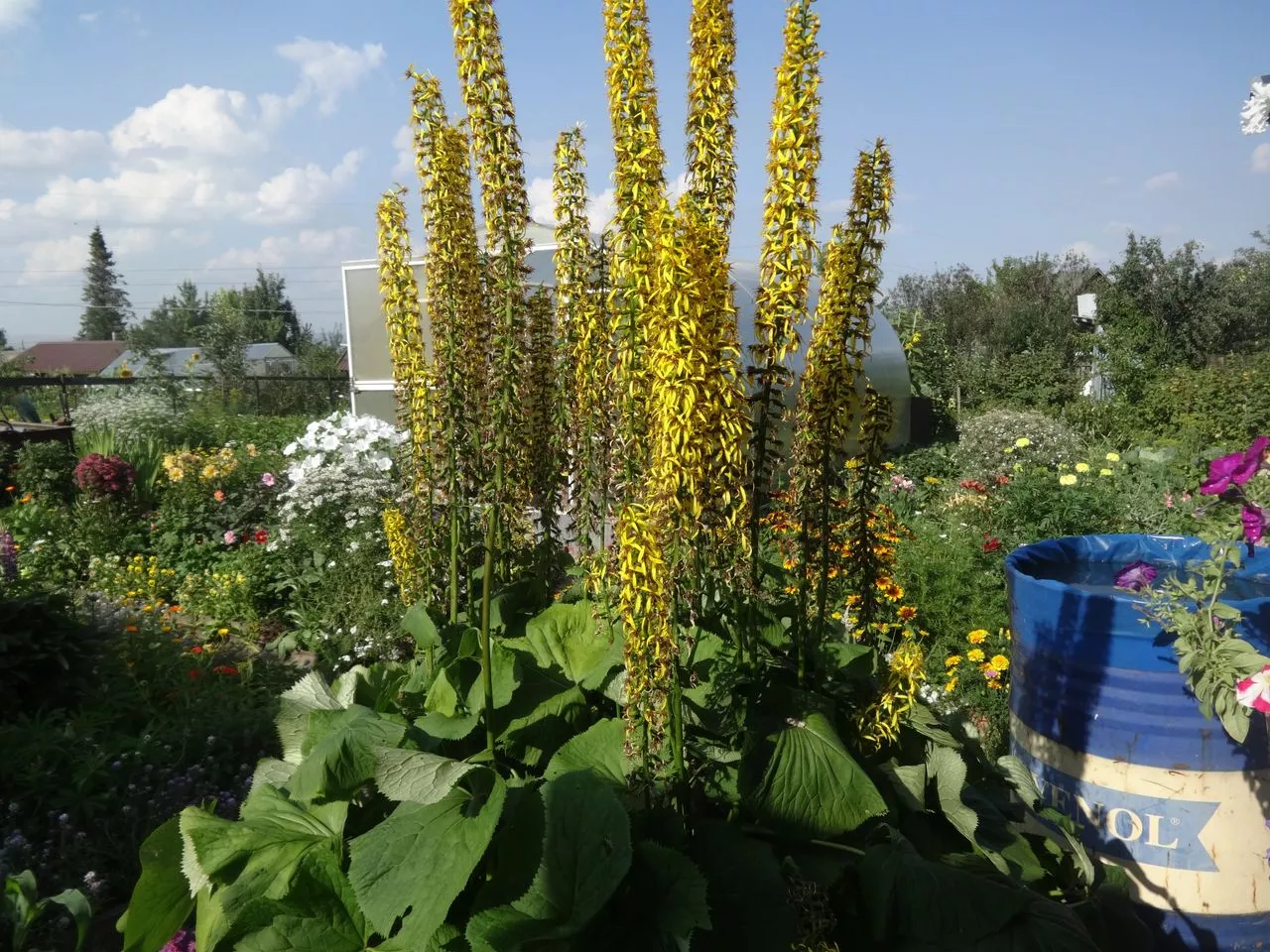
Then, fruits form on the inflorescences—oblong achenes with a tuft. The ripe seeds can be collected and sown in the spring. I usually cut the inflorescences immediately after flowering ends, so I haven't seen any ripe seeds. You'll need to leave one spikelet for the seeds to ripen. When propagated by seed, flowering will not occur until the third or fourth year.
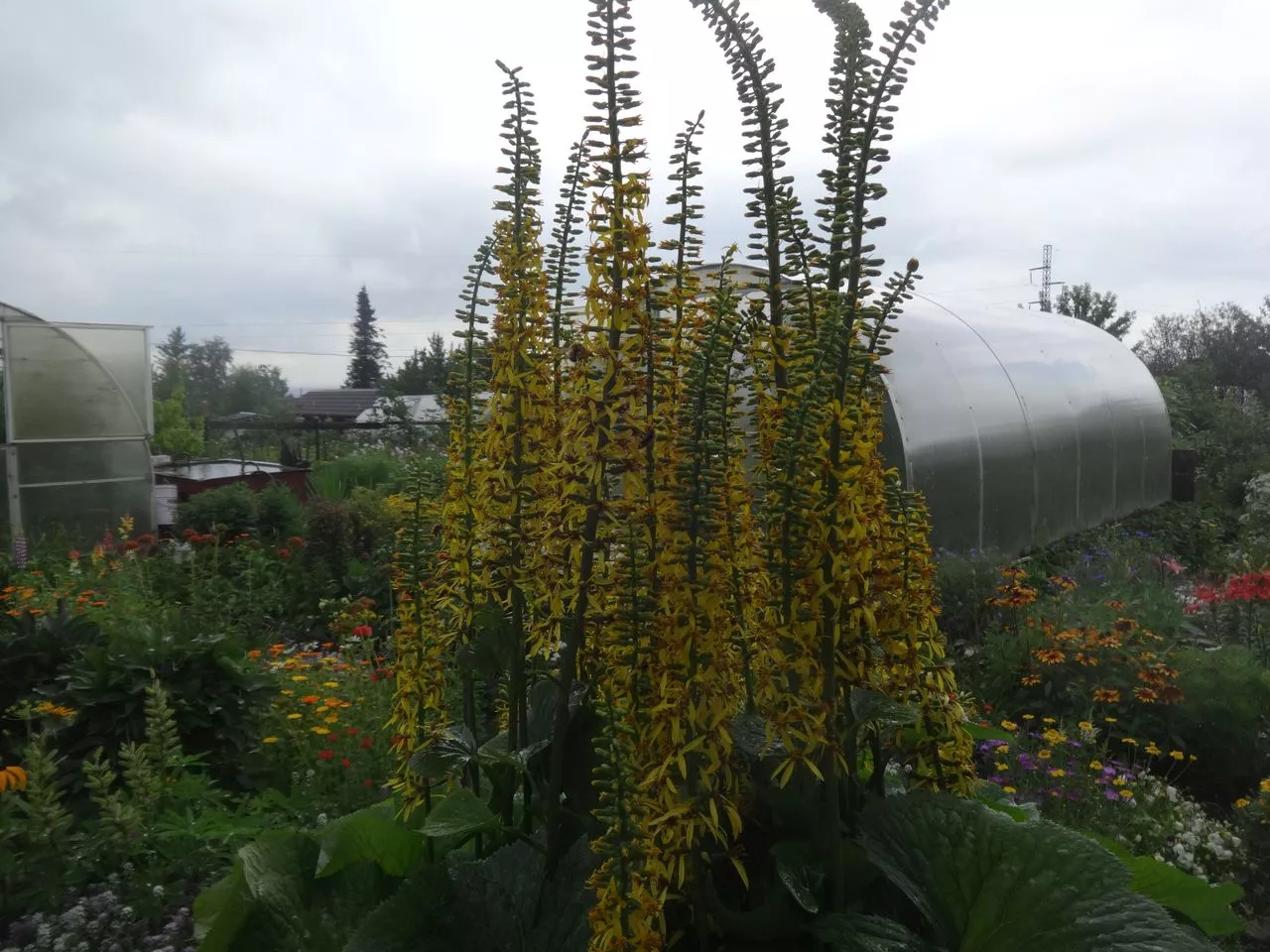
So, if you want to propagate Ligularia, it's best to do so by dividing the plant. To do this, dig up the plant, divide it into sections, and replant. I once wanted to use a shovel to separate a section of the plant without digging it out completely, but I couldn't do it—the roots were strong and intertwined. I decided not to divide it to avoid damaging the plant. Let it grow; it has plenty of space. Especially since Ligularias can thrive in the same spot for over 15-20 years.
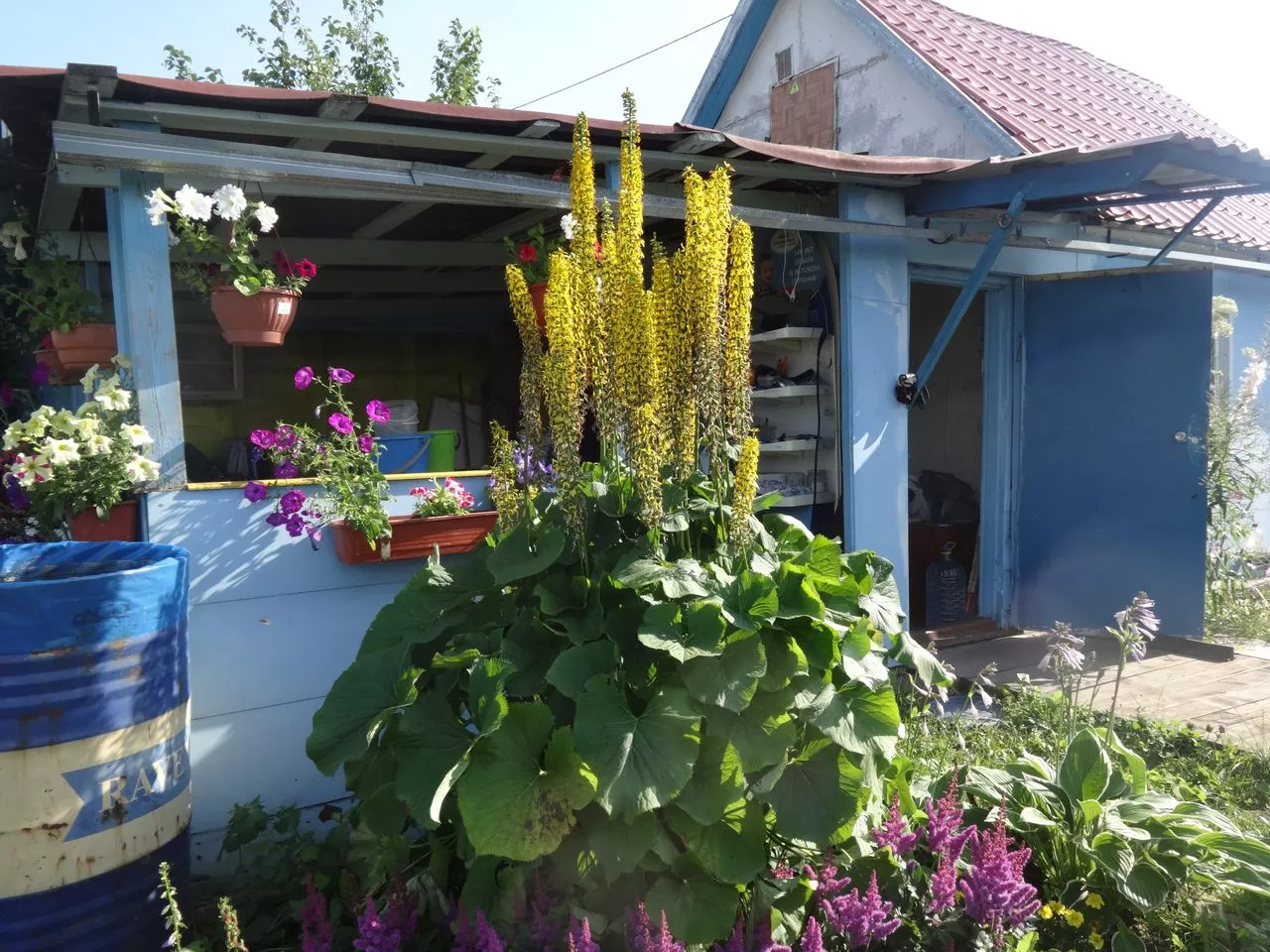
My ligularia grows more beautiful every year, producing numerous blooms. I fertilize it in the spring, with nitrogen fertilizer in early spring. As soon as it starts to poke out of the ground, I rake in the humus, which I sprinkle on the bush in the fall, loosen the soil, and add urea.
When the leaves grow back, around mid- to late May, I water them with fermented grass. I also sprinkle superphosphate granules under the bush, mainly to repel slugs when holes appear in the leaves. Slugs are very fond of ligularia leaves.
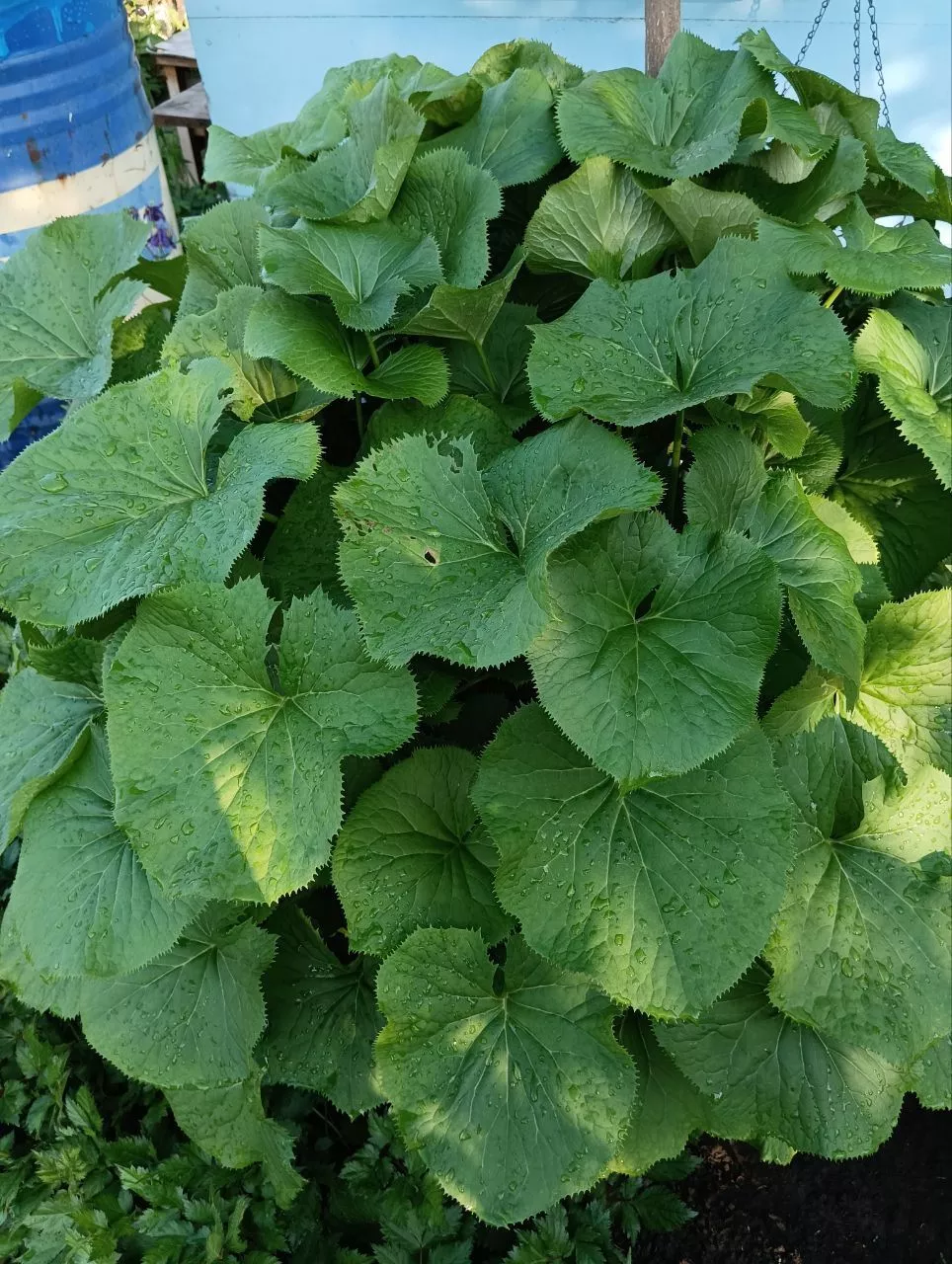
Superphosphate not only repels slugs but also fertilizes the plant, providing phosphorus, nitrogen, sulfur, boron, calcium sulfate, and molybdenum. Superphosphate has a positive effect on the root system, accelerates flowering, and increases resistance to plant diseases. I also use similar treatments for other Ligularias.
Ligularias prefer moist soil, so they need to be watered more frequently and more deeply than other flowers. If they don't get enough moisture, their leaves droop and wilt. But as soon as you water them, the leaves immediately rise. We live in Siberia and often have rainy summers, so we water only when it's very hot and sunny.
Ligularia is said to grow well in shady spots, under tree canopies, but we have almost no such spots. Our plot is open and sunny, and there are no tall trees.
My ligularia grows near the terrace, it gets shade in the afternoon, this is the wettest place, there is a watering barrel nearby and during the rain it overflows and there is always enough moisture there.
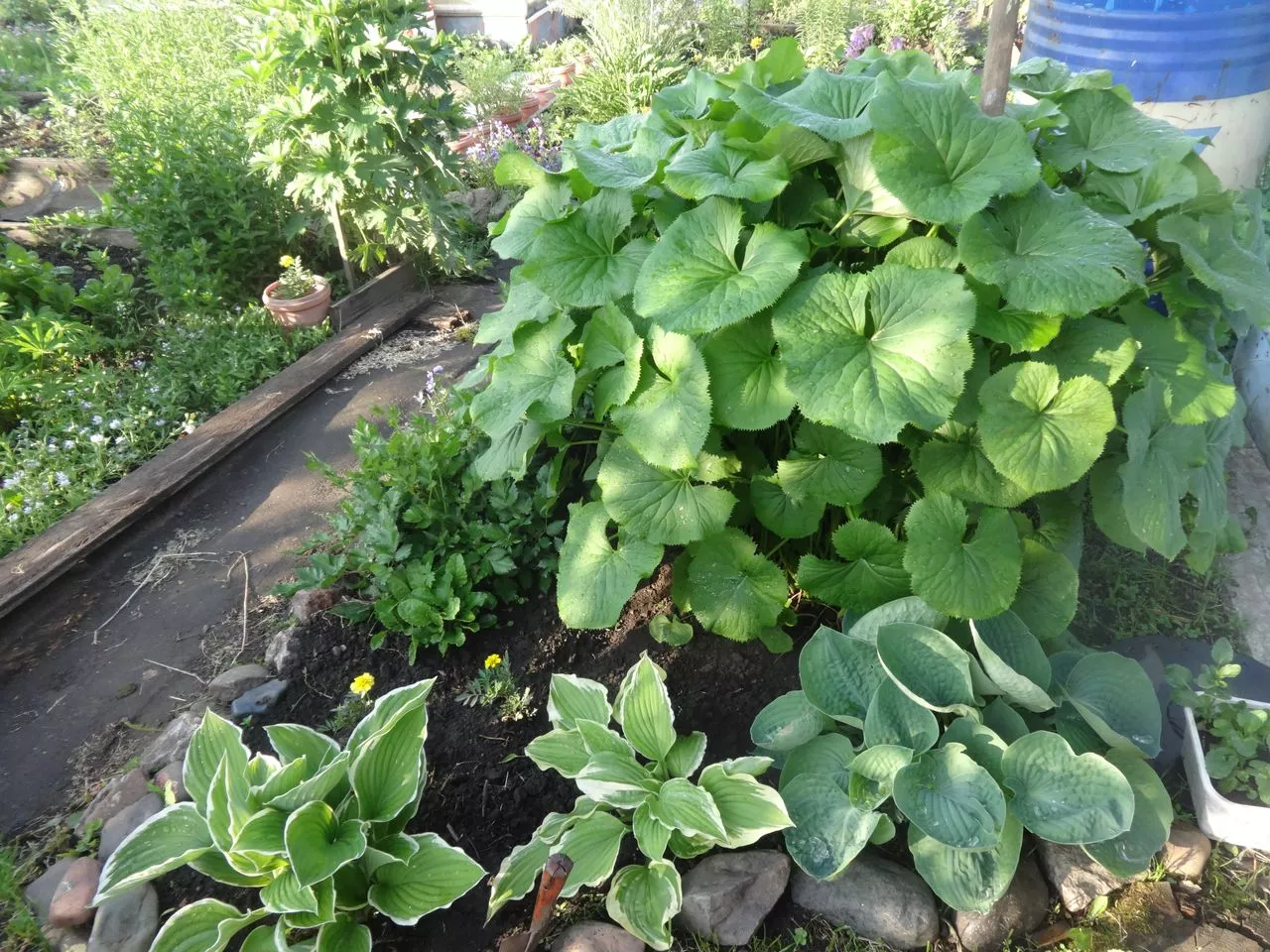
But in the hottest hours of the day the leaves also wither.
Hostas and low-growing astilbes grow under the ligularia.
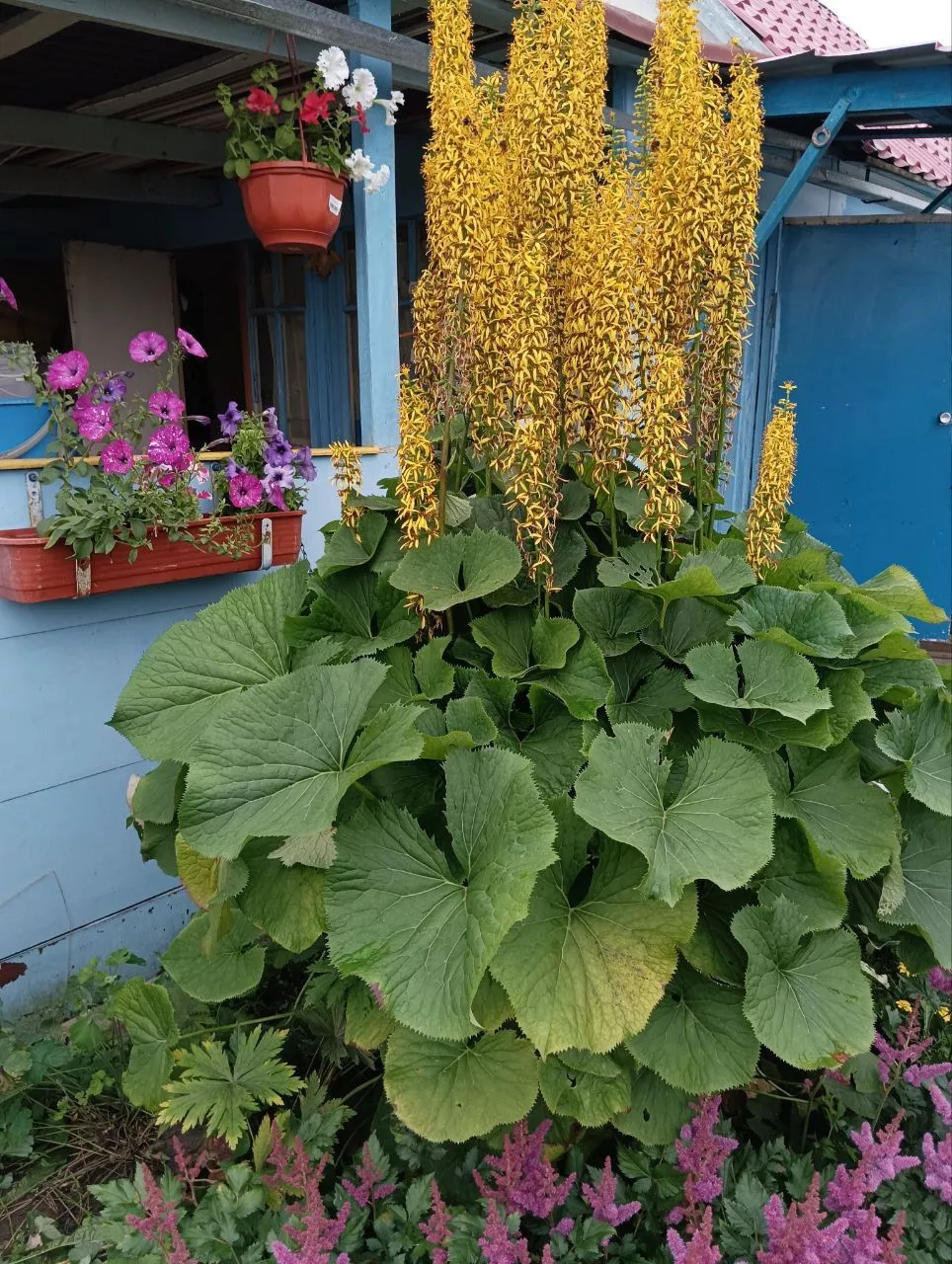
And I really like this color combination.