

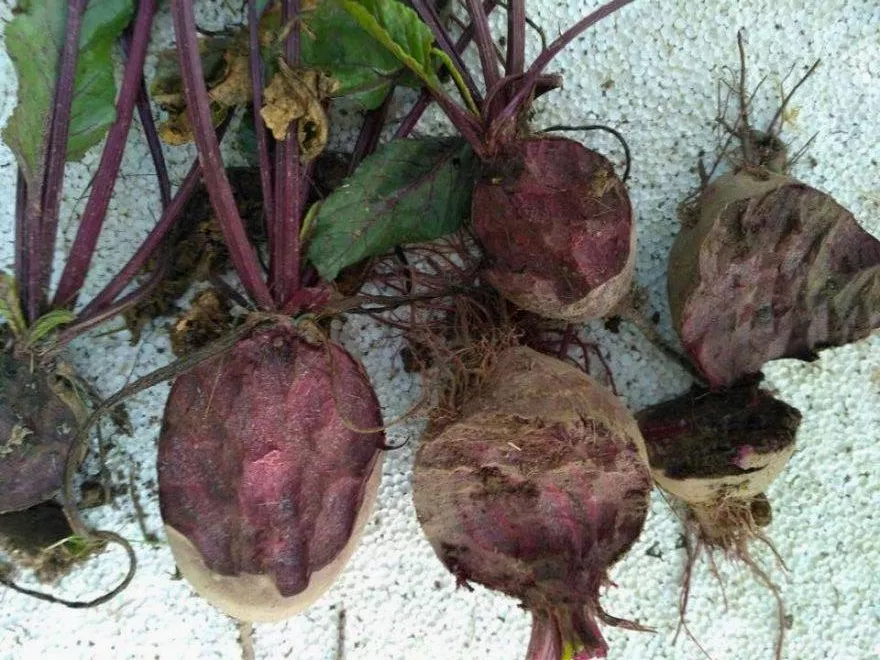
 This year, my beets were a real disaster. They suffered from everything from phoma, blackleg, cercospora, and fusarium. But that's not all—it turns out we also had pests like flies, nematodes, and mole crickets. I've never had anything like this before, apparently because I didn't treat the crop in time for preventative measures, which I do every year.
The reason for this is a friend who said she never sprays her beets and they don't get sick. Like, I'm wasting my time and money. It must have been a very "kind" friend giving me advice. I won't listen to her anymore, because now I know for sure that preventative treatments are absolutely necessary.
Especially considering that our neighbors (and there's just chain-link fencing between us) never do it. You know, there are those, the lazy ones, or, pardon the expression, the indifferent ones. They collect all the pests, throw out the diseased plants, right back into the garden beds...
In short, my beets suffered. I also realized that if I strictly follow the proper growing practices, the beets will be resistant to diseases and insect infestations. In my case, the following problems plagued my crop:
| Disease/pest | Signs | Control measures |
| Fomoz | The tops become covered with yellow and brown spots, and the fruits begin to rot. | Seed treatment with Fundazol. |
| Cercospora leaf spot | The upper part of the leaves is characterized by red spots, the lower part by a gray coating. | Wood ash and potassium chloride are added to the soil. Spraying is carried out with copper-based products. Fungicides are also used. |
| Fusarium | The fungus causes the tops to wither and turn yellow, and the fruit to rot. | Liming the soil, spraying with boric acid. |
| Blackleg | Seedlings are susceptible to damage. The rootworm can be recognized by thinning and blackening of the stem. | There are no treatments, so the plant dies. Soil aeration is used as a preventative measure. |
| Mole cricket | Eats the root vegetable. | A poison such as Grom is scattered on the soil, and burrows and passages are treated with boric acid. |
| Beetroot fly | The pest eats the tops and stems, after which yellowing and wilting occur. | Spraying with insecticides. |
| Nematodes | The insect larvae attack the roots, causing the leaves to wither and the beets to die. | There are no treatment options. |
The crop is attacked by slugs, flea beetles, and wireworms. These were present, but in very small numbers. Fight these pests with folk remedies—sprinkle tobacco dust, wood ash, and ground pepper.
I recommend that you familiarize yourself with diseases and pests in more detail. Here – a lot of useful and reliable information.
Next year, I'll do as I always have—treat with fungicides, insecticides, and folk remedies—because I don't want any more problems. And my advice to everyone: never listen to well-meaning people like my friend.