

Among the variety of flowers that adorn flowerbeds, I would like to highlight an unpretentious plant - Tatar aster.
The name "aster" conjures up images of an annual plant that blooms in the fall, and children bring bright bouquets of asters to school on September 1st. But there's another kind of aster—the Tatarian or bush aster. These flowers are also called "Sentyabrinkas."
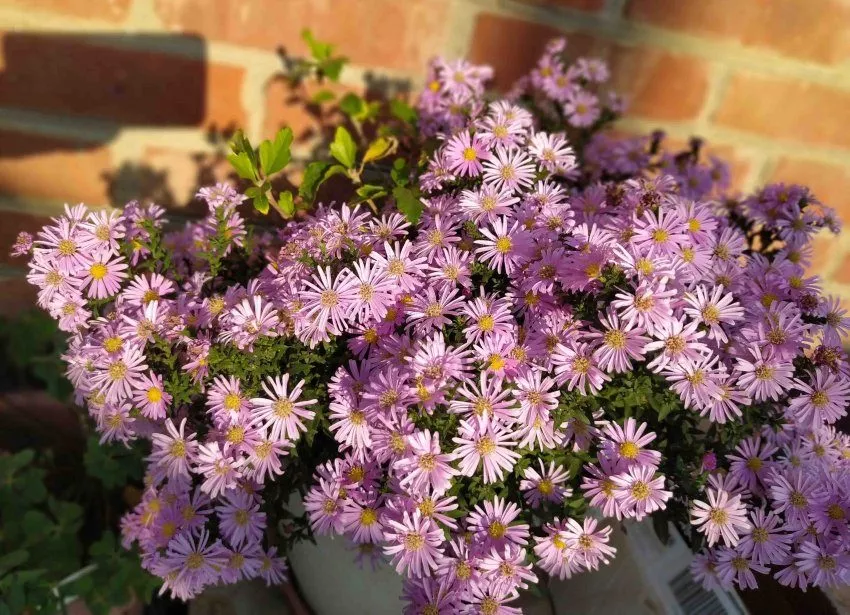
A plant with dense, elongated leaves and sturdy stems. The stems and leaves are thick, creating a voluminous bush. In the wild, it is found in Eastern Siberia and the Far East.
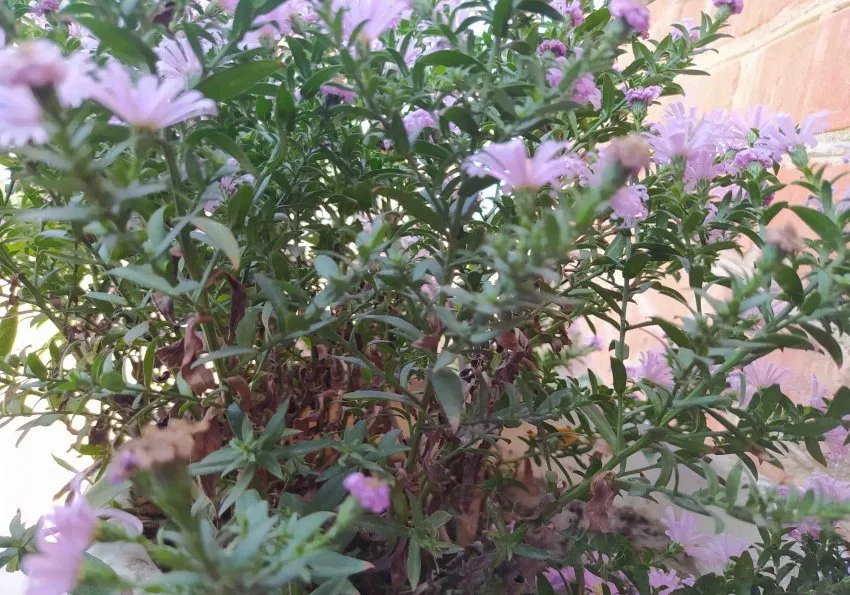
It is unpretentious in care, watering 2-3 times a week is enough, but it prefers areas well lit by the sun.
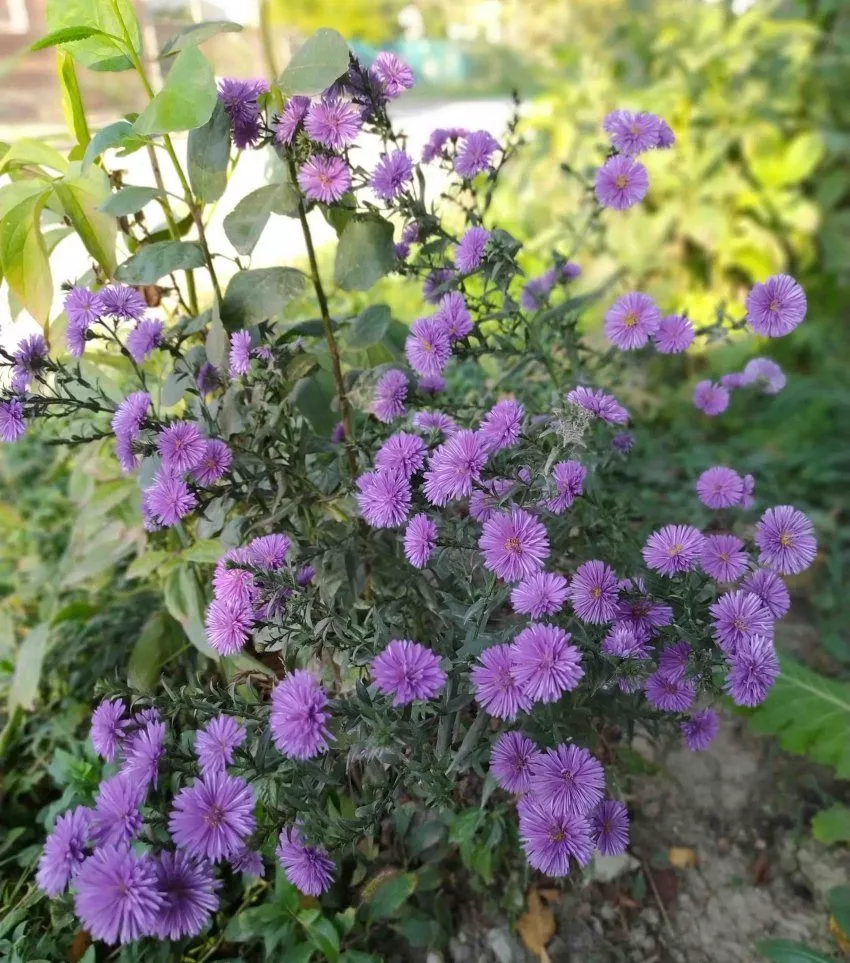
One of this plant's unique features is its ability to form a ball-shaped bush densely covered with flowers. This plant requires no additional pruning or shaping.
Flowers vary depending on the variety: snow-white, pink, purple or sky-blue.
Asters are quite frost-hardy, surviving temperatures down to -5 degrees Celsius. Flowering time varies by variety, with early-blooming varieties (from May) and late-blooming varieties (September varieties) blooming from September until the coldest temperatures. The bright flowers, dusted with the first snow, are a delightful and unusual sight.
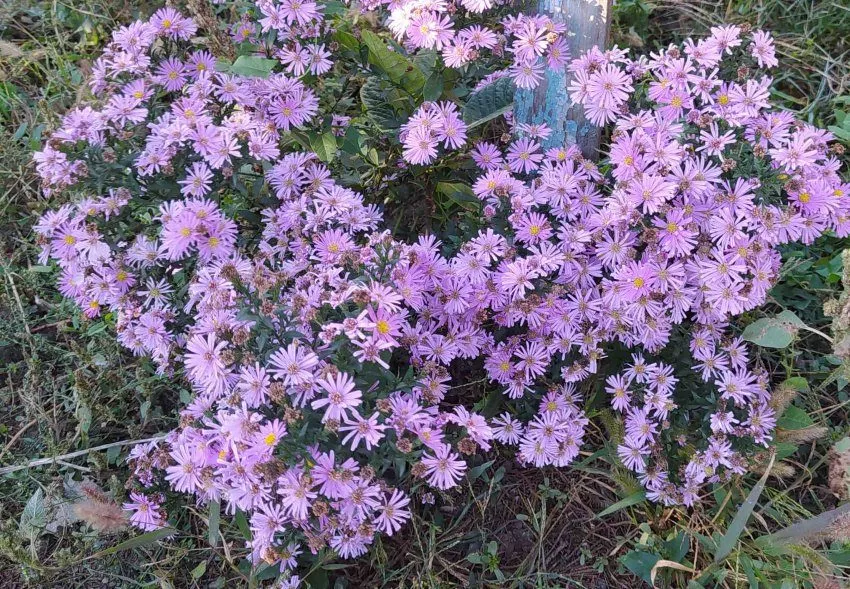
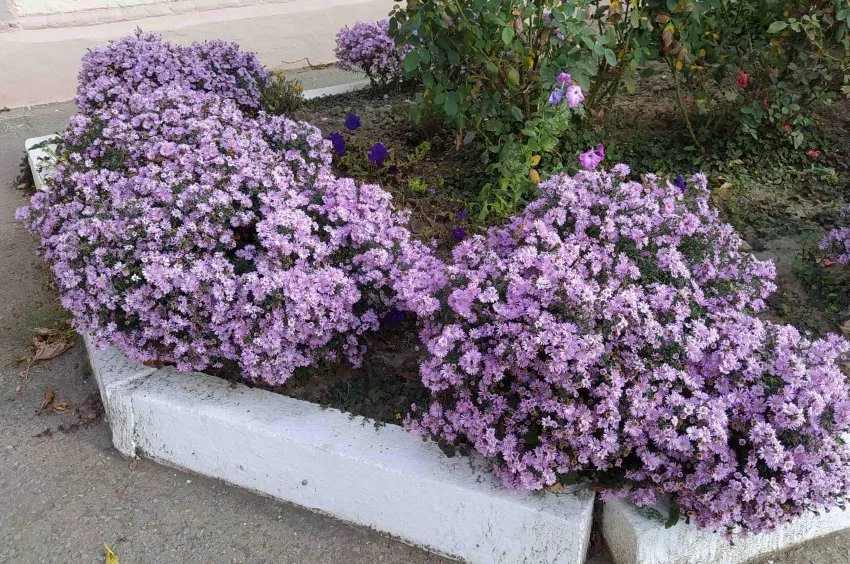
Bush varieties can reach up to 150 cm in height, while border varieties can reach up to 30 cm. In our country, low-growing asters are more commonly grown; when planted 20-30 cm apart, they intertwine, creating a vibrant carpet of flowers.
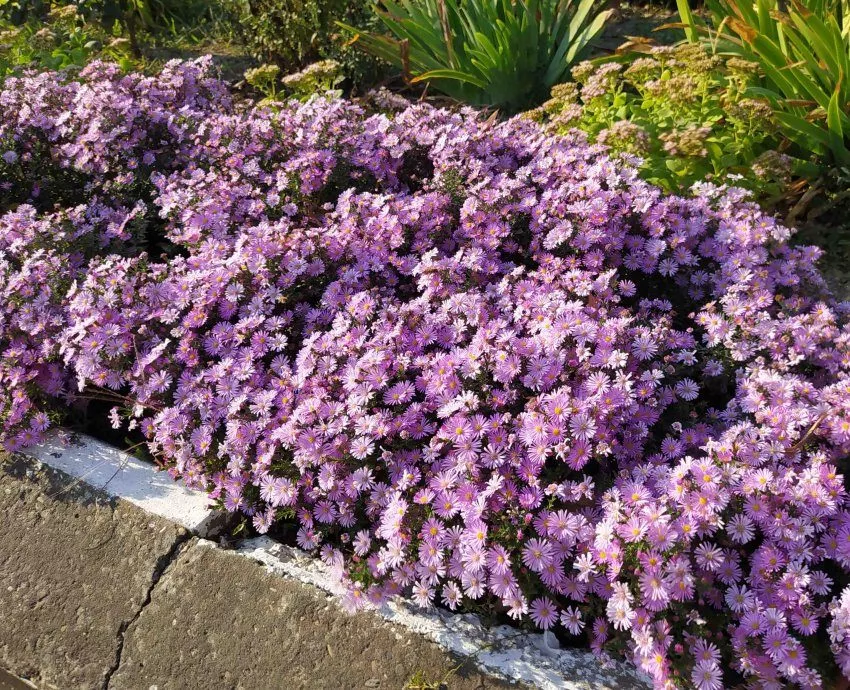
In addition to its decorative qualities, Tatar aster also has medicinal properties: its dried flowers are used to treat gastrointestinal diseases.
This plant can be propagated by seed, but it takes longer to flower, so it's more often propagated by division or cuttings. Furthermore, due to the long flowering period, the seeds often don't have time to fully ripen when cold weather sets in, and the germination rate of the collected seeds is low.
It winters in Kuban without shelter; it is enough to cut off the dried bushes after flowering.
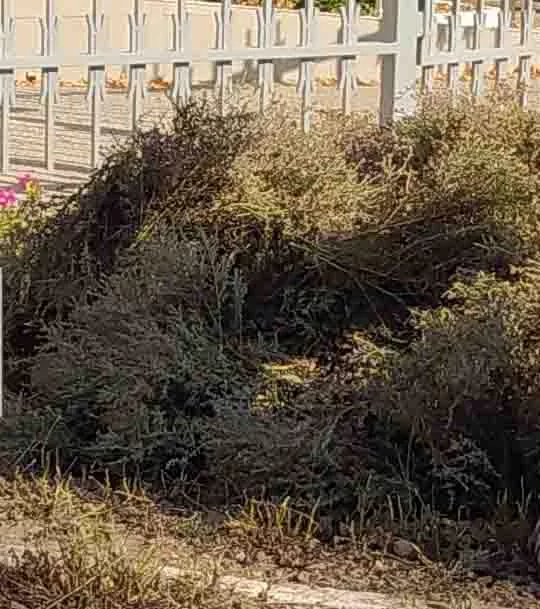
These are the sockets that remain:
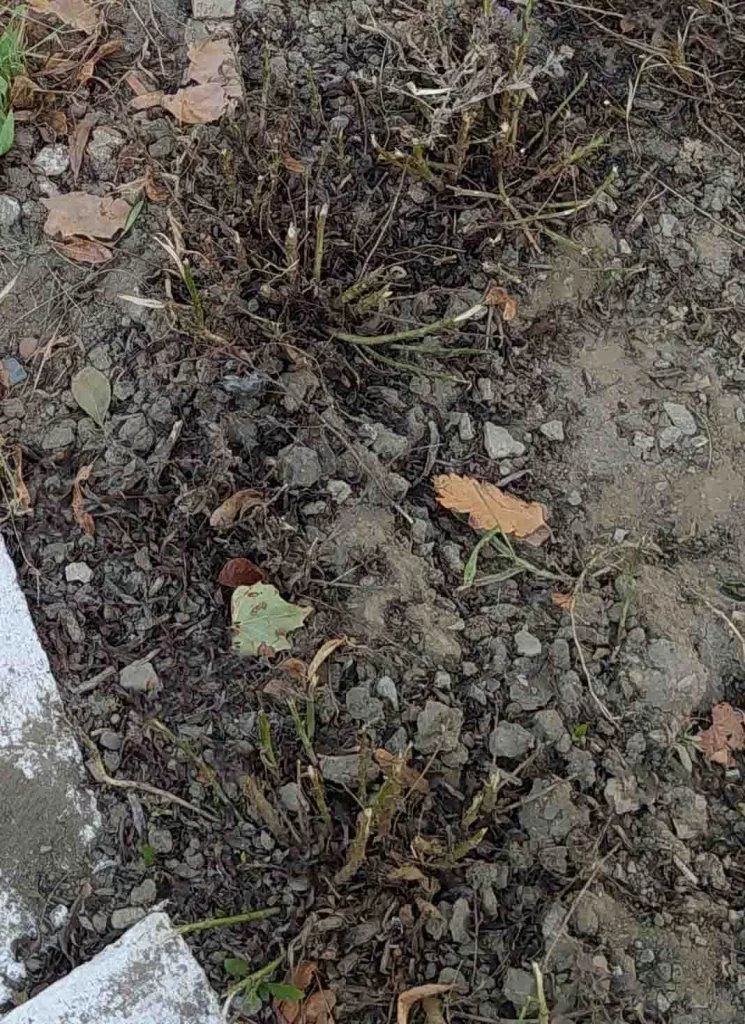
This is how the bushes go into winter. I'm playing it safe in case of a harsher winter and usually cut off the dry crown of the bush, leave it above the bush, upside down, and then cover it with fallen leaves.
In more northern regions, it's still advisable to cover the flowerbed with spunbond rather than plastic when cold weather sets in, as the roots are more susceptible to damping off than frost. In April, the covering is removed. A new bush will emerge, ready to delight you with its blooms.