

Astilbe panicle inflorescences
In July they burn like a fire,
The bees are buzzing above the flowers,
They are talking about something.Beautiful moments of summer
I'll take a photo quickly
I'll send it to social networks.
And I'll get a class from my friends!
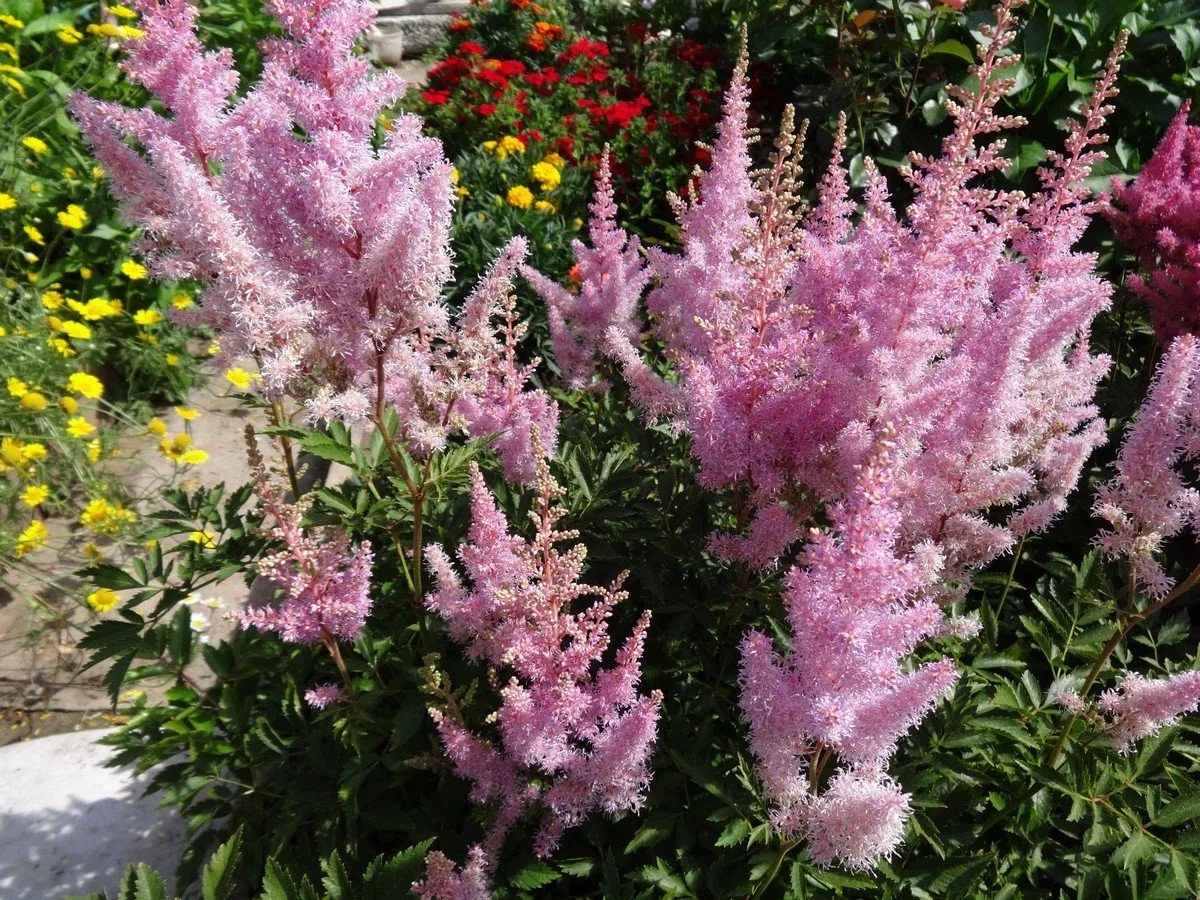
Astilbes are bright ornamental perennials that decorate my flower garden from spring until late autumn.
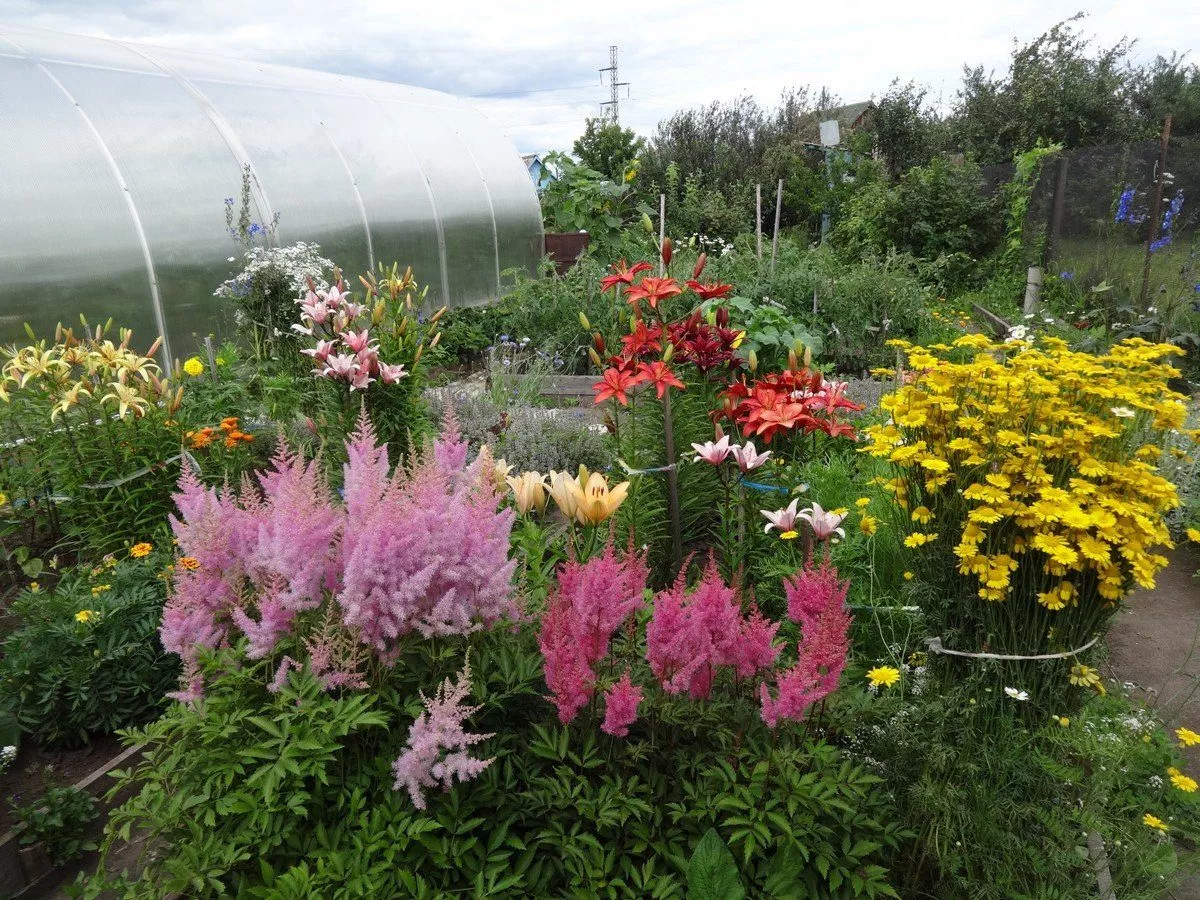
They grow beautifully and bloom profusely in both shady and sunny spots. Mine are in light partial shade, with morning and afternoon sun, and in the afternoon, during the hottest hours, shade from the summer house.
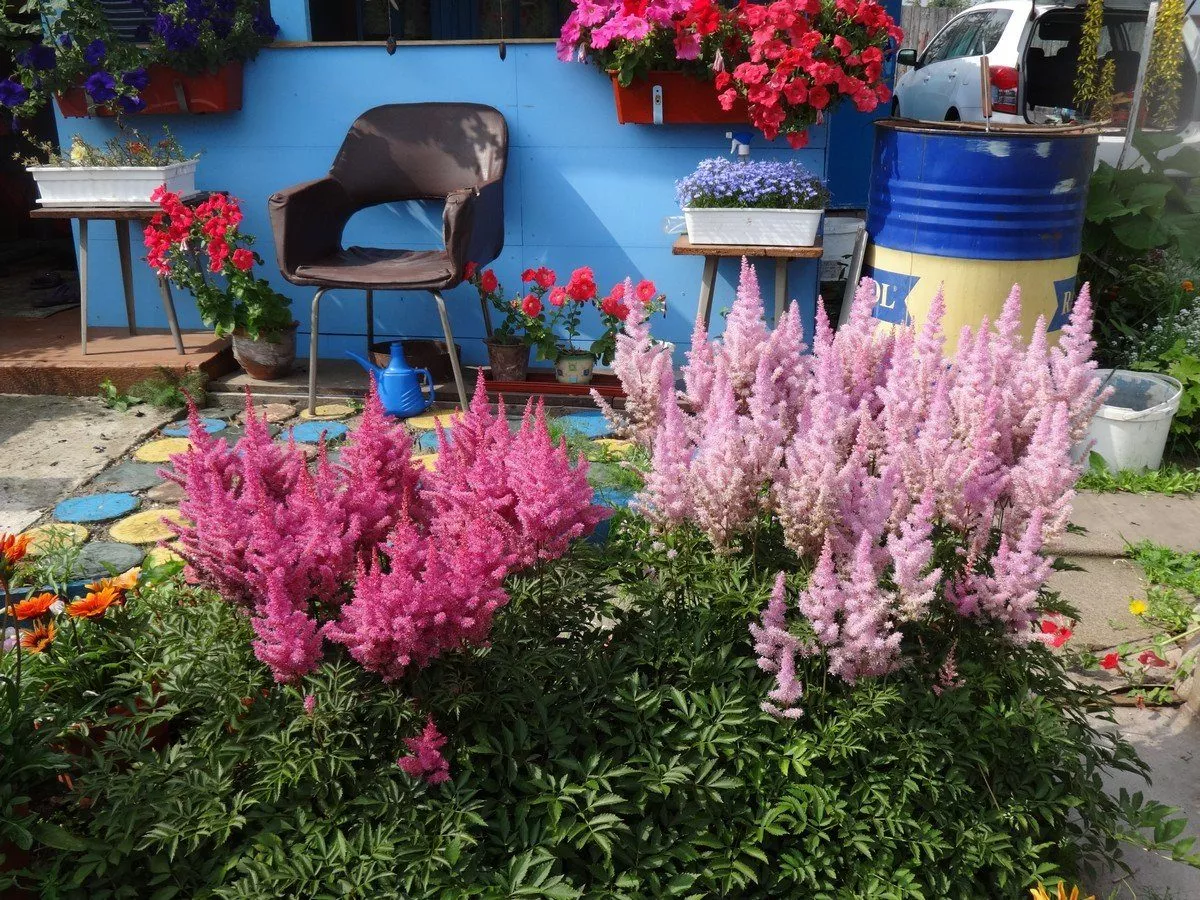
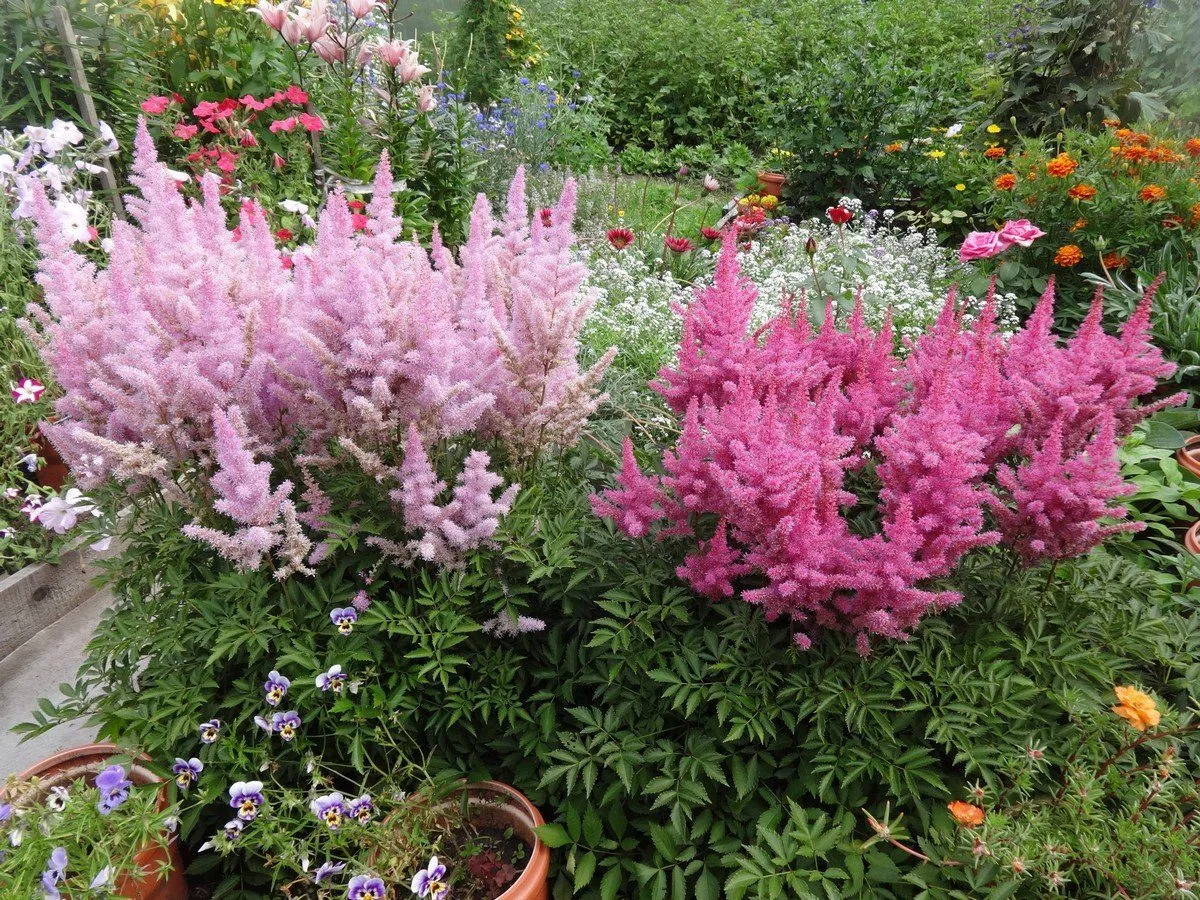
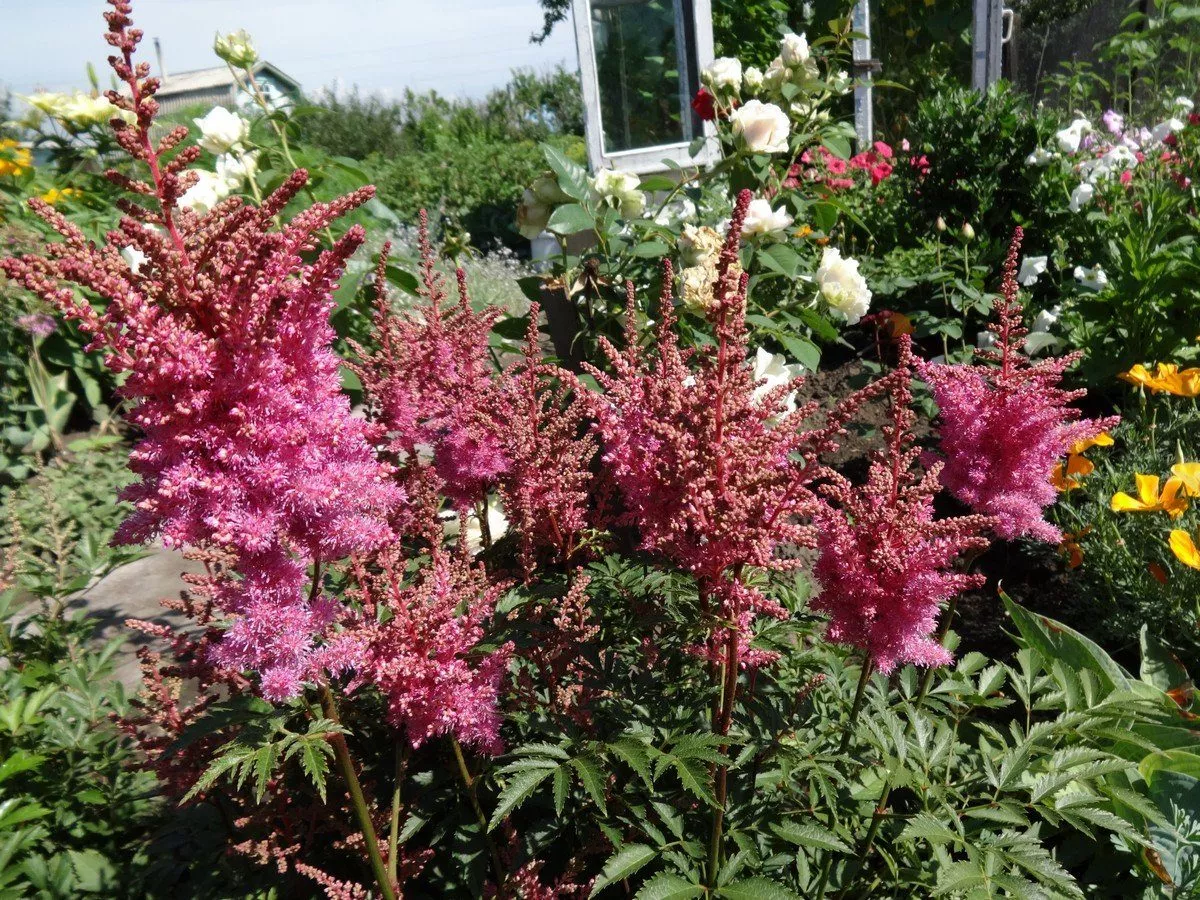
I have had two astilbes growing for a long time - one with bright crimson flowers, the other with soft pink ones.
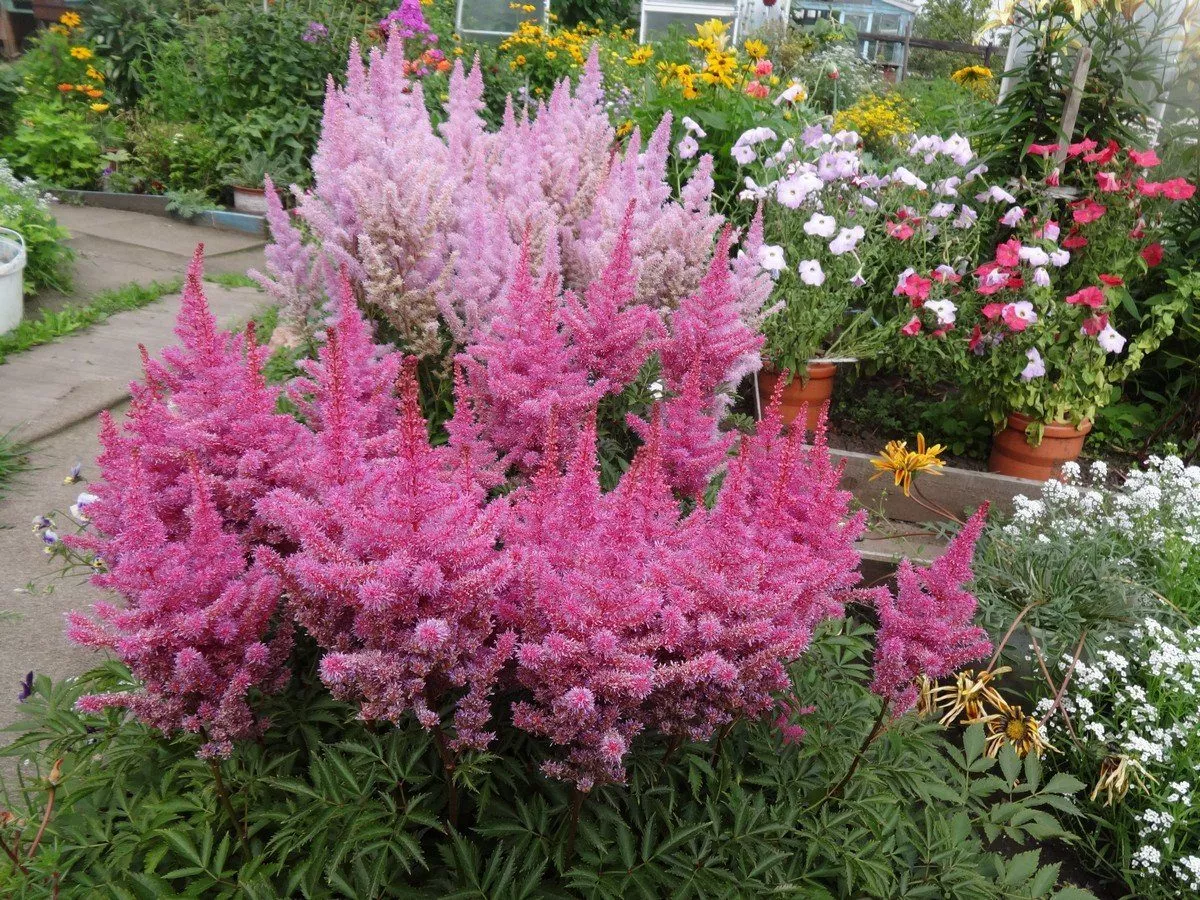
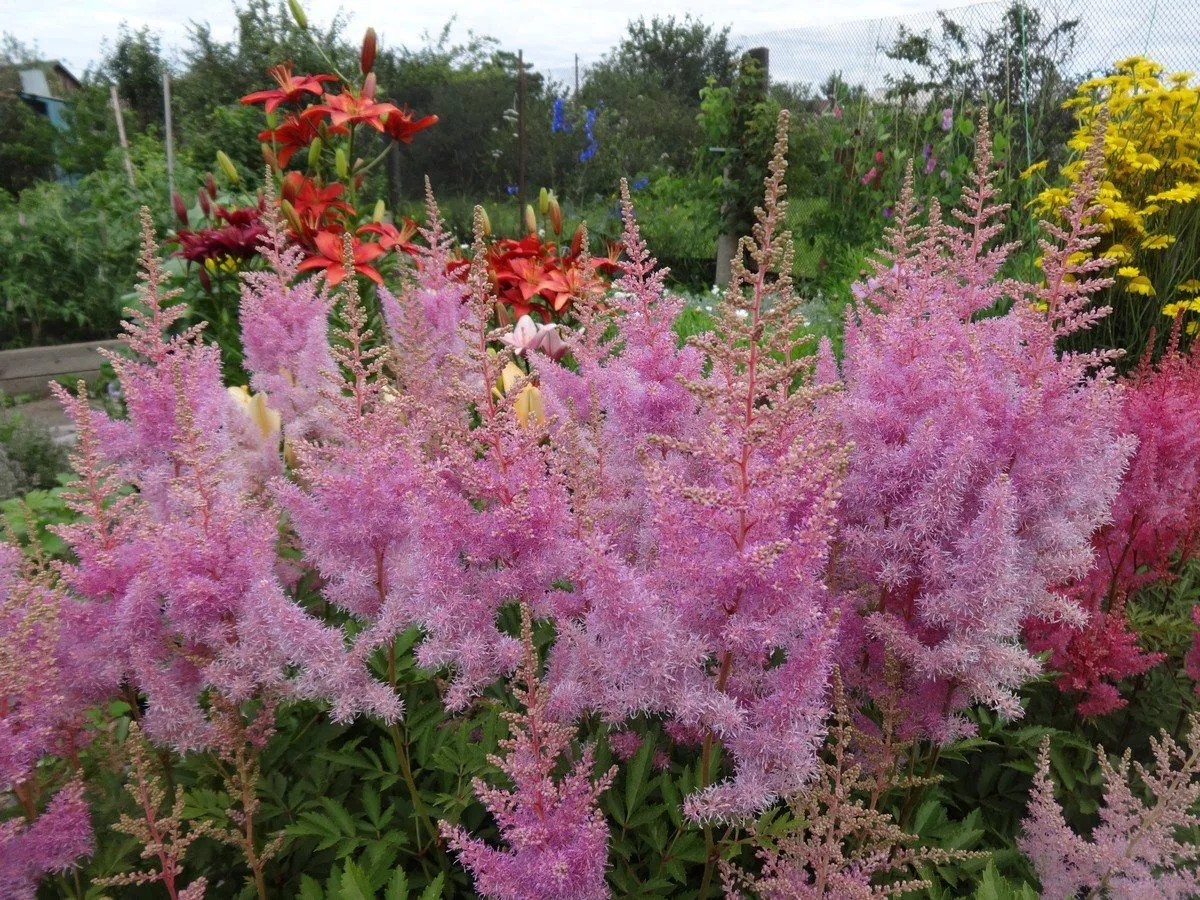
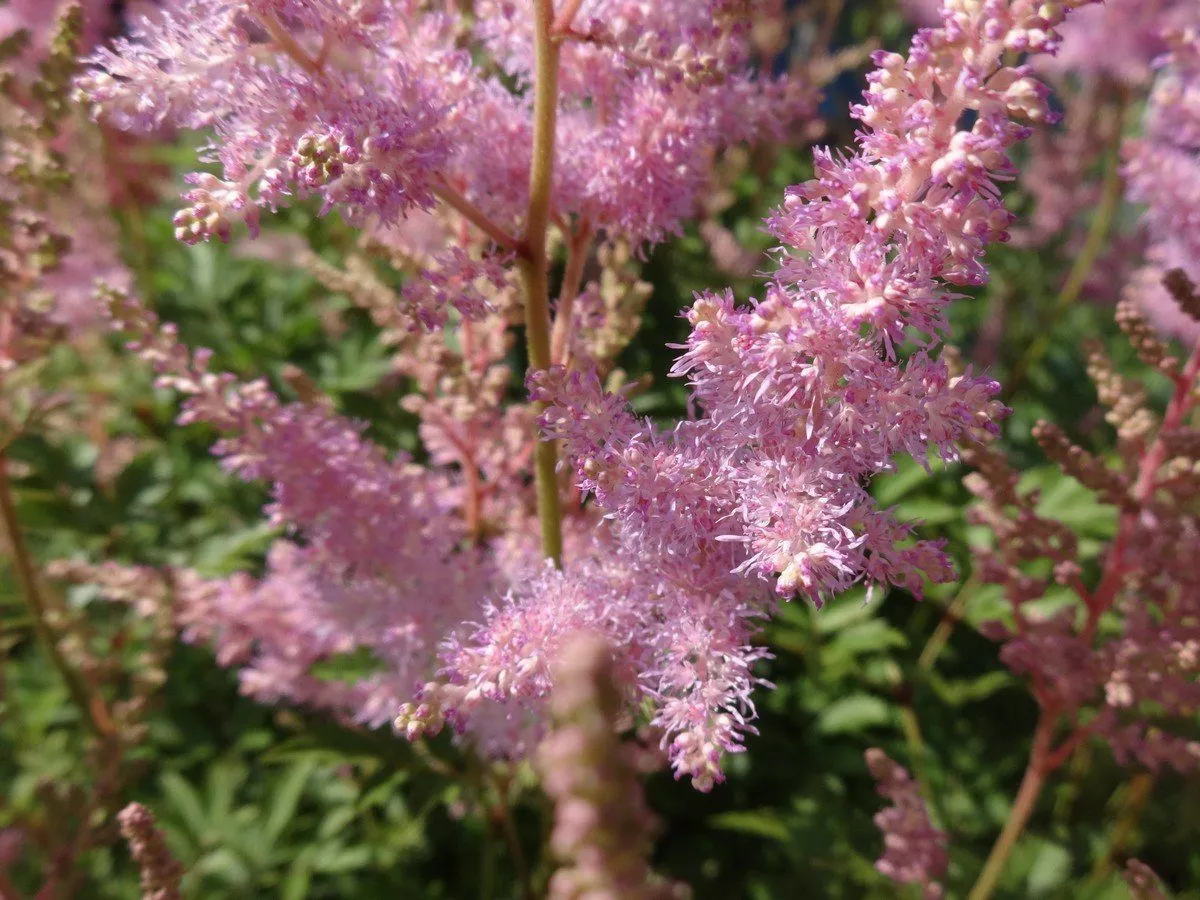
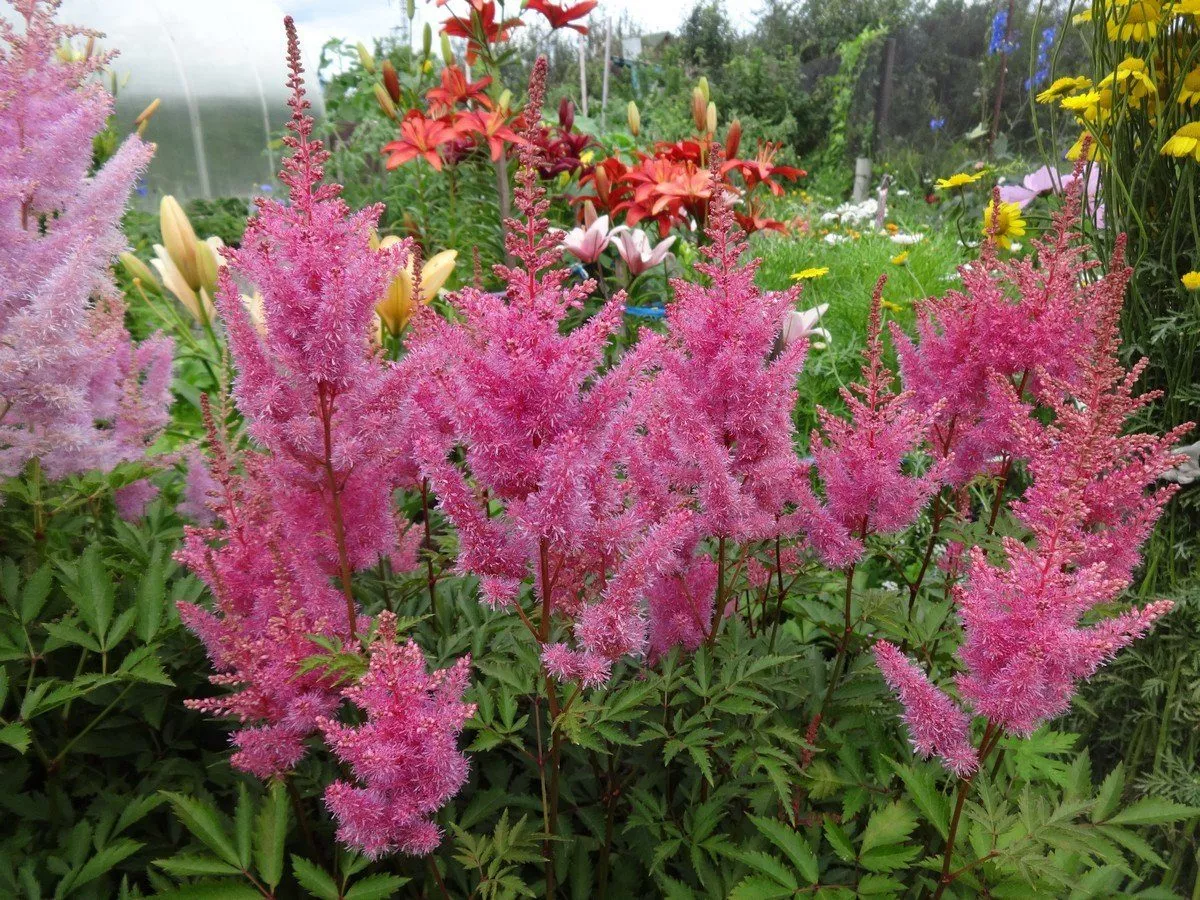
Another one with ash-white flowers was planted quite recently in 2018; the bush hasn't grown yet; in the summer of 2020, it produced several flower stalks.
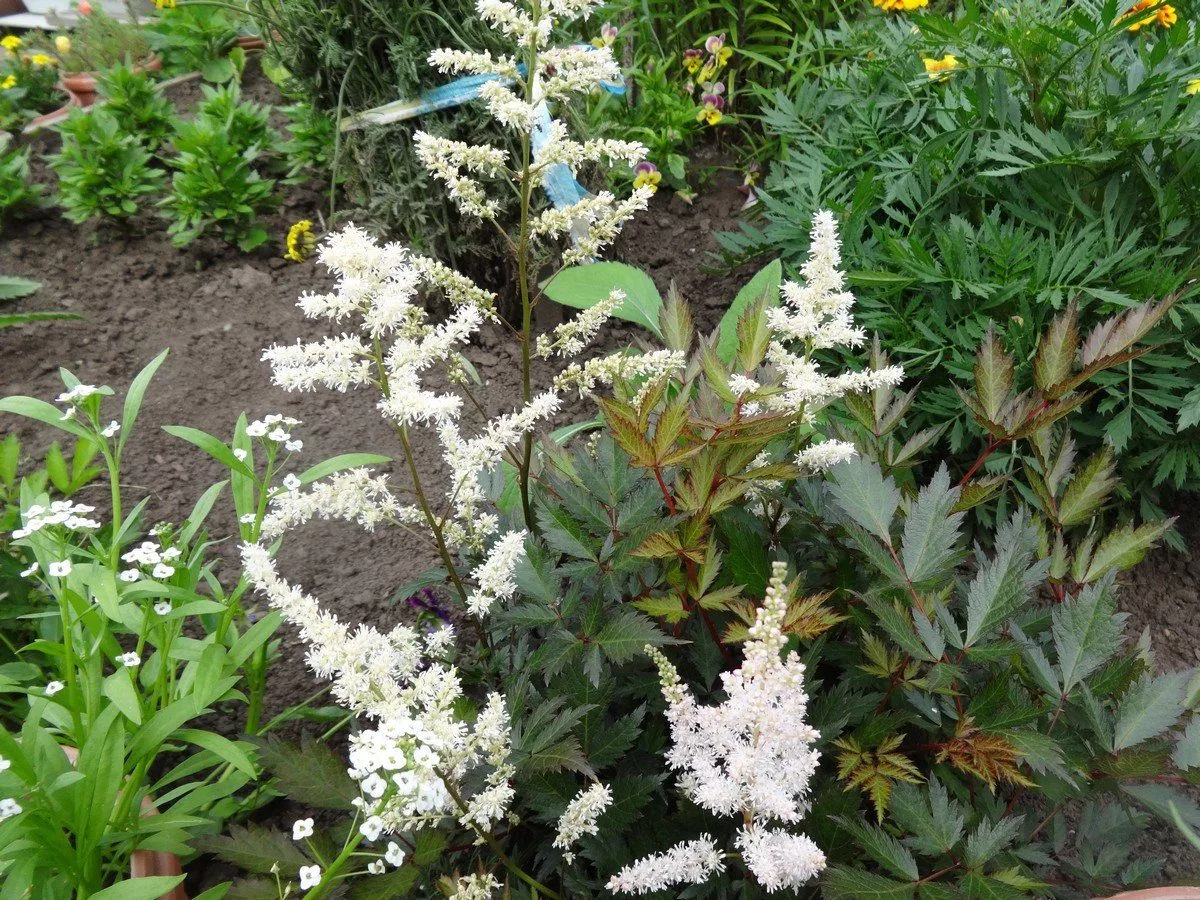
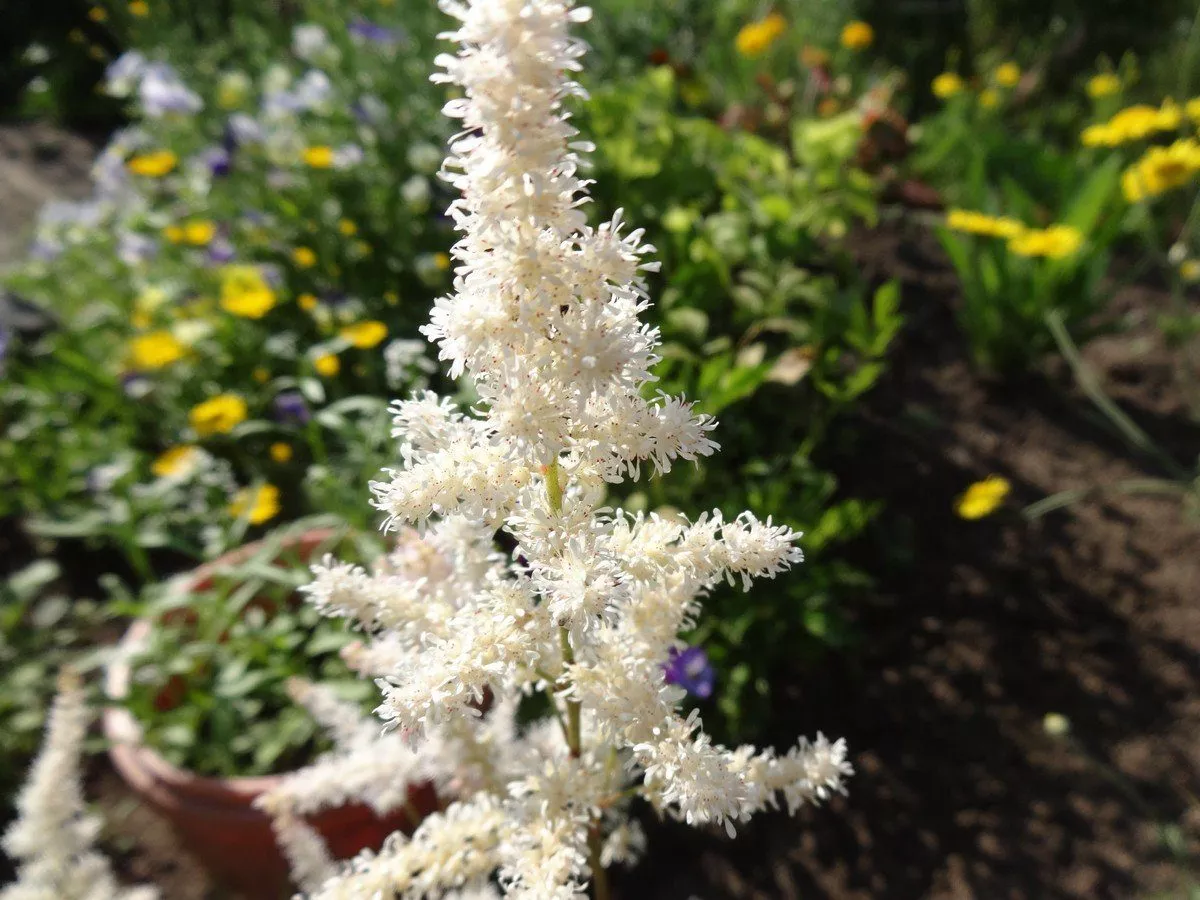
Also this spring I planted an astilbe with snow-white flowers, it is still small and has not bloomed, but I think that next year it will delight me with its blooms.
All four astilbes most likely belong to the same species—the Arends cultivar. The plants grow neatly, 50–70 cm tall, with beautiful, pinnate leaves with serrated edges.
Astilbe is a herbaceous rhizomatous plant. In the fall, the leaves dry up and die off. I don’t trim them because the snow sticks to them better.
The woody rhizome overwinters well in the soil, but in the fall I still add humus under the bushes to protect the plant from frost.
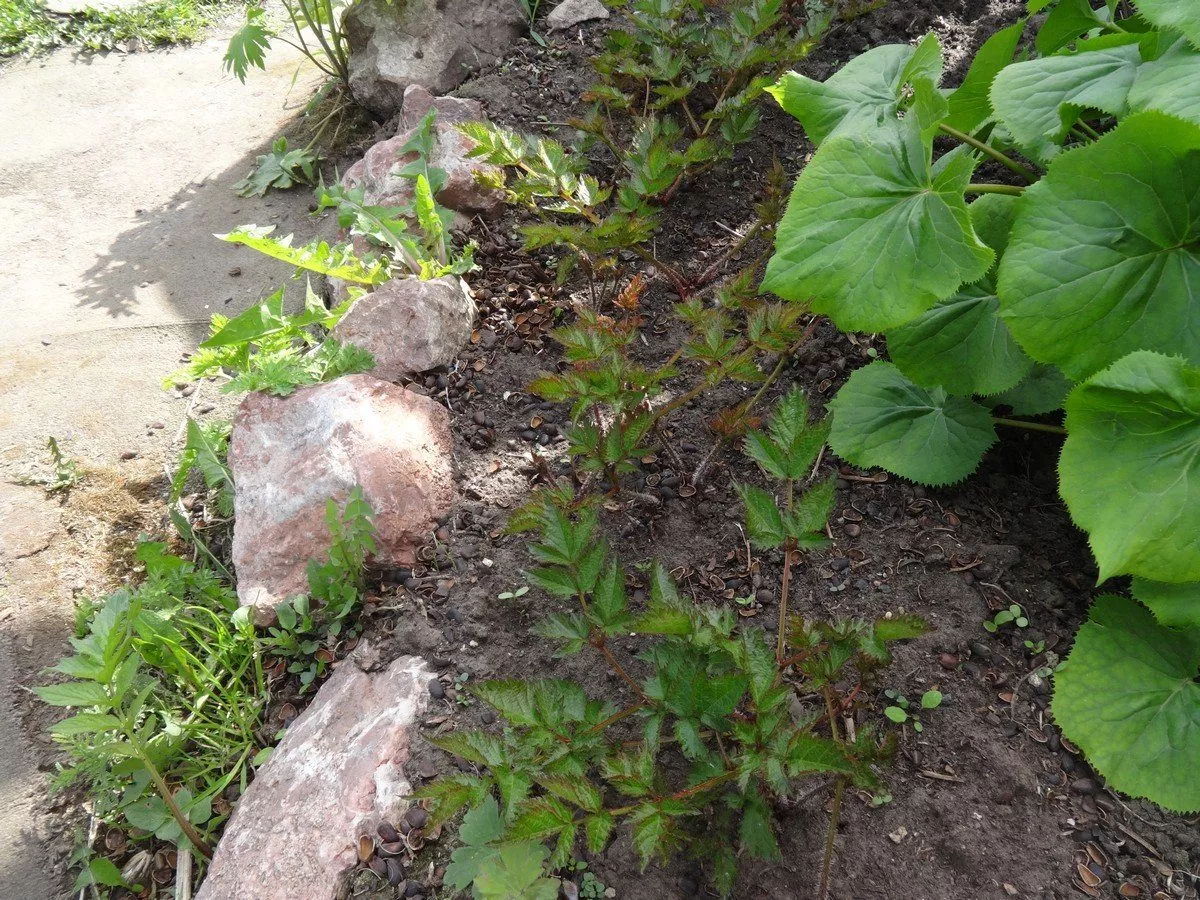
In spring, in May, new buds appear from the soil, and leaf stems grow from them.
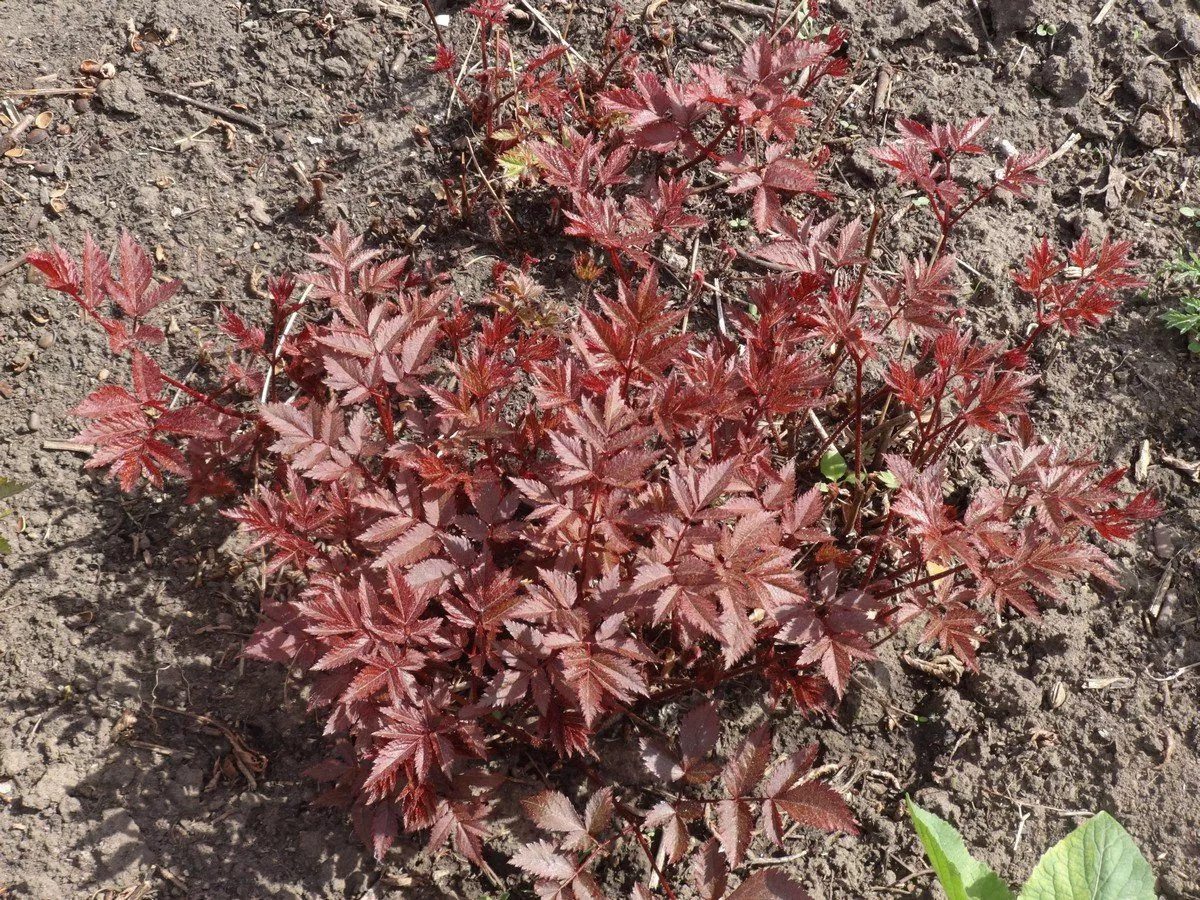
Two bushes have reddish-brown leaves; in summer the leaves become rich green.
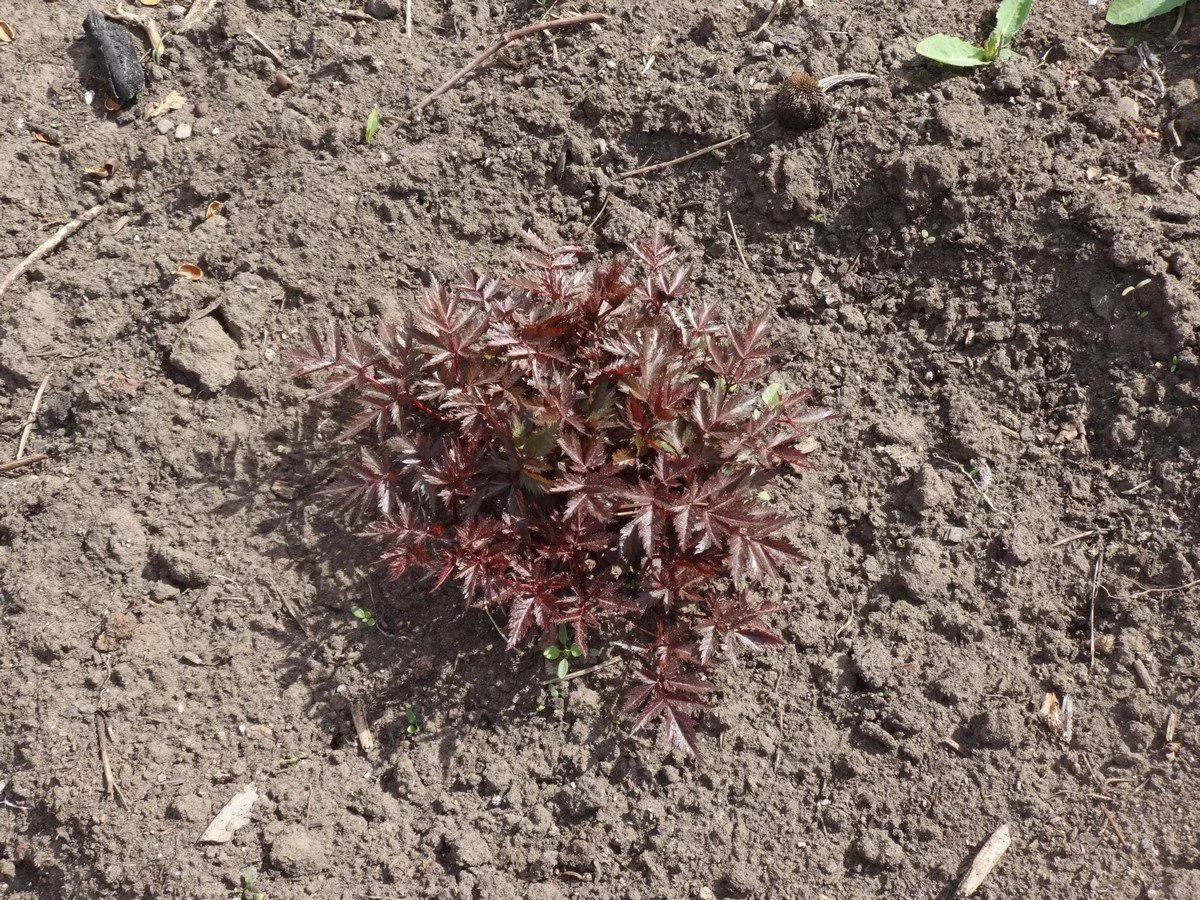
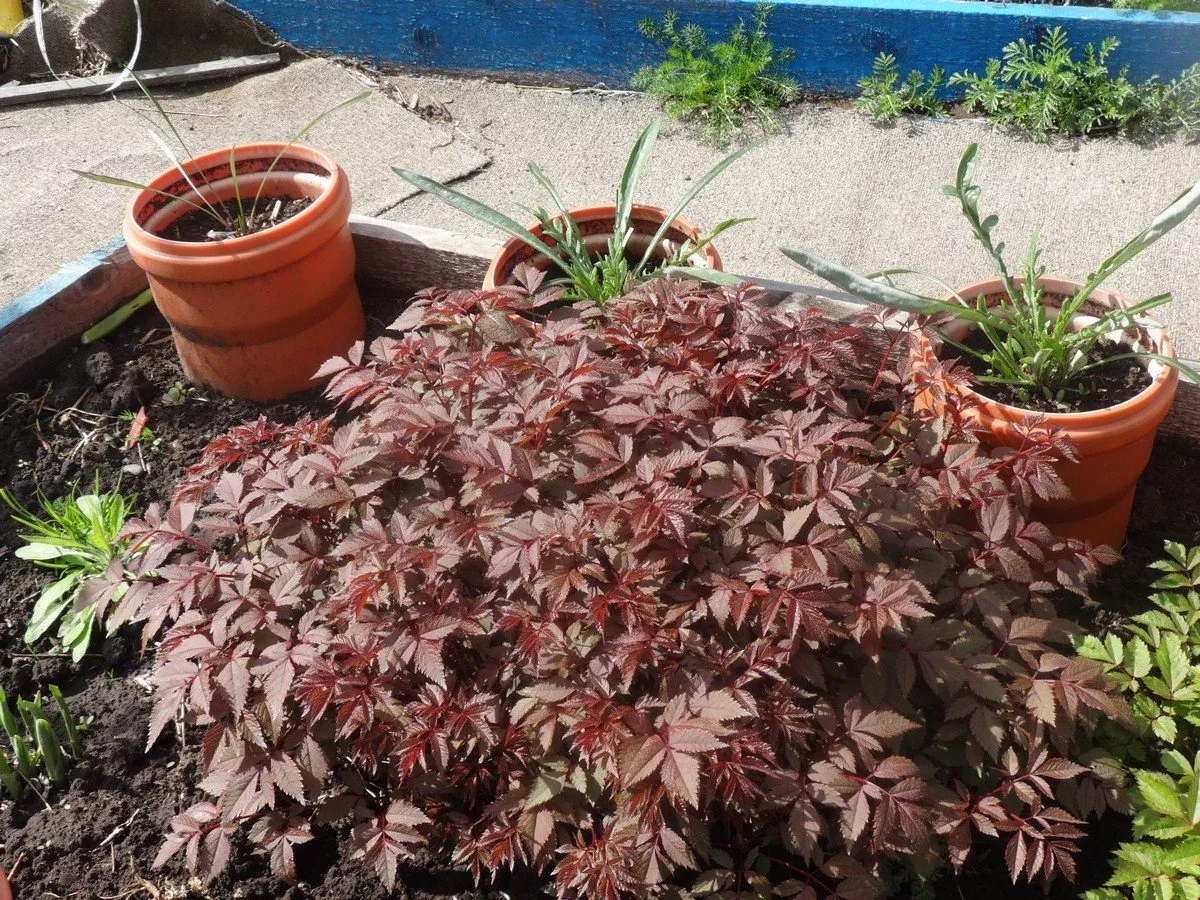
Others have green-brown at first, then the brown tint disappears.
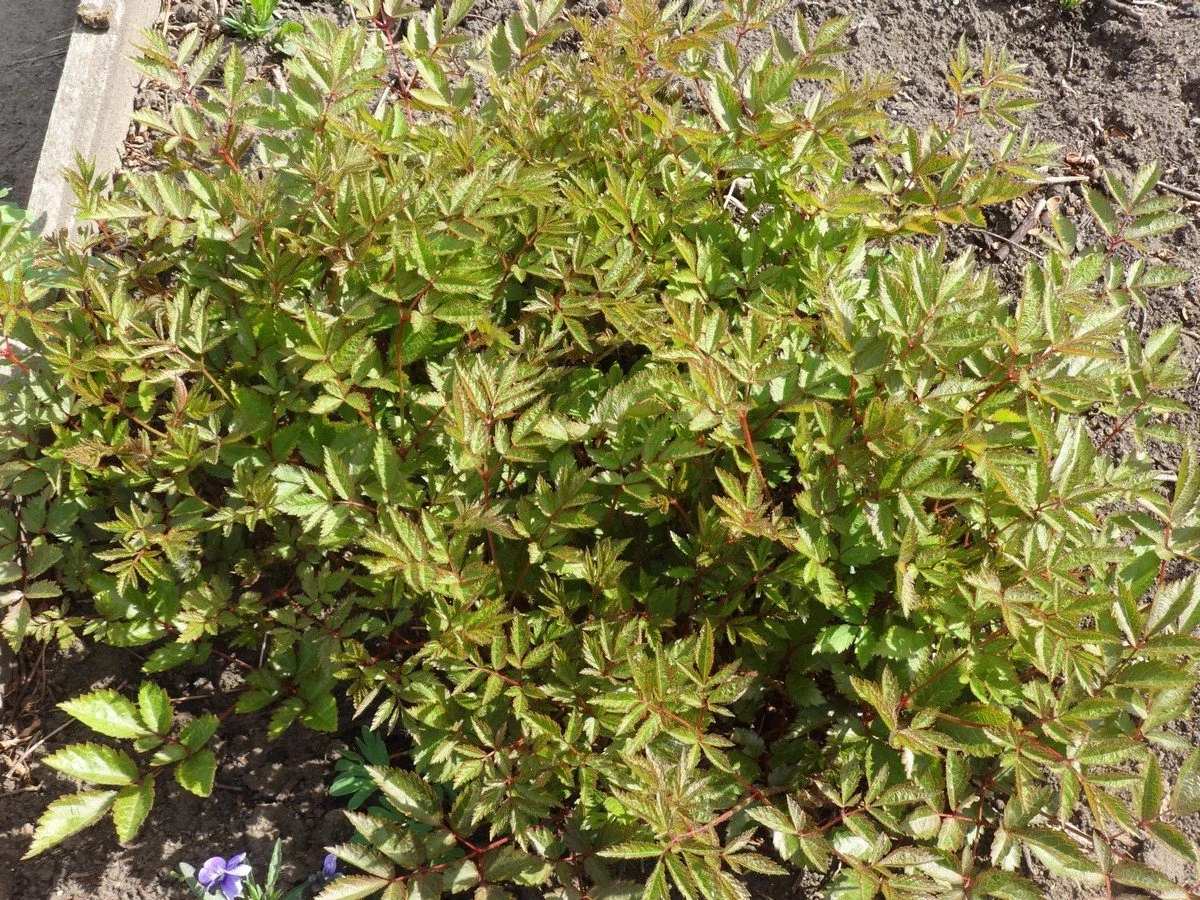
And the ash-white astilbe still has a reddish tint in its foliage.
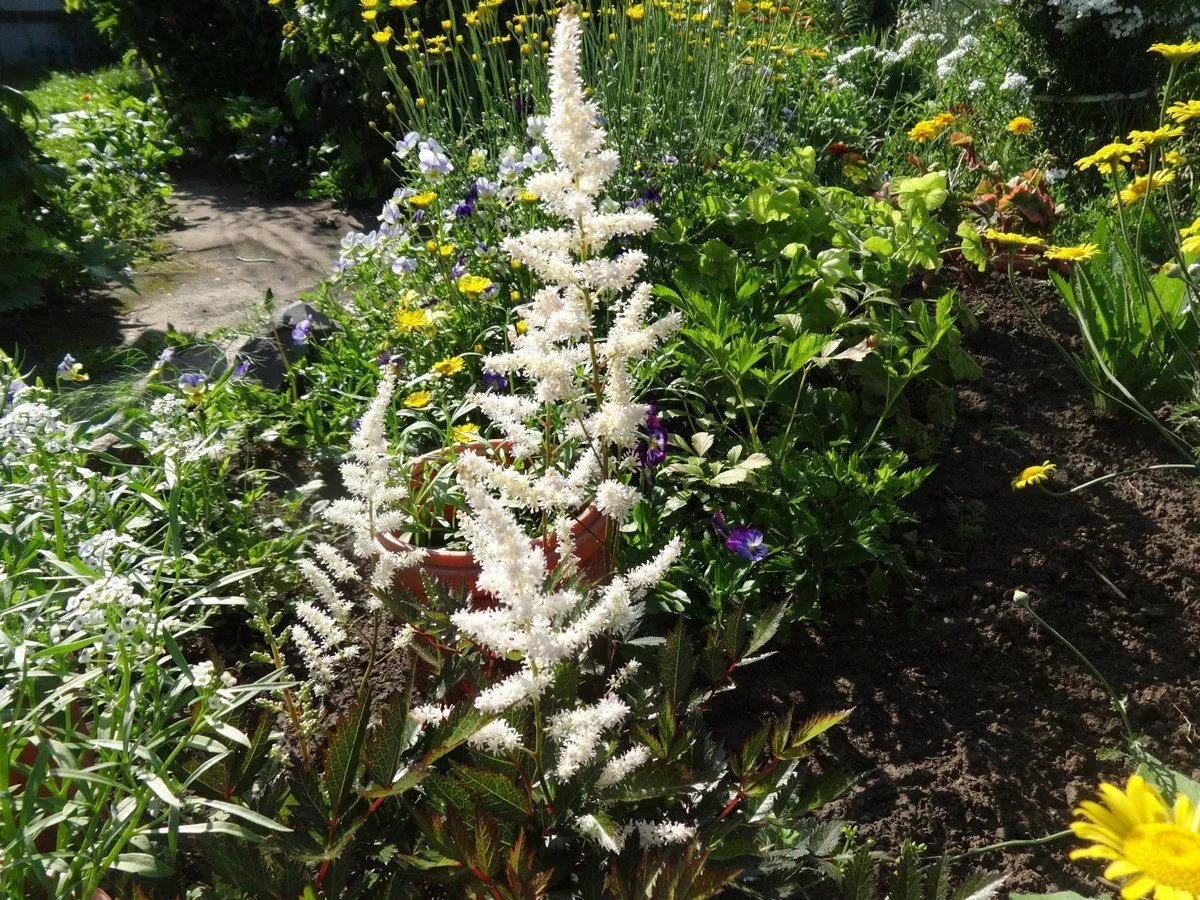
In July, tall paniculate inflorescences with delicate small flowers grow from the lush bush and shine like a bright bonfire all summer long.
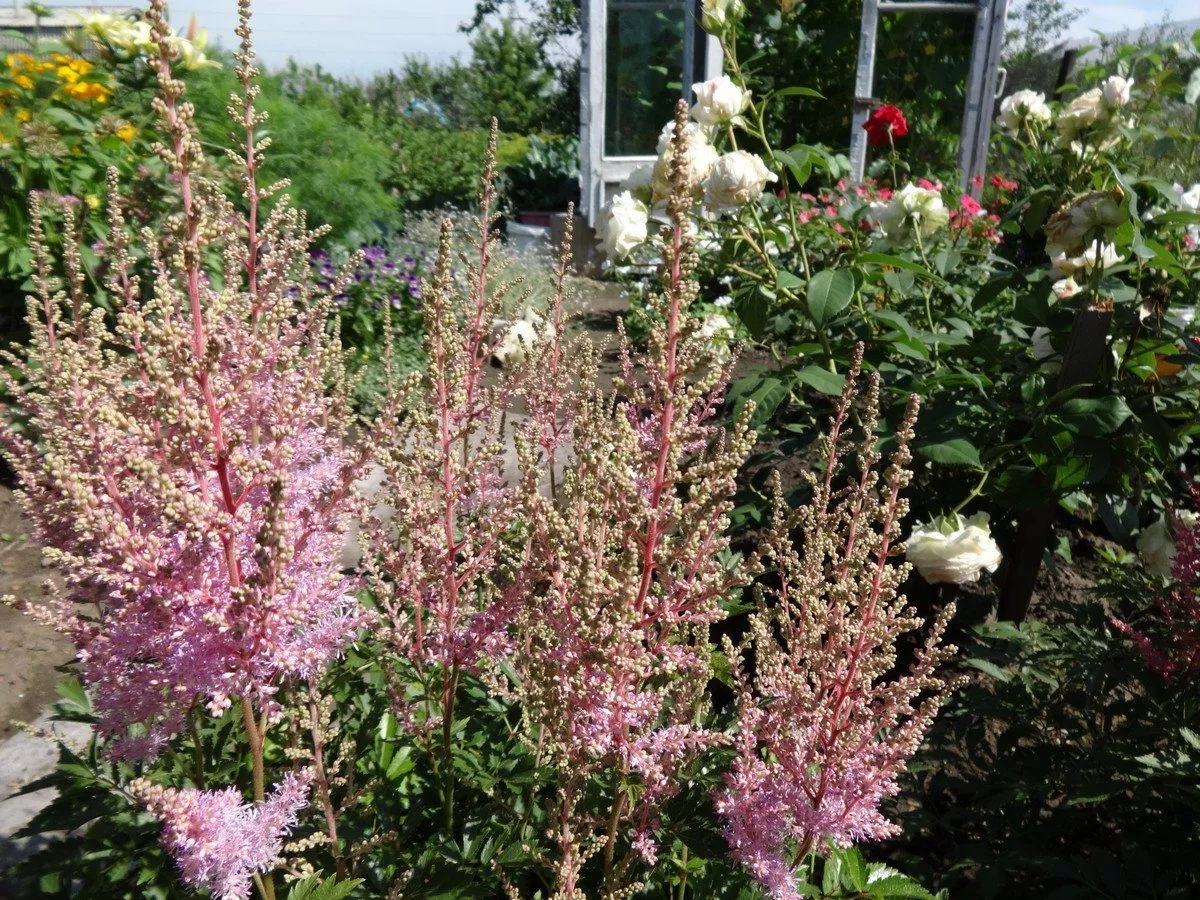
I also have a low-growing astilbe growing, it has slightly different leaves, wider, and the inflorescences are not high, but dense.
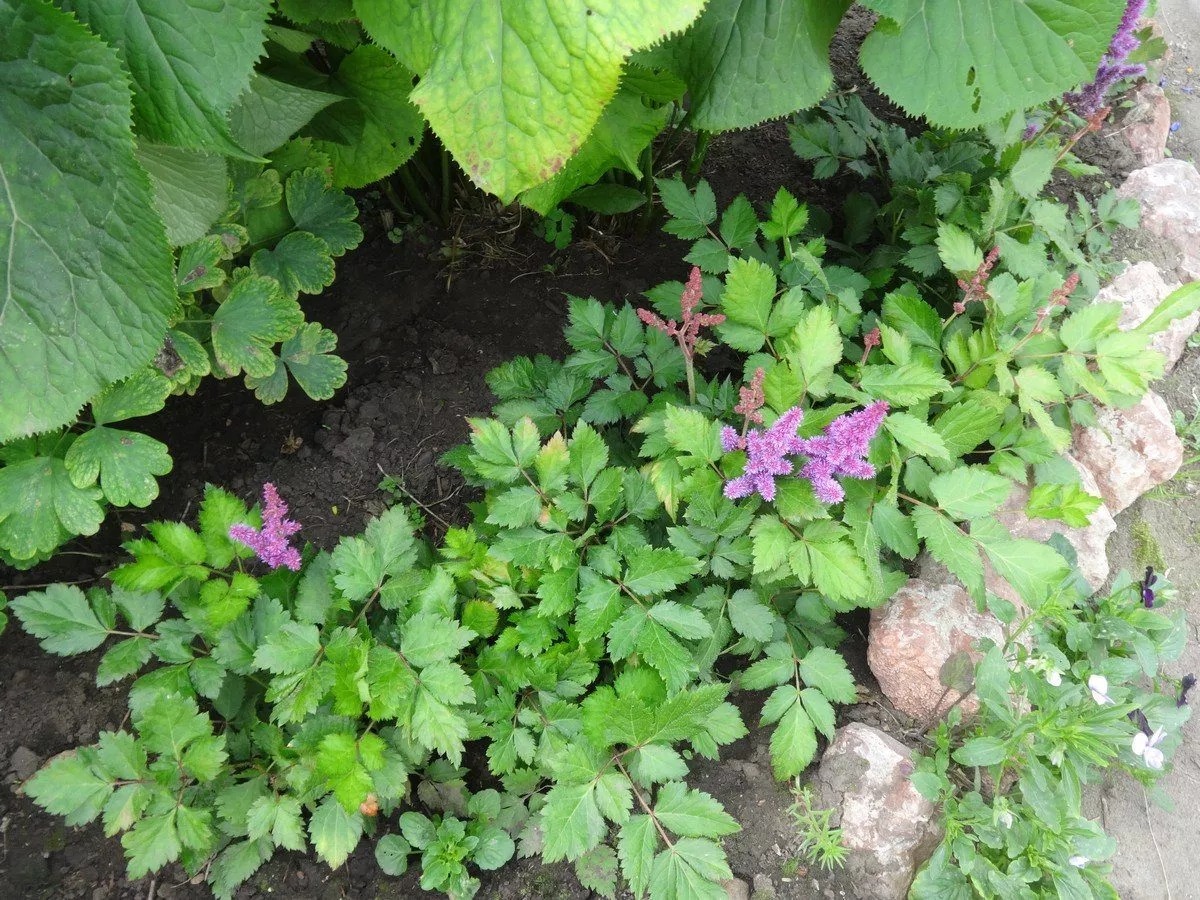
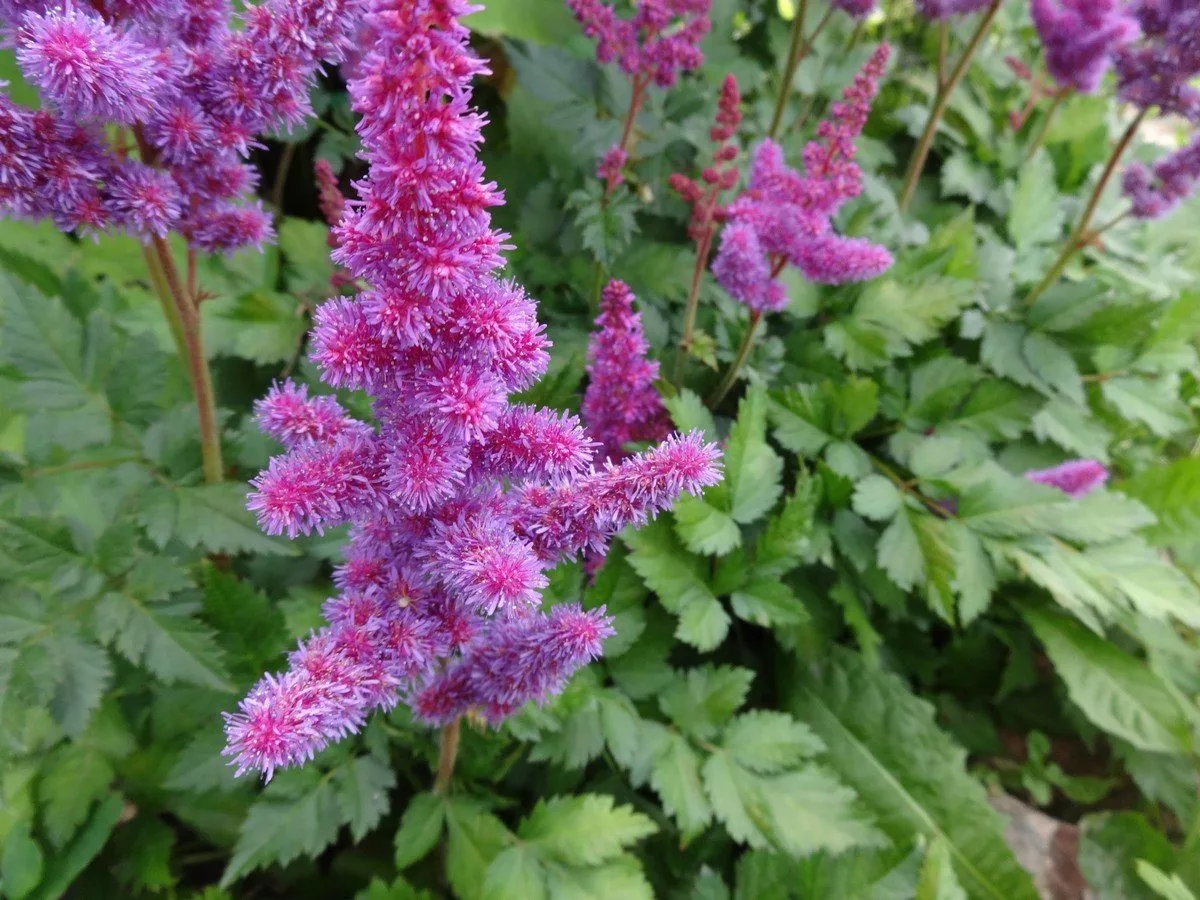
It is planted near a ligularia bush and feels great in the shade of this tall plant.
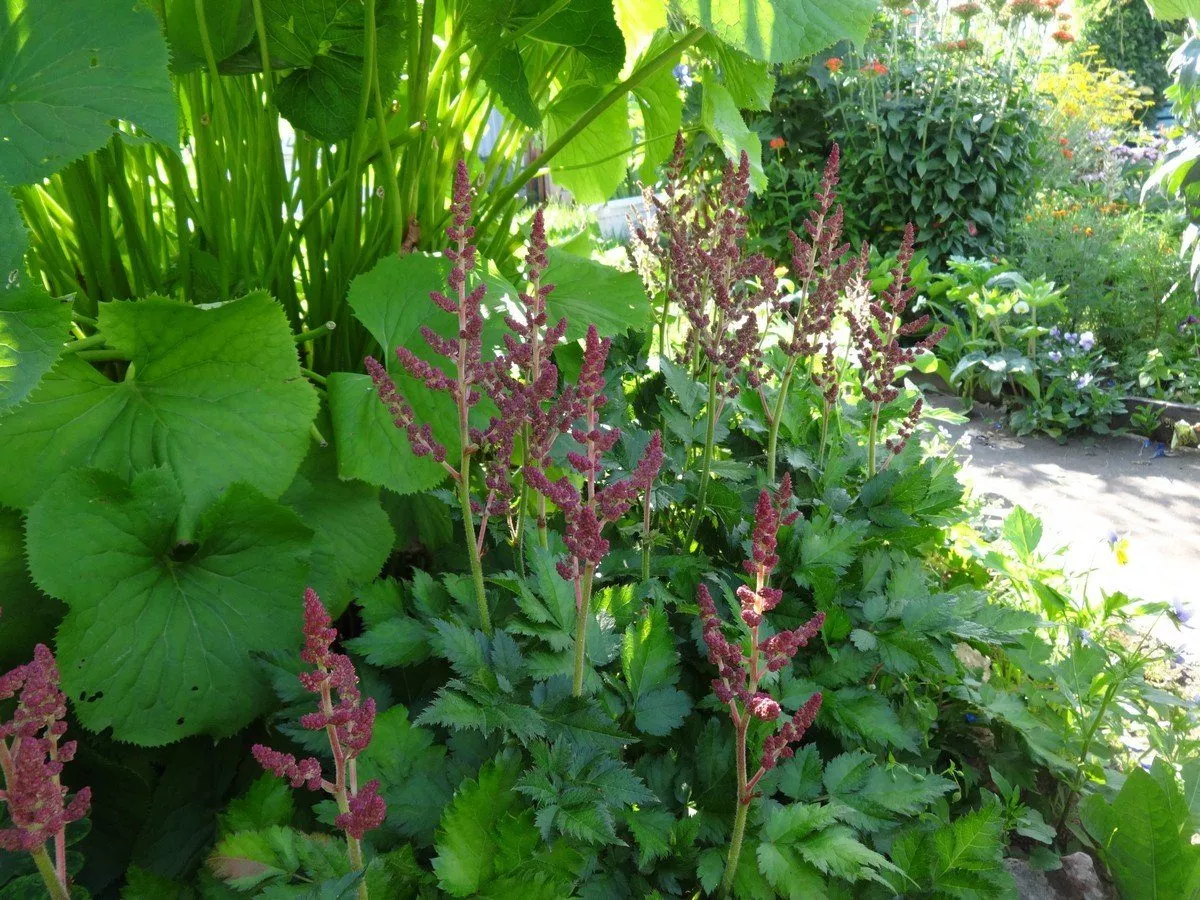
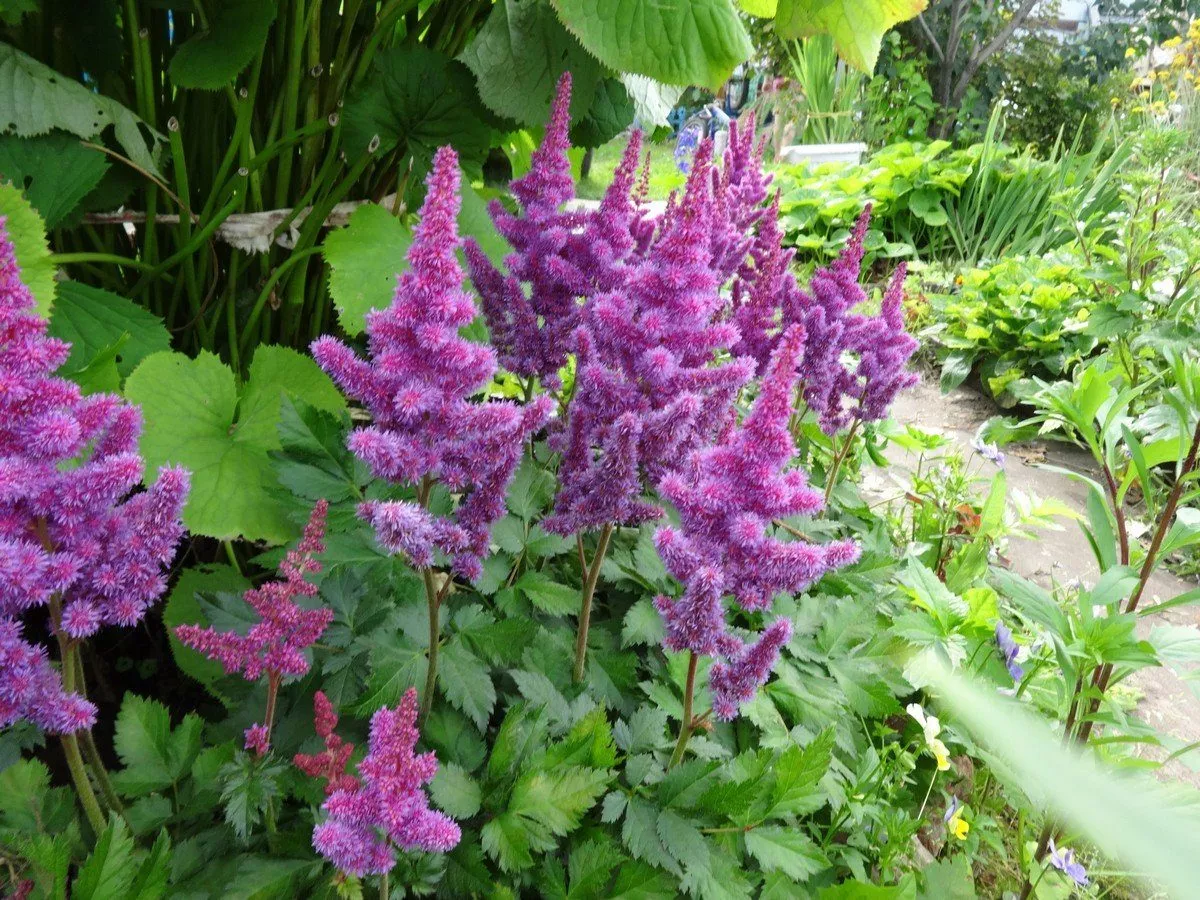
And these photos show astilbes growing in our Krasnoyarsk flora and fauna park, Royev Ruchey.
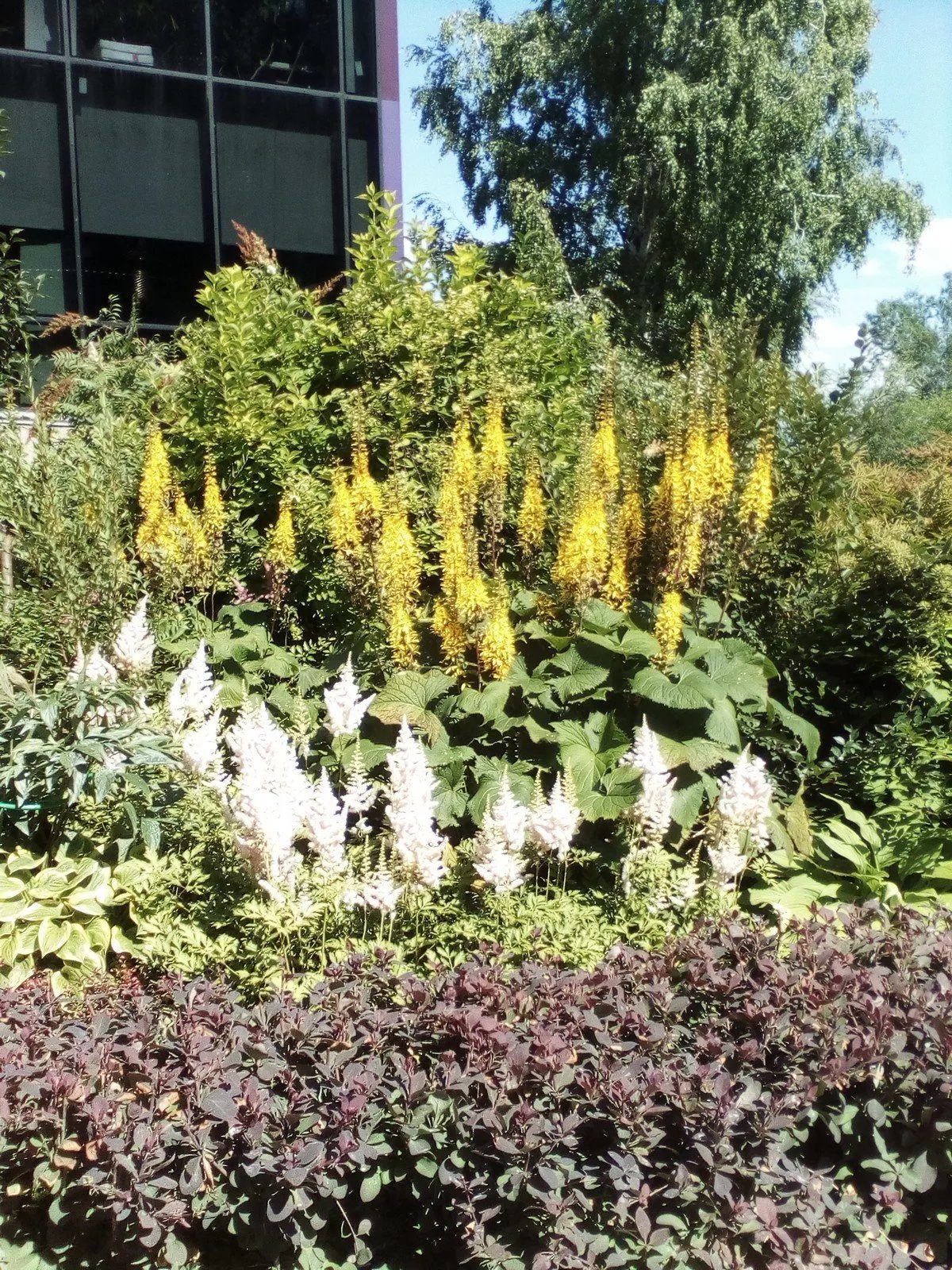
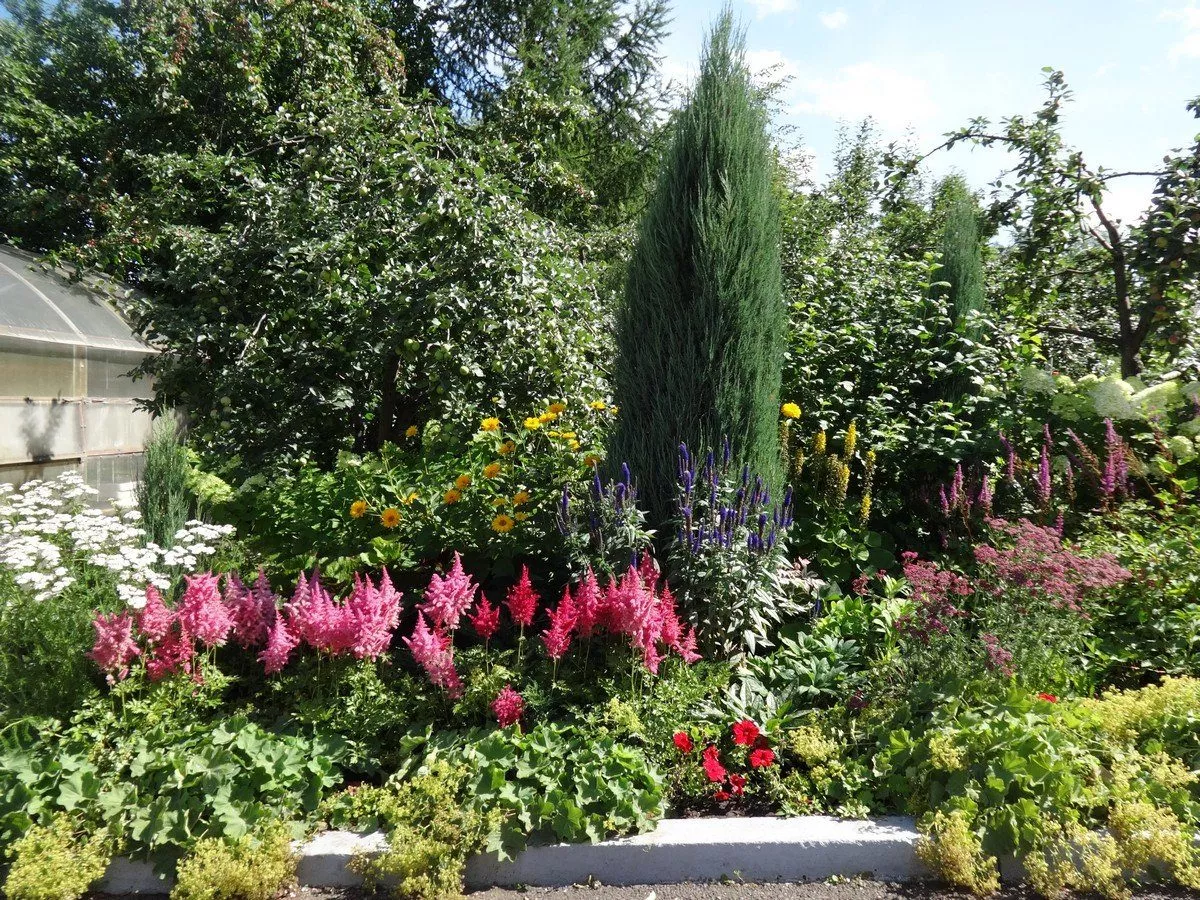
Growing astilbe is easy; it practically grows on its own, with no pests or diseases. I feed it a couple of times a season. In the spring, when the leaves start to grow, I rake away the old humus, loosen the soil, and add ash. I add loose, nutritious humus or compost; it not only provides the plant with essential micronutrients but also acts as mulch, retaining moisture in the soil.
Astilbes are moisture-loving plants and require regular watering, especially in hot weather. If the soil isn't moist enough, the leaves wilt and droop. It's best to water them regularly rather than letting them get to this point.
In autumn I also add humus to protect from severe frosts.
And my astilbes bloom brightly and for a long time, decorating our dacha.