
Africanized bees are dangerous insects that should be avoided as much as possible—their multiple stings can be fatal. They are ruthless and aggressive, reacting to loud noises and brightly colored clothing, and can attack when you least expect it. It's important not to provoke the bees, stay away from their hives, and remain calm in areas where killer bees may be present.
History and distribution of the breed
Just 60 years ago, African honeybees didn't exist. They were bred by scientists during scientific research. Initially, these were African honeybees that were brought to Brazil. The insects struggled with the high humidity and heat, so they decided to crossbreed them with local species. But something went wrong during the process: the scientists made a mistake by releasing the queen bees into the wild, where the insects interbred with native species under natural conditions. drones.
Thus, in 1957, African killer bees began breeding in Brazil, producing excellent offspring. The incubation period for these insects is one day shorter than that of other bee species.
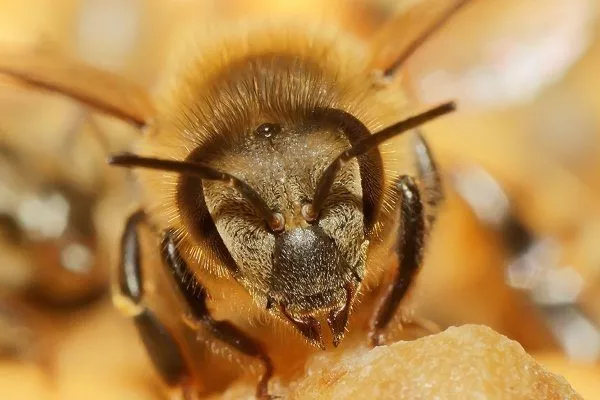
Africanized bees were once popular in Brazil, gradually displacing other bee breeds of South American origin. These insects were introduced to produce more honey – Africanized bees fly quickly, start their work early, and finish late. Compared to other European species, Africanized bees are more productive, producing twice as much honey.
Beekeepers did not take into account the fact that African bees are very aggressive, irritable and dangerous to humans, they secrete large quantities of toxic venom.
This is illustrated by an incident that occurred during a routine experiment in Pirachicaba. During swarming, the hive cells were equipped with special shutters that allowed the insects to pass through, but not the drones and queens. By an unfortunate accident, an inexperienced beekeeper removed the protective shutter, causing up to 27 colonies of African bees to escape.
They are impossible to control; they swarm constantly, can fly away from their nests at any moment, and are constantly aggressive toward humans. A distinctive feature is that these insects can fly as far as 100 kilometers.
| Bee breed | Level of aggressiveness | Threat response distance (m) | Time to calm down after a threat (hours) |
|---|---|---|---|
| African bee | Very tall | 5-10 | 8 |
| European honey bee | Short | 2-3 | 1 |
Description and characteristics of the African honeybee
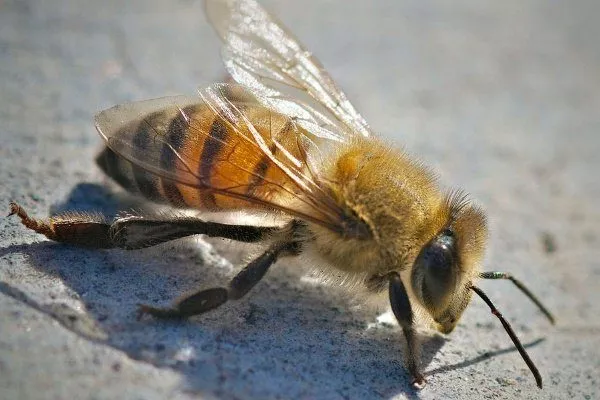
The African honeybee is distinguished by its large size. Otherwise, it resembles the more familiar domesticated insect:
- the body is round, covered with small villi;
- slightly dull color with yellow and black stripes;
- two pairs of wings - the front one is always larger than the back one;
- proboscis for collecting nectar;
- segmented antennae.
The distinctive characteristic of the African honeybee is not only its large body, but also:
- high-speed travel;
- increased aggressiveness;
- high honey production rates compared to domestic bees;
- good physical strength and endurance;
- high viability and rapid adaptation to various climatic conditions.
Aggression in Africanized honeybees can be triggered by intrusion into their hive. The insect is extremely sensitive and irritable—the slightest stimulus can trigger a response. Even after the threat is eliminated or the stimulus ceases, the swarm will not abandon its defensive position for eight hours.
To best protect yourself from attacks by Africanized bees, it is important to know the irritants to which the insects react:
- extraneous noises;
- unpleasant odors;
- sharp sounds;
- bright colors;
- sudden movements.
If an attack occurs, it is important to know that dangerous bees are not afraid of water or smoke – they will not be able to hide in a body of water; they will wait for at least an hour to attack again.
Advantages and disadvantages of the breed
Despite the fact that the African honeybee is a serious threat to humans and can cause death, this insect also has positive qualities:
- are considered the best pollinators;
- physically resilient, rarely get tired;
- are capable of collecting a lot of honey during the season.

The danger of the bee and its victims
Today, fatalities from killer bee stings are known – approximately 1,500 people have died. In the US alone, more people have suffered from killer bee stings than from snakebites. Five hundred stings from Africanized bees are comparable to one bite from a rattlesnake. Scientists estimate that 500-800 stings from Africanized bees are fatal to humans.
After 7-8 bites from this dangerous insect, a person experiences swelling and short-lived but very painful sensations. For those prone to allergies, including to bee products, bee stings are extremely dangerous, as they can trigger anaphylactic shock and subsequent death.
Previously, bees had attacked rural settlements, people, and pets. People were reportedly covered in bees, screaming in agony.
There's a well-known story that ended tragically: in 1975, a local school teacher was attacked by a swarm of African bees. Help was provided promptly, but she suffered multiple stings, after which she fell into a coma and died without awakening.
Football matches have had to be stopped more than once due to the aggressive behavior and attacks of bees living near the stadiums.
The danger of a bee is as follows:
- It will attack if approached more than 5 meters from its nest. Its aggressiveness is 30 times higher than that of common honey bee species.
- Animals and humans aren't the only ones at risk from attacks. Africanized bees are prone to attacking apiaries, destroying common bees or colonizing their habitats.
- When a swarm attacks, the outcome for a person is always disastrous, since the insects pursue their prey for more than 500 meters.
This species' aggressive state persists for a very long time. Common bees calm down within an hour, while Africanized bees calm down within 8 hours.
Lifestyle
African honeybees also build hives, collect honey, and go about their normal lives. However, as soon as a human approaches within 5-10 meters of a hive, the swarm becomes enraged. There have been cases of the insects pursuing their prey for over 1 kilometer.
Africanized honeybees are extremely sensitive to extraneous sounds—they can be irritated by car horns, engine noises, and even loud laughter. They can hear "irritating" noises from up to 15 meters away.
Africanized honeybees are small in size, but this should not be misleading.
The only thing bees dislike and repel is the scent of vinegar. Upon smelling it, they simply fly away. This can help prevent fatal stings.
Habitats
Killer bees inhabit remote forest belts and shrubbery, high cliffs and mountain crevices, and even burrows and tree hollows. They can be found in abandoned buildings, nesting in attics and rooftops. They prefer locations near bodies of water.
African bees have ever been spotted on the following continents:
- Australia;
- Eurasia;
- South America;
- Africa;
- North America.
Breeding prospects
Considering all the negative aspects of breeding, the Africanized bee should be considered unpromising and even dangerous, as its spread is causing the displacement of other breeds. Many scientists are developing plans for further crossbreeding and developing new breeds. The priority is to develop non-aggressive, industrious, and highly productive bees.
The first positive results were recently obtained through crossbreeding with Alpine bees, which have a calm disposition and are considered the best choice for such experiments. Perhaps the threat will soon be eliminated using the safest possible methods.
Hybrid-bred African honeybees are a completely unique species of honey bee. Not only are they aggressive, but they also spread rapidly, increasing the risk to human life, as they attack without apparent provocation and not singly, but in swarms.
How to avoid an Africanized bee attack?
If a person is attacked by a swarm of Africanized bees, the outcome will be fatal. However, there are control methods that can help prevent further insect aggression:
- Use vinegar. Africanized bees do not like the smell of vinegar, so if you need to be in areas where the bees live, you should wipe yourself down - this will repel the bees.
- Don't make noise. Bees become very irritated when they hear loud laughter, the hum of a car, etc. The insects become aggressive and attack anyone making sounds that are unpleasant to them.
- Don't wave your arms and move slowly. Such behavioral factors are unacceptable to bees; in fact, they are several times more potent. When near potential habitats, it is advisable to move smoothly and carefully.
- ✓ Using vinegar to repel insects
- ✓ Avoid loud sounds
- ✓ Slow and smooth movements
At the moment, only one safe method of maximum protection is known: learning to live with bees.
There have been cases of killer bee swarms killing livestock in a short period of time. Furthermore, their presence near existing apiaries significantly reduces the bees' productivity.
Africanized bees are considered very dangerous insects; they are extremely aggressive, and their stings have been known to be fatal. To avoid a killer bee attack, it's important not to provoke them and avoid areas where they may be found.