
Replacing queens in bee colonies is an important aspect of beekeeping. It is performed with a certain frequency and affects many factors. The process must be properly organized. Both fertile and infertile queens are used for replacement. There are many methods for introducing queens, each with its own unique characteristics.
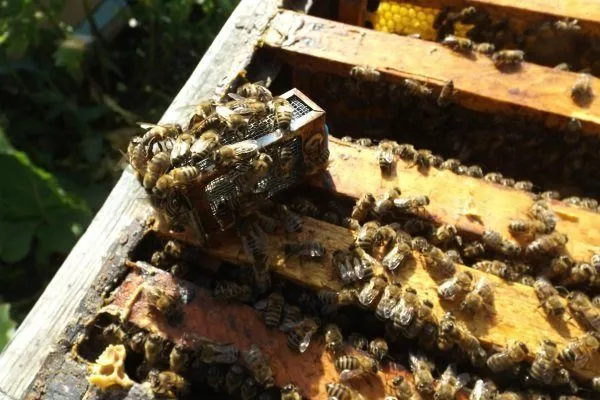
Frequency of queen replacement in bee colonies
The frequency of queen replacement is determined by the biological characteristics of the bees. Climate, the quality of the honey flow, and the methods used in the apiary are all important factors.
- ✓ Consider the phase of the moon: uterine replacement is more successful during the waxing moon.
- ✓ The ambient temperature must be at least 15°C to ensure bee activity.
A queen can live up to 5-6 years. High-quality females are kept for this long when the goal is to obtain the maximum number of queens from them. In other cases, queens are kept for two years, as in the third year they lay fewer eggs, and an increasing proportion of these are drone brood.
The wear and tear of a queen depends on the intensity of her egg-laying. During a rich forage or unfavorable weather conditions, foragers die in large numbers, so it is necessary to restore the colony's population.
The queen's age influences how well she and her colony survive the winter. Honey production is also related to her age—in the third year, productivity decreases by approximately 25%.
General rules for replacing queens
One of the most important rules for uterine replacement is the timing. This can be determined based on various factors:
- the optimal period for raising a full-fledged queen;
- time for the best reception of the queen by bees;
- the period when it is easier to find a replacement queen;
- Features of honey collection;
- methods used in the apiary.
The optimal time to raise a queen is when the bees are swarming or the honey flow is moderate. During these periods, the new queen will be well received.
There are several periods that are unfavorable for uterine implantation:
- end of intensive family growth;
- peak strength of the bee colony;
- weak bribe;
- there is no honey collection in natural conditions.
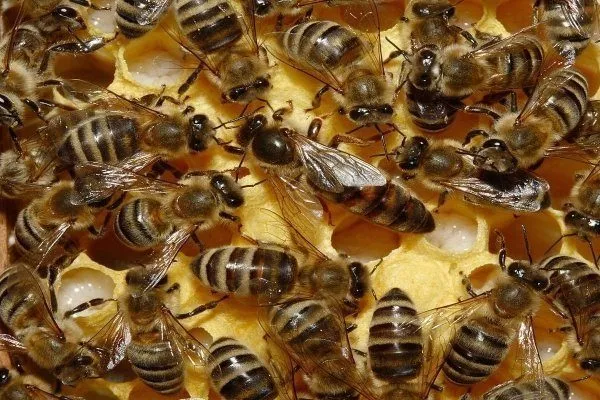
When replacing the queen bee, it is important to consider the following points:
- Bees respond better to a queen of the same breed. It's recommended to introduce queens of other breeds when weather conditions are favorable and the honey flow is stable.
- After replacing the queen, peak egg laying will begin in 1.5 weeks if a sufficient number of cells are prepared.
- With any replacement method, the colony must be fed beforehand (sugar syrup, syta). This is done to simulate a good honey flow. Under these conditions, the new queen is better accepted by the other bees.
When using a replacement for a barren individual, it is important to consider the following points:
- the acceptance of a barren queen bee will not occur if there is open brood;
- It is better to choose replacement queens immediately after they hatch - if 5-6 days or more pass, the period will become unfavorable;
- The more young insects there are in a bee colony, the faster and better the infertile individual will be accepted.
You can also read more about the queen bee in the article: Features of the queen bee, her role in the hive, types.
Methods for replacing fertile queens in hives
There are several methods for replacing a queen bee. Depending on her characteristics, placement can be direct or indirect.
| Name | Life expectancy | Honey productivity | Egg laying intensity |
|---|---|---|---|
| Fertile uterus | 2-5 years | High | High |
| Infertile uterus | Up to 6 years | Average | Low |
Placing a queen on a honeycomb
This method is straightforward; a fertile queen bee is used as a replacement. The process follows the following algorithm:
- Bring the comb with the replacement queen to the hive.
- The nest must be dismantled to remove the old queen.
- Immediately place the frame with the replacement individual in the nest and close the hive.
- The family must remain in peace for 3 days.
- 2 days before replacement, reduce the amount of open brood in the hive.
- Provide the family with sufficient food to reduce aggression.
- Check the hive for the presence of queen cells and remove them.
When using this method, the more similar the physiological characteristics of the old queen and her replacement, the more successful the planting will be.
The beekeeper demonstrates how to replace a queen bee with a comb containing queen cells in the video below:
Planting bees by shaking them onto the gangway
This method is straightforward; the queen bee must be fertile. Follow the following algorithm:
- Remove the uterus 2-3 hours before replacement.
- In the evening, when the flight stops, take out 2-3 frames with bees and shake them onto the gangway next to the entrance.
- Place the queen in the resulting cluster of bees.
- The queen will enter the hive along with other insects and will fully join the family.
- To increase the likelihood of accepting the queen, shaken bees are lightly treated with thick cold smoke, the same must be done with the nest.
Placing a queen in a cage
This method is indirect. A fertile queen bee is selected. The replacement is then carried out according to the following algorithm:
- 2-3 hours before replacement, remove the old queen.
- Examine the brood in advance and remove any queen cells that have been infected with the virus so that the bees accept the new queen well. It is recommended to perform all these procedures in the evening.
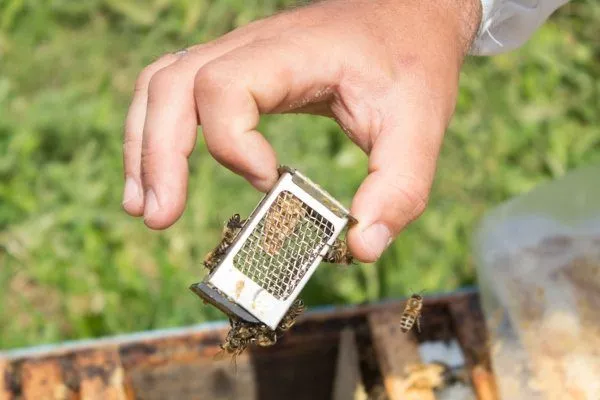
- Place the new queen in a cage and provide her with Candy.
- In the evening, insert the cage containing the replacement queen into one of the hive's alleys. The cage should be in the center of the nest, on either side of the exposed brood comb. This provides the optimal temperature for the queen, and the young bees are more willing to welcome the replacement.
It is recommended to place not just one queen bee in the cage, but also 5 worker bees - they will provide maintenance for it.
- Release the queen after two days in the evening if the bees are friendly toward her (they are calm and attempt to feed the queen with their proboscis). To do this, open the bottom flap of the cage. Seal it with wax foundation and make a small hole with an awl to make it easier for the bees to chew through the foundation to release the queen.
It is advisable not to use smoke during inspection and not to keep the hive open for a long time, and you should try to remove the canvas from a smaller number of frames!
- After releasing the queen, do not inspect the hive for 3 days!
When releasing the queen, there's a risk of aggression from the bees, who will chase her. In that case, confine her to the cage for another two days, then release her through the entrance.
If the period is unfavorable for replacement, the colony should be left queenless for 3-4 days. During this period, they should be fed sugar syrup. The queen should be introduced and released according to the standard procedure, but first, the colony should be cleared of any queen cells that have been affected by the queen collapse.
If the period is favorable, place the queen to be replaced in a cage and leave it in the colony for another 24 hours. After 24 hours, remove her and place a replacement in the cage. She can be released onto the comb with the bees after another 24 hours.
If the bees' aggressive behavior persists, a nest inspection is necessary. The problem may be caused by collapsed queen cells or a young, infertile queen, bred by the colony for a "quiet" succession. In this case, proceed as follows:
- Get rid of queen cells.
- If an infertile uterus is detected, its size and development must be assessed. If everything is normal, it can be left and the replacement removed.
- If the queen in the nest is bad, she is destroyed, and the cage with the queen for replacement is left for another day.
- An examination is required in the evening of the second day.
- Place the new queen bee in a cage, leave her in the nest and release her in the evening of the following day after checking the bees' attitude towards her.
- After removing the cage, the bee colony needs three days of rest.
An experienced beekeeper shares an effective method for replacing a queen in the video below:
Replantation of a uterus enclosed under a large cap
The method is indirect. A fertile queen bee is selected. The following steps are followed:
- Remove the replaceable individual.
- Wait 3 hours. Add a replacement, covering it with a cap on the central comb along with several dozen young ones. worker bees from this family. The cap is pressed lightly into the comb so that the bees can move freely.
The cap should cover both empty cells and those with honey.
- On the 2nd-3rd day, egg-laying will begin – you should get rid of the fistula queen cells and remove the cap.
- The released queen must be observed; if other bees show aggression, isolate her for another two days.
If the replacement period is unfavorable, provide sugar syrup for the bees. Place the queen to be replaced under a cap on dark comb, difficult for other insects to reach. The replacement queen should be introduced on the fifth day after inspecting the combs and removing the emergency queen cells.
You can clearly see how the uterus is placed under the cap in the video below:
Inserting a queen bee into a drone colony (correction)
If the colony is queenless and the drone bees are laying eggs and therefore not accepting the queen, then you need to try to rectify the situation. Bees from a weak colony are simply shaken out of their hive, allowing them to disperse to other colonies. But if the colony is strong, then:
- During the day, during the flight, take a fertile individual from another medium-strength family.
- Place her in a cage in a nest with drone bees, adding 2 frames of sealed brood from the family from which you took the queen.
- Swap the drone bee hive with a normal hive. This will also swap the flying bees, which will destroy the drone bees, as the drone bees will not abandon their nest when the hive is moved.
- The following evening, release the queen from the cage. A spare queen is introduced into the second colony, which was dequeened, after removing the encysted queen cells three hours beforehand.
A beekeeper will explain how to fix a drone colony in the following video:
Replacement with the introduction of a queen through a nucleus
This method is straightforward. A fertile queen bee is used as a replacement. The steps are as follows:
- Remove the individual being replaced, isolate the nest with a diaphragm, moving it to the side.
- In the evening, when the flight stops, organize the relocation of the queen and bees on frames from the nucleus to a free area in the hive.
- The next day the partition is removed, smoke can only be used as a last resort.
- Wait 2-3 days, examine the family.
The placement of the queen using this method can also be carried out using another algorithm:
- Remove the old specimen.
- After 2 hours, add an additional body, laying newspaper underneath it as a cover.
- Move the nucleus with the replacement and bees to a new part of the hive, and insulate it from above.
- The insects will make holes in the paper covering, and they will gradually begin to unite and accept the queen.
- Wait 2-3 days, check on the family, clean up the nest.
The video below shows how the fertilized queen is implanted through a nucleus:
Replanting and forming a layer in a new location
This is a direct implantation of the fertilized uterus. Here's how to proceed:
- In the evening, when the flight ends, blow a few puffs of smoke into the queenless colony.
- The frames are sprayed with sugar syrup.
- Transfer the queen bee on a frame from the nucleus to the hive.
- Close the hive.
The following video explains how to form a colony for queen bee implantation:
Frame insulator for planting
The technique is indirect and uses a fertilized uterus. The algorithm is as follows:
- Remove the replaced individual.
- Wait 2 hours, take out the honeycomb, which contains the brood at the exit, bee bread with honey and empty cells.
- Remove all insects and introduce a new queen bee.
- Place the honeycomb in an isolator, restricting the bees' access to it by blocking the passages with slats.
- To place the isolator, choose the middle of the nest so that there is open brood around it.
- On the sixth day, control, getting rid of the fistula uterine cells;
- The comb with the queen bee and young bees is removed from the isolator and placed in the nest – it should be surrounded by brood.
The transfer of a queen using an isolator is shown in the video below:
Methods of implanting infertile queens
Replacing an old queen with a young, infertile one is not an easy process. Success depends on many factors: timing of introduction, weather conditions, availability of honey flow, the queen's age, etc. However, there are often cases where it is necessary to replace a purchased, infertile queen.
Replanting a barren queen by temporarily removing old bees
With this technique, the procedure is as follows:
- In the evening, remove the replacement individual from hive No. 1.
- The next day, wait for a strong flight, and move hive No. 1 a meter to the side, and install a spare hive of identical shape and color in its place.
- Transfer the frames with open brood and eggs from hive No. 1 to the spare hive, but leave the bees, shaking them back into hive No. 1.
Capped brood It is permissible to leave it in hive No. 1 without eggs and larvae.
- The flying representatives of the family will return to their previous place in the spare hive.
- Only the flightless bees will remain in queenless hive #1. In the evening, a new queen should be introduced to them in the cage, having first provided it with food.
- The queen bee is released in the standard manner described above.
- Families are united after the queen has been fertilized and egg-laying has begun.
Transfer of an infertile queen into a cage
In this case, there are two possible options. The first algorithm is:
- Remove the old queen.
- On the third day, when there is no more open brood left, pick off the laid queen cells towards evening.
- In the evening, place the queen in a cage in the nest.
Another approach is to replace the eggs while they're still in the larval stage. Once the old queen's eggs are gone, the queen cells should be removed. There's no need to free the queen—the bees will do it themselves; simply prepare the cage properly.
Replacing queens in bee colonies is an important process in the apiary. Regular queen replacement is essential, as many factors depend on their age. Queen replacement can be accomplished in various ways, each with its own specific algorithm. Proper organization of the process ensures rapid adaptation and better acceptance of the new queen by the bees.