
Experienced beekeepers regularly use wax foundation. It significantly simplifies the bees' work and simultaneously reduces the time it takes to produce honey. There are several types of wax foundation, produced using different methods. Each type has its own advantages and characteristics.
What is wax foundation?
These are special wax sheets inserted into frames. Each side of the sheet has an imprint of a hexagonal honeycomb. Using wax foundation significantly facilitates the bees' work.
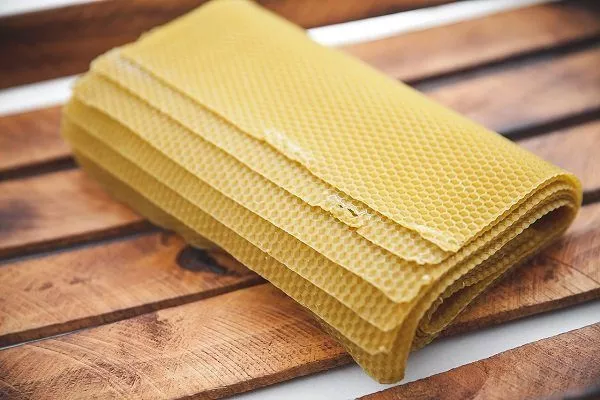
The insects simply build their own honey or brood storage bins on top of the hexagonal cells. If the frame doesn't have a plate, the bees spend a lot of time and energy building the comb themselves (as they would in the wild).
Using such a preform is not mandatory. However, its presence speeds up the process of obtaining the finished product.
Why do you need wax foundation?
Using this design effectively prevents swarming while simultaneously ensuring full colony capacity. The honeycombs provide a complete guarantee that the bees will be completely healthy.
Artificial wax foundation is an analogue of the natural device made by honey plants, capable of fully replacing it.
The plates perform several important functions:
- there is a rapid and significant increase in the bee nest;
- insect productivity increases several times;
- in spring a swarm quickly forms;
- this is a storeroom for honey and bee bread supplies;
- Honeycombs are necessary for raising offspring.
What types are there?
| Name | Material | Color | Strength |
|---|---|---|---|
| Natural | Wax | White | High |
| Artificial | Plastic or paraffin | Yellow | Average |
| Semi-natural | Wax with impurities | Yellow | Low |
In modern beekeeping, only three main types of wax foundation are used. They are classified by production method:
- Natural. Made exclusively from wax, completely free of any artificial additives, this type is the most suitable for bees.
However, natural products are not always accessible to beekeepers. This factor forces them to consider alternative options. - Artificial. The process of making this type of wax foundation uses plastic or paraffin. Typically, there is virtually no wax. It must be applied before framing.
- Semi-natural. This variety is made from wax, which contains a variety of additives (paraffin, etc.). This mixture of components allows the finished plates to be quite strong yet inexpensive. Budget-conscious beekeepers choose this type.
The best option is considered to be wax foundation with natural wax, i.e., a preparation without foreign impurities. Insects are more willing to begin the process of building a new comb. This material will not introduce additional substances into the wax during melting.
Advantages and disadvantages of different types of wax foundation
Each option has its pros and cons. By considering all the nuances, a beekeeper can select the ideal wax foundation for bees and swarming expansion.
How do bees produce wax foundation?
Bees have special compartments on their abdomens. These compartments secrete wax, which is what bees use to form honeycomb. This all-natural product is very soft and white, and contains only beeswax.
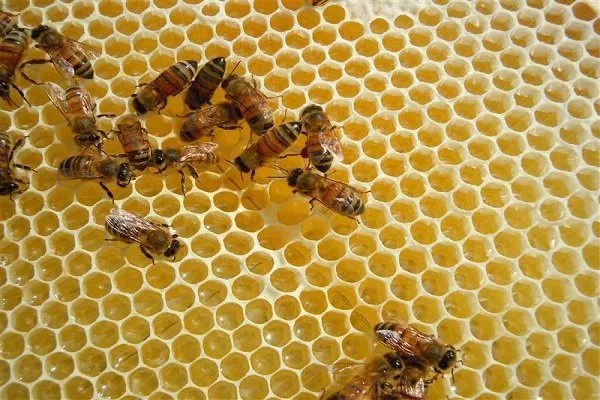
Wax secretion is directly dependent on the insects' nutritional status. Without nectar, insects do not produce this building block. Therefore, bees require a honey harvest or artificial feeding.
During use, the wax becomes contaminated, and the entire plate takes on a yellow-brown tint. This is caused by bee bread and the insects' own waste.
How does a person produce wax foundation?
The manufacturing technology depends on the specific type of product and has certain differences:
- For natural waxing, a mechanical method is used. Preheated and well-softened wax is passed through rollers with the design already applied.
A press is often used. It consists of two plates with a design printed on them. Softened wax is placed into the machine. The result is natural wax foundation. - Artificial and semi-natural products are manufactured in factories. Hand-made products are typically very difficult to produce, as they use wax with additional additives. Sometimes, wax is completely absent.
The process of making natural wax foundation is very simple. First, purchase a special wax press. Then follow these steps:
- Heat the wax to + 90 degrees.
- Let it cool. It only takes 2-4 minutes for it to thicken.
- Pour wax into the press and natural beeswax foundation is ready.
Detailed instructions on how to make your own wax foundation are provided in the following video:
Features of wax foundation
Sometimes, after a wax plate is installed in a frame, waves appear. This occurs due to sagging in the wire used to attach the plate to the frame. This problem is easily avoided:
- Once you've stretched the wire over the frame, let it sit for a bit. There's no need to wax it right away.
- Be sure to check that the tension of the wire threads is uniform in all rows of the frame.
- Buy or make wax foundation in advance. The sheets should be aged for approximately 3-5 years. This will cause them to darken and become stronger, losing their softness. The wire will adhere much better, and bees will be less likely to chew on this material.
Usage
Wax foundation is an essential part of beekeeping. It's important to know exactly how and when to install it. To do this, follow these tips:
- Beeswax foundation is placed in the hive only if there is a honey flow (there must be flowering fields or trees at least 5 km away from the apiary). In the absence of such a flow, artificial feeding with syrup is used.
- A bee colony must contain a fertile queen. Otherwise, the bees will simply flood the wax foundation with honey. It's important for the queen to seed it.
- ✓ Provide honey flow or artificial feed to stimulate bees to work with wax foundation.
- ✓ Make sure there is a fertile queen in the hive for seeding wax foundation.
How to choose the right wax foundation?
The quality of the plates directly impacts the life of insects, as well as the amount of honey they produce. When choosing structural elements, it's worth following a few simple tips:
- Select sheets of the same thickness in all cells - check the criterion in the light (the plate should be equally transparent).
- Place it on the sheet on the inside of your hand. The correct thickness of wax foundation will bend slightly at the indentation in your palm.
- For a standard hive, choose plates measuring 41 x 26 cm, and for a multi-body hive, choose plates measuring 41 x 19 cm.
- Pay attention to the production date - after 3-5 months, the wax foundation becomes denser and is ready for use.
- ✓ Check the uniformity of the wax foundation thickness by holding it up to a light source - the absence of darkened areas indicates high quality.
- ✓ Make sure there are no foreign odors that could repel bees.
There are several grades of wax foundation. The first is considered the best and is characterized by greater strength. The second is of average quality, but not the worst. The third grade is of low quality and is often used by novice beekeepers or hobbyists.
Storage rules
Wax is used to produce honeycomb foundation. It absorbs a wide variety of odors. This will discourage insects from building honeycombs. Therefore, proper storage conditions are essential:
- Wrap the plates in thick, clean paper to protect them from the influence of various negative external factors;
- maintain the correct temperature regime - the optimal temperature is + 10 degrees;
- do not freeze the wax foundation, otherwise it will begin to crack and crumble;
- Do not store the layers in a very warm place, as they will melt and deform;
- Place the product in a dry room with good ventilation;
- Do not store in high humidity conditions, as pests can quickly develop in such conditions;
- Before installing the frame and wire in the hive, wash it well.
Each beekeeper makes their own decision whether to install wax foundation or not. However, this process is primarily aimed at faster honey production. When using pre-fabricated foundation, it is important to choose a high-quality product. The productivity of bees using wax foundation also depends on the timing and installation procedures for the foundation.