
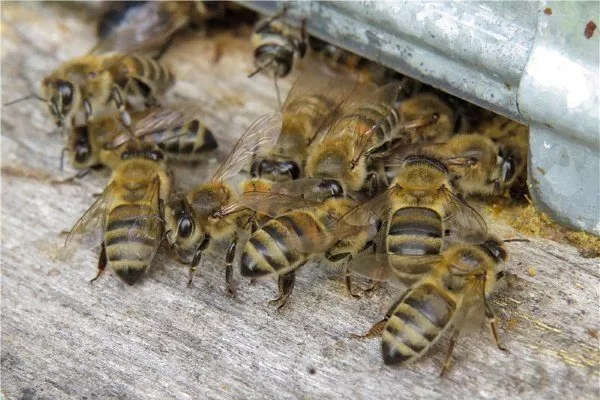
Bee theft is a fairly common problem. Beekeepers need to closely monitor their apiaries, especially in the spring and fall, when bees have nowhere to forage for honey. This problem most often affects young queenless colonies that lack an organized nest structure.
Causes of the phenomenon
Bee theft typically occurs among young and inexperienced beekeepers who leave hives open for long periods of time. Regular spilling of honey or sugar syrup, or leaving frames of honey in plain sight, also contribute to this behavior.
Other factors leading to bee theft:
- lack of bribe;
- vulnerability of young and weak families;
- hereditary habits: the family has been obtaining food using this method for a long time;
- during the absence of honey flow, the nest becomes spacious and has open entrances;
- the presence of a large number of cracks in the hives;
- failure to observe safety precautions when examining bees by the beekeeper;
- the presence of a nearby apiary with a large number of honeycombs and their cuttings, feeders;
- feeding bees during the flight period.
The problem of nectar theft can also be encountered during the honey flow. This is caused by unfavorable conditions in the hive, such as poor ventilation and excessive heat. This causes a strong nectar smell to emerge from the hive, which attracts thieving bees.
Signs of theft
It's easy to spot the presence of a robber bee. During a routine inspection of the hives, a beekeeper may notice the following suspicious signs:
- The presence of bees with a zigzag flight pattern. They emit a loud buzzing sound, as if collecting pollen.
- Robber bees enter the hive through the entrance and cracks, avoiding encounters with other bees.
- These bees have a black body with worn hairs.
- When attacked by thieves, bees rush very quickly towards the landing board and fly around it.
- Presence of bees killed by stings.
- While defending their hive from attack, a large number of insects die. During this period, foragers cease their flights.
- Bees carrying stolen honey fly low when leaving their hives and then gradually rise upward.
- Regular evening battles between thieves and defenders are observed.
To identify a robber bee, press on the abdomen of the suspected insect: if stolen honey is present, it will squirt out of its proboscis as nectar. Once the affected hive is opened, all robber bees will begin buzzing loudly and fly upward. They will lose their reflex to smoke and the ability to sting.
A robbed bee colony becomes aggressive and irritable: trying to defend themselves, they sting everyone in sight. The damage is immediately noticeable: the sealed honey will be riddled with holes, there will be a lot of waxy debris, and there will be no brood.
The need to prevent theft from bees
This problem requires urgent attention, as it can lead to significant losses in the long run, including loss of food and death of the queen or entire colonies. Enraged colonies may simply flee the hive. Robber bees also carry various diseases.
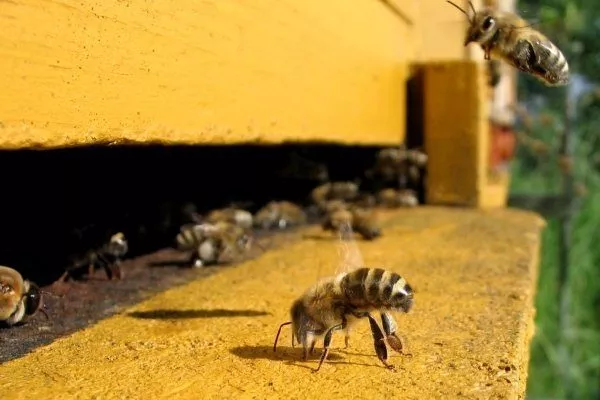
Often, members of robbed colonies join the thieving colonies. Then, together, they attack subsequent hives. After some time, all colonies in the apiary are robbed. The problem can spread to everyone. bee colonies, located within a radius of 2 km.
Methods of combating bee theft
Standard events
First of all, it is necessary to adhere to the basic rules for preventing bee theft:
- Don't open the hives too often.
- Perform all work processes with hives in the evening.
- At the first sign of theft, immediately move the work to another location.
- Before starting any work process, fill a bucket with water and regularly rinse your hands and tools in it.
- Do not inspect the nests for a long time; remove the honeycombs only as a last resort.
- Use frames with top bars covered with canvas soaked in water. Bees dislike canvas soaked in water, so thieves won't land on it. This type of canvas also prevents the scent of honey from leaking out of the hive.
- Use a canvas dampened with water when inspecting extensions and frames.
- Narrow the entrance opening before removing the lid from the hive.
Once you notice signs of theft, stop all inspections and honey extraction. Remove all equipment that smells of honey from the apiary.
Check the entrances and reduce them: leave a passage for 1-2 bees in weak colonies, for 2-4 bees in average queenless colonies and in drone-laying colonies, and half of it in strong colonies.
Typically, these measures help stop theft in its early stages. However, if the robber bees persist, additional methods should be considered:
- break off some wormwood branches and place them on the landing boards near the entrances;
- lubricate the landing boards with kerosene;
- Place a piece of glass at an angle to the hive.
By using the above tricks, your bees will fly into the hive, bypassing all obstacles, and the robber bees will lose their orientation and stop stealing from the apiary.
If these methods don't work, the colony being robbed should be removed from the apiary and placed elsewhere. You can also take it to the basement for a day and then return it to its original location.
Combating bee theft with a red light flashlight
Using a red light from a lantern makes it possible to extract honey, cover and reduce nests, dry supers, and perform heat treatments at night. Red light calms bees and makes them more peaceful.
This method eliminates the need to work during the daytime (which attracts thieves), as well as the need to use masks and smoke to repel aggressive bees.
How to get rid of robber bees using a regular straw?
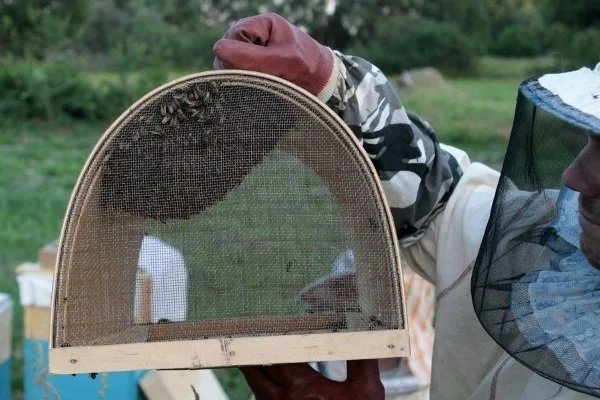
Close the entrance and insert a tube (up to 10 mm in diameter) into the passage. Once the robber bees enter the hive, they will be unable to escape. Wait until a large number of pests have gathered in the hive, and then move it to another location. After some time, the intruders will become accustomed and begin to work alongside the new colony.
- ✓ The diameter of the tube must be strictly up to 10 mm to effectively capture thieves.
- ✓ The tube material must be smooth so that bees cannot get caught and escape.
Getting rid of robber bees with table salt
In the morning, before sunrise, close the hive entrances of all bee colonies. Sprinkle a thick layer of table salt on the landing boards and roofs. After landing on the landing board, any intruders will immediately fly away: all robber bees will leave within an hour. After this, remove all the salt and thoroughly wash the landing boards and roofs, then open the hive entrances to the desired size.
Other methods of combating bee theft
You can use special sliding film covers. They are transparent and stretched over a special rectangular frame. Before beginning the inspection, you need to set up a tent to house the hive.
Experienced beekeepers recommend using protective agents such as diesel fuel, kerosene, dill essential oil, and creolin. Coat the front wall of the hive with one of these and narrow the entrance to just enough room for one bee to fly through. Repeat this process several times.
If there's a fierce fight between bees, you can sprinkle them with flour. This will help determine the flight path of the thieves. Spray their hive with smoke: the bees will become wary, begin protecting their food, and forget about stealing.
If attacks by thieving bees persist, cover the hives with hay, leaving only a small opening at the entrance. This way, the thieves who entered the hive through the hay become entangled and fly away, while new arrivals become disoriented by the changed situation and fly away in the opposite direction.
You can build a special wooden corridor. It should be about 50 cm long and 25 cm wide. Cover the top of the corridor with mesh, and the opposite side with an entrance barrier. The corridor should be installed at dawn, which will help the bees adapt to the new entrance. Bee thieves dislike long entrances and will not enter such hives.
If the theft has spread to neighboring apiaries, be sure to move all hives to other locations at least 5 km away. Don't forget to check for a sufficient supply of hives nearby. honey plant.
Restoring a bee colony after theft
First, reduce the entrances to the size of a single bee. Barricade them with a block of wood: when thieves attempt to leave the hive, they will hit their heads on it and die.
Then, seal any possible entry points for robber bees (cracks, gaps at the joints of the hives) with paper tape or clay mortar. Grease the front wall and landing board with kerosene and cover the entrance with wet grass. To eliminate the honey smell and repel intruders, spray the walls and entrance with water.
If all else fails, move the hive to the cellar for 2-3 days. Provide the bees with the required amount of water: pour 0.7 liters of water into a dry frame and feed it to the hive. Place an empty hive with a kerosene-soaked rag in the place of the removed hive. To redirect robber bees from robbing to working, open a few combs in their hive.
When inspecting hives in the spring, use an inspection tent: it will prevent weak colonies from becoming overcooled and the emergence of theft during the non-nursery period.
Prevention of theft from bees
In early spring, during the period of honey collection and the absence of honey flow, you can avoid theft by following these rules:
- open the entrance according to the strength of the bee colony and weather conditions;
- Work with the hives very carefully: do not allow honey or sugar syrup to spill on or near the hive;
- do not leave the hive open for a long time;
- inspect the hives quickly, but without haste;
- exclude the presence of weak queenless families in the apiary: combine them with families of equal or stronger strength;
- Use separate feeders for each family.
This video explains when and how bee theft occurs and what to do to prevent the problem:
The problem of honeybee theft is quite common. It must be addressed as quickly as possible before it leads to irreversible consequences. When the honey flow period begins, the intensity of the theft decreases or ceases altogether.