
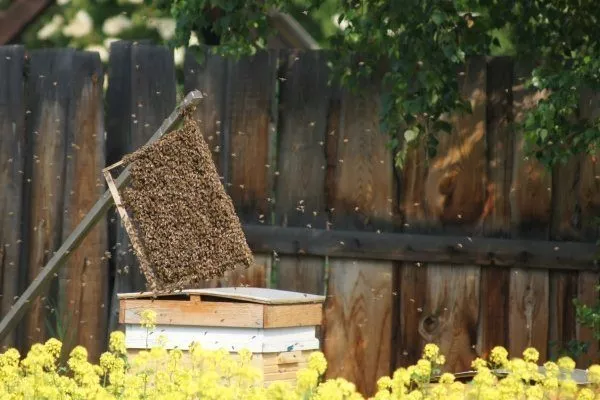
Every beekeeper should be familiar with anti-swarming methods, as they are essential for controlling the natural reproduction process of bees. If swarming is left unchecked, the honey-producing colony may disintegrate, reducing the amount of honey produced.
| Method | Efficiency | Difficulty of implementation | Impact on honey yield |
|---|---|---|---|
| Demarie's method | High | Average | Positive |
| Vitvitsky's method | Average | Low | Neutral |
| Dernov's technique | High | High | Positive |
| Taranov's method | Average | Average | Neutral |
| Breeding work | High | High | Positive |
| Changing the queen and keeping two queens | High | High | Positive |
| Additional open brood | Average | Low | Neutral |
| Cutting off swarm queen cells | Low | Average | Negative |
| Dividing grid | Average | Low | Neutral |
| Formation of layers | High | Average | Positive |
| Dividing families for half the summer | High | High | Positive |
| Plaque on the uterus | Average | High | Neutral |
Classification and basic principles of methods
Beekeepers have developed several techniques to prevent swarming of beesAll methods of preventing insect reproduction are classified into two main types:
- Preventing swarming and preventing swarming in families.
- Those fighting against the results of the process.
It's worth noting that none of the chosen methods can eliminate the urge to swarm completely and permanently. Each method can only deter the insects, suppressing their natural urge to swarm for a time.
Demarie's method
The method involves using two-body hives. The beekeeper must increase the living space for their bees in a timely manner. This ensures the queen has sufficient space to lay eggs. At the bottom of one body, the beekeeper installs bars to monitor the queen's activities.
Three main variations of the Demari method are actively used in beekeeping:
- The queen and a frame of brood remain in the bee colony, while the remaining frames are placed in another enclosure. They are then separated by a grid, and filled with comb and foundation.
- The queen is left in the combs, and the young individuals are sent to other parts of their home.
- The brood with the queen bee remains in the hive.
Vitvitsky's method
This method is based on nest rupture. To reduce the bees' desire to reproduce, the beekeeper takes an empty super and separates the nest. All the insects' energy is directed toward work and the desire to occupy the empty space, leaving them with no time for swarming.
Dernov's technique
M.A. Dernov developed three methods for combating swarming:
- During the day, the newly formed swarm is transferred to a basement, where the brood is removed. In the evening, the insects are returned to their main colony, and a super is added. The individuals begin to work and stop swarming. The young insects move to the nest occupied by a weak colony.
- The flying bees are relocated by their owner to another hive, which is placed where the colony swarmed. The hive containing them is turned over and placed near the new one. The insects stop swarming and begin destroying the queen cells, and their hive is returned to its original location. They then return to their queen.
- The old queen is destroyed, but the sealed queen cell is left behind. To prevent too many new queens from appearing, the new queen cells are removed.
Taranov's method
The anti-swarm method of G.F. Taranov consists of several stages:
- The swarm separates from the bee colony.
- Insects must collect honey in their crops.
- The beekeeper fumigates the hive.
- The artificial swarm is sent to another home after a couple of days.
Breeding work
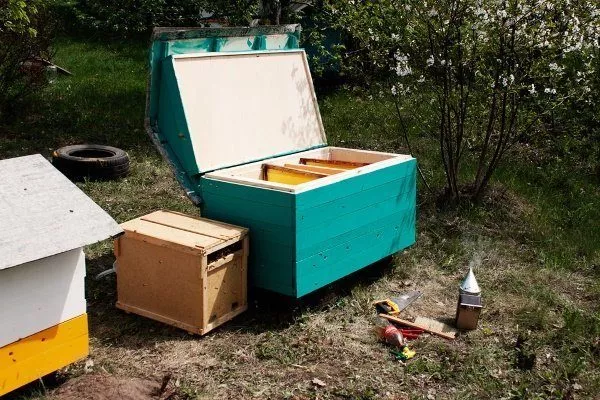
Insect breeding involves selecting non-swarming queens and physically strong bees. These selected individuals are then used to breed a new generation of bees.
- Selection of non-swarming queens and strong bees.
- Breeding a new generation from selected individuals.
- Destruction of brood of males prone to swarming.
Males for fertilization of the queen are selected from stable colonies. To reduce the number of males prone to swarming, their brood is destroyed.
When choosing a queen, make sure she's purebred. The best queens come from generations that haven't swarmed for a long time.
If it is difficult to obtain a purebred queen on your own, you can buy one from experienced beekeepers who specialize in queen breeding.
Changing the queen and keeping two queens
Replacing old queens with young ones is a routine part of apiary management. Young queens are more fertile and capable of rapidly increasing the size of the colony, which positively impacts the amount of honey harvested.
Queen bees are replaced in the spring. In a hive where queens are replaced regularly, the bees survive the winter well and are less aggressive. New queens also secrete special pheromones, which are sufficient to suppress the desire of other bees to reproduce.
Beekeepers also use the two-queen method to prevent swarming. Another queen is placed in a hive with a strong colony, in a separate enclosure separated from the main hive by a grate. The queen herself won't be able to fit through this grate, but other bees will be able to easily access her.
Additional open brood
Many beekeepers consider this method very effective. Bees typically have a small amount of exposed brood, but produce more royal jelly than necessary to feed it. Consequently, they begin to consume this valuable product themselves.
After the insects consume the royal jelly, their reproductive system begins to develop and they lay unfertilized eggs. These individuals soon become the majority of the hive's inhabitants, leading to swarming.
If a beekeeper removes the capped brood from the bee colony and leaves the open brood, as well as the combs with wax foundation, the bees will not consume the royal jelly themselves but will feed it to their young. They will be preoccupied with their young, and their desire to reproduce again will temporarily disappear.
Cutting off swarm queen cells
This anti-swarming method is considered one of the most radical. Its outcome will be positive if the trees and grasses bloom, and the bees become engrossed in collecting honey and stop swarming.
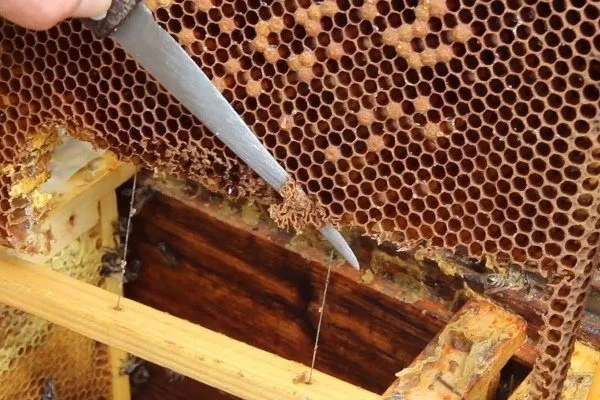
The swarming process can be stopped by removing all swarm queen cells and their larvae. However, this is dangerous because the beekeeper will have to disturb other bees by dismantling the brood nest. Furthermore, finding all the queen cells is very difficult, as their location may be hidden by the bees themselves.
Dividing grid
A separator grid is installed to separate the brood from the queen. To do this, the top hive body is removed, and a grid is installed to separate it from the bottom hive, where the brood is concentrated.
It is very important at this point to ensure that the queen does not run away downstairs, so it is better to remove her from the home during the refurbishment.
The grille is installed across the entire hive body. Its slots are positioned parallel to the frame bars, 7-8 millimeters above them.
Formation of layers
This method of preventing bees from swarming involves opening their nest and introducing a small amount of smoke. Some bees will immediately leave the upper hive and move to the lower one.
The top section is removed and set aside, and a ceiling is attached to the bottom section. It is then rotated 180 degrees. The removed top box containing the brood is then placed on top of it, and the entrance is opened.
After this manipulation, some of the bees return to their previous place of residence, while others, not finding it, fly into the entrance of the colony.
Dividing families for half the summer
To combat swarming by dividing colonies for half the summer, the apiary owner should follow these instructions:
- If the beekeeper's pets are in good flight, then a new hive without inhabitants is placed next to the swarming family.
- In the new place of residence, half of the honeycombs from the old hive are installed with brood, honey and individuals remaining on the honeycombs.
- If there is no other queen, then the best queen cell is installed in the new home, and those that remain in the first hive are destroyed.
- Both bee houses are placed opposite each other, and their hive entrances are located at the same height.
Returning from their honey flow, the insects can't immediately figure out where their old home is and disperse to different hives. Using this method, the beekeeper ends up with two hives containing bees of varying ages. Some are capable of collecting honey, while others are growing and developing to replace them.
Plaque on the uterus
One way to stop swarming is to raid the queen or queen cell. This method is used when swarming has already begun and the bees are establishing queen cells.
To use this method, a plywood bottom is attached to the spare body of the bee colony. The frames containing the queen are placed inside this bottom. Two frames containing brood and a queen cell are left in the original main body of the hive. These are then supplemented with frames containing food and dry food, and covered with a piece of canvas. A spare box is placed on top of the old box, housing the main colony of bees busy collecting honey.
How to prevent swarming?
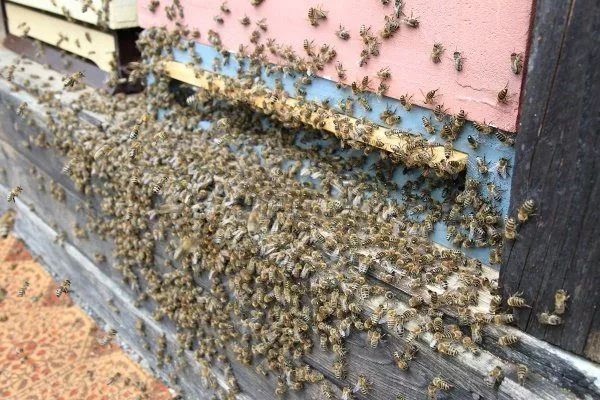
Beekeepers must know and be able to prevent bee swarming. The key factors are sufficient food in the hive and adequate housing for the insects, such as multi-hull hives or horizontal hives.
Beginner beekeepers should also follow these recommendations:
- Set up a hive. Expand the bee colony, replace frames, and monitor the amount of foundation and comb, as there must be enough of them. There are two ways to expand the bee colony: active and passive. In the first case, the bees independently explore new areas to find a home. In the second case, the insects complete the comb in the hive if the beekeeper remembers to install new frames in a timely manner.
- Conduct breeding work. That is, to control all the vital processes of insects, remove colonies that have a high tendency to swarm, get rid of unproductive bees and select the best queens. Monitor drones and remove them from the hive in time.
- Do ventilation. During the summer, the bee's home must be constantly ventilated to prevent the insects from overheating.
- Choose a good location. Insects require favorable conditions to collect honey, so the apiary should be located near abundant flowering plants. When bees are engrossed in collecting honey, they lose the desire to swarm.
In addition, the beekeeper must form anti-swarm colonies, that is, new homes for bees that are separated from the main colony. The process of their resettlement is also supervised by the apiary owner.
Sometimes, on the contrary, beekeepers need the swarming process, and if for some reason the bees do not want to carry it out, then the artificial swarming method is used for these purposes.
Any of the above methods can reduce swarming and direct bees toward honey flow. By using any of these methods, beekeepers can maintain healthy bee colonies, increase the productivity of their apiary, and resolve the swarming problem for several generations to come.