
Bees always follow a schedule—each month has its own set of beekeeping activities. A beekeeper's calendar helps beekeepers complete their tasks on time, avoid missing anything, and prevent potential problems.
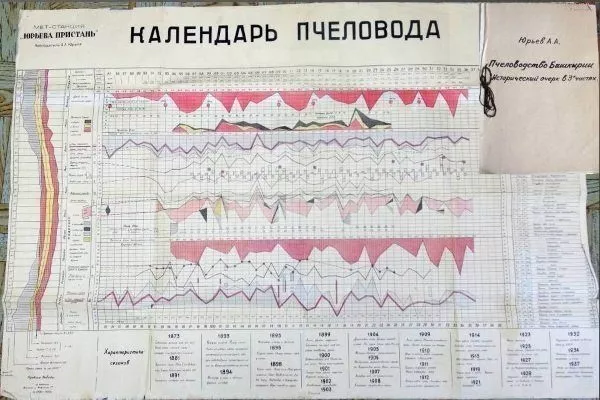
Classic Beekeeper's Calendar by Month
| Name | Temperature in the club | Movement activity | Feeding requirements |
|---|---|---|---|
| January | +14°C | High | Moderate |
| February | 34-35°C | Moderate | High |
| March | +8-10°C | Low | Moderate |
| April | Depends on the weather | High | High |
| May | Depends on the weather | High | High |
| June | Depends on the weather | High | High |
| July | Depends on the weather | High | High |
| August | Depends on the weather | Moderate | High |
| September | +7°C | Low | Moderate |
| October | Below +12°C | Low | Moderate |
| November | Depends on the weather | Low | Moderate |
| December | Depends on the weather | Low | Low |
January
This is a difficult month for bees—all their energy is focused on survival. The insects, gathered in a cluster, are constantly on the move. The bees maintain the cluster's temperature at 14°C. Within the cluster, bees constantly move—some crawling inside, others emerging on the surface.
The colder it is outside, the more active the bees are in the cluster.
Work in January:
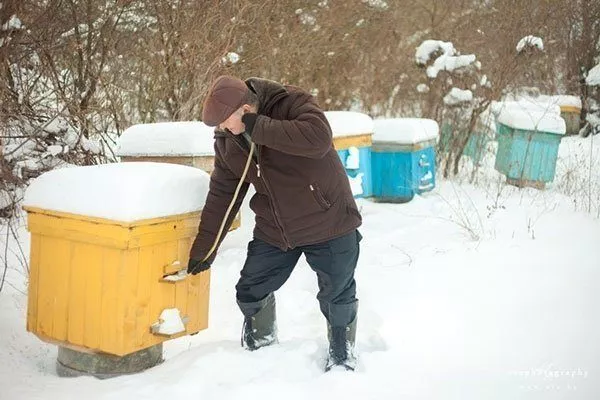
- Regularly check the hives for noise. The beekeeper listens to the bees using a rubber hose—one end to the ear, the other in the hive entrance. If the noise is faint, the bees are fine; it should fade after a click. If there's a constant hum, the bees are restless or suffering from the heat; if there's a rustling sound, the colony is experiencing a food shortage.
- Rodent control is underway.
- If a food shortage is detected, the bees must be given food, otherwise they will die.
During the winter, beekeepers also repair hives, sew cushions for insulation, and prepare frames and other equipment.
Problems that threaten insects in January:
- Due to frost, icicles accumulate under the frames, and the hive may become damp.
- During thaws, liquid drains and accumulates in the bottom of the hive. If the hive doesn't have special bottom protection, it gets wet, and the side frames become moldy.
- Due to high humidity, feed fermentation occurs.
To prevent moisture and mold, liners are placed in the bottoms before winter sets in. In January, they are removed after each thaw to drain the water.
February
February's problem is severe frosts and snowstorms. Bees are sensitive to weather changes, and the colony awakens, anticipating spring. The insects begin feeding intensively, requiring more oxygen.
During this period, the first brood appears in the hive. The queen bee lays eggs, and the colony requires a lot of food. To raise the brood, the bees increase the ambient temperature to 34-35°C.
List of works for February:
- Check the ventilation weekly and clean the trays dead bees.
- They continue to fight rodents.
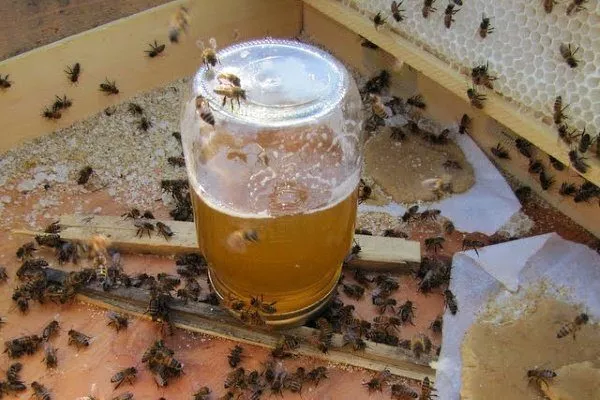
- In the last ten days of February the family is given additional feeding (candi).Candy – a special bee food with a dough-like consistency. It is prepared with honey, powdered sugar, milk, yeast, flour, eggs, and pollen.
- They give the bees sweetened water.
Excrement begins to accumulate in the bees' intestines, causing diarrhea. To alleviate this condition, the bees are given an early flight, removing snow obstacles near the hives.
March
Weather conditions are unstable. Many colonies already have brood. Current work in March:
- They clear snow from street hives.
- Replace the bottoms with dead bees;
- Dead bees are examined to determine what caused the death and whether the colony is at risk of mass death.
- Protect hives from drafts.
- They reduce the flight holes for weak families.
- Provide the family with water.
- They check the hives for noise and mold, and determine how the colony survived the winter. If necessary, they add candy.
- They check to see if there's food in the outer frames. If there isn't enough food, they add additional honey frames.
- When the air temperature rises to +8-10°C, the family is sent out for the first flight.
- Preventive treatment is carried out.
In his video, the beekeeper talks about his work on one March day at the apiary:
April
A time of intense feeding and growth begins. Honey plants bloom. The old brood dies, leaving the August brood and newcomers in the hive. The colonies begin their flight, collecting nectar from the first flowers.
Beekeeper's tasks in April:
- A bee colony inspection. Following this, the bees are provided with protein and carbohydrate feed.
- Each nest is provided with 10 kg of honey and bee bread.
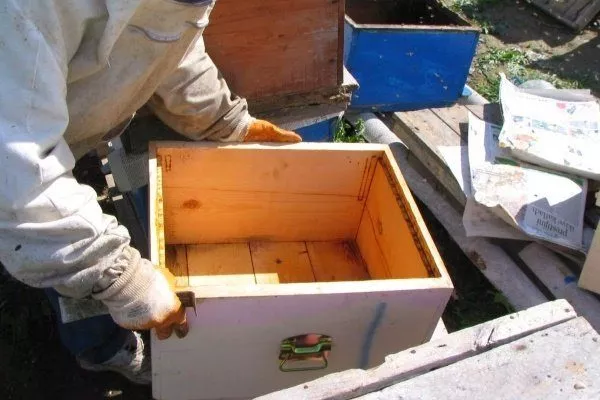
- Spare hives are being disinfected for replanting colonies. They are being equipped with honeycomb frames and insulated.
- Before transferring bees to a new hive, they treated against ticks.
- Disinfect old hives.
- Each family is fed with honey and bee bread, and acidified water is placed in the hives in drinking bowls.
- If the hive is damp, this is determined by checking the bottom and insulating mats, and the colony is moved to a dry and warm hive.
May
The days are getting quite warm, but the threat of return frosts at night still remains. The bees are busy collecting honey. Spring honey is considered the most beneficial. A good bee colony can produce 4 kg of May honey.
Work at the apiary in May:
- Unnecessary frames are removed. Frame removal procedures are divided into several stages:
- 1st half of May – frames with light brown honeycombs are put out;
- 2nd half of May – new frames are installed;
- When the gardens bloom, frames with artificial wax are put out.
- Feeding with sugar syrup – if there's not enough food, bees begin to steal food from each other. More about feeding bees in the spring Here.
- Hives are insulated when there is a threat of frost.
- Anti-swarm measures are being carried out.
- The bees are treated with moth control products, acarapidosis And nosematosis.
- They begin to prepare food for the winter.
- Before the honey harvest, weak families are reinforced with strong individuals.
- Preparing hives in case new swarms appear.
June
The main honey flows are in full bloom. Bees are swarming, and colonies are expanding. Beekeepers must exercise maximum control. If swarming is missed, the bee population will significantly decrease. How to prevent bee swarming – read here.
Work in June:
- Removal of hives for honey collection.
- Conducting anti-swarming measures. Directing swarming energy toward honey collection.
- Another treatment of the colonies with mite-repellent products. The treatment is carried out only with natural, safe substances to avoid damaging the honey.
- The hives are lined with honey bodies and supers.
- Add wax foundation for the insects, monitor ventilation - the flight holes should always be open.
July
This is the most fruitful month—July is the month with the heaviest honey harvest. The bees work themselves to the bone, expending a tremendous amount of energy. To make their job easier, they are brought out to honey plants such as fireweed, buckwheat, and so on. Before transporting the bees to new locations, the old honey extraction supers are removed.
Work for a beekeeper:
- Preparing spare honeycomb frames.
- Cleaning of sealed frames.
- Installing additional boxes – thanks to empty combs, the bees will be more active.
- If necessary, replace old queens with young ones. This will ensure a successful wintering and prevent swarming.
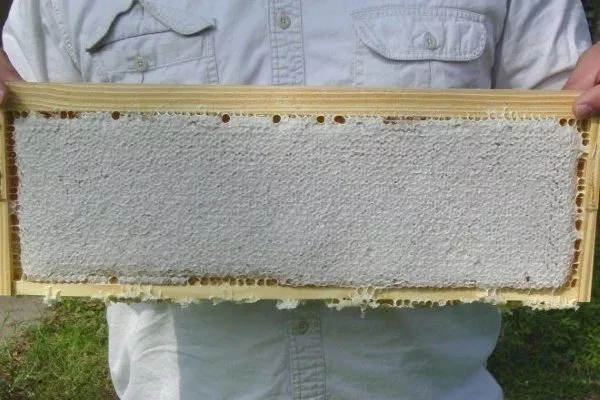
Sealed frame
August
Rain and even frost are common in August. The main honey plants fade, and honey yields decline. Colonies shrink, with June- and July-born bees dying before winter. Only those born in August and September survive until spring. The colony prepares intensively for winter.
Tasks for August:
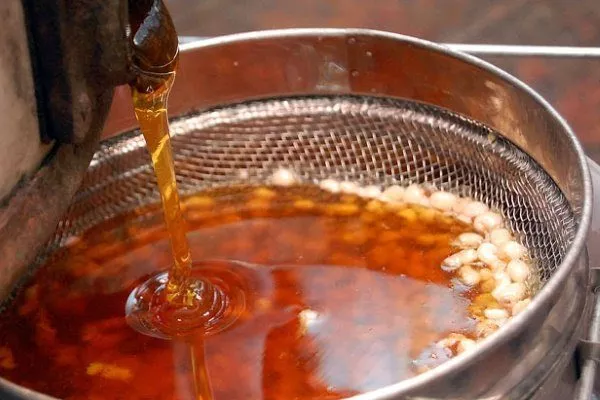
- Pumping out honey.
- Drying the honeycombs from which the honey has been extracted.
- Preparing nests for winter. Drying and disinfecting nest boxes.
- Feeding with sugar syrup – for the successful growth of August bees.
- The honeycombs are put into storage and the unsuitable ones are discarded.
- They prepare the wintering quarters. They remove the superstructures and second buildings, inspect the food supplies in the nests, and distribute them among the colonies.
- Frames containing artificial wax and unfinished frames are removed. The hive entrances are covered and cracks in the hives are sealed.
- Preventing bee theft.
- Uniting weak families.
September
In September, the birth of the long-lived birds ends. The young perform a cleansing flight, which will help them survive the long winter. When the temperature drops to 7°C, the flock begins to gather.
Tasks for September:
- Multi-body hives are reduced in size, leaving only two sections.
- They check the quality of the feed. Honeydew is removed and replaced with higher-quality feed.
- They clean, disinfect and store bottoms, bodies and frames.
- They are collecting propolisThey store frames with honey and bee bread.
- The wax raw material is melted down and the wax is prepared. How to melt wax without a wax melter is discussed in this article.
- The last feeding is carried out on September 10-20 – using ready-made honey sealed in frames.
- They are treating bee colonies from varroatosis.
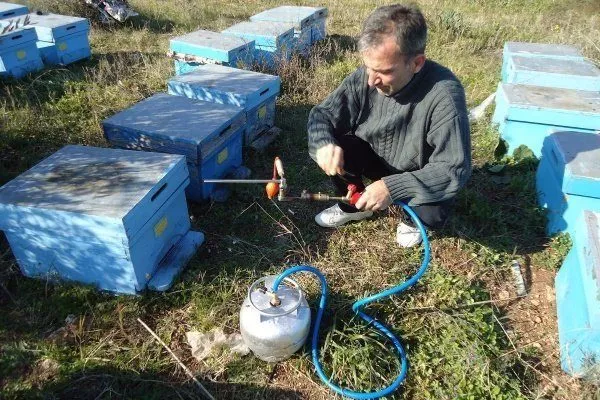
To help bees survive the winter, 20 kg of honey is placed in the hives—this is for northern regions. In the southern regions, 13-15 kg of honey is sufficient. Honey is sometimes replaced with sugar syrup, but no more than 30% of the total feed.
October
When October temperatures drop below 12°C, a lull sets in for the insects. The formation of a cluster begins. If the weather improves, the bees will make their final flight and then reassemble into a cluster.
Tasks for October:
- Work in the honeycomb storage area is completed. The beekeeper places the supers and boxes under shelters or in a warehouse. He sorts through the honeycombs, removing any worn ones.
- Fight against mice.
- It is recorded when the final cleansing flight was completed.
One example of a beekeeper's work in October can be seen in the video:
November
Snow is already falling in some places. The bees are wintering. Huddled together, the insects conserve heat. The flights are over, and the beekeeper's job is to maintain the hives and equipment.
Beekeeper's tasks in November:
- Transferring bees to a wintering house, dried and ventilated, after the onset of stable frosts.
- If wintering is outdoors, the hives are insulated - from above and from the sides.
- Having placed the bees in hibernation, the beekeeper monitors their behavior.
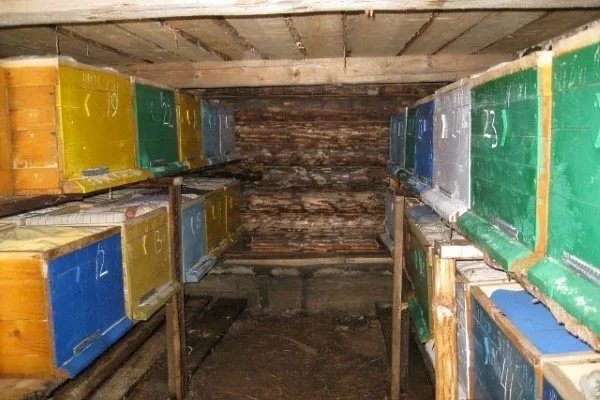
More information about preparing bees for winter is available in next article.
December
The colony, seeking to conserve heat, moves toward a partition placed in the center of the hive. The bees are quiet and consume little food. The beekeeper has little to do during this period. It's sufficient to periodically visit the wintering house, maintaining optimal humidity, air exchange, and temperature.
Tasks for December:
- Listening to hives.
- Checking ventilation - in the wintering house and in hives under the snow.
- Fight against mice.
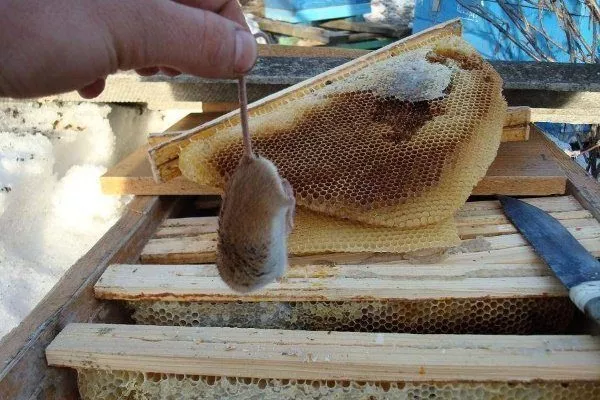
This concludes the calendar, and a new annual cycle begins in January. The beekeeper analyzes the bees' life dynamics, evaluates productivity, and draws conclusions.
An ancient apiary calendar
Beekeeping played an important role in the lives of the Slavs. Beekeepers, closely monitoring their bees, developed their own calendar based on their experience and observations.
- ✓ The optimal humidity in the wintering house should be maintained at 75-85% to prevent honey and bee bread from drying out.
- ✓ The temperature in the wintering house should not fall below 0°C or rise above +4°C to minimize bee activity and preserve food.
Winter
February 4. Timofey the Half-Winter Day. Beekeepers were checking their moss beds. Timofey's frosts and February snowstorms were beginning. A faint buzzing meant everything was fine. A hum signaled problems.
Spring
March 25th. Annunciation. They knock off the moss pit, take out the hives, and carry them out.
- ✓ The first flight should be carried out on a sunny day at a temperature of at least +12°C to ensure bee activity.
- ✓ It is necessary to ensure that water is available near the hives before the flight begins to prevent dehydration of the bees.
April 1st. Darya's Day. The hives are put out when the alder catkins bloom.
April 28. On this day, it was called Bee Pud. It was customary to take bees out from under the bushel—from their wintering quarters.
April 30. Zosima the Beekeeper's Day. Setting up the hives.
Summer
July 21It's time to go for honey at Kazanskaya.
August 2. Elijah's Day. Trimming the honeycombs.
August 14. Honey Savior. Breaking out the honeycombs. Trying the first honey. The bees finish making honey.
Autumn
September 21.It's time to remove the bees.
Calendar of folk omens
Insect behavior is closely linked to the weather. Observing the impact of weather conditions on bees' lives, people have accumulated many folk beliefs.
Winter
January 1st. New Year. Look at the roofs – if there's snow hanging off them, there's going to be a lot of swarming.
January 18. Epiphany Eve. If the branches bend under the weight of snow, swarming will be successful.
January 19. Baptism. Epiphany. A strong wind leads to active swarming. If it snows while entering the water, there will also be good swarming.
February 1st. It's Makarii the Weatherman's Day. If the bees have left the hive, don't expect warmth anytime soon. If there's a buzzing noise in the hive or snowflakes are falling, there will be a significant swarming.
Spring
March 1st. Maremyana-Kikimora Day. Early departure – early spring.
April 28. If the loss of bees is small, expect a buckwheat harvest.
May 1st. Kozma's Day. Angry bees mean bad weather.
Summer
June 1st. Bees that are angry and sting frequently foretell a drought. Loud buzzing foretells a change in the weather, with rain expected today or tomorrow. Bees near the hive foretell bad weather, while bees far away in the fields foretell good weather. Lazy and late work foretells good weather.
July 7. John the Baptist's Day. If it rains, there will be honey on August 14th (the First Savior's Day).
Autumn
September 1st. St. Andrew's Day. Bees are closing their cracks and entrances—winter will be harsh. The sooner the drones are driven out, the sooner winter will arrive.
October 14. The Intercession. On this day, the Most Pure One covers the beehives with snow.
Beekeeping is an occupation that requires hard work, discipline, and consistent adherence to all necessary procedures. A well-organized calendar allows beekeepers to complete all beekeeping tasks on time.