
The main honey flow is the period when plants produce their greatest amount of nectar and bees gather their main honey reserves. The timing of the main honey flow varies by region, and its onset can be determined by several characteristic signs. To ensure high productivity, it's important to properly prepare for the honey flow: replace the queen, strengthen the colony, prevent swarming.
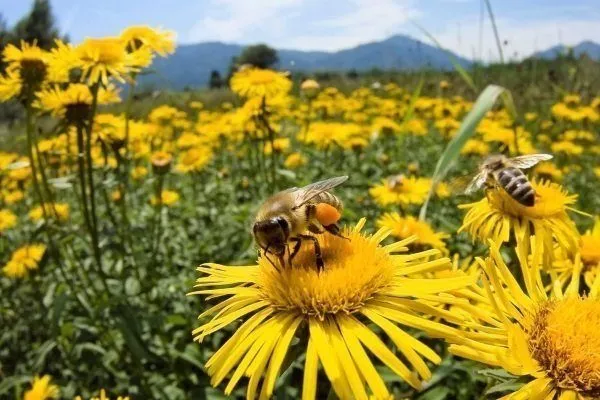
Timing of the main honey flow
| Name | Flowering period | Honey productivity (kg/ha) | Preferred regions |
|---|---|---|---|
| White acacia | Beginning of June | 800 | Steppe zones of the European part, Altai Krai, Rostov, Volgograd regions |
| Mustard | Beginning of June | 600 | Steppe zones of the European part, Altai Krai, Rostov, Volgograd regions |
| Sainfoin | Beginning of June | 300 | Steppe zones of the European part, Altai Krai, Rostov, Volgograd regions |
| Sunflower | Beginning of July | 50 | Steppe zones of the European part, Altai Krai, Rostov, Volgograd regions |
| Clover | June 10-15 | 100 | Forest and forest-meadow areas of the Non-Black Earth Belt |
| Raspberry | June 10-15 | 500 | Forest and forest-meadow areas of the Non-Black Earth Belt |
| Fireweed | Middle and second half of June | 500 | Tver, Vologda and Yaroslavl regions |
| Linden | The first days of July | 1000 | Mountain forest regions of the Urals, southern Far East |
| Buckwheat | Early to mid-July | 80 | Kursk, Lipetsk, Saratov and other forest-steppe regions of the Black Earth Region |
The start time of the main honey flow varies by region. Each region has a certain diversity of species, but the best honey plants only 2-3. If we take only these into account, the following periods of the main honey flow are observed:
- Early June – white acacia, mustard, and sainfoin. Steppe zones of the European part of the country, Altai Krai, Rostov, and Volgograd regions. Here, the main sunflower harvest begins in early July.
- June 10-15 marks the peak honey flow period for the clover-raspberry honey zone. This includes forested and forest-meadow areas of the Non-Black Earth Zone.
- The middle and second half of June – for the raspberry-fireweed honey zone, including the Tver, Vologda and Yaroslavl regions.
- The first days of July for the linden honey zone are the mountain forest regions of the Urals and the south of the Far East.
- Early to mid-July for the buckwheat zone – Kursk, Lipetsk, Saratov and other forest-steppe regions of the Black Earth Region.
- The second half of July for the linden-buckwheat zone is the Tula, Kaluga, and Saratov regions (northern areas).
There are several signs that indicate the beginning of the main honey flow:
- the control hive's weight gain was more than 1 kg per day;
- bees from the landing board rush into the hive;
- honeycomb whitening – the appearance of a light waxy coating on the surface of the honeycombs;
- the appearance of ventilating bees;
- increased activity of insects at the entrances on warm evenings;
- the appearance of honeycombs in store add-ons.
Conditions for productive honey collection
For bribes to be productive, the following conditions must be met:
- abundant nectar sources within the productive flight area of bees (approximately 0.75 km);
- the presence of not only flying bees, but also hive (young) bees for receiving and processing honey, placing it in honeycombs and sealing it;
- the presence of a freely moving fertile queen - during the main bribe, its replacement or selection is excluded;
- availability of the required number of empty honeycombs - they must be of high quality;
- timely selection and pumping of mature honey - empty combs stimulate the bees' instinct to collect;
- High-quality ventilation of the nest reduces the energy costs of the bee colony, accelerates the thickening of nectar, and increases overall productivity.
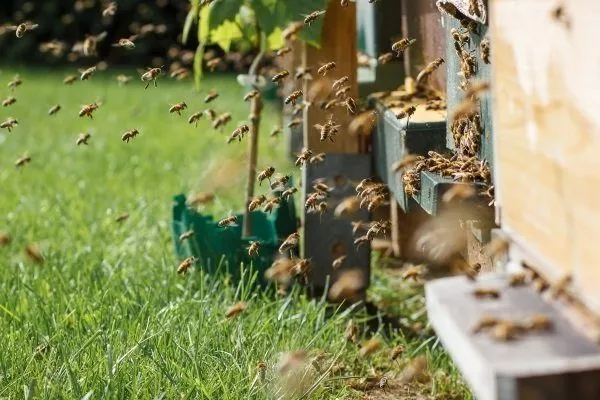
Honey flow productivity also depends greatly on weather conditions. For example, strong winds can reduce honey flow by almost a third. Dry weather prevents nectar flow, while warmth and sufficient humidity enhance the process, thus increasing productivity.
- ✓ Air temperature should be between 20-30°C for maximum nectar production.
- ✓ Relative air humidity should be 60-80% to prevent rapid evaporation of nectar.
Replacing queens before the main honey flow
It's recommended to replace the queen before the main honey flow. Then, remove the partition separating the nuc from the main colony so the new queen becomes the queen. The brood of both her and the old queen will live here.
- ✓ The queen's age should not exceed 2 years to ensure high egg production.
- ✓ The queen must be from a family with high productivity and resistance to diseases.
Bees are more receptive to queens when they move slowly. To achieve this, soak them in warm water (no hotter than 30 degrees Celsius).
If you are interested in how to remove a queen, then read about it Here.
Preparing bees for the main honey flow
The bee colony needs to be prepared for the main honey flow. This is essential for its strengthening. Preparation begins in the fall, when weak and unproductive bees are culled. The stronger the colony, the more production per unit of live weight it will produce.
Preparing for the honey flow involves creating favorable conditions for strong colonies. This includes proper heating and feeding to raise the brood.
Young bees from strong colonies are larger, have a longer proboscis, and a larger honey stomach. This means they will bring in more nectar and pollen. Their productivity is higher. lifespan of a bee more. A unit of live weight from a strong bee colony requires a smaller volume of maintenance feed.
During the main honey flow, it's important to establish the correct hive conditions. The following requirements must be met:
- shading the hive in the sun and an empty nest, which are necessary for optimal temperature conditions, preventing overheating and increasing the flight activity of insects;
- full opening of the upper and lower entrances, which promotes increased ventilation and enhances the natural evaporation of moisture, which is brought into the hive along with nectar.
To use bees effectively, it is necessary to do more than just increase strength bee colonies, but also maintaining it in working order. Both conditions are easier to achieve if the insects are kept in a large hive. Systematic selection and bee reproduction, which are not prone to swarming.
The maximum number of bees must be redirected to the main honey flow. This is achieved by limiting the queen's egg laying. The bees themselves can also do this by filling empty cells with nectar. To limit oviposition, the queen is capped or replaced with a barren one.
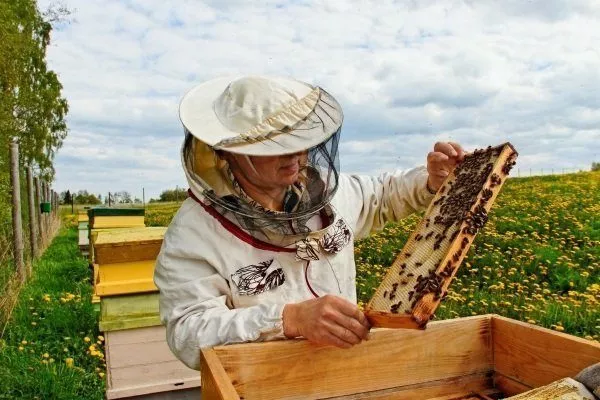
Honey is produced by processing nectar. The yield is 2-3 times less than the nectar collected for it, so the honeycombs must be stocked with sufficient quantities. Bees will only fill the cells a third full with liquid nectar—this accelerates moisture evaporation.
Duration of honey flow, expected volumes depending on the honey plant
The duration of the main honey flow is influenced by many factors, including the abundance of honey plants in the area and weather conditions. On average, the honey flow lasts two weeks, but under favorable conditions, it can last up to two months.
The productivity of the honey flow depends largely on the honey plants. The following results can be achieved per hectare:
- common ecchymosis – up to 0.8 t;
- sweet clover – up to 0.6 t;
- Ivan tea – up to 0.5 tons;
- sainfoin – on average 0.3 t;
- purple tansy – not less than 0.3 t;
- white clover – up to 0.1 t;
- buckwheat – up to 0.08 t;
- sunflower – up to 0.05 tons.
Preventing bee swarming during the main honey flow
Often, toward the end of the main honey flow, bees' swarming instincts become activated. This is attributed to the presence of abundant food. To prevent swarming, the following measures are used:
- Expanding the nests with frames of wax foundation – bees begin to build honeycombs and feed bee larvae, so they are distracted from swarming. Read on to learn about the dangers of swarming.Here.
- Installing a store or additional housing is again necessary to provide the insects with work.
- Providing for a colony with established queen cells.
The risk of swarming is higher if there is an old queen in the colony, if the hives are exposed to the sun and overheat, and if there is a small honey flow in good weather.
The main honey flow is one of the most important periods in beekeeping. It is during this time that bees are most productive. It is important to know the timing of the main honey flow, prepare for it properly, and implement swarming prevention measures. Productivity depends on many factors, including the types of honey plants within the beekeepers' reach.