
Keeping bees with two queens makes beekeeping more efficient. This method has certain advantages, but it is not without its drawbacks. The technology and nuances of the process largely depend on the type of hive used.
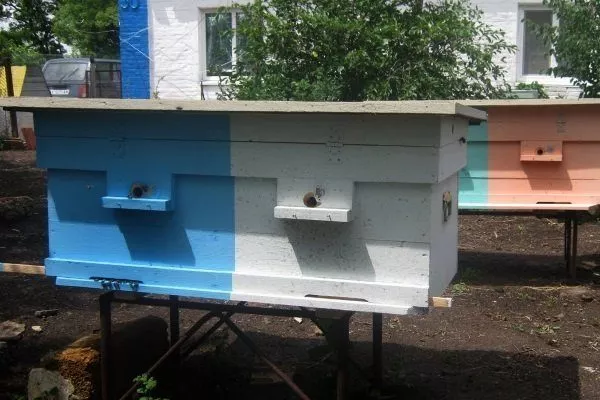
A horizontal hive for two bee colonies
General characteristics of the concept
Double-queen housing refers to a special arrangement of bee colonies. Typically, they have only one queen, but in this case, the two brood nests have mutual access through separator bars. This method was devised in the late 19th century.
- ✓ The optimal distance between hives to prevent fights between bees from different families should be at least 2 meters.
- ✓ The temperature inside the hive should be maintained in the range of 34-36°C to ensure normal development of the brood.
Supers or boxes are used to combine brood nests with different queens. This results in the formation of something resembling a single large bee colony. This type of management can be achieved using various technologies.
Advantages and disadvantages
Keeping bees with two queens has several undeniable advantages:
- Bees survive the winter better. They overwinter in large numbers, thus conserving their vital energy.
- By saving energy during wintering, dual-queen beekeeping also reduces feed consumption. This translates into reduced costs for the beekeeper.
- Increased colony strength. During winter, keeping two queens provides more warmth, so the bees are healthy and strong by spring.
- An increase in brood, and therefore the opportunity to expand the apiary.
- Effective honey collection. This is ensured by the health and resilience of the bees. Productivity can be increased by 1.5-2 times.
The advantages of keeping bees in two queens are very important, but this method also has certain disadvantages:
- The hive design becomes more complex, requiring more frames. The volume of honey and other insect waste products increases. This means a significant increase in the hive's weight, making certain manipulations more difficult—a beekeeper alone can no longer handle it.
- When a hive is maintained with two queens, the insect density increases, which affects ventilation. Bees react negatively to this deterioration and may react by swarming. If this isn't detected promptly and appropriate measures aren't taken, part of the colony will be lost.
- The increased number of frames makes it difficult to inspect the hive, so the amount of work required increases. Inspections also need to be carried out more frequently due to the risk of swarming. How to stop swarming is explained. here.
- A significant drawback of dual-queen beekeeping is the risk of colony hostility. To achieve the benefits of this method, all bees must interact normally with both queens; otherwise, the purpose of combining bees is lost, so colony separation is necessary.
For more information, you can read the article about the role of the queen bee in the hive.
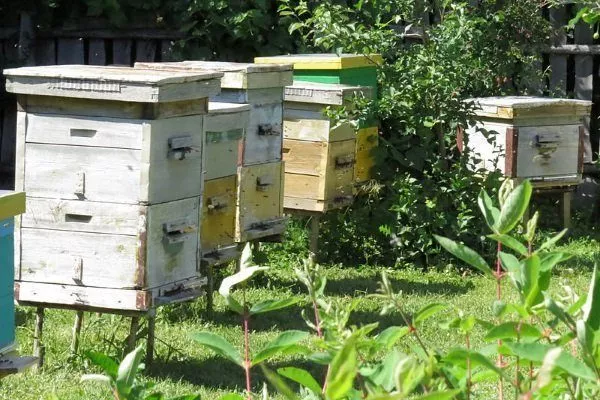
General recommendations for setting up a hive
When setting up a hive for two-queen housing, regardless of the chosen method, it is important to adhere to the following recommendations:
- For wintering, use the outer sections; remove the summer section in advance.
- Fertilize in early spring to build strength after winter. Use pollen for this purpose.
- Training to use the bottom flight hole.
- Two months before the main honey flow, a new queen is planted and the board is replaced with a dividing grid.
- Change of localization every 1.5 weeks.
- During early honey collection, it is necessary to install a super-superstructure.
- Installing the middle section after the insects have colonized the hive. A mesh partition is essential. This will need to be replaced with a grate later.
- Gradually transfer the brood from the outer section to the middle. Once it's full, begin combining the colonies. Mint drops are effective for the frame, which replaces the mesh divider.
- To expand the family, it is effective to use frame movement, using a building frame as an indicator.
- At the first signs of swarming, take action - organize a separate 8-frame enclosure and use the division method.
- If swarming is prevented during honey flow, collect sealed honey and monitor free combs for nectar.
- After the main honey flow ends, bees in the hive become more active, increasing the risk of them becoming aggressive toward the queen. In this case, the middle entrance should be closed and the outer one opened.
The double queen maintenance is stopped after main honey flowInstead, two standard bee colonies are established. Leaving a double-queen hive for the winter is also a common practice.
Technologies for organizing double-queen beekeeping
Dual-queen beekeeping can be organized in various types of hives. The specifics of the process depend on this.
| Name | Hive type | Number of frames | Features of wintering |
|---|---|---|---|
| Horizontal hive | Sunbed | 16-20 | Suitable for wintering and spring development |
| Multi-body hive | Multi-hull | 2-3 | Low risk of swarming, large number of worker bees |
| Beehive according to Ozerov | Special | 8 | A simple nest for a strong family |
| Beehive according to Sviridov | Sunbed | 16 | Only for a strong family |
| Dadan-Blatt hive | Universal | 16 | Well suited for twin queen housing |
| Technology | Minimum family strength | Recommended period |
|---|---|---|
| Horizontal hive | Strong | Spring-summer |
| Multi-body hive | Average | Late spring-summer |
| According to Ozerov | Very strong | Summer |
Horizontal hive
In this case, a 16-20-frame hive with a dividing partition is typically used. Each bee colony has its own compartment, which is also where the queen and brood are placed. This type of hive is suitable for overwintering and spring development of the insects.
During the summer, a housing with a dividing grid and a common feeder are installed on the sunbed. This significantly increases productivity.
When keeping a horizontal hive, start with one initially full-fledged colony. The queen and half the worker bees are placed in one compartment of the hive. The other half is placed in the second compartment. The fertile queen is initially introduced into the hive in a cap, releasing her only after the bees have become accustomed.
At the peak of egg-laying activity, all frames may be occupied, so a gradual selection is necessary. If the bees run out of space, swarming may occur.
A colony should be formed from the selected frames and worker bees. This colony can later be used to establish a dual-queen colony.
Watch a video about keeping two queens in horizontal hives and combining colonies for honey collection:
Multi-body hive
Keeping bees in two-queen hives is also called the Gand or Farrar method. In this case, a spring colony is formed over the main colony.
Multi-box hives are typically used to build up colony strength for the honey flow. Queen formation should begin in the first ten days of May, so by the second half of the month, the colony will occupy two to three boxes.
To establish a colony in the upper enclosure, place a barren queen with a queen cell there. Egg-laying will begin at the end of the month. With two queens, colony growth will be rapid.
At the beginning of clover flowering, when the cluster contains 6-8 frames, a metal divider mesh should be installed. This mesh should remain in place for no more than two days. Then, begin filling the cluster with wax foundation until the frame is completely filled. Afterward, turn it over and install another frame with the divider mesh. The old queen is removed to form an additional cluster.
The appeal of dual-queen housing in multi-hull hives lies in the low risk of swarming and the large number of worker bees due to brood rearing in the upper hives. The number of foragers increases, so productivity during the nectar flow will be higher.
Watch a video about keeping bees with two queens in a multi-hull hive:
According to Ozerov
In this method, the first two boxes are brood boxes and are divided in half. The entrances are closed for the summer, and the nests and super boxes are separated by bars. Bees fly through the entrances of the super boxes, using their reserves to supply the brood with honey and bee bread.
It is recommended to arrange the entrances symmetrically, with a 30 mm gap at the top and bottom. This will speed up the insects' adaptation to the entrances after installing the new enclosures.
Ozerov's method involves creating a spacious nest for a strong colony. The process is as follows:
- When will it end? spring cleansing flight, close the alleys (use slats) and install insulation. If you need to use stimulating or therapeutic fertilizer, you'll need to remove some slats and install feeders (4 cm deep). Place an empty extension on the lower body and lay good insulation.
- To expand, remove three slats from the center of each section of the lower housing. Cover the compartments with divider grids and install the main housing. It should contain eight frames of dried fruit, which should be sprayed with syrup. Use diaphragms on both sides to restrict the amount of dried fruit.
- After 1.5 weeks, remove the top box to a stand behind the hive. Remove the divider bars and the filler bars. Cover the sections with bars and add a main box containing wax foundation and a dry comb.
- After another 1.5 weeks, once the upper box has been fully colonized, remove it to a stand behind the hive, remove the dividers, and install half of the second box. Add four frames of dry honey and the same amount of wax foundation. Install the divider screens, cover them with canvas, and install the roof. Shake the bees from the third box behind the hive onto a piece of plywood, placing one edge on the landing board of the lower box. Pump out the frames, and place the box on the halves of the second box, covering them with dividers. Close the streets of the third box with slats.
- The halves of the second building will be occupied in approximately three weeks. Remove the third building and arrange the halves of the second building. Queens with young brood from them should be transferred to the lower building and covered with screen dividers. Then, after pumping, install the third building with dividers, and the sections of the second building on top—all brood frames should be placed there. Open the side entrances of the second building. After a week, replace the screen dividers with mesh partitions. Destroy the queen cells of the second building and replace them with fertile queens.
- Combine the honey flow sections. Remove the super and place it at the back, remove the sections of the second box and arrange them to the sides. Remove the third box and place it at the back. Remove the dividers from the bottom box, install the sections of the second box, and then the super without dividers on top. Transfer the bees from the super to the second box using smoke, and place it on the lid. Place the dividers on the second box, then the transition boxes and honey supers. Shake the bees out of the third box.
- Remove honey corpuses when the main honey flow is over.
- Before wintering, move brood, honey, and bee bread from the other hives to the lower hive. Shake the bees off one by one and add food as needed.
To keep two queens, according to Ozerov, it is necessary to construct a hive patented by him:
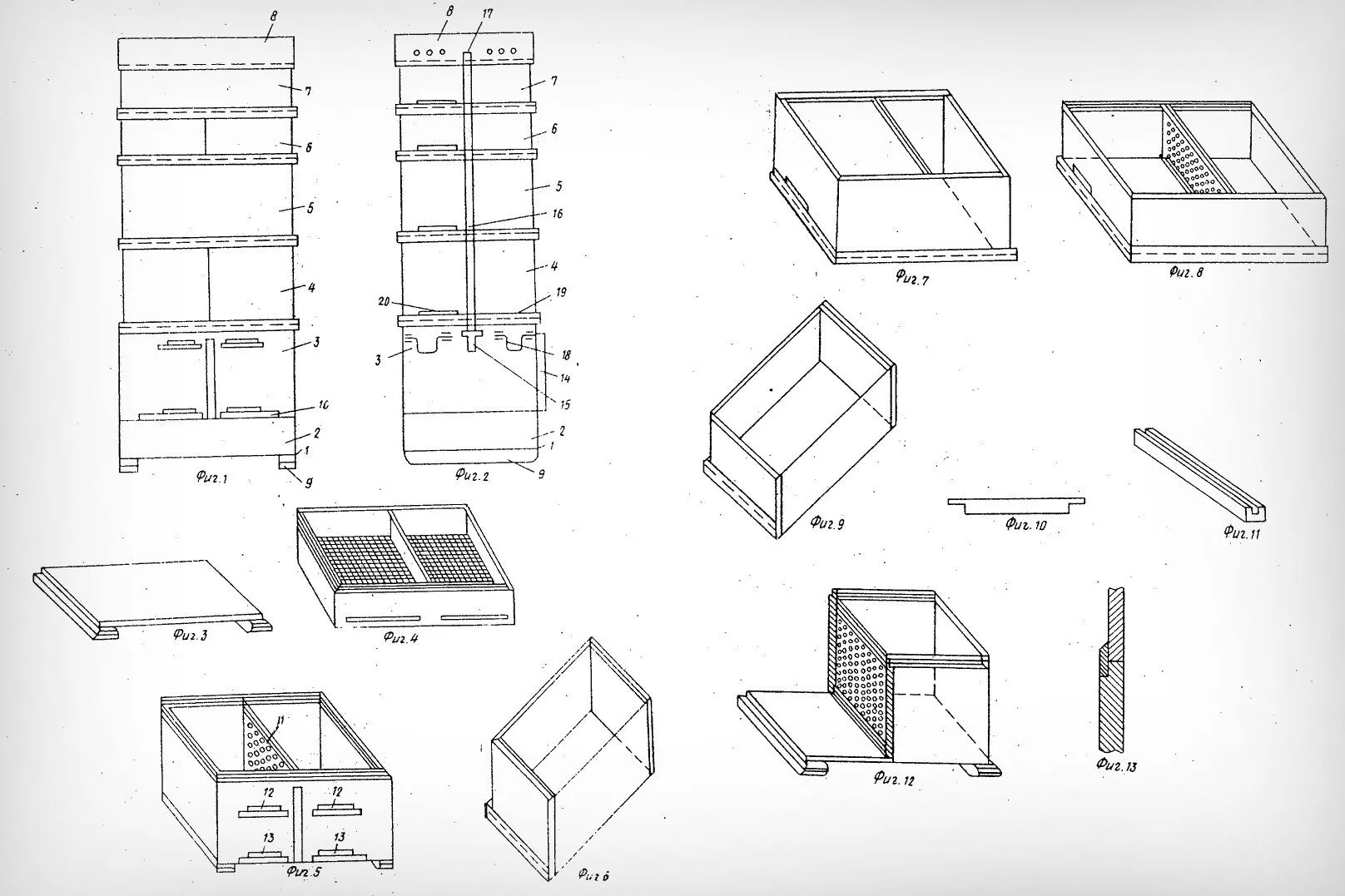
Ozerov's hive for keeping bees with two queens (Fig. 1 shows a general view of the hive, Fig. 2 - a side view): 1 - detachable bottom (Fig. 3); 2 - ventilation mite-catching stand (Fig. 4); 3 - lower body (Fig. 5, general view and Fig. 12, section along the line of the partition); 4 - second body (Fig. 6, in section); 5 - third body (Fig. 7); 6 - detachable super-structure (Fig. 9, in section); 7 - solid super-structure (Fig. 8); 8 - roof; 9 - beams; 10 - landing board; 11 - perforated partition; 12 - upper entrance holes; 13 - lower entrance holes; 14 - outer vertical divider; 15 - non-bending clamps; 16 — wire traction; 17 — hook; 18 — handles for carrying the hive; 19 — "skirt" made of planks; 20 — entrance hole. Fig. 10 — bookmark strip. Fig. 11 — limiting strip. Fig. 13 — outer ledge at the lower body.
According to Sviridov
This method was developed in the Dnipropetrovsk region (Ukraine). It uses horizontal hives with a dividing grid for insect interaction.
Only a strong colony is suitable for Sviridov's method. The process follows the standard algorithm for horizontal hives. Adherence to the technique ensures the production of 16 frames of brood.
Dadan-Blatt hive
These hives are considered universal and well suited for dual-queen housing. They are constructed using Starobogatov's method, which utilized 16 Dadan-Blatt frames.
With this method, the winter mating occurs in the fall before overwintering. This allows for the preservation of a strong queen for the swarm. Subsequently, the system changed: the colony is combined only during the nectar flow, from mid-May to mid-July. The rest of the time, including overwintering, the colonies must be separated by a diaphragm. Under these conditions, they become virtually independent.
The entire process is carried out according to the following algorithm:
- Before the main honey flow, remove the weak and non-viable queen and 2 frames of brood.
- Remove the partition and place 3 frames with wax foundation.
- During the bribe, add half-frames - 1-2 extensions.
- Place the removed queen and brood in a regular hive - there should be 4 compartments where the queens will be hatched.
- At the end of the honey flow, select the strongest individuals from the queen cell and place them in a double-queen hive.
- In mid-August, insulate the hives and provide syrup feeding. This is the final stage.
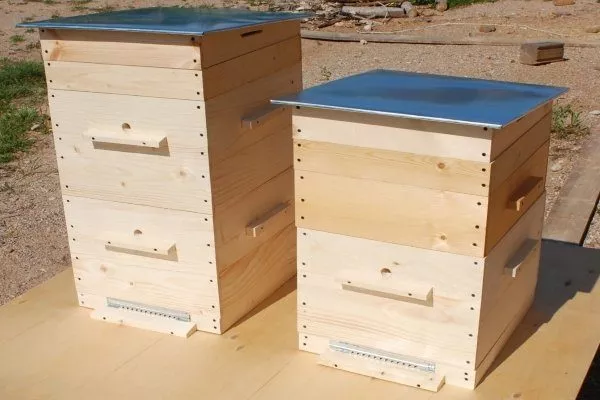
Keeping bees in a double-queen system improves winter survival, resulting in a stronger colony. This increases productivity during the main honey flow, which is the primary goal of beekeeping. Double-queen systems can be implemented in a variety of ways, each with its own specific technology and nuances.