
Membranous insects have a unique "weapon" for defense—a stinger containing a poisonous substance. In bees, it is pointed and located at the end of the abdomen. More information about the bee sting, its structure, and its functions can be found below.
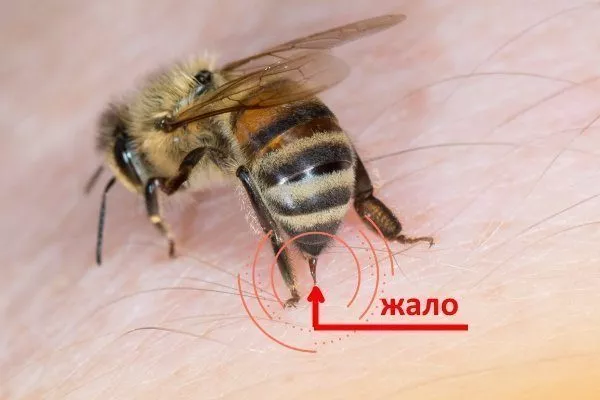
What is this organ and what are its dimensions?
A bee's stinger is an organ measuring 2 to 4.5 mm that it inserts into its attacker, injecting venom that causes pain and a burning sensation. Interestingly, the venom contained in the stinger continues to be released even after the sting.
The sting has two parts:
- MotionlessIt consists of:
- sleds;
- processes of the sleds;
- oblong plates;
- palps.
- MovableIt consists of:
- triangular plate;
- stilettos;
- square plates;
- muscle;
- poison gland (small and large);
- reservoir of the poison gland.
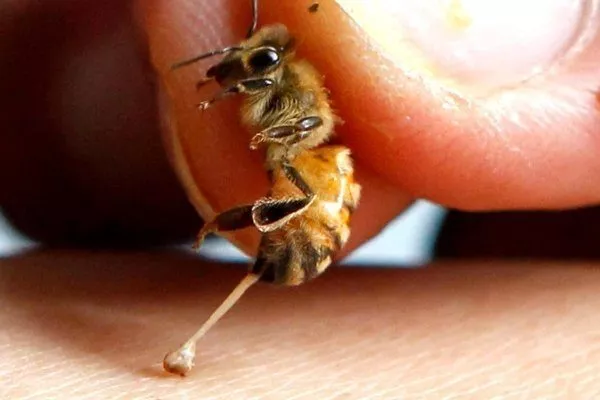
A bee needs its sting for defense, but it can only sting once, after which it dies. This is because when a bee stings, the stinger remains under the attacker's skin, and without it, the bee cannot survive, as it is part of its body.
After stinging, the bee flies away from the offender with an open wound and dies.
Where is it located?
The stinger is located behind the insect's abdomen and is considered a modified ovipositor. The bee's abdomen can easily bend, making it easy to insert the stinger into its victim. Furthermore, it has a sharp point with serrations visible only through a microscope. These serrations make it significantly more difficult to remove the stinger from the offender.
Functions of the sting and characteristics of the venom
Originally, bees lacked a stinger, but through evolution, the ovipositor in the 11th and 12th abdominal segments evolved into this organ and became a tool for honey protection. Only females possess this organ, so drones do not sting. Thus, the stinger's function is to inject venom into the body of enemies to stop them and protect the hive. It can be attacked by:
- wasps;
- hornets;
- other people's bee colonies;
- ants;
- spiders;
- mice;
- rats;
- lizards;
- hedgehogs;
- bears.
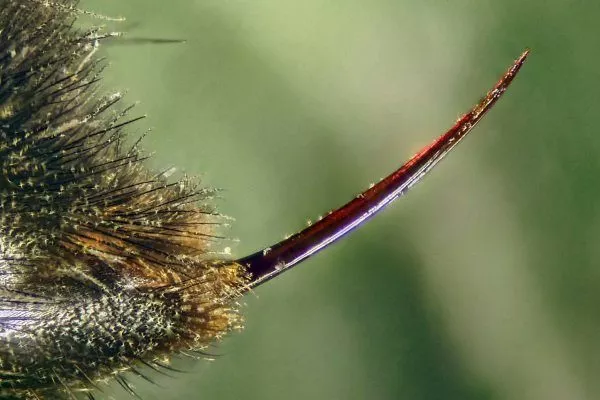
Worker bees use their stings to attack and defend themselves in times of danger. The venom secreted from them has a pleasant aroma and is a colorless liquid. It is produced in two venom glands—the major and minor. Within the bee's body, it is stored in a special sac.
A study of the venom's chemical composition revealed 13 amino acids and various compounds, but its core component is melittin, a protein substance or peptide found in bee venom. It has properties capable of eliminating bacteria.
The functioning of the venom-producing gland depends on the bee's age. When the bee has just emerged from the cell, the sac contains a minimal amount of venom. After a week, the reservoir is almost completely filled with the poisonous substance. The sac accumulates its maximum amount of venom by the 15th day. When the bee becomes a "guard," around the 19th day, the sac is completely filled with venom.
In bees that emerge from a cell in the fall, the activity of the venom-producing gland begins much later (only on the 14th day) and ends on the 20th day.
It's worth noting that the queen bee uses her stinger not only for self-defense but also for laying eggs. This is one of the queen's primary functions, as she must continue her gestation. To ensure proper egg-laying, she positions her stinger perpendicularly. The queen bee's stinger is longer than that of a normal bee.
How does a bee sting?
A bee must sting to protect its hive. Its goal is not to kill, but to repel the offender. "Older" bees, those that have reached 19 days of age, are particularly good at guarding the hive. A bee performs its actions in stages:
- Stage IFirst, the insect lands on its enemy, making contact with their skin. Then it decides to sting. The entire stinging apparatus is contained within a special sac-like chamber-case. When the bee is at rest, the tip of the stinger is concealed within it. A narrow slit is located in the seventh abdominal section. When the sting is initiated, muscles exert force on the chamber, lifting it upward. The abdomen begins to descend and bend, moving downward and slightly backward. This bending action moves the abdomen, pushing the stinging part toward the opening of the chamber. The sharp part begins to emerge through the resulting slit, although the case will be slightly raised by the muscles.
- Stage IIThe sting's stylets are shaped like triangles with angles pointing backward, like a fishhook. They insert easily but interfere with the sting's exit. The queen bee has only four barbs, so it's quite easy for her to remove the sting after stinging, as she has a more important task—procreation—than protecting the hive. When stinging, two stylets are pulled out of the abdomen by sleds. These sleds are covered by several plates, but when stinging, they open, allowing the sleds to extend slightly from the abdomen, allowing the stylets to slide easily along them. After the bee inserts her sting, the next stage begins.
- Stage IIIOnce a bee's stinger has penetrated about one-third of its length, it can't do anything else. The stinger is torn from its body when it attempts to take off, and the barbs on the stinger prevent it from doing so. The bee is forced to pull it out, which causes its entrails, including the last ganglion of the nerve cord, to come loose along with it.
- Stage IV. Although the bee has flown away, the stinger is already lodged in the victim's body, releasing toxic substances. This process lasts for 20-30 minutes. The stinger vibrates, releasing more and more venom, which enters the bloodstream. The stinger also penetrates deeper into the skin, so it's crucial to remove it quickly. Additionally, pheromones are released into the air within a 15-30 meter radius. These pheromones attract other bees, which can quickly fly in and attack.
A bee can't sting when its crop is filled with honey during the honey flow. Beekeepers blow smoke directly into the hive for a reason, as the smoke signals the bee to fill its crop with honey.
Differences from a wasp sting
A bee's sting differs from a wasp's:
- When stinging, wasps insert their stinger into the soft flesh of their predator, thanks to the presence of barbs. The stinger has a saw-shaped stylet made of hard chitin, containing two lancets. The stinger is sharpened, making it easier to insert, and contains glands filled with venom.
- Unlike a bee, a wasp doesn't die after stinging and can even sting several more times. A wasp's stinger has much smaller barbs, so they don't cling easily when pulled back out of the body. Furthermore, there's no knot at the tip, allowing the wasp to easily remove the stinger.
- Species sting in different ways. Wasps are aggressive insects, so they can sting or simply bite with their jaws. They don't need a trigger—a simple wave of your hand or an unpleasant scent is enough. Their sting is very painful, often causing swelling and inflammation, especially if the insect is large. Bees, on the other hand, sting only when necessary to protect the hive.
- A wasp sting will leave its stinger behind, while a bee sting will remain like a splinter. A bee sting is less painful than a wasp sting.
Lifespan of a bee after stinging
After a bee stings, it can survive only a few hours. When it stings a human, it dies because the stinger cannot be pulled out of its elastic skin. When a bee stings an insect with a hard chitinous layer, it can retract its stinger, thus surviving.
If a bee is stung by another insect, it dies immediately.
What to do if you get stung by a bee?
A single bee sting isn't life-threatening, as the amount of venom injected is only 0.1-0.3 mg. However, if a swarm attacks, the venom level can rise to 0.25 g, a dose considered fatal. Furthermore, much depends on the location of the sting. It's especially severe on the face, lips, eyes, and neck. People die not so much from the insect's venom as from suffocation due to swelling of the neck or tongue.
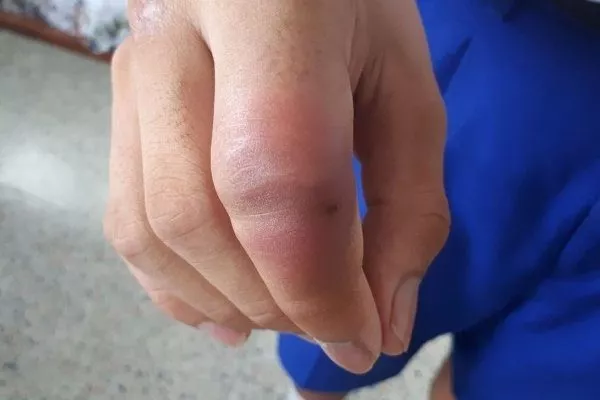
In any case, the stinger should be removed from the resulting wound quickly, as venom will continue to leak through it even after the bite. This will cause a burning sensation. If proper measures are not taken, swelling and redness will occur at the bite site. In severe cases, the wound may become infected.
Many beekeepers who are frequently stung experience little or no reaction to the bite, developing a temporary immunity. A person can survive 10 to 15 bee stings if stung regularly.
Help for bites without signs of allergy
If there's no allergy, symptoms will include mild swelling and itching. This indicates the bite is not life-threatening. First aid measures include:
- ice or cold water;
- baking soda;
- antihistamine;
- painkiller.
The following sequence of actions is followed:
- Remove the stinger as quickly as possible. If it's still protruding from the skin, use your fingernail to grasp it with your fingers. Don't use tweezers, as pulling it out can introduce more venom. Don't squeeze it out either!
- The resulting wound is washed under running cold water, using liquid soap to disinfect the area.
- Take antihistamines. For example:
- Cetirizine;
- Tavegil;
- Suprastin;
- Fenistil;
- Zyrtec;
- Erius.
- Treat the wound with an anti-allergy cream. You can also apply a damp cloth soaked in a baking soda solution to the area. Prepare the solution by mixing 1 teaspoon of baking soda per 1 cup of water. If you don't have baking soda, you can substitute it with hydrogen peroxide, a weak solution of potassium permanganate, salt water, 0.25% ammonia, or 6% vinegar. Avoid scratching the bite.
- Applying cold to the wound relieves pain and helps the venom spread more quickly. Cold also helps prevent swelling. This can be done with ice or a towel soaked in cold water.
- For severe pain, take painkillers:
- Aspirin;
- Ibuprofen;
- Nurofen.
- Drink a lot of fluids.
Help with bites caused by allergies
A bee sting isn't fatal to humans, but if you're allergic to bee venom, things become much more complicated. Unfortunately, many people only discover their allergy after being stung.
Insect venom is a mixture of protein compounds. Some people react to it with an allergic reaction, leading to severe consequences such as angioedema and anaphylactic shock.
Symptoms of an allergy after a bite are as follows:
- severe swelling;
- a feeling of pressure in the chest area;
- difficulty breathing;
- the presence of red itchy spots all over the body, hives;
- headache;
- weakness;
- nausea and vomiting;
- elevated temperature;
- convulsions;
- pain in the lumbar region and joints;
- loss of consciousness.
- ✓ The presence of red itchy spots all over the body, not limited to the bite site.
- ✓ Difficulty breathing and a feeling of pressure in the chest, indicating possible anaphylactic shock.
If you experience such symptoms, you should call an ambulance immediately.
The steps taken to provide first aid are as follows:
- Use an epinephrine pen if the victim has one. Allergy sufferers usually always have one with them.
- Unbutton the collar and loosen the tie to make it easier for the victim to breathe and to avoid constriction of clothing.
- Lay the victim down, then cover him and apply heating pads with warm water.
- Give 25 drops of Cordiamine to support the heart.
- If there is nosebleed and vomiting, turn the victim on his side.
- Place the bite site below the level of the heart so that the poison does not move quickly through the blood.
- Call emergency medical help immediately.
After receiving assistance, swelling may persist for 1-5 days, and on the face for about a week.
Prevention of bites
People with allergies to bee venom should exercise extra caution. It's a good idea to take the following precautions:
- Wear protective clothing or long-sleeved, protective clothing. Although insects can sting through fabric, it can still provide protection in some cases.
- Avoid wearing perfume or brightly colored clothing when working in the apiary or outdoors. This attracts insects.
- Do not approach wasp and wild bee nests or apiaries without protective clothing.
- When walking, be aware of large concentrations of stinging insects. It's best to leave such areas promptly.
- If there are such nests at your dacha, it is better to call specialists and get rid of them.
Bees are peaceful insects that sting only in exceptional cases. It's best to avoid large groups of them, exercise caution, and avoid provoking them. If stung, administer first aid and call a doctor.