
Reproduction is an important part of insect life. In beekeeping, studying the stages, methods, and forms of bee reproduction helps maintain and effectively increase the bee population as the apiary grows. We'll explain how specialized knowledge can influence the natural processes of the hive.
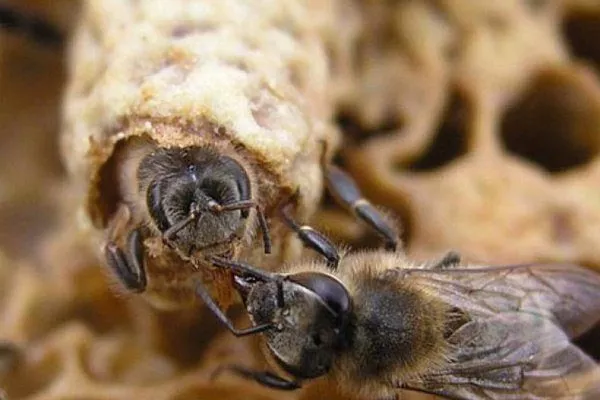
There are two forms of bee reproduction. These, in turn, are divided into several reproductive methods.
Natural reproduction
All honeybee species reproduce vegetatively and sexually. There are two such methods.
Population increase
For a bee colony to function, there must be 3 types of bees inside the hive:
- queen bee - a queen whose only job is to lay eggs;
- worker bees – those who carry honey and care for new generations;
- drones – male individuals whose only function is mating with the queen.
To mate, numerous male bees fly to a special location to meet the queen. During mating, the drone does not fertilize the queen, but merely fills her special organ with sperm.
At one time, the queen mates with 10-20 males. About 100 million sperm accumulate in the queen's oviducts. The semen is stored and used for the next four years. However, the queen is replaced every two to three years.
Comparison of reproductive characteristics of queens
| Parameter | Young queen (1 year old) | Old queen (3+ years) |
|---|---|---|
| Egg laying per day | 2000-2500 eggs | 800-1200 eggs |
| Quality of offspring | Large individuals | Small individuals |
| Pheromone background | High | Reduced |
| Risk of swarming | Short | High |
| Replacement period | Not required | Required |
The queen fertilizes only some of the eggs: as they move through the queen's oviduct, they can become fertilized by pressing against the vas deferens. A queen bee will lay about 2,000 eggs per day. If an egg is fertilized, it will become either a worker bee or a queen. If an egg is not fertilized, it will become a drone.
When the queen's seminal fluid runs out, she slows down egg-laying, and new queens are formed in the colony (their laying is controlled by worker bees), who will either leave the hive with part of the swarm or replace the old queen.
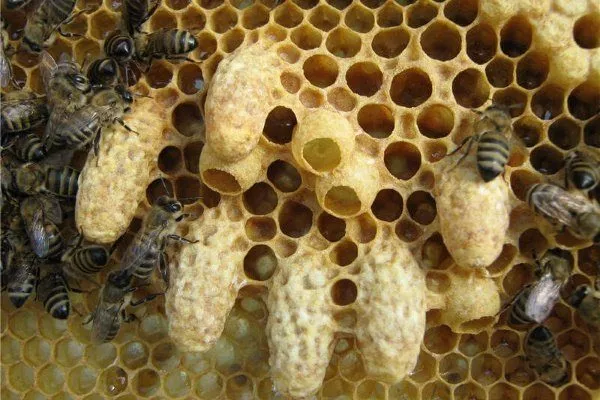
Swarming
Swarming is the reproduction of bees by separating the swarm with its new queen and moving to a new place of residence.
In the spring, a large number of young bees emerge, capable of raising five times more larvae than older nurses. If the young bees are not sufficiently busy, they begin to swarm. Consequently, comb construction and honey flow cease, and the process of laying the rudiments of 8-10 queen cells for new queens begins, along with the special feeding of the larvae within them.
In order for a larva to become a queen bee, it must be fed royal jelly.
Swarming can be promoted by:
- a large increase in the number of young bees;
- deterioration of living conditions;
- old queen with reduced levels of pheromones and low reproductive capacity.
The swarm emerges from the hive 7-9 days after the eggs are laid in the queen combs. In rainy and cold weather, the swarm may be delayed.
50% of the family can join the swarm, with 2/3 being young bees.
In preparation for departure, the bees stock up on honey, filling their bellies with it, then wait for the signal from the new queen and fly away. Tree branches and bushes near their home hive can serve as shelter. They remain there for anywhere from a few hours to 2-3 days until the "scouts" find a new home.
The beekeeper can either catch the swarm and place it in a vacant hive, or identify the queen and kill her. The swarm will then return to the old hive.
After the first swarm, a second, third, and more will appear until there are enough larvae in the hive to form a new swarm. Each subsequent swarm will contain fewer and fewer bees.
The end of swarming is the destruction of the old queen bee by the insects: they will suffocate her by covering her with their bodies, she will overheat and die.
For more information on bee reproduction through natural swarming, watch the following video, presented by practicing beekeepers:
Artificial reproduction
Comparison of artificial reproduction methods
| Method | Dates of the event | Required resources | Risk of weakening the family |
|---|---|---|---|
| Layers | April-June | 4-6 frames with bees | Average |
| Division | May-July | 12 streets | High |
| Plaque on the uterus | May 15–June 10 | 5-6 frames | Short |
The natural swarming process is difficult to control, and since it brings many concerns related to the productivity of the swarming colony and the capture of an escaped swarm, large apiaries switch to artificial breeding methods.
Artificial methods are based on the natural reproduction of bees by swarming.
Layers and nuclei
Before forming colonies, queens are bred and prepared, and conditions for maintaining the future hive are created:
- mating nuclei are being prepared - small hives that will contain bee colonies with a reserve queen;
- the nest is insulated;
- the required amount of nutrition is provided.
A colony with a sterile queen is created:
- a productive family is selected, 10 streets and 9 brood frames;
- in a family, 2-4 frames with bees sitting on them are selected and transferred to a new hive;
- bees are placed in the same hive, shaking them out of 2 frames, and a supply of food is transferred (just a few frames are enough);
- An infertile queen is introduced into an established family, or a mature queen cell is placed.
Swarms are a selection of bees that are later capable of breeding in artificially created conditions. They can be formed by selectively selecting bees from several hives. This method does not weaken the donor colonies.
Worker bees from the new colony can fly back to the mother nest.
Division
To reproduce by separating families, you need:
- take one family for 12 streets and about 8 brood frames;
- install a new house, similar in color and shape, right next to the mother house;
- transfer 50% of all bees into the hive, as well as food and brood frames with a new queen bee;
- several frames with wax foundation are installed in the new and “donor” hive;
- When arriving, worker bees are evenly distributed between the two hives.
Plaque on the uterus
A step-by-step plan for a uterine attack
- Prepare a new hive 2 days before the procedure
- Transfer 2 frames with sealed brood
- Add 3 frames with wax foundation
- Transfer the queen with 1 frame of bees
- Install the hive in place of the old one before 10 am
- Monitor the distribution of bees for 3 days
Another method of artificial reproduction of bees is "raiding the queen".
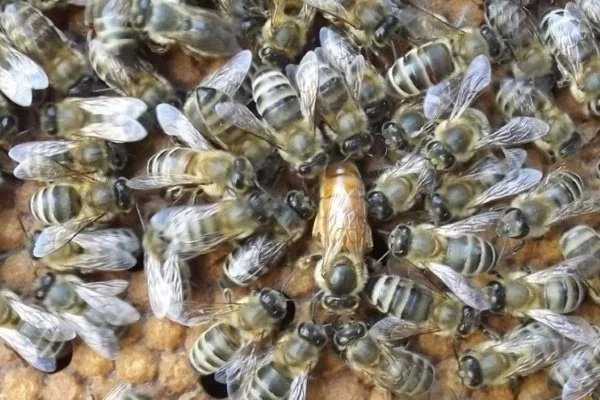
Held during:
- From May 15 to June 10 – when the excess reserve bees accumulate, causing swarming. This must be monitored to ensure a successful swarm formation before a new swarm forms. Then, the queen will have unlimited space for colonization, and the bees will be busy and will "change their minds" about swarming.
- On the eve of the main honey flow or during the honey flow, if the colony is in a pre-swarming state and has already stopped working, the beekeeper needs to speed up the process by placing part of the colony in a new hive.
There is a noticeable difference with the natural method, since the beekeeper cannot control the presence of the same number of young bees that would fly out with the queen in the usual way.
The sequence of stages of the "raid":
- it is necessary to prepare hives, streets and lids;
- a nest of a new family will be formed in the old hive on 5-6 frames;
- it should contain 6-10 kg of honey, cells for sowing, 2-3 frames with wax foundation;
- a working queen is taken from the main family and transferred with a brood frame to a new nest;
- the hive of the former family is moved to the side by 1-1.5 m;
- a new hive is installed in place of the old one;
- After most of the worker bees have left the mother hive, it is given a mature queen cell, separated from it by a diaphragm and having its antrums removed;
The "raid" is carried out during the active flight of bees in the first part of the day.
- When returning, the bees independently distribute themselves between the two hives.
If a beekeeper plans to accelerate reproduction, the main colony is divided not into two, but into several sub-colonies. The young bees with brood are divided into equal parts, supplying all colonies with 8 kg of honey and mature queen cells. This will allow each colony to produce 3-4 new, fully-fledged colonies by fall.
Each of the above methods is based on the natural life cycle of bees. The optimal option is selected for each location, taking into account the timing. flowering of honey plants, local flora and swarming time to effectively use natural and artificial breeding methods.