
What is bee brood? To answer this question, you need to learn more about the importance of brood and the process by which it develops. This article will cover this, as well as the main types of brood, the diseases it can be susceptible to, and treatment options.
Definition of the concept
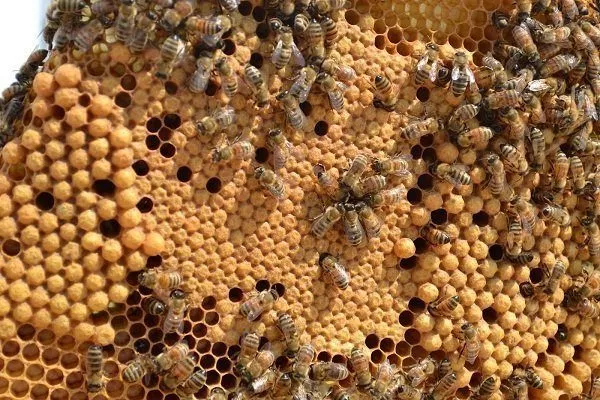
Brood refers to the entire collection of insect offspring that have not yet become a full-fledged part of the bee colony. This includes eggs, pupae, and larvae.
The formation of brood is of great importance for the full development of an insect family.
Bee brood
Brood rearing occurs in a nest constructed from vertically arranged honeycombs. In the wild, the size of the honeycombs depends on the species of bees living in them.
There are several main stages:
- Laying eggs. Within 3 days, tissues and organs are formed in future insects.
- Larva. After hatching, the larvae spend six days intensively feeding with the help of adult bees to grow and gain weight. The larvae require a great deal of vitamins and nutrients, as they must gain almost 500 times their original weight in less than a week.
After another three days, the bee brood separates into queens and workers. The end result of this stage is the larvae's production of a substance necessary for cocoon spinning.
- Doll. The larva develops in a cocoon for 2-3 weeks.
- Adult. The period ends with the formation of an adult, which independently leaves the cocoon.
All stages, from laying eggs to the birth of a worker bee, and the process of the bee's emergence can be seen in the video below:
| Name | Stage of development | Duration of the stage | Temperature requirements |
|---|---|---|---|
| One-day | Egg | 3 days | 35°C |
| Open | Larva | 6 days | 35°C |
| Printed | Doll | 2-3 weeks | 35°C |
| Early | Various | Short terms | Warm climate |
| Late | Various | Long terms | Requires insulation |
| Drone | Larva | 24 days | 35°C |
One-day
One-day brood is when the future bee is still in the initial stage of development—in the egg. In beekeeping, it is necessary for the development of the queen.
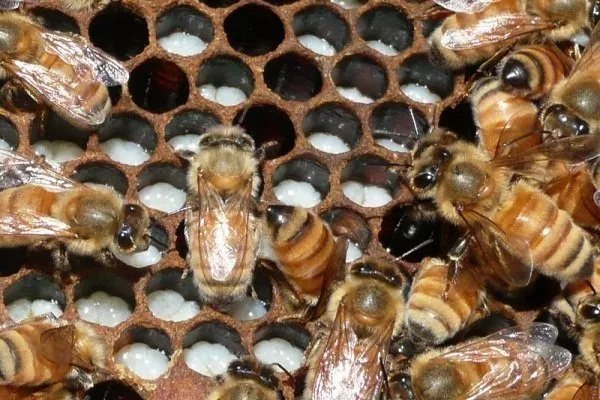
To obtain larvae of the same age, combs from which a generation of bees has already hatched are placed in the center of the bee nest. These combs are inspected daily until it is clear when the queen will produce offspring. Four days after laying the eggs, the older larvae will be about one day old. These larvae are used to rear the queen.
Open
If the brood consists only of eggs, it is called brood, and if it consists of larvae, it is called worm brood. Open brood consists of both eggs and larvae. It gets its name from the fact that the honeycomb cells remain unsealed by their wax caps.
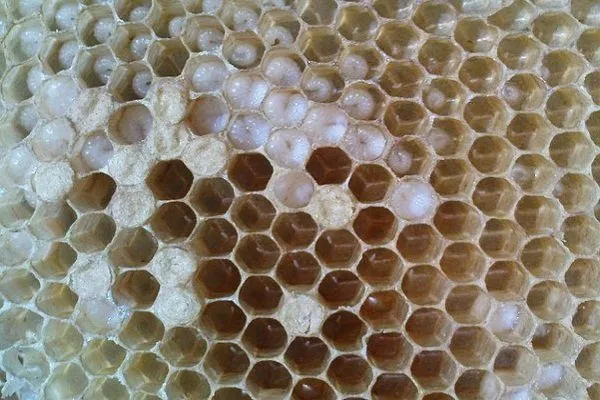
- ✓ The larvae should be pearly white in color without spots.
- ✓ Capped brood cells must be evenly sealed, without any gaps or bulges.
This type of brood is more vulnerable. Brood and worms are more susceptible to disease, so their condition must be monitored with particular care to take appropriate measures promptly.
Printed
If the honeycomb cells are sealed with wax caps, this type of brood is called capped or closed. During its stay in the capped cell, a fully developed bee develops. First, it develops eyes, limbs, and wings, then changes color to a darker shade. This color change indicates the imminent hatching of the insect.
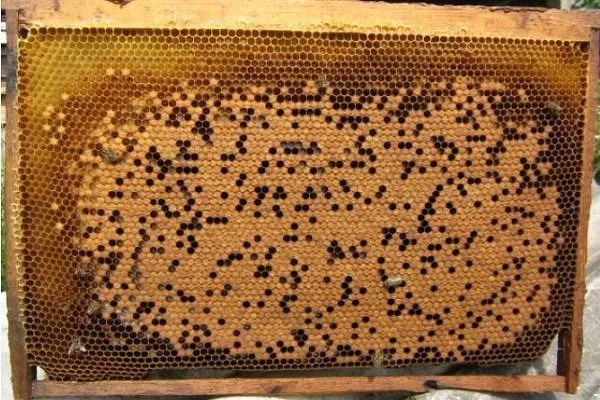
For normal brood formation in sealed cells, a temperature of at least 35 degrees is required.
You can learn more about what sealed bee brood is and what it looks like by watching the video below:
Early
This is a characteristic of only a few bee breeds. In these cases, the formation of individuals occurs more quickly. This type of brood is typical of insects living in warm climates. In cold climates, to accelerate brood formation, hives should be removed from wintering houses earlier. The queen can also be activated by using special feed additives.
Late
Late brood needs to be provided with special conditions, otherwise it may die.
Among the precautions:
- use only young queens;
- insulate the hives before wintering;
- ensure that there is sufficient food and cells for laying eggs;
- remove the caps from the honeycombs.
Precautionary measures are necessary if the queen has begun preparing for late brooding on her own. Creating an artificial need is undesirable.
Care should be taken to ensure that when warm weather arrives, young bees can make a cleansing flight.
Drone
All drones are male. They hatch from unfertilized eggs. It takes about 24 days for them to fully develop. The cells in which the drones develop are sealed with more convex caps.
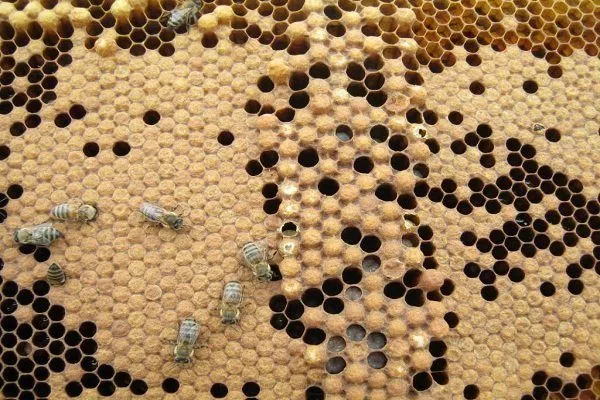
The drone's role is only to fertilize the queen.
Beekeepers often remove drone brood from frames to reduce the number of males in the apiary.
The video shows the birth of a drone, what sealed cells containing drone brood look like, and the importance of drones in a hive:
The extract from drone honeycombs, which is called homogenate, is of great value due to the content of useful substances and is used in medicine.
Drone larvae are also used for medicinal purposes.
Diseases
There are several main types of diseases that bee brood is susceptible to.
Stonebrood
This disease, also known as aspergillosis, is caused by a fungus and enters bees through nectar and pollen.
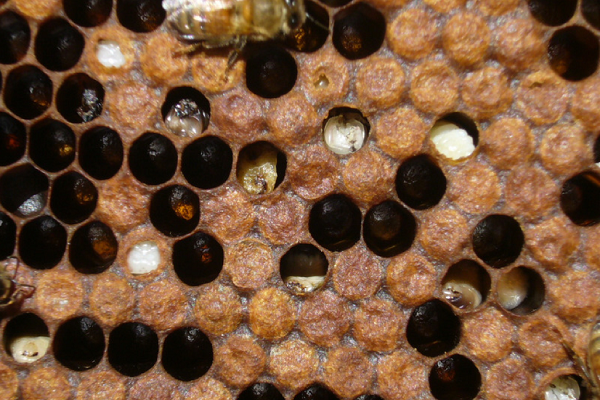
The main cause of aspergillosis is increased humidity in the nest due to improper wintering conditions or excessive precipitation. The fungus can be black or yellow.
Infected bees develop hardened abdomens and become more restless. Dead insects and larvae appear petrified, their bodies covered in a black or yellowish coating.
Treatment is carried out by raising the hive temperature to 60 degrees Celsius. In addition, spraying with a formaldehyde solution is carried out.
Limebrood
Ascorosphaerosis is also a fungal disease. It enters the bodies of larvae and adult bees through their food. The limebrood destroys the insects from the inside, gradually turning them into pieces of limestone, hence the name.
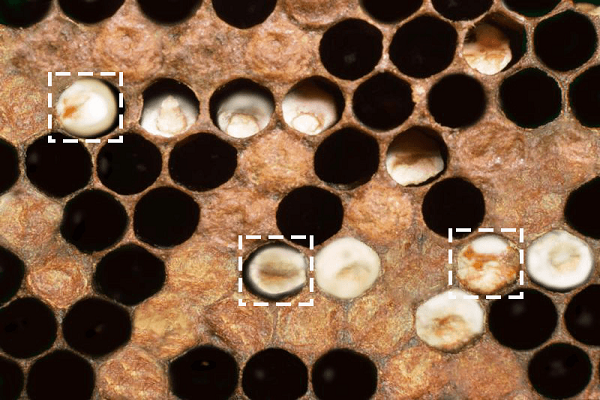
The pathology is treated with the following measures:
- placing healthy bees in new hives, which must be dry and clean;
- burning of all dead individuals;
- melting honeycombs into wax;
- replacement of the diseased uterus with a young and healthy one;
- use of drugs such as Unisan and Askosan.
Sac brood
Infection occurs in early spring, before warm weather sets in. The disease enters the nest through infected bees or beekeeper equipment, affecting larvae and pupae less than 10 days old.
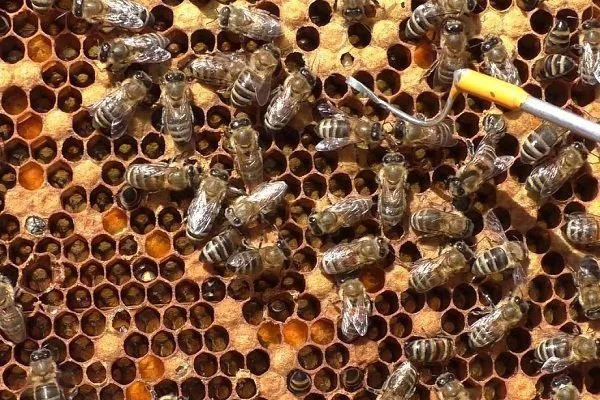
Symptoms of the disease:
- the larva's body begins to darken until it becomes completely black and dries up;
- in appearance, the larvae resemble small sacs;
- the larvae turn over onto their backs;
- The wax cap breaks through, and through it you can see the larva, which lies at the bottom of the cell.
As therapeutic measures:
- destroy infected brood and adult individuals;
- the queen bee is relocated for a while (if she was infected, a replacement is necessary);
- The hive is treated with a weak solution of potassium permanganate, but care must be taken to ensure that the solution does not get into the open cells of the honeycombs.
Humpbacked brood
This disease can be caused by the death or severe weakening of the queen bee. As a result, normal bees begin to eat her food and soon become capable of reproducing. However, due to differences in the structure of their reproductive organs, only males emerge from the eggs.
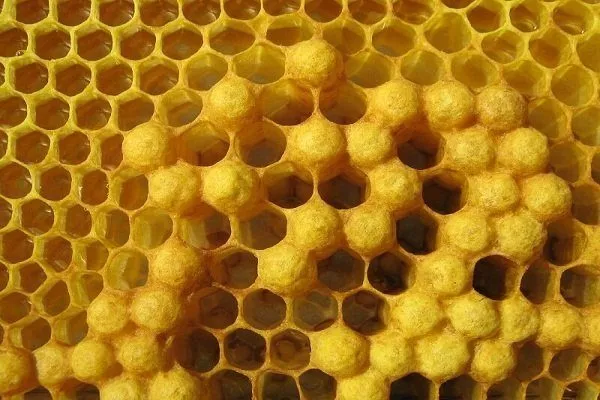
An increase in the number of drones is the main symptom of humped brood. Also, as the disease progresses, clutches are laid haphazardly. As a result, drones are formed in combs of the wrong size, their bodies appear deformed, and the sealed cells appear humped.
Treatment involves replacing the queen with a new one. If the colony is small, the bees are dispersed or moved to another hive.
Sometimes any drone brood is called "humpbacked".
Lattice brood
The development of this pathology is associated with a disease or weakness of the queen. Sometimes it develops due to late comb preparation or the presence of other brood diseases.
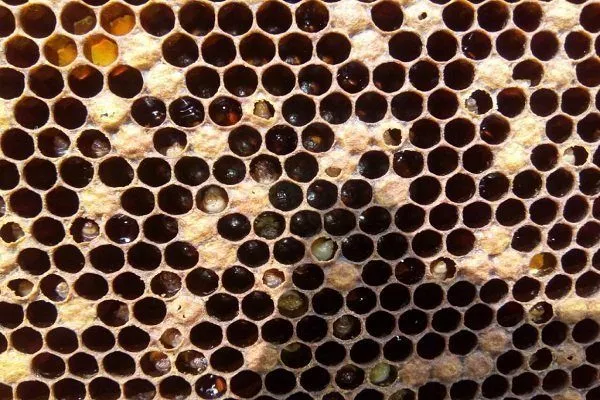
A characteristic feature of this pathology is the uneven filling of the cells. This results in weak, non-viable individuals.
Treatment of the pathology depends on the cause that provoked it.
Chilled brood
Only insects kept in poor conditions are susceptible to disease. Due to temperature fluctuations, bees are unable to warm the young generation, and the brood dies.
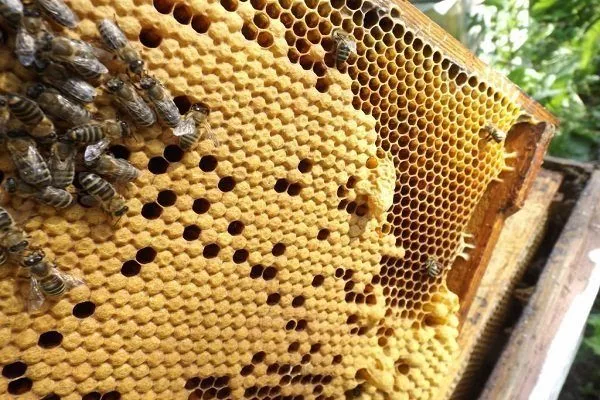
After the brood dies, bees remove it from the nest. An increase in the number of dead larvae indicates a problem.
This type of disease can be dealt with by maintaining normal temperature in the hive.
American foulbrood
The disease occurs during the formation of the capped brood. It is caused by the bacterium Larve. It enters the nest with an infected insect and multiplies very rapidly.
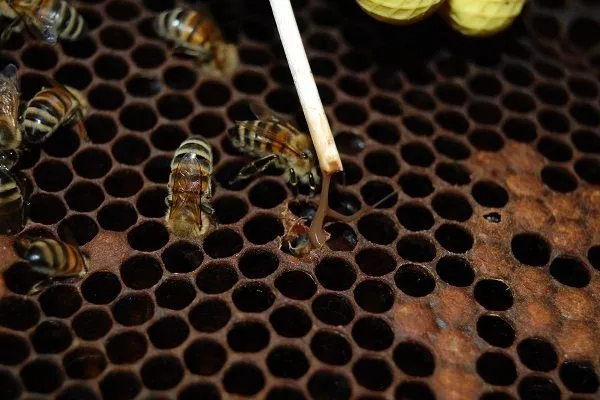
American foulbrood infestation can cause the death of an entire colony of insects.
Characteristic features:
- change in the color of the larvae to brownish, a gray tint may be present;
- complete cessation of growth of pupae, their adhesion to seals;
- darkening and deformation of the honeycomb caps, they begin to fall inward.
The disease can be cured with strong antibiotics, but in cases of large-scale infestation of a bee colony, it is recommended to burn the hive to prevent foulbrood from spreading to neighboring nests.
European foulbrood
The symptoms of this disease are similar to American foulbrood, but are less severe.
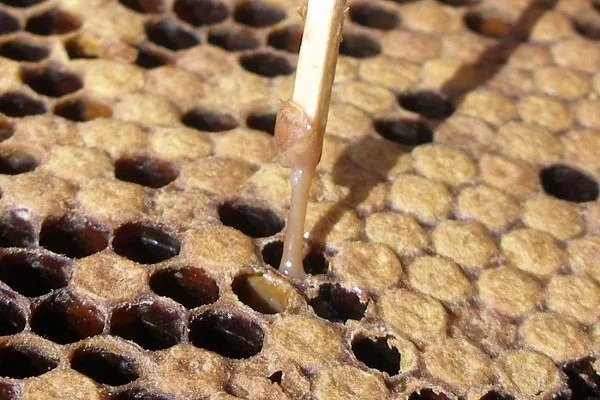
It develops due to the bacteria Streptococcus plutonium, which enters the nest with the bees. These bacteria infect the bee brood during the larval stage of development.
The infected specimen darkens and loses its elasticity. If you move a dead larva, you can smell a foul rotten odor, indicating disease.
Antibiotics are used for treatment. Replacement of the combs and transfer of the bees to other hives are also required.
Prevention
To prevent brood diseases, the following measures are used:
- adequate feeding of bees;
- ensuring normal feed quality;
- elimination of weak bee colonies;
- replacement of weak and sick queens;
- melting down old honeycombs into wax;
- ensuring optimal temperature and humidity levels in the hive;
- timely change of water and food;
- cleaning hives;
- preventive treatments.
Timely and proper brood formation is essential for the prosperity, growth, and development of a bee colony. Therefore, beekeepers should pay special attention to brood development at all stages and take preventative and treatment measures to prevent and treat diseases.