
Honey with the addition of capping wax is considered an effective treatment for various illnesses. It has antibacterial, healing, and strengthening properties, normalizes metabolic processes, and improves the nervous system. Learn why capping wax is so highly valued in this article.

What kind of honey is called capped honey?
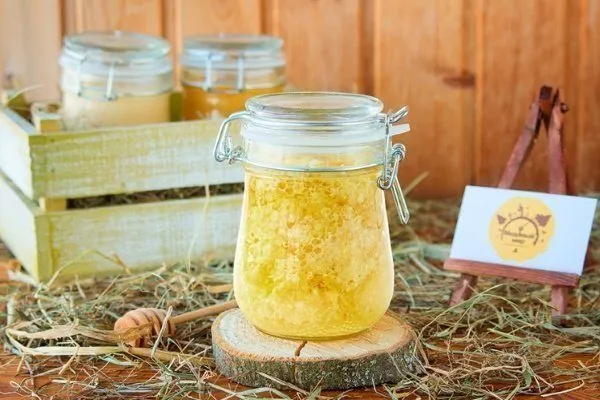
Capping cappings The caps of the honeycombs with which bees seal the honey are considered. They are also called seals.
Honey stored in such conditions becomes richer in nutrients. Some beekeepers say that the seal helps the honey fully ripen, which explains its high value.
Thanks to the capping, honey has a special taste and retains its beneficial properties longer.
Characteristics
During honey harvesting, beekeepers cut off the cappings, no more than 1 mm thick, and allow the honey to drain. Some of the honey is then left in the hive to allow the bees to make new comb, while the rest is collected and used for medicinal purposes.
Sometimes the cappings are crushed using a honey extractor, but it is believed that honey in which the cappings remain in pieces has a higher value.
Unfortunately, many beekeepers are unaware of the beneficial properties of cappings, so they simply discard them when harvesting honey. It's no surprise that, under these conditions, capped honey is considered scarce and highly prized.
Capped honey has the following characteristics:
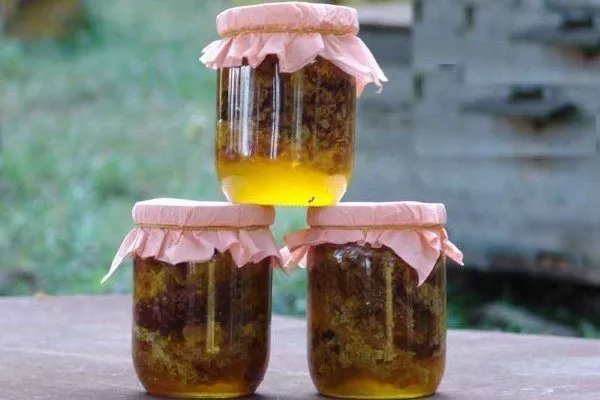
- Color. It depends on the bees, the plants from which it was extracted, and even the weather conditions during collection. Typically, it takes on a very light, almost white color with a slight yellow tint. However, sometimes you can also see dark capped honey, close to dark brown in color.
- Taste. This also depends largely on the conditions listed above. It's worth noting that if honey has been extracted, its flavor characteristics change somewhat. It becomes less intense. However, it retains its properties.
- Smell. Here, too, the variety plays a significant role. For example, sunflower honey will have a light and subtle aroma, while buckwheat honey will have a strong and rich aroma.
- Crystallization. It's important to note that mustard honey crystallizes in a matter of days, while flower honey crystallizes much more slowly. The presence of cappings does not affect this process.
- Consistency. Capped honey is a thicker, more uniform mixture. Pieces of capped honey can often be found within it.
- ✓ The presence of pieces of cappings in honey, which indicates its naturalness and high value.
- ✓ No signs of fermentation or unnatural odor, which may indicate improper storage or counterfeiting.
You can learn about capping wax, its qualities, and how best to use it by watching the video below:
Special composition
The composition of capped honey is considered unique. It depends largely on:
- the breeds of bees that produced the honey;
- places where insects live and where the apiary is located.
Among its components:
Capped honey retains components that are mostly lost during the extraction of regular honey.
Honey also contains many other useful substances:
- vitamins A and C;
- essential oils;
- organic acids;
- proteins, carbohydrates and fats.
Medicinal properties
Honey with cappings has many beneficial properties:
- Antibacterial. Medicinal honey helps get rid of viruses and bacteria that cause diseases.
Furthermore, honey does not cause addiction, unlike some traditional remedies with similar effects. Therefore, stopping honey use does not result in relapses or other negative symptoms. It effectively and safely combats the symptoms of the disease. - Antiallergic. Capped honey is a powerful remedy for pollen allergies, which occur during the flowering season of various plants. This property is explained by the fact that honey contains a small amount of flower pollen. Regular consumption of small amounts of this pollen helps build immunity to its negative effects.
- Antispasmodic. Effective for spasms associated with stomach upset, honey helps alleviate these symptoms. It also promotes the elimination of waste, toxins, and other harmful substances from the body, significantly facilitating digestion and improving the microflora of the stomach and intestinal walls. Furthermore, honey with honey cappings is an effective remedy for constipation.

- Dietary. Nutritionists recommend consuming honey with cappings for those who want to lose weight, as it helps normalize metabolic processes in the body, enriching it with beneficial micronutrients, and thus aiding weight loss. However, it's best not to overindulge in this sweet product.
- Sedative. The calming effect of honey cappings has been known since ancient times. This is especially beneficial for those suffering from sleep disorders. Honey also has a beneficial effect on the nervous system, strengthening it. This reduces the risk of stress and breakdowns, improves mood, and increases overall energy.
- Strengthening. Regular consumption of honey with cappings has been proven to significantly boost immunity and reduce the risk of many diseases. This is especially noticeable during the cold winter months: people who consume honey with cappings experience significantly higher energy levels and productivity.
- Cleansing. Even our distant ancestors chewed cappings to clean their teeth and improve gum health. It whitens enamel and gradually removes tartar. It is effective not only for treating many oral diseases but also for their prevention.
- Healing. For certain skin conditions, as well as minor skin injuries, it is recommended to treat specific areas with honey cappings. This promotes rapid healing and restoration of the upper layer of skin.
How to use?
To ensure that the consumption of cappings is beneficial, you should remember a few simple rules:
- Regularity. Even for preventative purposes, capped honey should be consumed daily, at least 1 tablespoon per day, divided into several doses. The dosage can be increased for various ailments. This should not be done all the time, but rather at specific times, with short breaks.
- The right time. It's best to take this product immediately after meals. This will help the food be better absorbed. An exception is when using it for weight loss.
- Fine grinding. It's recommended to thoroughly chew any pieces of cappings found in honey. The optimal time is considered to be up to 20 minutes.
- Individuality. The dosage and duration of consumption of capped honey should be selected individually for each person, depending on the disease and the severity of symptoms.
- Gradualism. It is recommended to start using capped honey in very small doses. This is necessary to monitor the body's reaction to the product and promptly address any adverse reactions. This is especially important for people prone to allergic reactions.
In some cases, honey with cappings may not need to be swallowed. The pieces of cappings should be chewed until they lose their sweet taste. Then they can be spit out.
For various diseases
The use of cappings for medicinal purposes must be agreed upon with a doctor.
There are separate recommendations for the use of capped honey for the treatment of various diseases:
- Cold. Take a spoonful of honey cappings every hour, chewing thoroughly. It's best to start consuming this beneficial product at the first sign of illness.
It's beneficial to consume zabrus cappings during periods when the risk of illness is particularly high. For prevention, take one spoonful in the morning and one spoonful late in the evening.
- Pancreatitis. For pancreatitis, it is recommended to swallow honey without chewing it too much. Pieces of honey cappings are believed to have a beneficial effect on the gastrointestinal tract.
- Constipation. It is enough to eat just 1 large spoon of honey a day to improve stomach function and cope with constipation.
- Sinusitis. To manage symptoms, take a spoonful of the product every hour for 2-3 days. After that, limit the dose to no more than 1 tablespoon per day, divided into 2 doses. This same regimen is recommended for a runny nose.
- Allergy. There are several schemes for preventing allergic symptoms of various origins:
- Mild hay fever. You need to eat 1 spoon a day 2 weeks before flowering begins.
- Hay fever. Just before the onset of the critical period, approximately two days before, it is recommended to take 1 spoon up to 5 times a day. Then, reduce the dosage to 3 times a day.
- Severe forms of allergies. Capped honey should be consumed three months before the onset of flowering. It's best to consume one teaspoon per day. Two weeks before the onset of the disease, consume two tablespoons of honey per day, mixed with two tablespoons of apple cider vinegar. This should be done before bedtime. Continue this treatment throughout the entire period of exacerbation, provided that no pronounced allergy symptoms appear.
- Improving oral health. It is recommended to eat 1 tablespoon of honey 2 times a day, thoroughly grinding the pieces of cappings.
- Poisoning. For minor poisonings, take a spoonful of honey in the morning. This will help flush out toxins more quickly, including during hangover symptoms.
- Fighting insomnia. If you eat a few spoons of honey with cappings at night, washing it down with warm milk, your sleep will be healthier and deeper.
- Fight against excess weight. You should eat no more than a spoon in the morning on an empty stomach.
- Joint pain and treatment of the musculoskeletal system. An ointment made from honey cappings, applied to inflamed areas, helps quickly relieve joint pain and symptoms of radiculitis, and prevents exacerbation of the condition.
It has been proven that the use of capped honey in combination with other medicinal products significantly increases the chances of a speedy recovery.
Contraindications
Even with all the benefits of honey with cappings listed above, caution should be exercised when consuming it. In some cases, honey consumption is not recommended, even as a medicinal remedy.
You should not use capped honey if you experience:
- manifestation of allergic reactions to components, which, however, is a fairly rare phenomenon;
- increased acidity inside the stomach;
- children under 3 years of age, since children who do not yet have teeth may choke on pieces of cappings;
- cancerous tumors in the later stages, as the product can only aggravate the situation and provoke accelerated division of affected cells.
If negative symptoms occur, it is recommended to urgently seek help from a specialist.
Use by pregnant women and children
Pregnant women should use the product with caution, provided there are no other possible contraindications and they have received approval from the physician supervising the pregnancy.
It is believed that consuming at least 1-2 teaspoons of this product daily during pregnancy is very beneficial for women. This significantly strengthens the immune system of not only the expectant mother but also her baby, helping to compensate for any deficiencies in nutrients and vitamins, which is especially important during pregnancy.
As for children, it is recommended to give them capped honey during periods of exacerbation of colds, this is especially important in the fall and winter, when immunity is weakened due to the cold.
The dosage depends largely on age:
- From 3 to 6 years. Give your child only 1/3 teaspoon of the product 30 minutes before meals. It's best if it doesn't contain large pieces of wax cappings that your child won't be able to completely crush.
- From 6 to 12 years old. The optimal dose is half a teaspoon. This is quite enough to improve a child's health.

Older children can be given the same dose of capped honey as adults.
How else are they used?
Capped honey has found wide application in cosmetologyIt's added to various creams, masks, and scrubs, which can be used in daily skin care. It's believed to promote skin rejuvenation and health, softening and toning.
Also, some healers believe that honey with pieces of capping is an effective remedy that will help get rid of such a harmful addiction as smokingSimply taking the product several times a day will significantly improve your lung and oral health, and the product's ingredients will help you overcome addiction.
How to store?
To preserve the beneficial properties of honey cappings, it must be stored properly. Generally, storage conditions are no different from those for regular honey.
You need to remember the following recommendations:
- To preserve honey better, it should be placed in a transparent glass container.
- Store in a cool, dark place. The storage temperature should be below 21 degrees Celsius.
- Don't seal the jar tightly with a metal lid. A regular nylon lid will do, but you should first scald it with boiling water.
The shelf life of honey with cappings is, on average, about 1-2 years. After that, it begins to lose its beneficial properties and its quality deteriorates.
- ✓ Store in a glass container with a tight-fitting lid to prevent oxidation.
- ✓ Avoid direct sunlight and high temperatures to preserve beneficial properties.
The beneficial properties of honey with cappings have been known since ancient times. It can be used to treat and prevent various illnesses, including in children. Despite this, many beekeepers discard this beneficial component of the product. Therefore, honey with cappings, although scarce, is particularly valuable.