
Honey caps, or zabrus, are the so-called "lids" that insects use to seal honeycombs. The appearance of this distinctive plug indicates that the honey is ripe and ready to be harvested. So, what makes zabrus so beneficial? Why is it considered one of the most valuable beekeeping products? Read on to learn more about its beneficial properties, uses, storage, and much more.
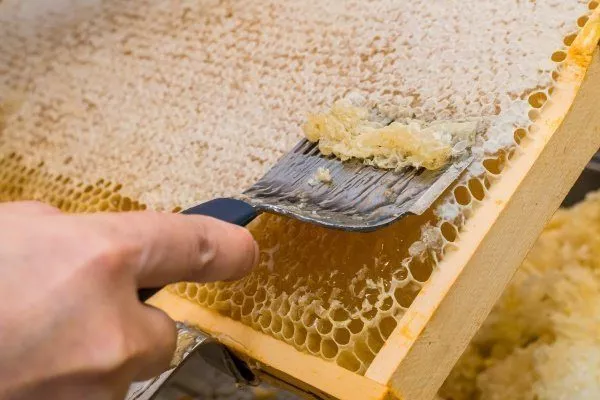
How is capping wax collected?
It's no coincidence that the product received its name. Literally, the word translates as "behind the hive frame bar." Before extracting the honey, the cappings are removed from the honeycombs with a special knife. They are then placed on a rack to drain. The resulting product is either melted down to produce highly beneficial wax or used in its pure form.
Compound
The benefits of wax capping are due to its unique combination of ingredients. The product is based on wax, and also contains:
- honey;
- propolis;
- bee bread;
- flower pollen;
- secretion of the salivary glands of bees;
- essential oils;
- vitamins A, B, C, E;
- fats;
- proteins;
- resins;
- chitin;
- carotene;
- monosaccharides;
- antioxidants;
- macro- and microelements.
The healing properties of zabrus were discovered quite by accident by a beekeeper. A man with a cold started chewing the "caps" out of boredom and after a while felt his nasal congestion and sore throat go away.
Benefit
Beeswax cappings have antiseptic, regenerative, and anti-inflammatory properties, and are non-allergenic and non-addictive. They also have a positive effect on various body systems:
- improves blood circulation;
- stimulates immunity;
- normalizes metabolic processes;
- promotes rapid recovery from respiratory diseases;
- improves the condition in infectious pathologies of the chest, oral cavity and nose;
- normalizes the function of the digestive organs;
- improves intestinal microflora;
- increases the secretion of gastric juice,
- relieves toothache and sore throat;
- disinfects the oral cavity, relieves bleeding and inflammation of the gums;
- is an excellent preventative against colds and flu.
Even in Novgorod birch bark letters there was a mention of cappings.
This video will help you learn about the beekeeping product, cappings, and its benefits:
Possible harm and contraindications for use
The main contraindication for use is individual intolerance to the components included in the product.
The following should be taken with caution:
- people with gastritis and high acidity;
- children under 3 years old;
- people with chronic diseases;
- cancer patients.
This doesn't mean these groups should avoid using cappings, but it's recommended to taste the product carefully and monitor the body's reaction. Avoid exceeding the recommended doses, as the product is rich in beneficial substances, and an excess of these will be harmful.
Before starting treatment with bee cappings, patients undergo consultation with a general practitioner and an allergist.
Where and how is capping used?
Thanks to its beneficial properties and unique composition, bee cappings are widely used in folk medicine to treat various ailments. This product is also of interest to cosmetologists and nutritionists.
In folk medicine
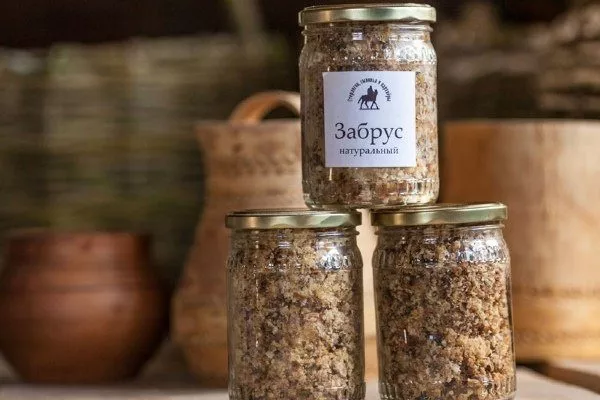
Zabrus capping therapy is not only delicious but also beneficial. The sweet-tasting "caps" are simply chewed, allowing all the beneficial substances to enter the body through saliva and the oral mucosa. Chew the product until a hard, waxy lump forms in the mouth and the sweetness disappears.
To boost immunity and fight viral diseases
To strengthen the immune system, chew 1 teaspoon of capping wax (equivalent to 1 ball) three times a day for 10 minutes, then spit out the remainder. This procedure not only boosts the body's defenses but also significantly improves overall well-being and energy.
Helps quickly cure colds, preventing them from becoming chronic or developing complications. In the initial stages, chew 1 teaspoon every hour. Unlike many medications, it does not dry out the mucous membranes.
For the treatment of oral diseases
Zabrus cappings effectively combat pathogenic bacteria, cavities, and periodontal disease, and cleanse and disinfect the oral cavity. Chew one ball regularly after meals for 10-15 minutes.
If you apply the capping to a sore tooth, the pain will go away in 15 minutes.
Using the product also helps freshen your breath and get rid of tartar.
Gastrointestinal therapy
Chewing honeycomb cappings causes profuse salivation, which improves gastric secretory function. Swallowing the product eliminates intestinal peristalsis problems, relieves constipation, and gas. Acting as an absorbent, the product collects toxins and accelerates their elimination. For the treatment of gastrointestinal disorders, it is recommended to consume no more than 4 teaspoons of the product per day.
The anesthetic properties of cappings are 5 times better than those of novocaine!
Impact on the central nervous system
For depression, neurasthenia, and chronic fatigue, chew a honey seal for 10 minutes and spit it out. This procedure lifts mood, increases productivity, and invigorates.
For problems with the musculoskeletal system
For joint and spine problems, honey cappings are applied to the affected area. A thin layer is applied to a natural cloth and placed on the affected area for a couple of hours. This procedure relieves pain and inflammation. Joint ointments made from honey cappings are available in pharmacies.
For the treatment of burns
A thin layer of melted cappings is applied to the burned skin and covered with plastic wrap. This procedure relieves pain and promotes skin regeneration. The "compress" is changed every 2-3 hours.
For varicose veins
Zabrus is used as an ointment and for varicose veins, as well as for applications. It reduces swelling and inflammation, has bactericidal and antimicrobial properties, relieves spasms, and provides pain relief.
Anti-smoking
To quit smoking, simply replace cigarettes with cappings. Every time you want to smoke, take a ball and chew it. This product has been proven to reduce nicotine cravings.
Chewing wax balls is also beneficial for smokers who have already quit. The active ingredients cleanse the mucous membranes and the bronchopulmonary system.
In cosmetology
The beneficial properties of honey caps are effectively used in this context as well. Thanks to their antibacterial properties, they are used to make ointments for boils, corns, and calluses. They are also used to treat skin rashes, wounds, and abscesses. They are also used as an active ingredient in shampoos and hair conditioners. Manufacturers of modern, high-quality cosmetics also add honey caps to anti-aging products.
- ✓ Contains antibacterial properties that help treat skin rashes.
- ✓ The ability to accelerate skin regeneration, useful for anti-aging products.
To get rid of facial rashes, make a mask from wax cappings. Melt the product in a double boiler, cool to a comfortable temperature for your skin, apply for 10 minutes, and then remove.
When losing weight
Beeswax cappings activate metabolic processes, speed up metabolism, and restore intestinal microflora. Therefore, many nutritionists recommend honey and other bee products to overweight people as a substitute for sweets.
Zabrus also reduces appetite due to its rich vitamin content. To lose weight, chew the wax balls regularly.
Peculiarities of use by pregnant women and children
During pregnancy, the product can have a positive effect on the expectant mother's body. Consuming cappings activates the body's defenses and provides a complex of vitamins and nutrients. Just 2 teaspoons per day is enough to enrich the body with valuable elements and boost its resistance. The product can also be consumed during lactation, allowing the baby to receive essential vitamins through breast milk.
During pregnancy, it is better not to experiment with folk remedies without the permission of a gynecologist.
To avoid unwanted reactions in children's fragile bodies, it is not recommended to give honey cappings to children under 3 years of age. However, starting from age 3, as a preventative measure against colds and to strengthen the immune system, honey cappings are introduced into a child's diet according to the following schedule:
- aged 2-5 years - 1/4 teaspoon before meals 2 times a day;
- For children over 5 years old, gradually increasing the dose, you can give up to 1 teaspoon 2 times a day before meals.
Healthy eating advocates recommend giving children zabrus cappings instead of sweets, chips, and gum. If a child doesn't like the taste, mix it with a little honey!

How to choose and where to buy a honey seal?
To choose a quality product, it's important to pay attention to its appearance. Bee caps can be white, brown, tan, or yellow. Color depends on several factors, such as the season, bee species, and weather conditions. For example, in the fall or when feeding the insects sugar syrup, the product is brown. But usually, it's white and opaque. The cappings have a pleasant honey aroma and a sweetish taste.
- ✓ The color of the cappings should correspond to the harvest season: white for spring, yellow or brown for summer and autumn.
- ✓ The presence of a honey aroma and sweetish taste, the absence of foreign odors.
Beekeeping gloves should be purchased directly from beekeepers, in villages, or from professional beekeepers. Large cities often host fairs where beekeepers display their products.
The most useful are the seals cut directly from the frames.
Where and how to store?
If you follow the product's storage instructions, its shelf life can be extended to 2 years. Provided that:
- The cappings should not be exposed to direct sunlight or in a warm place; they should be stored in a cool, dark place, perhaps in a cellar;
- storage method - exclusively in a glass container;
- storage temperature - not higher than 21°C;
- the product should not be rolled into a jar, it is enough to cover the container with a lid doused with boiling water;
- For better preservation, you can add honey.
Honey cappings, or zabrus, are a highly beneficial beekeeping product that combines a complex of beneficial substances and vitamins. They have found application in folk medicine, dietetics, and cosmetology. When taken in the correct dosage and when all recommendations are followed, honey cappings will provide significant benefits to the body.