
Propolis is one of the most beneficial natural substances, used in a variety of applications. It's crucial to understand what propolis is, where bees get it from, and how it can be beneficially used.
What is bee propolis and how is it obtained?
Propolis is a natural resinous mixture produced by honeybees from substances collected from plant parts, buds, and exudates. Due to its waxy nature and mechanical properties, bees use this element in the construction and repair of hives, sealing holes and cracks.
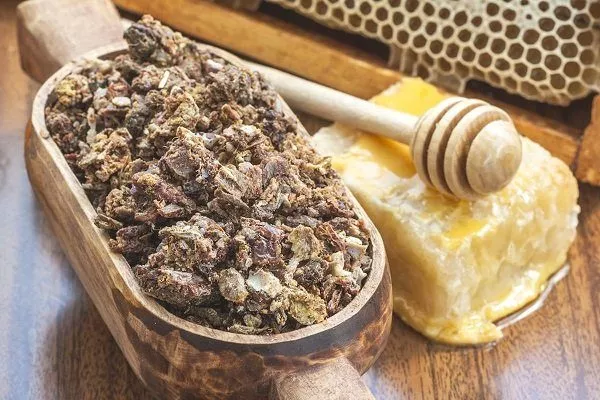
Insects collect propolis from various plants in temperate climates, primarily trees. Modern antimicrobial uses of the substance include treatments for cold syndromes (upper respiratory tract infections, colds, and flu-like infections) and wound healing.
Story
Since ancient times, this substance has been widely used by humans, especially in folk medicine. The Egyptians used bee glue for embalming the dead, as they were well aware of its protection against putrefaction.
In the Inca Empire, propolis was used as an antipyretic. Western ancient physicians used this substance as an antiseptic and wound healing agent, prescribed for topical treatment of mucous membranes and skin lesions.
Characteristics
Propolis is a lipophilic, hard, and brittle material that becomes pliable, sticky, and very soft when heated. It has a characteristic, pleasant, aromatic odor and ranges in color from yellow-green to red, and can also be dark brown.
Compound
Propolis consists of a complex mixture of bee enzymes and plant-derived substances. The raw material is composed of approximately 50% resins, 30% waxes, 10% essential oils, 5% pollen, and 5% various organic compounds. Natural propolis has an astringent and bitter-pungent taste.
Propolis of different origins contains different components. There are different types of propolis, each with different properties.
Uses of propolis
Bees use propolis to disinfect their hives, making it a natural antiseptic. Propolis is active against bacteria, viruses, and fungi.
It can have an anti-inflammatory effect and promote skin healing. Importantly, fungi, bacteria, and viruses cannot develop resistance to this element.
The main properties of propolis:
- has an anti-inflammatory effect;
- is able to relieve pain and accelerate the healing of wounds, injuries, abrasions, inflammations, burns;
- can destroy pathogenic organisms.
Propolis can be used externally and internally. Propolis helps with the following conditions:
- diabetes;
- skin diseases;
- gastrointestinal diseases;
- colds (some studies suggest that it helps against Covid 19);
- urological and gynecological diseases;
- allergy;
- fungal infections.
Medicine produces propolis in the form of tinctures, tablets, ointments and gels. It is possible prepare a tincture and at home using folk recipes.
It's usually sold either in small pieces or loose. It's easy to use: break off a piece of propolis, swallow it, and wash it down with water.
Peculiarities
- Aqueous solution of propolis. Only 3 drops of this remedy are required per dose. It is non-irritating to mucous membranes and can be used internally or topically on affected tissues.
- Alcohol tincture. It's suitable for external use. There are some contraindications for internal use. For example, it should not be taken by those with peptic ulcers.
How does propolis differ by region?
| Name | Color | Main source | Active ingredients |
|---|---|---|---|
| Birch propolis | Yellow-green | Birch | Flavonoids, flavonols |
| Green propolis | Greenish-yellow to dark green | Plants of Brazil | Not specified |
| Red propolis from Cuba | Red | Plants of Cuba | Polyprenylated benzophenones |
| Poplar propolis | Yellow-green | Poplar | Not specified |
Russia: Birch propolis is prevalent in this region. Its main biologically active substances are flavonoids and flavonols.
Brazilian Propolis: Brazil accounts for 10-15% of global production. Brazil is the world's third-largest producer after Russia and China. Among the varieties produced here, green propolis (ranging from greenish-yellow to dark green) predominates, becoming increasingly popular in the global propolis market.
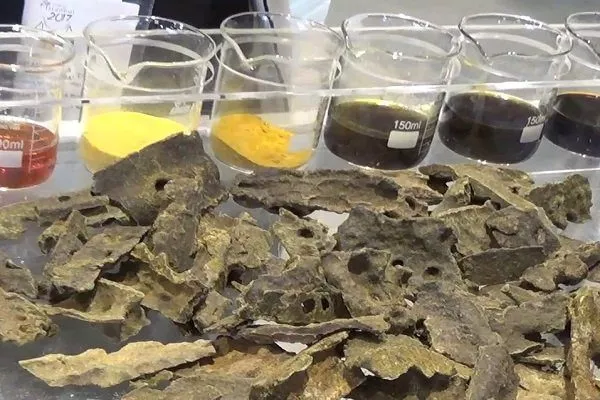
Red propolis from Cuba: It is particularly rich in polyprenylated benzophenones (propolon A, nemorozone, guttiferon E, xanthochimol). However, the chemical composition of other propolis samples from the same country did not contain prenylated benzophenones.
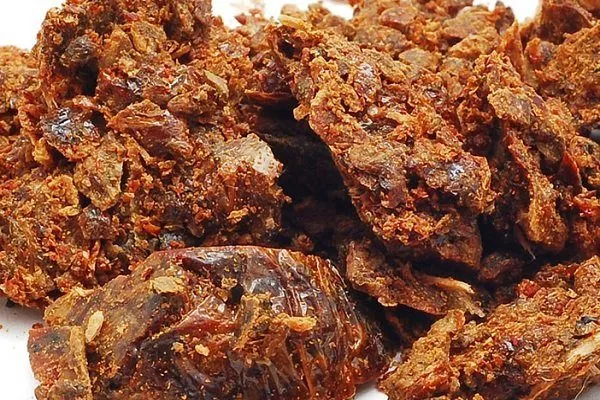
In Europe, China and North America: This type of propolis is usually considered to be poplar propolis. However, some authors have demonstrated that other types may also be present due to the specific flora of each region. Mediterranean propolis from various locations in Greece contains primarily diterpenes and is almost completely devoid of phenols.
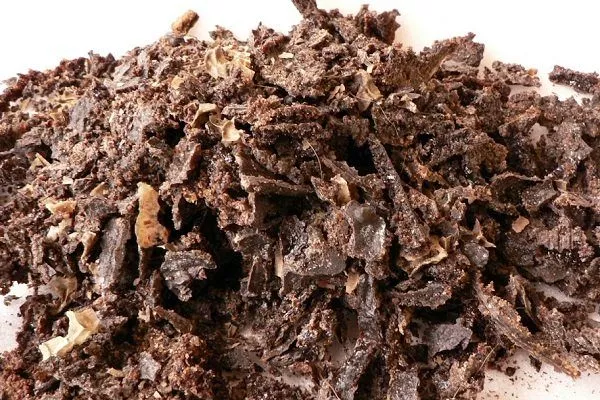
How to clean propolis with impurities yourself?
Propolis is sold in pharmacies in its pure form. However, if you're a beekeeper or simply come across propolis of rather low quality, you need to know the process of propolis purification.
How to do it:
- Take a regular grater and some propolis balls. Let the propolis sit in the freezer for a while before peeling.
- Grate the propolis well.
- Pour the resulting gruel into a saucepan with cold water.
- Mix the water and propolis mixture thoroughly and let it sit for an hour. This will cause the propolis, being heavier than water, to settle to the bottom, while the impurities will float to the surface.
- Dry the pure propolis and make a tincture from the remains.
| Method | Processing time | Efficiency |
|---|---|---|
| Freezing and rubbing | 1 hour | High |
| Infusion in water | 1 hour | Average |
How to check the quality of propolis?
To get a quality product, use these tips:
- Propolis, unlike other bee products, is similar to resin, which is essentially what it is. While wax alone has a delicate aroma, propolis has a more pungent scent.
- If you bite into a piece of propolis, after chewing it for a while, it begins to stick to your teeth. It has a slightly bitter taste. High-quality propolis warms up easily in your hands and can be crushed.
- You can drop propolis into water. Since resin is heavier than water, the propolis should sink. If it contains a lot of impurities, it will float to the surface.
- In the presence of appropriate conditions, dry propolis can be stored 7-10 years, tinctures 3-5 years. Ointments, depending on the expiration date printed on the packaging.
- ✓ The presence of a characteristic tart aroma, different from the delicate smell of wax.
- ✓ The ability to stick to the teeth when chewing and have a bitter taste.
- ✓ Ability to warm up your hands and become flexible.
- ✓ Sinks in water, which indicates a minimal amount of impurities.
Propolis is a beneficial natural substance, the properties of which have been proven in hundreds of medical experiments. Therefore, propolis is not just a folk remedy, but a fully-fledged medicine. Some of the properties of this substance remain to be studied, meaning it may be used to treat other ailments in the future.
Thank you for the article. I know from experience how unpleasant it is to encounter counterfeit products. I've fallen for scammers several times. Until I read this article. Now I feel more confident going to fairs and choosing propolis.