
Propolis harvesting is an important step in beekeeping. It's not the most difficult task, but it's important to approach the process carefully, taking into account all the important nuances. This will allow you to obtain this valuable substance without much effort or harm to the bees.
Propolis collection time
The best time to collect propolis is considered to be late summer or early fall (August-September). Some beekeepers decide to do so as early as late spring, in May. This is a time when propolis is less important for bees, so the process is painless for them.
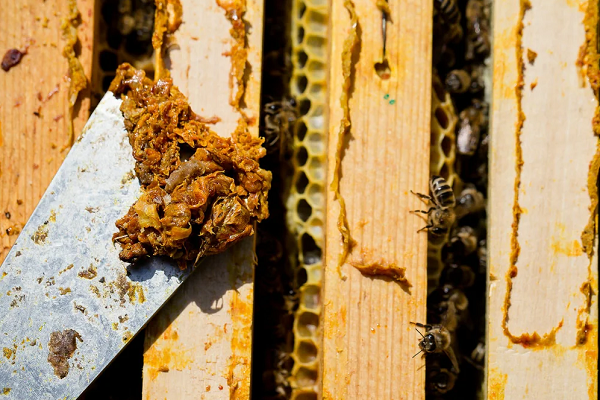
It's important to pay attention to the health of the bee colony. If for some reason it's weakened, it's best to postpone harvesting for a while.
It is not recommended to collect propolis in early spring, late autumn or early winter.
Collection methods
Bee propolis is most often harvested manually. It is scraped from frames, canvases inside the hive walls, or from mats and grates, as this is where it is found in greatest abundance. The harvesting process itself is labor-intensive, and the final product yields very little.
Using a shield
This method is widely used in large beekeeping areas. A special shield or grate is prepared in advance.
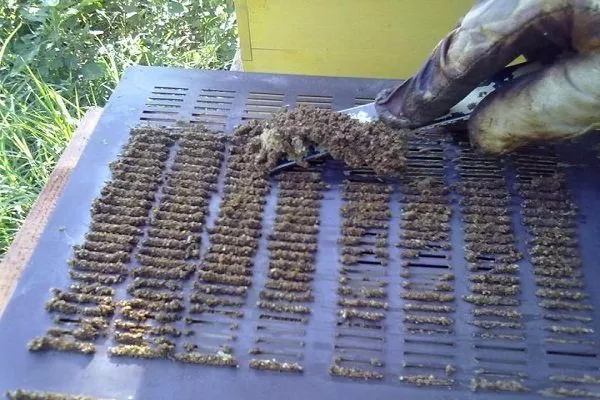
The collection process is carried out according to the following scheme:
- Make a shield from wood or plastic with a distance of 2-3 mm between the planks.
- Attach the shield to the frames in the hive and cover it with a wooden ceiling or a suitable canvas sheet. The distance from the shield to the top cover should be 7-8 mm.
- Leave the shield until the grid is completely filled with propolis.
- Remove the shield from the hive and scrape off the propolis from its surface and crevices.
Using an apiary chisel
Another tool used to extract propolis is an apiary chisel. It helps clean the hive, move the frames apart, and remove the bottom and walls.
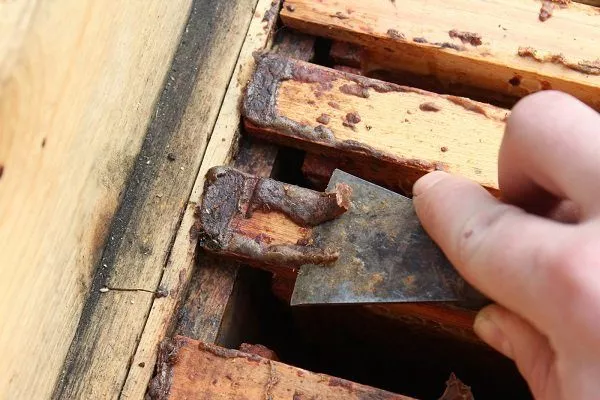
A chisel is a durable iron plate. Its first end is sharpened on both sides, while the second has only one sharp corner, bent at a right angle.
The beekeeper selects the chisel's handle and size based on personal comfort. This tool is used to literally scrape the product off the frames, walls, and floor of the hive.
Brazilian way
This method involves creating a special hole in the hive and installing several slats, each approximately 1.5 cm long.
This design creates an artificial draft in the bee colony. The bees actively combat it by sealing the cracks with propolis (propolis glue). The slats need to be replaced periodically.
How to purify propolis?
It's impossible to immediately collect pure propolis without wax impurities. Also, during the collection process, debris such as dust, wood chips, insect carcasses, etc., can get into the product. Therefore, cleaning is necessary; otherwise, beekeepers simply won't sell the collected product.
When collecting propolis from canvases and grates, remove all large debris immediately, which will simplify the subsequent cleaning process. Sifting through a sieve is also an option.
Next comes the wax removal stage. This can be accomplished in several ways, including water and cold cleaning, or using a water bath.
A popular method is water purification. To do this, you'll need:
- cold water;
- fine sieve;
- chopping knife or grater;
- paper.
All the collected glue is ground to a fine crumb consistency, placed in a container of very cold water, and stirred. The glue then sinks to the bottom, leaving all the waste on the surface.
Using a fine sieve, the debris is finally separated from the propolis. The remaining substance is transferred to clean paper and left until completely dry. The propolis is then rolled into balls and wrapped in paper for storage.
Cold cleaning is carried out in the following manner:
- Freeze the beeswax in advance (it will take about 12 hours).
- Finely chop the frozen product until it becomes crumbly.
- Sift the resulting mass through a fine sieve, separating the wax from the propolis.
A double boiler can also be used to purify propolis. Heat treatment preserves all of the beneficial properties of propolis. The purification process is very simple:
- Place the container with crushed uzu in a water bath.
- Make sure the water temperature is not below 80 degrees.
- Once the wax has melted and has a liquid consistency, separate it from the larger particles of propolis using a fine sieve.
How to increase product yield?
Every beekeeper is interested in increasing the amount of propolis produced. And this is entirely possible using the following tricks:
- increase ventilation in the hive, this will stimulate the production of additional honey;
- Use materials with ribbed, uneven surfaces to build the bee house;
- Place a piece of cloth soaked in a small amount of strong-smelling cosmetic oil into the hive.
Storage and processing of the product
After purification, propolis is processed into powder or stored as a solid. Ideal packaging options include:
- baking paper;
- food foil;
- cellophane bags.
When stored properly, propolis can have a shelf life of 8-10 years. It's important to maintain an optimal temperature of 15 to 25 degrees Celsius and monitor humidity levels at 45-60%. Store the product in a dark place, away from sunlight.
- ✓ The storage temperature must be stable, without sudden changes.
- ✓ Avoid storing near sources of strong odors, as propolis easily absorbs them.
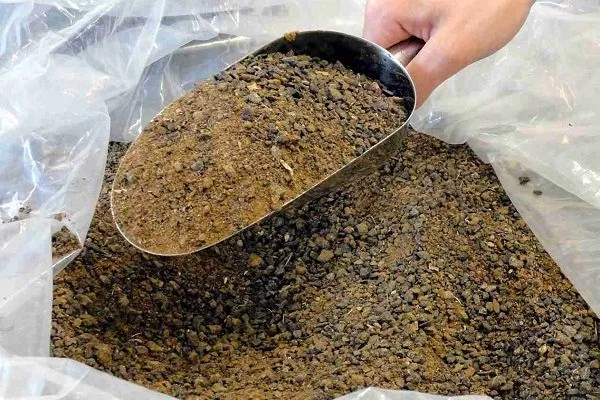
Many have long since experienced all this the uniqueness of propolis (propolis). Although the harvesting process is very complex, the end result is a valuable and beneficial substance that makes all the effort worthwhile. The key is to properly perform the harvesting and cleaning process before storing the product.