
Before storing propolis, carefully read the information on proper storage depending on the type, expiration dates, and processing methods. If you purchase propolis, learn how to identify damaged strands by their external signs.
Preparing propolis for storage
To ensure propolis lasts the intended period, prepare it in advance. Prepare it immediately after harvesting from the frames, usually between June and August. The process begins with disassembling the frames and cleaning the propolis from their surfaces. Next, clean the propolis, separating any excess fragments.
Rules:
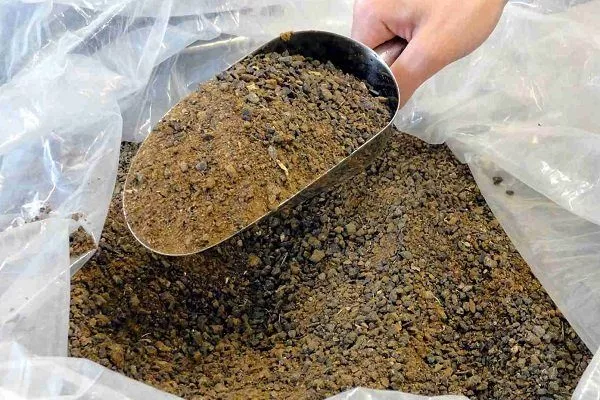
- Grind the entire mass to a powdery state.
- Transfer to a large bowl and cover with cold water. Stir occasionally.
- Let it sit for 5-6 hours, after which you'll see a sediment appear at the bottom. This is pure propolis. The elements that float to the surface are wax and foreign impurities.
- Carefully drain the water with unnecessary fractions.
- Remove the raw materials from the bottom through a sieve.
- Place it on a cloth and leave it until the moisture evaporates.
Next you can form balls, make butter, dry, etc.
Propolis storage rules
Bonds should not be stored in high or low humidity conditions. Optimal humidity levels are 40-60%. Avoid direct sunlight and sudden temperature changes (it should be between 22-26°C).
Avoid placing it near products that have strong or pungent odors, as propolis can quickly absorb them.
Optimal storage locations
It's important to follow storage guidelines for simple reasons: to prevent the product from spoiling and to preserve the maximum amount of nutrients. Otherwise, it becomes pointless to use it for medicinal purposes. Choosing the right storage location is also important. What's not suitable:
- cabinets and shelves located near heating appliances and radiators;
- a section of the kitchen table where a trash can is located nearby;
- a shelf where household chemicals are stored;
- freezer – the material becomes too fragile (but the properties are retained);
- refrigerator – there is high humidity and temperature fluctuations (except for tinctures, ointments and oils).
Based on this, the optimal places for storing propolis are considered to be:
- a storage room where there are no household chemicals;
- mezzanine;
- cabinet compartments with identical and odorless products.
Suitable container
The material in which the propolis is placed must be environmentally friendly, free of any additives, such as newspaper (with printing ink). The best containers and packaging:
- foil and parchment paper;
- album sheets and paper packaging bags;
- polyethylene bags;
- ceramic tableware;
- glass jars.
- ✓ The container must be made of a material that does not enter into a chemical reaction with propolis.
- ✓ Be sure to have a tight-fitting lid to prevent oxidation.
Since you want to prevent the product from being exposed to light, it's best to use darkened containers. If you don't have one, simply wrap the container in dark cloth or paper.
Best before date
It is believed that propolis can retain its properties for about 7 years. However, to achieve this shelf life, strictly follow all recommended storage guidelines. The shelf life directly depends on the form in which the raw material is stored for long periods.
Dry propolis
This is a powdered mixture that has undergone purification and drying (there are various methods for this). The product is used to make folk remedies and preparations for external and internal use. Key requirements:
- minimum humidity level;
- tightness of packaging (usually stored in jars with tightly screwed lids);
- no contact with metal - if the lid is tin, 2-3 layers of fabric, parchment paper, etc. are placed between its surface and the propolis.
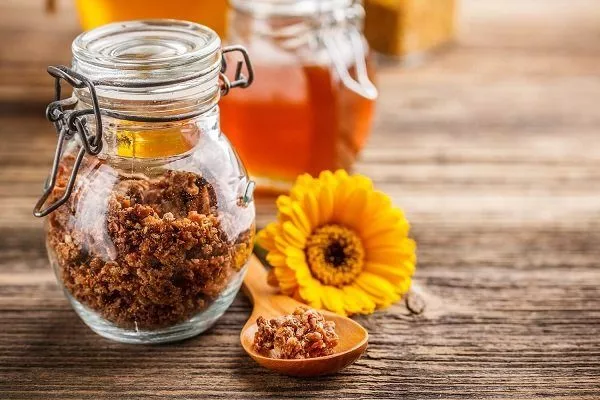
The shelf life under these conditions is 7-8 years. This is the longest-lasting form of the bond.
Solid propolis
The solid bee product differs from the previous version in that it has a sticky and flexible structure. The mass is formed into various fragments—a cake, a stick, a ball, etc. To store it properly, use a plastic bag, parchment paper, cling film, or foil.
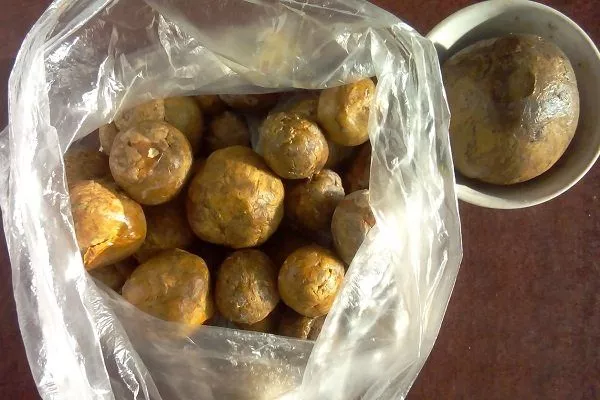
Humidity level is average (50%), shelf life does not exceed 5-6 years.
Propolis tincture
This is the most common form of propolis production for the treatment and prevention of diseases, as ethyl alcohol is the best solvent for the essential oils. The tincture should have a light brown hue, and when held in bright light or sunlight, the liquid will sparkle with reddish hues.
Humidity levels don't matter in this case, as the alcohol tincture is stored in dark glass bottles or ceramic containers. The product can even be stored in the refrigerator. The air temperature shouldn't exceed 14-15°C. Under these conditions, the shelf life is 4 years.
Ointment
Propolis ointments are made with ingredients such as fish oil and petroleum jelly. They are used externally only, but there are strict requirements to maintain their antibacterial and other properties:
- permissible humidity level – 54-56%;
- temperature – up to 20°C;
- complete absence of light and especially ultraviolet radiation.
Shelf life is maximum 2 years.
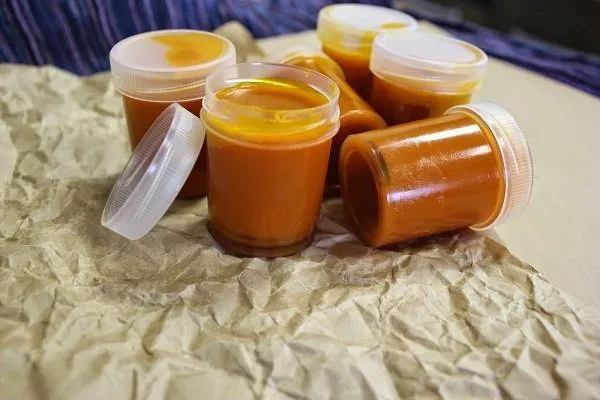
Oil
The medicinal product is made using propolis and butter as a base. The more natural the butter is, the shorter the shelf life. This is because natural products contain no preservatives or other synthetic additives.
It's especially important to monitor the oil's condition and storage conditions—the medicine is taken orally (dissolved in hot milk, etc.). Store in the refrigerator in an airtight container. The shelf life of this product is no more than 3 months.
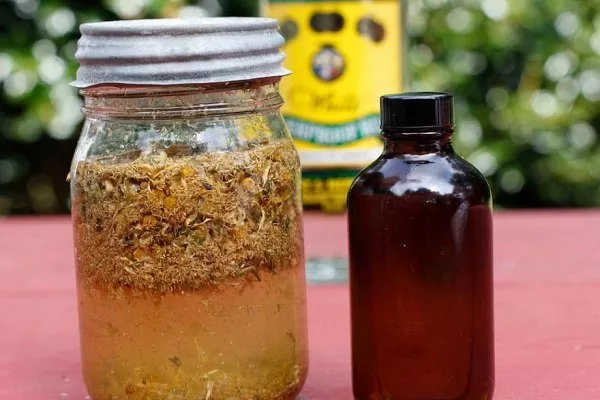
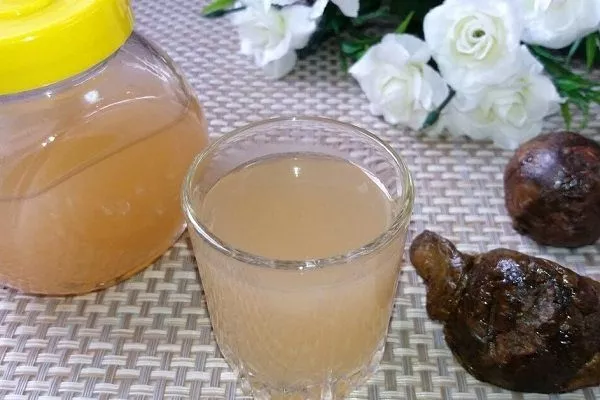
Propolis on water
The remedy is called a "water tincture." It is used when the use of alcohol is undesirable or contraindicated. While ethyl alcohol acts as a preservative, extending shelf life, water does not have the same properties.
How do you know if propolis has gone bad?
Spoiled propolis, like other bee products, is strictly prohibited for consumption, especially if intended for internal use. Visual and mechanical characteristics are used to determine freshness. A good product has the following characteristics:
- if in solid form, viscosity is present;
- the shade is brown, but there may also be dark gray “notes”;
- there is a resinous aroma, essential oils and the smell of honey can be felt;
- taste – there should be a slight bitterness.
- ✓ The presence of a resinous aroma and a slight bitterness in the taste.
- ✓ Plasticity at room temperature and hardening in the cold.
If propolis is left in a warm room (for example, in the kitchen), it becomes soft; if taken out into the cold, it quickly hardens. This indicates that all its properties are preserved.
If the product is spoiled, the following signs appear:
- too dark color;
- lack of honey aroma;
- there is no plasticity, but brittleness appears (even at room temperature the product crumbles);
- presence of mold, any plaque;
- If propolis is made in the form of a dry powder, it, on the contrary, sticks together and becomes like plasticine.
If you've taken the time to create optimal storage conditions for your propolis, rest assured it will last the specified shelf life, depending on its production method. If you discover any "spoiled" product, discard it promptly, as this substance is not suitable even for external use.