
Extracting bee bread isn't the easiest process. Apiary owners must be familiar with all the intricacies of various methods (industrial and home), as each has its own characteristics and advantages. These are worth learning about before beginning bee bread collection.
Bee pollen: what is it and how is it formed?
Bee bread is a natural product made from preserved pollen grains. The production process is very simple, consisting of just a few steps:
- The bee flies around the flowers, collects pollen grains on its legs, and carries them to the hive in the form of lumps.
- Next, the process of compacting the product into the honeycombs and then sealing them with honey is carried out.
- Once the pollen is preserved, it has no access to oxygen.
- In conditions of high temperature and high humidity, pollen germination begins.
- Lactic acid fermentation occurs as a result of the action of enzymes and honey. This process lasts for 15 days.
- ✓ Optimum temperature for lactic acid fermentation: 34-36°C.
- ✓ Humidity in the hive should be maintained at 60-80% for proper fermentation.
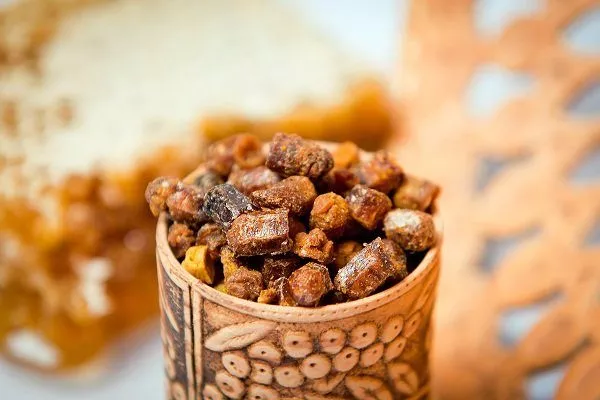
Once the bee bread has undergone fermentation, it becomes completely sterile. This allows the product to be stored for a considerable period of time without losing its quality and properties.
The main characteristics of bee bread:
- Perga contains a huge number of valuable elements, including vitamins and enzymes;
- one cell contains approximately 130–190 mg of product;
- the product may have a bitter, sour or sweet taste;
- After extraction, the bee bread has the shape of a hexagonal prism.
Industrial methods
There are various options for extracting bee bread from honeycombs. Industrial drying methods include vacuum, convection, and natural drying. Each method has its own characteristics and subtleties.
Vacuum drying
This method requires the use of specialized equipment. Vacuum drying allows for quick and easy cleaning of the cells and the extraction of all granules.
The procedure is carried out according to the following scheme:
- The honeycombs are cooled in advance and cut into small pieces.
- The honeycombs are placed in a special sealed drying compartment with an optimal temperature.
- Intensive evaporation of moisture from the bee bread begins.
- After a certain time, the bee bread easily separates from the wax.
The vacuum method is the most expensive and labor-intensive, but also very fast. Processing one batch of honeycomb takes approximately 8–10 hours.
Convective drying
Convective drying occurs within the hives themselves, stacked on top of each other. This method is not used in small apiaries due to its high cost. It differs from vacuum drying by its high productivity.
The special equipment contains a chamber with shelves for storing honeycombs previously cleared of honey. The chamber door is closed tightly, and the heaters and fan are turned on. The hot air carries away water molecules, drying the bee bread.
Natural drying
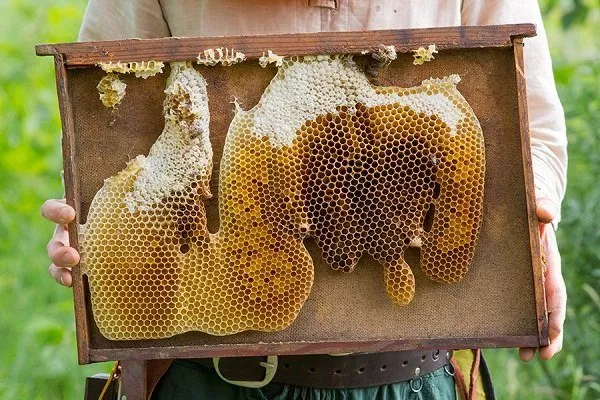
This is the simplest method of extracting bee bread. Natural drying is higher quality and more affordable, allowing for processing large quantities of bee bread at once. The honeycombs are placed under a canopy in the fresh air or in a well-ventilated room.
This method produces a higher-quality product. The downside is that the process is time-consuming, but it requires virtually no human intervention.
How to extract bee bread at home?
Extracting bee bread is easy at home. No special or expensive equipment is required. Several easy-to-use methods for drying bee bread at home are available. Both novice and experienced beekeepers use them.
Freezing
The procedure is simple. Simply follow these steps:
- Place the cells in the freezer and leave for 2 hours.
- Then break them into pieces and place them in a honeycomb grinder for 20 seconds, making the pieces even smaller.
- Next, transfer to a sieve and sift well using a seed cleaning machine.
- Collect the remaining mass, already cleared of wax.
Another way:
- Heat a knife and cut the honeycombs. Crush them in your hands.
- Fill a saucepan with cold water and place the honeycomb mixture into the container.
- Gradually, wax will begin to float to the top, and bee bread granules will sink to the bottom.
- Drain the water. Spread the separated grains out to dry for 24 hours.
Low temperatures cause the loss of many beneficial substances. Therefore, freezing is considered ineffective and is rarely used by professional beekeepers.
Soak
This is also an easy-to-implement option. The procedure is as follows:
- Soften the honeycombs with bee bread and place them in water to soak.
- After a few hours, shake the honeycombs lightly - all the cells should fall out.
- Squeeze out the water and leave the bee bread until it dries completely.
This is the simplest and most popular option. However, exposure to water results in the loss of some nutrients, which are simply washed away during pumping.
Natural drying
Drying is used to reduce the moisture content to 14–15% (the initial moisture content is around 24%, sometimes higher). If you press on a granule and it smears, it hasn't been dried properly. If the drying process is performed correctly, it should crack but not fall apart.
The honeycombs are laid out indoors, away from direct sunlight. On average, the drying process using this method takes 2–3 months. The condition of the honeycombs should be checked periodically. To speed up the drying process, pierce or cut the caps off the pellets beforehand.
Electric drying is often used as an alternative to natural drying. Using an electric dryer significantly reduces the drying time. The temperature is set to +30…+36˚C. The drying process lasts 8–10 hours. The granules are then separated from the honeycomb manually.
You can also learn about extracting bee bread in the following video:
Where is bee bread used?
This product is actively used in food. Perga is widely used in folk medicine, as it helps improve blood composition, normalize gastrointestinal function, and increase hemoglobin levels.
Simultaneously:
- the body's resistance to viral and bacterial infections is increased;
- tissue regeneration is accelerated;
- the aging process in the human body slows down.
Bee bread contains many beneficial substances. However, extracting it at home takes a long time. Some methods further reduce the quality of the natural bee product. However, even without specialized equipment, it is still possible to find the optimal method.
Thank you so much for the information. I recently started beekeeping and there are still so many things I don't understand about it.