
Bee pollen is most often used for medicinal purposes, but it is very sensitive to external factors, and improper storage can cause its beneficial properties to be lost. Therefore, it's important to know how to properly store bee pollen at home—under what conditions, in what containers, etc.
What is bee pollen?
Perga is pollen, which bees collect from plants for use as food, as it contains a huge amount of nutrients.
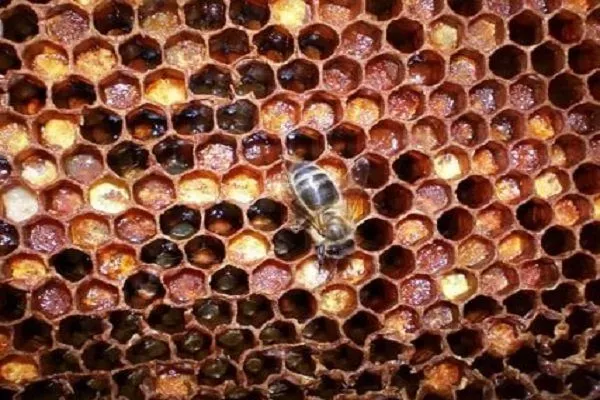
The flowering period is short, so honey plants store it in honeycombs, where they “preserve” the product – even insects understand the importance of properly storing this valuable biomaterial.
When bees bring pollen, their salivary glands become active, moistening the product to facilitate compaction into the honeycomb. "Preservation" is achieved using natural honey and beeswax.
This procedure causes fermentation, resulting in the formation of a protein substance (perga), which can be stored after removal from the honeycomb or directly in it.
How to check the quality – signs of spoiled and good bee bread
To ensure the long-term preservation of bee bread, it's important to select and purchase a high-quality product. Otherwise, bee bread, as beekeepers call it, will quickly spoil and be of no use. Furthermore, it can be harmful to the human body.
Therefore, pay attention to the main signs of good bee bread:
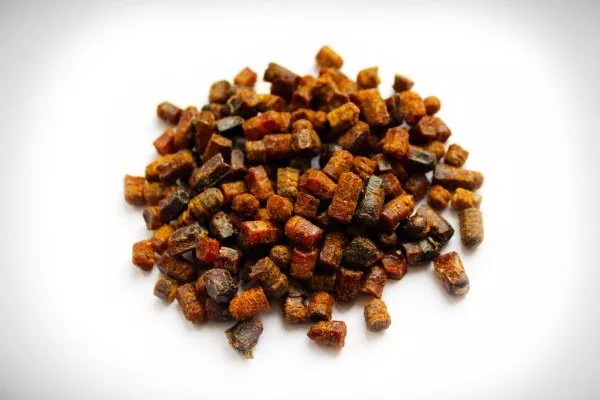
- If the product is dry, ground or granulated, it should be free-flowing;
- color – dark, with a small amount of light or even purple inclusions;
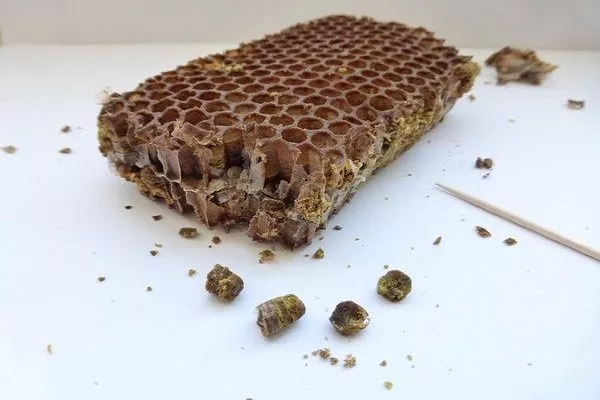
- If the bee bread is in honeycombs, they should consist of several layers of different shades - from dark yellow to brown;
- absence of impurities - homogeneity should be felt when touched;
- no crunching when chewing;
- when pouring granules, only a dry knock is made;
- If you smell the product, it gives off a pleasant honey aroma;
- The taste is slightly bitter-sour, but does not cause any unpleasant sensations.
How to identify a spoiled product that is unsuitable for storage and consumption:
- Perga after dead insects. This is a dangerous substance that can cause poisoning, as it contains not only bee excrement but also cadaveric venom. It can be identified by the presence of mold and a putrid odor. If you squeeze it with your fingers, the mixture will become a homogeneous, pasty mass.
- Unripe. It has too light a shade and is too friable – it disintegrates into clumps of pollen.
- Not fully dried. It feels soft and pliable to the touch. If placed in a plastic container or plastic bag, after 2-4 hours (depending on the product's moisture level), the inside walls will become coated with condensation (sweat).
- Poorly cleaned. It always contains foreign matter (cocoon scales, insect body parts, debris, etc.) and a high percentage of beeswax (over 4-5%). Excessive beeswax levels are indicated by a large number of bee bread granules in the honeycomb cells that have not yet been broken down.
Bee bread lovers test the moisture level by squeezing the product in their palm. If it comes out in a lump, discard it, as it will mold within a short period of time.
General storage standards
If bee bread isn't stored properly, it's strictly prohibited to consume it, as it will spoil within 2-3 days. The average shelf life is 6 to 12 months, but choosing the right storage method and type of product is crucial.
How to store?
There are several forms of storing bee bread that are suitable for use. Namely:
- In honeycombs. An excellent option for those who prefer to enjoy bee products in their natural, fresh form. Children especially love to nibble on these honeycombs, as the wax and bee bread bits resemble chewing gum.
Among the disadvantages, they note a short shelf life and the inconvenience of storage due to the large size. But most importantly, they require creating conditions that prevent wax moths from penetrating the honeycombs.

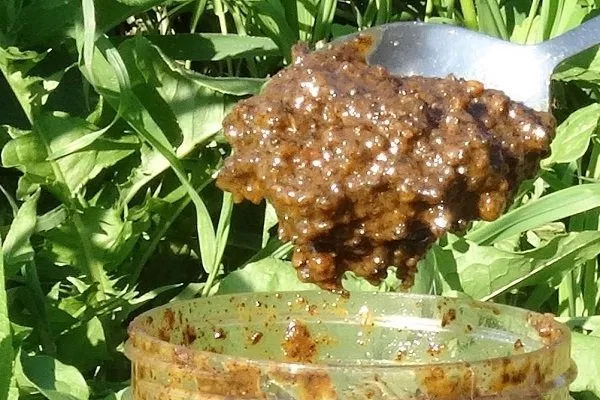
The peculiarity is that sometimes the bees do not seal the top part well, which causes the bee bread to spoil, so you will have to do this artificially - generously lubricate it with wax. - Ground. To do this, grind the honeycombs through a meat grinder. The main advantage, as in the previous case, is the presence of beneficial wax. The shelf life is slightly longer. A special feature is that this product is convenient for preparing topical remedies and for internal use in dishes.
Crushed bee bread, like honeycombs, is best stored in the refrigerator or other cool place.
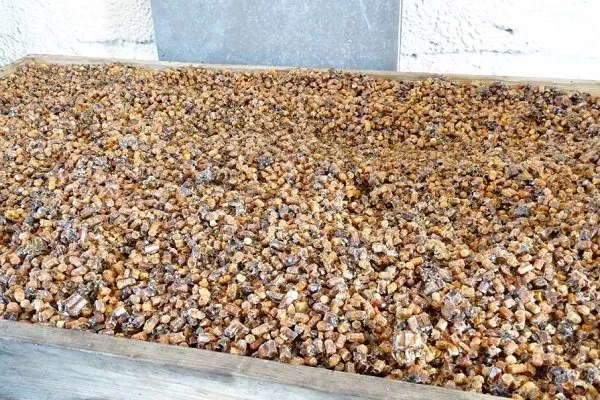
- In granules. Their production involves removing unwanted elements from the honeycomb, after which the product is dried and converted into granules. Their main advantages include easy storage and a long shelf life.
Glass containers and canvas bags are suitable for storage; they can be placed anywhere except the refrigerator, as granules are sensitive to moisture (which leads to mold formation).
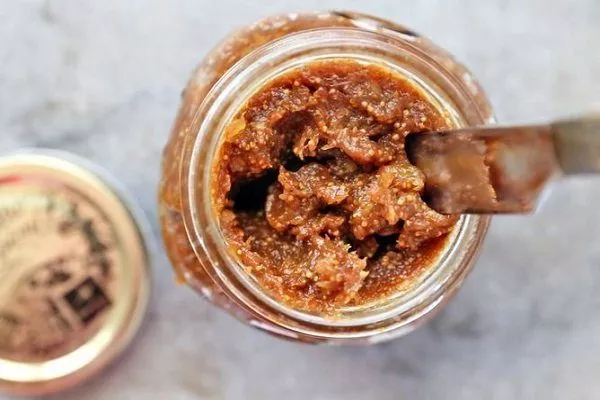
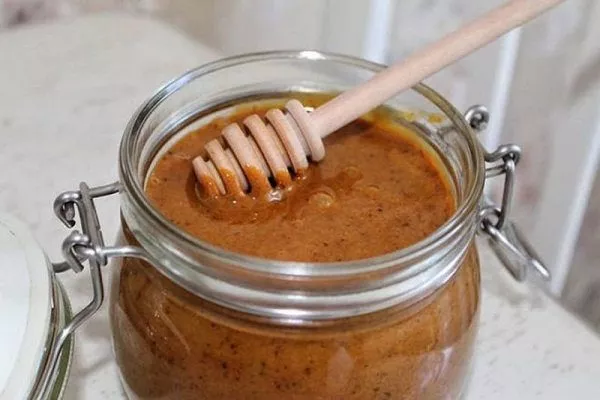
Disadvantages: If you store large quantities in one container, the granules become crushed, which spoils the aesthetic appearance. Experts say that, along with removing unnecessary substances, this also reduces the level of beneficial elements. - Pasta with honey. During production, ground honeycombs are mixed with natural and necessarily fresh honey, which prolongs the shelf life.
The main advantage is that the mixture is ready to use, but this should be done with caution, as it contains not only bee bread and wax, but also honey, which greatly increases the risk of an allergic reaction.
- Dried. The technique involves drying the honeycomb, which preserves all the beneficial substances while significantly extending its shelf life. This natural product is easy to store anywhere and in various containers, taking up minimal space, unlike raw honeycomb.
Where and in what to store bee bread?
Packaging is a crucial aspect of proper bee bread storage. Key requirements for preserving bee bread include the following:
- integrity of packaging – no cracks, holes or other damage;
- no influence of high humidity – tightness of the container and dryness of the room;
- ventilation – for dry products;
- shelter from sunlight – overheating leads to incorrect chemical reactions;
- Hygienic – store only in clean packaging;
- Dosage - It is better to store in small portions.
To create optimal conditions, choose the right container. This could be:
- glass or ceramic jars – suitable for all forms of bee bread (easy to disinfect, but it is advisable to use dark-colored glass);
- Small canvas bags – only for dry products (an excellent option, but you will have to strictly monitor the humidity level in the room).
Polyethylene bags and plastic containers are absolutely not suitable, as condensation easily forms in them. It is not recommended to store bee bread in metal containers (including tin cans), as contact with iron causes oxidation.
It is also important to choose the right storage location, depending on the type of product:
- in the refrigerator - only honeycombs, paste and ground honeycomb bee bread;
- in the pantry or kitchen - dry variations of the product (this could be a shelf in cabinets, mezzanines, etc.).
- Inexperienced consumers place their products on a loggia/balcony or veranda of a private home. This is absolutely prohibited, as they overheat in the summer and freeze in the winter (due to unstable weather conditions).
- ✓ For storage in honeycombs, use only glass or ceramic containers with airtight lids.
- ✓ Store granulated bee bread in canvas bags in a dry, ventilated place.
- ✓ The honey paste should be stored in the refrigerator to prevent fermentation.
Temperature, lighting and humidity
Temperature is the most important factor for all forms of bee bread. If not maintained, the product will immediately begin to spoil. Depending on the type of bee bread, temperatures range from 1-2°C to 23-25°C.
Avoid exposing the product to light and sunlight, as this will cause the nutrients to deteriorate and the product to spoil. What you can do:
- Place the bee bread in a dark container. If you don’t have one, wrap the jar in black cloth;
- put it in a closet, or even better, a pull-out drawer that is opened extremely rarely;
- Place the container in a sealed cardboard box and then store it in a cupboard/refrigerator.
The humidity level in the room also deserves special attention – if you store a dry product in a non-airtight package, it will immediately become saturated with moisture and begin to grow mold.
The same applies to other forms of bee bread, even those stored in glass jars—water or steam must not be allowed to penetrate. This can happen in a variety of ways—a drop accidentally falls into the container, the jar is opened while a kettle or saucepan is boiling, releasing steam, etc.
Can it be canned?
Preserving bee bread is perfectly acceptable and even advisable if you're harvesting it fresh (in honeycombs, ground). This significantly extends its shelf life. Simply mix the bee bread with honey or pour it into the honeycomb, then seal and store in suitable conditions. However, keep in mind that the honey content should not exceed 30%.
Canning has a drawback: the product hardens considerably, making it difficult to remove from the jar. Experienced consumers do this by placing the container in warm (not hot) water.
Conditions and shelf life of bee bread
Each form of bee bread requires specific storage conditions. The method of raw material preparation directly impacts this and the product's shelf life. If an error is made during production, the bee bread will spoil. Therefore, pay particular attention to these factors.
In granules
The granulated storage method is considered optimal, as it has the longest shelf life—at least 12 months. The storage temperature should be 18-25°C, with a maximum humidity of 10%.
It's crucial to properly extract the bee bread granules from the honeycomb and dry them. This prevents fermentation and mold formation. How to obtain granules – the main methods:
- By soaking. The honeycomb is completely submerged in water for 10-15 minutes, after which the container is vigorously shaken, which separates the elements. The liquid is then drained, and the granules are dried. The downside is that the water leaches out beneficial substances, making it difficult to separate the granules from the honeycomb pieces.
- VacuumingThis will require specialized equipment, which is expensive.
- Freezing. The bee bread and honeycomb are frozen, then crushed and sifted. The downside is that freezing destroys some of the micronutrients.
- By drying. The honeycombs are first dried, then ground with a mixer and sifted. The downside is that this process is labor-intensive.
Watch our video to learn how to properly extract bee bread granules using a dryer:
Most beekeepers use the freezing method, as it's considered the simplest and most effective. Here's a step-by-step guide:
- Place the honeycombs in the freezer. If you don't have a large one, divide them into portions and store them in a regular freezer.
- Let it sit for 2 hours, then break it into small pieces. This is easy to do, as the product becomes brittle under the cold.
- Grind the honeycomb pieces using a food processor (if the volume is large, you will have to buy a special mixer, for example, a construction mixer).
- Place the raw material in a sieve and shake thoroughly. This separates the wax from the granules—the former turns into dust, which passes through the mesh, while the granules settle on the sieve.
To store, proceed as follows:
- Spread the resulting granules (1-1.5 cm in size) on clean paper or cloth to dry completely under natural conditions. Avoid direct sunlight.
- Clean off any remaining wax and debris and spread the granules out again, but this time on parchment paper until completely dry.
- Prepare your containers. If they're glass or ceramic, be sure to sterilize them using the standard sterilization method and dry them thoroughly (it's easiest to combine the two procedures by placing the jars in the oven for 15-20 minutes). If you're using bags, wash them with brown laundry soap, rinse thoroughly, and dry them.
- Place the pellets in the container without compacting them. If it's a container, be sure to cover the surface with a canvas cloth. Beekeepers recommend layering the cloth every 4-5 cm.
- Close the lid.
Purchased granules have the highest cost, since the production process is labor-intensive, but the biogenic activity is fully preserved.
| Name | Shelf life | Storage temperature | Humidity level |
|---|---|---|---|
| In honeycombs | 6 months | +1-5°C | 10-30% |
| Ground | 6 months | +1-8°C | 10-30% |
| In granules | 12 months | 18-25°C | up to 10% |
| Pasta with honey | 12 months | +1-18°C | 10-30% |
| Dried | 10 months | 18-25°C | 10-15% |
In honeycombs
Bee bread is stored in honeycombs for subsequent use as a medicinal product (the basis for preparation) and as food for bees in the spring. Its shelf life is a maximum of 6 months. If preserved, it can last up to 12 months. Basic storage requirements:
- humidity level – no more than 30% and no less than 10% – in the first case, mold fungi develop, in the second, the product dries out;
- temperature – +1-5°C, but +8°C is also acceptable – if the readings are lower, hypothermia occurs, if higher, moths develop.
Rules for preparation before storing:
- Clean the honeycombs from any foreign matter that may stick to the surface.
- Cut them into pieces of the required size. If you're filling the comb with honey, the pieces should be small.
- Place in a glass or ceramic container and close tightly with a lid.
When filling with honey, use linden or May honey - this is the optimal solution for storage, since crystallization occurs after 2 or more years.
Ground and in the form of honey paste
Storage conditions are identical to those for honeycomb. However, honey paste is most often canned, which allows it to be stored for one year at temperatures of 1-18°C. If the container is simply covered with a lid, the temperature should not exceed 8°C.
How to prepare the mixture correctly:
- Using scales, prepare the primary raw materials - for every 700 g of bee bread, you need 300 g of honey (it must be fresh, not candied).
- Grind the bee bread using a meat grinder or a blender/food processor.
- Place in a large, non-metallic bowl.
- Pour honey over it.
- Mix thoroughly.
- Place in sterile jars.
- Seal it.
If you plan to store simply ground honeycombs, simply grind them and pack them into jars.
Dried
The purpose of drying bee bread in honeycombs is to reduce the product's moisture content to 10-15%, thereby extending its shelf life to 10 months or more (when the honeycombs are removed from the hives, their moisture content is 24-35%). The subsequent storage conditions for the dried honeycombs are fully consistent with the storage requirements for pellets.
There are several methods for preparing raw materials, but one rule is to scarify them before drying, which reduces moisture evaporation time. This procedure involves puncturing or cutting the lid of the granules contained within the honeycomb.
How drying is carried out in industrial and home conditions (in small apiaries):
- The natural way. This involves laying the raw materials on a flat surface in a ventilated area or under a canopy. The duration of this process depends on the temperature and humidity, but typically takes 1-3 months.
The main conditions are that the honeycombs are hung so that there is a distance of at least 5 cm between them, and that protection from moths is provided (fine-mesh nets are stretched). - Conductive method (contact). The use of specialized drying equipment is recommended: the honeycombs are laid on a heated surface. Drying time is at least 24 hours, provided the honeycombs are of a minimum thickness.
A huge disadvantage is the loss of up to 40% of useful substances. - Convective. It's considered optimal because it's gentle (doesn't suppress trace elements in large quantities) and dries quickly (approximately 9-10 hours). Equipment equipped with moisture absorbers and heat transfer agents is used.
Another advantage is the low cost, which attracts beekeepers. Furthermore, the combs can be dried in the hive bodies. Modern models feature an oscillating mode, alternating the supply of atmospheric air with heated air. - Vacuum. A drying chamber with vacuum properties is required to speed up the drying process (4-6 hours is sufficient for one batch). A significant drawback is the expensive equipment.
Factors that negatively affect safety
The preservation of bee bread in any form is threatened by improper temperature, humidity, and exposure to light. Bee bread is extremely sensitive to these disruptions—it spoils instantly, and stopping the destructive process is virtually impossible.
More details about the negative factors:
- Excessive humidity leads to mold, which quickly covers large areas, so beekeepers recommend storing bee bread in an airtight container and in small portions;
- low and high temperatures not only shorten the shelf life, but also neutralize the content of useful substances by almost 50-70%;
- the influence of light (both artificial lighting and sunlight) leads to spoilage, since the substances responsible for the preservation of the product (there are many of them) are destroyed;
- excessive dryness in the room (humidity should not be less than 10%) – the bee bread simply dries out, and the microelements evaporate – it is no longer suitable for consumption;
- Excessive heat promotes the growth of wax moths.
Knowing how to properly harvest and store bee bread will give you a valuable source of medicinal value. Bee bread, honey, and honeycomb cells contain the highest amount of beneficial substances (more than 350 elements). The product has no contraindications (except for individual intolerance) and is also used for preventative purposes.