
Honeycombs are wax structures constructed by bees for several purposes. They store honey, raise their young, and house the bees themselves. They are shaped like hexagonal prismatic cells, with most of their faces adjacent to other similar cells. Honeycombs vary in size depending on the bees living within them.
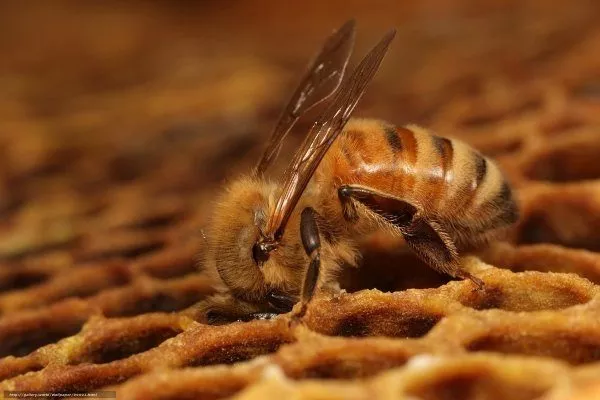
How do bees build honeycombs?
Honeycomb construction begins in early spring, when the bees that survived the winter gain strength. It is at this time of year that the bees' specialized glands responsible for wax production become active. New honeycombs are built over the old ones, honey is collected, and the honeycombs are sealed with the same wax. This happens every year.
- ✓ The optimal temperature for comb construction should be maintained at 35°C, which is critical for proper wax formation.
- ✓ The humidity in the hive should be within 60-80% to ensure the plasticity of the wax and prevent it from becoming brittle.
Bees use no other materials besides wax to build honeycombs. Beeswax has the following properties:
- it is convenient for construction in a softened state, which allows it to be given the required shape;
- retains its shape well after hardening;
- durable and strong;
- resistant to many external factors;
- has an antibacterial effect, which protects the hive from a large number of diseases.
Honeycomb construction proceeds from the top of the bees' nest downwards. The honeycomb floor is constructed first, followed by the walls. Cell sizes are selected based on the size of the hive itself and its inhabitants.
Every few hours, a bee can produce a certain number of wax scales. Using its front legs, the insect moves the wax scales to its upper jaws, where, under the influence of a special substance synthesized by the bee, they begin to be processed. This crushes the wax and makes it available for use in construction.
Bees are known for their high construction speed – under normal conditions, they can build a frame measuring 1 square meter in about two days.
Bees build honeycombs using only their sense of touch. The optimal temperature for comb construction is 35°C, and bees must maintain it at this temperature. This temperature is determined by the physical properties of wax, allowing it to compress well and form into the desired shape.
Honeycomb structure
Honeycombs have long been recognized as a benchmark for architectural construction—they occupy minimal space while maximizing efficiency. Honeycombs differ in several ways and have their own characteristics.
Cell types
| Name | Cell depth (mm) | Number of cells per 1 sq. cm | Wax content per cell (mg) |
|---|---|---|---|
| Bees | 11 | 4 | 13 |
| Drones | 15 | 3 | 30 |
| Transitional | 13 | 3.5 | 20 |
| Queen cells | 20 | 2 | 40 |
There are several types of honeycombs in a hive, depending on their purpose:
- BeesThese are standard hexagonal combs. They are used for hatching worker bees and also for storing honey and bee bread. This type of cell predominates in the hive, as worker bees make up the majority of its population.
There are typically four such cells per square centimeter of hive space, with a depth of approximately 11 mm. When the brood is uncapped, the depth is twice as great; after capping, it reaches 25 mm. During brood rearing, the volume of space in the combs is reduced by the remaining cocoon remnants.
Bees usually solve the problem of shrinking space by adding walls. Northern bees have larger cells than southern bees. On average, one cell requires 13 mg of wax. - Drones. When bees are given complete freedom to construct their hive, they also build drone combs in addition to the honeycombs. These differ from the former in their larger size—their depth is already approximately 15 mm, and no more than three drone combs can fit per square centimeter.
A drone cell requires significantly more wax—about 30 mg. This type of comb is also used for storing honey, but bees do not store bee bread in it. - Transitional. These cells are located where the honeycomb transitions to drone comb. These combs have no standard features or specific purpose—they simply serve to fill the space between the aforementioned comb types.
Transitional cells can be irregularly shaped—pentagonal, excessively elongated, uneven, and so on. Their size is somewhere between that of honeycomb and drone comb. Brood is not raised here, but these spaces are often filled with honey. - Queen cells. These cells are used for raising queens and are the largest in the hive. Bees build them for two reasons: preparing for swarming or the loss of the queen.
In the first case, queen cells are called swarm combs, while in the second, they are called burrow combs. Swarm combs are usually constructed in the area of the comb edges. Initially, the queens lay eggs in them. The walls of the queen cell are then completed as the larvae grow. Queen cells are often darker in color than regular combs. This type of cell is not used for storing food supplies.
- ✓ Bee cells have a characteristic hexagonal profile and are used primarily for storing honey and raising worker bees.
- ✓ Drone cells are larger in size and are used to store honey, but not bee bread.
Framework
In modern beekeeping, frames are used to facilitate the removal of honeycomb from the hive. The size of the frame determines the size of the honeycomb within it. Within the frames, the base for the new honeycomb is waxed foundation, a thin sheet of beeswax with a pressed-out bottom and the beginnings of new cells on each side.
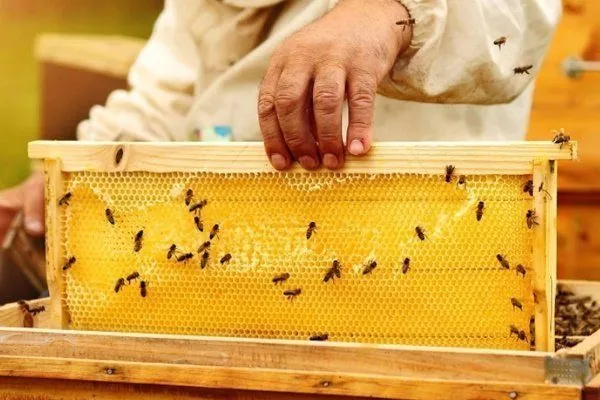
When building comb on frames, bees first draw out the rudiments of comb and then build on them using their own wax. This results in a large number of combs arranged in regular rows on both sides of the frame.
Each frame holds an average of 4 kg of honey, depending on the depth of the cells. Beekeepers ensure that empty cells are filled and also monitor the quality of the wax.
Honeycombs
The combs in the hive are arranged vertically. The upper part of the frame contains thicker combs, tapering toward the bottom. To navigate between the combs, bees use so-called alleys, which are approximately 13 mm wide.
Pure wax is white or light yellow, due to the plants pollinated by the bees that produce it. Bees coat the walls of the constructed combs with propolis, which gives them a more yellow color. Over time, the wax darkens due to the influence of resin and bee waste. Occasionally, the bees clean the combs, which slightly increases the lifespan of the comb.
In the hive, some combs are also referred to as "dry." This refers to combs built by bees that are not yet filled with honey.
Purpose of honeycombs
Honeycombs perform several important functions in the life of the entire hive. These include:
- honey storage;
- bee habitat;
- maintenance of offspring.
None of these functions are unimportant, so honeycomb plays a significant role in the lives of bees. In beekeeping, humans facilitate the hive's work by constructing certain structures. In the wild, bees may spend more time constructing, which prevents them from devoting most of their time to honey production.
A medium-sized hive typically has eight vertical combs, equally spaced parallel to each other. The upper cells are used for storing honey, while the lower part of the hive has more space—where the bees store the pollen and flower nectar they've collected, enriching them with special enzymes and acids. As the honey in the lower tiers is ready, it is transferred to the upper tiers.
Composition and benefits
The main component of honeycomb is wax. To date, science has studied over three hundred substances it contains. Among these, complex fats stand out, making up three-quarters of the wax, while free fatty acids account for approximately half of the remaining components. Wax also contains paraffin hydrocarbons, aromatic oils, hydroxy acids, keto acids, triterpenes, cholesterol, various minerals, resins, plant pigments, and much more.
Due to its composition, honeycomb wax is practically not susceptible to the effects of many microorganisms, because it does not contain the enzymes they break down.
Propolis Beeswax and wax have many beneficial properties, including their bactericidal, healing, antifungal, anti-inflammatory, and analgesic properties, which are particularly valued. Honey and pollen enrich the honeycomb with a wealth of beneficial substances.
It's easy to see why honeycomb is so beneficial for the human body. Honeycomb honey is often sold in stores, and it's more expensive than regular honey. This price is due to both the greater health benefits of this product and the difficulties of transporting it.
People use honeycomb wax for a variety of purposes, but it's primarily used as a medicinal remedy. Beeswax helps:
- improve immunity;
- normalize the functioning of the gastrointestinal tract;
- strengthen the walls of blood vessels;
- relieve gum inflammation;
- improve the condition of the respiratory system;
- neutralize many allergens.
This is just the beginning of the list of beneficial properties of honeycomb. Wax is also often used for cosmetic purposes, creating various scrubs, masks, and creams.
Storage
Given the many benefits of honeycomb, it's important to preserve its quality for as long as possible at home. Propolis in honeycomb acts as an excellent natural preservative. Its increased resistance to most microorganisms gives the honeycomb a fairly long shelf life.
Among the threats to honeycombs removed from the hive, it's worth highlighting the main ones. These include:
- Moisture. When humidity levels exceed acceptable limits, honey in the combs begins to spoil. Therefore, humidity in the honey storage room should not exceed 60%, and adequate ventilation is also essential.
- Sun. Exposure to direct sunlight and high temperatures accelerates the decomposition of honey in the combs. Therefore, honey should be removed from direct sunlight and heat.
- Insects. The most common pest here is the wax moth. It is especially active during hot weather. Well-ventilated areas with temperatures no higher than 10°C protect the honey in the combs from these insects.
- Mold. It develops when humidity is too low, and it is quite difficult to get rid of, so you shouldn’t allow it to appear.
After considering the dangers to honey in honeycombs, protecting it from them is easy. The optimal storage conditions for honeycombs are a suitable temperature of 3 to 10°C.
When storing honey, it's important to remember that it readily absorbs odors, so keep it away from strong-smelling foods. Storage containers should always be covered with a lid. Under proper storage conditions, honey in the comb can be stored in liquid form for up to 3 years.
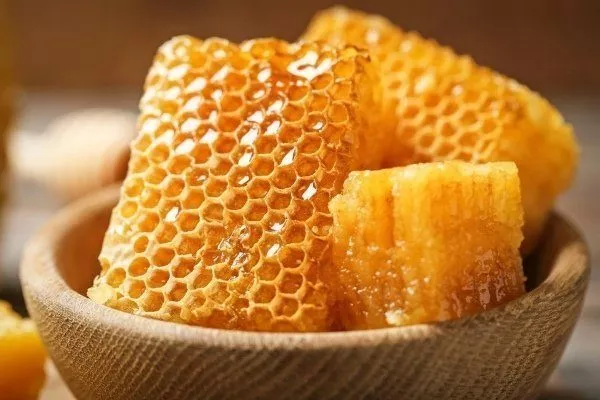
Can you eat honeycomb?
Honeycomb can be consumed, but certain conditions must be observed. Extracting honey from the honeycomb on your own without proper experience while preserving all its beneficial properties is difficult.
An important factor here is the correct separation of the pollen layer, bee bread and propolis during honey extraction—all these components should not remain at the bottom of the honeycomb. Therefore, the best way to obtain all the beneficial properties of honeycomb, according to most beekeepers, is to chew it, like regular chewing gum.
It's recommended to slowly chew small pieces of honeycomb cut from the frame—approximately 2 x 2 cm in size. Chew them until the sweet taste disappears, which usually takes about 10 minutes. The remaining wax can also be chewed for a longer period of time; it has many beneficial properties, but the taste will be lost. After chewing, simply spit out the wax; do not swallow it.
Ingesting a small amount of wax will not cause any health problems. Furthermore, natural wax is an excellent absorbent, making it effective at absorbing and removing many harmful substances.
Wax can have a negative impact on the human body only if it is consumed deliberately in large quantities and in certain individual cases, including late-stage cancer, diabetes, active gastritis, urolithiasis and cholelithiasis, and elevated body temperature.
Comb honey in folk medicine
Traditional medicine has long used honeycomb. It strengthens the immune system, increases hemoglobin levels, stimulates appetite, and promotes physical and mental development in children.
Comb honey is used to treat diseases of the thyroid gland, respiratory system, gastrointestinal tract, heart, and blood vessels. Comb honey helps boost metabolism and normalize blood pressure. It is also popular for preventing tooth decay and helping with nicotine addiction.
Honeycomb honey is a highly beneficial natural product, used for centuries by humans both as food and for medicinal purposes. It has a beneficial effect on the health of most people. Unless there are any contraindications to consuming honeycomb, it's worth consuming regularly—it will significantly improve your health, and it's simply delicious.