
Beekeeping products are widely available, but before purchasing, it's important to know exactly how to test honey for quality, as counterfeits are common among the wide selection. This can be determined in a variety of ways, including laboratory analysis, visual inspection, and reactions with other substances.
Criteria for quality honey
There are a number of factors that indicate the good quality of bee nectar. There are many of them, as honey comes in different types. Each type has its own specific selection criteria.
Appearance
| Name | Color | Consistency | Taste |
|---|---|---|---|
| Acacia | Light, transparent | Liquid, reminiscent of refined vegetable oil | Tender, sweet |
| Lime | Whitish, amber or light yellow | Liquid for children up to 3-4 years | Delicate, with a slight tickle |
| Buckwheat | Dark brown | Thick, creamy | Tart, with a slight tickle |
| Sunflower | Golden amber | Thick, creamy | Sweet, with a slight tang |
| May and fireweed | Yellow or with a greenish tint | Thick, creamy | Sweet, with a slight tang |
| Floral | Yellow or golden | Thick, creamy | Sweet, with a slight tang |
| Sweet clover | Amber | Liquid up to 3 years | Tender, sweet |
| Mountain | Amber and yellow | Thick, creamy | Tart, with a slight tickle |
| Wild | From amber to dark brown | Thick, creamy | Tart, with a slight tickle |
| Pine / coniferous | Very dark with a greenish tint | Thick, creamy | Tart, with a slight tickle |
| Sugar | Light yellow | Thick, creamy | Sweet, without irritation |
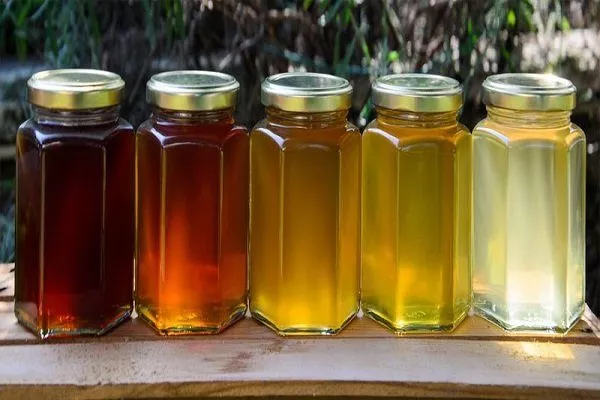
The color of honey depends on the variety. It ranges from very light and transparent to dark. The main criteria are the absence of impurities, sediment, cloudy particles, and microscopic particles, and transparency upon visual inspection.
If there are such comments, it can be assumed that chalk or starch was added to the honey.
How to determine quality by appearance:
- Excessively colorless honey is rare, except for acacia honey. It takes a long time to crystallize, which is why it doesn't acquire a consistent color and has a slight turbidity.
- Linden honey can be whitish, amber, or light yellow. If the seller claims that dark nectar is linden honey, don't believe them.
- Buckwheat, honeydew and chestnut are only dark brown.
- Sunflower - golden-amber.
- May and fireweed are yellow and even have a greenish tint.
- Floral - exclusively yellow or golden.
- Sweet clover - only amber in color.
- Mountain - amber and yellow.
- Wild – varies from amber to dark brown.
- Pine/coniferous – very dark with a greenish tint.
- Sugar - light yellow.
The color of fresh, natural honey depends on the pigment contained in the inflorescences of the plants from which bees collect nectar. A single variety can have up to 2-3 shades. The key is to ensure it remains clear for the first 3-7 months, until crystallization occurs, which results in a slight turbidity.
Consistency and viscosity
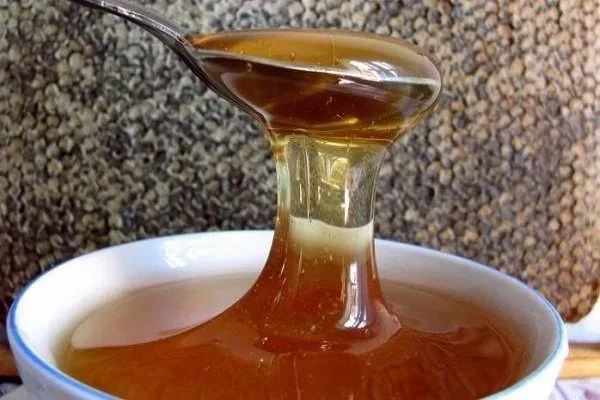
Another important factor affecting the quality of honey products. Many people believe that real honey should be thick, but there are varieties (those that crystallize slowly) that remain liquid:
- acacia – thickens over a long period (from 3 to 5 years), the consistency of which resembles refined vegetable oil;
- chestnut - liquid only 6 months;
- lime – remains in this state for up to 3-4 years;
- sweet clover - liquid up to 3 years.
All the rest varieties It should be thick, creamy, and smooth. If you buy fresh honey in the summer or early fall, it's slightly viscous, but by winter it thickens as the crystallization process occurs.
Taste qualities
Flavor also depends on the variety and plants the bees "visit." Important factors include the following:
- absence of acidity, bitterness;
- the aftertaste should not be caramel;
- no cloying sweetness;
- slight sore throat after the test.
- ✓ Natural honey should not have a caramel aftertaste, which indicates possible overheating or added sugar.
- ✓ When dissolved in water, natural honey makes the water cloudy, but without forming sediment.
Aroma
Before purchasing, be sure to smell the honey—natural honey has herbal notes. For example, buckwheat and chestnut honey have a tartness, mixed-herb honey has a grassy flavor, linden honey has the delicate aroma of linden blossom, and so on.
Low-quality honey has a weak aroma that can only be detected by a person with a heightened sense of smell.
Specific gravity
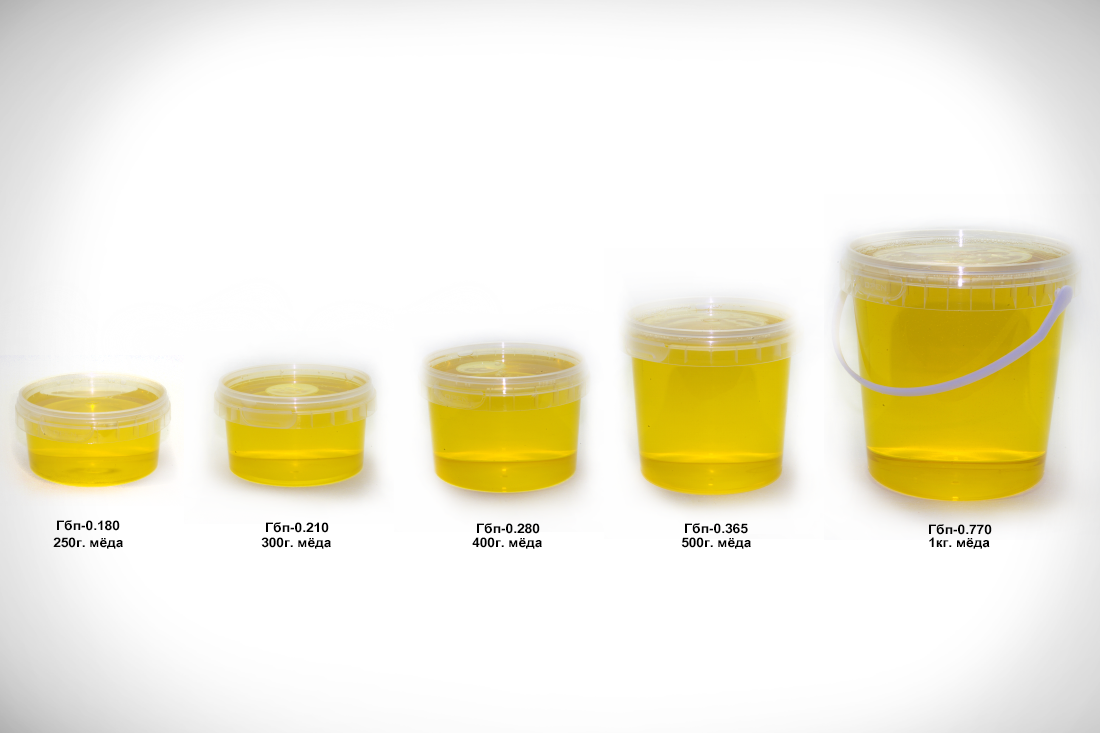
Inexperienced consumers assume that 1 liter of honey contains 1 kg. This is fundamentally incorrect, as the density of honey is several times greater than that of water, and the volume and weight figures do not match.
Honey is only 20-21% liquid; the rest is solid, which weighs more than water. Therefore, the specific gravity of a 1-liter jar ranges from 1.4 to 1.6 kg, depending on the variety (heather honey is the heaviest).
Sugaring
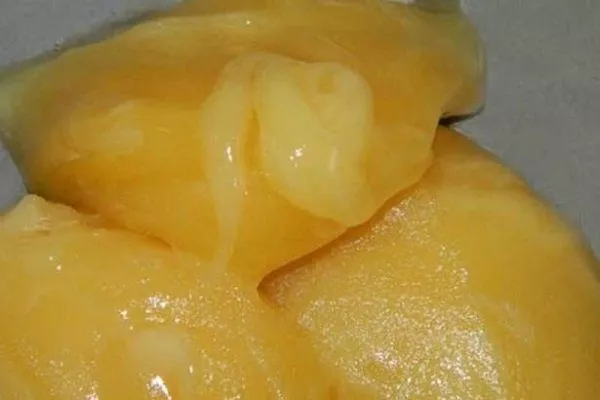
Consumer opinions on honey crystallization vary – some believe it shouldn't be, while others believe it's essential. Experts maintain that the latter view is correct, as the product is 40% fructose and the same amount of glucose.
Another issue is the time it takes for honey to crystallize. This varies for each variety, but the minimum time is 2-6 months, and this process must occur without fail.
The concept of sugaring includes the crystallization of the components of the bee product, which occurs gradually - first small crystals are formed, then large ones, and at the last stage the honey is transformed into a lard-like substance.
The seller's assortment
Every consumer dreams of seeing the widest selection when buying honey, but this is only possible in a store. When purchasing bee products from a beekeeper, the opposite is true. If they have more than four or five types of honey, it's a safe bet that some of them are counterfeit.
It is impossible to collect several types of honey from one apiary (even a large one) at the same time - bees pollinate plants at a distance of about 5 km, but no further, and only 2-4 types of plants can grow in such a radius (for example, linden, buckwheat, sunflower, clover).
The region where apiary production is located is also important. Several regions in Russia are renowned for this: Voronezh, Rostov, Altai, Bashkir, Volgograd, and Krasnodar Krai. Other regions lack large beekeeping farms.
Methods for testing honey quality
Since it is impossible to accurately determine the quality of honey based on external characteristics (color, smell, consistency, etc.) due to the large number of product varieties, this can be done using available tools.
Don't hesitate to check - honey is quite expensive, and you're buying more than one liter at a time.
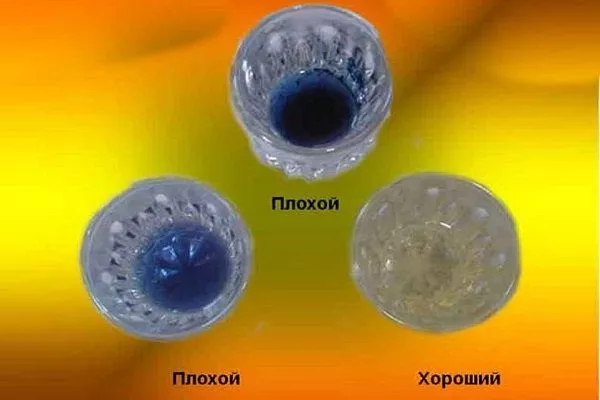
Iodine test
Counterfeit products often contain added starch, flour, and other ingredients to achieve the desired viscosity and thickness. This can be detected using a pharmacy test. Here's how to check:
- Buy iodine.
- Combine honey and water in a 1:1 ratio.
- Add 1 drop of iodine to 1 tablespoon of the mixture.
- Mix thoroughly.
- Wait 4 minutes.
Now check the reaction. If the mixture takes on a bluish tint, discard the counterfeit, as the iodine solution has no effect on natural honey.
Vinegar test
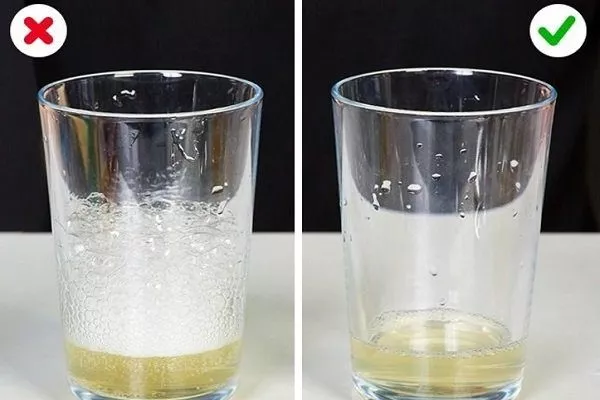
Sometimes unscrupulous beekeepers or producers add chalk to honey products. It's an alkaline substance, and its presence is easily detected in an acidic environment. How to test:
- Fill a glass (150 ml) with warm water.
- Dissolve 1-2 teaspoons of honey completely in it.
- Pour in 1 tbsp of regular table vinegar.
Watch the reaction – if chalk is present, foam will form and the mixture will begin to fizz. Discard this product.
Checking with a sheet of paper
The simplest method for determining the naturalness of a bee product is using a piece of paper. Excessive moisture is detected if the honey is diluted with water. To do this, drop a small amount of honey onto the paper and wait 2-3 minutes. If water is present, the product will spread, leaving a wet mark.
Testing with milk
For this method, you'll need natural milk, heated until hot (turn off the heat before it boils). Add 1 tablespoon of honey to 200 ml of milk and stir well.
A real beekeeping product or honey, to which no sugar has been added, will not curdle, but will dissolve easily and quickly.

Genetic memory
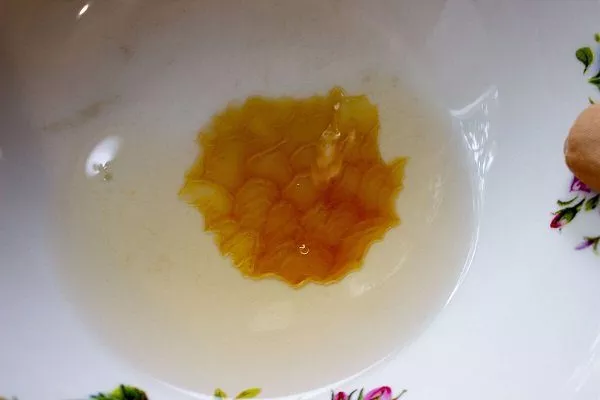
The theory has no scientific basis, but many experienced beekeepers believe that honey has its own genetic memory. What to do:
- Mix honey and water in equal proportions.
- Take a plate/saucer.
- Spread the mixture over the surface of the dish and leave for 1-2 minutes.
Water test
Regardless of the variety, honey products become slightly cloudy when dissolved in plain water, but do not form sediment or contain any grains or impurities. To test, dissolve 1 tablespoon of honey in 100 ml of water.

Fire test
The fire method is based on the fact that bee products always support combustion. If they're not genuine or have water added to them, this won't happen. How to conduct the experiment:
- Dip a match with sulfur in honey.
- Hold for 30-40 seconds.
- Remove and light with a lighter.
If the product is genuine, the match will burn.

There is another “hot” method – using a hot wire:
- Heat the metal element in the fire.
- Place in a container with honey.
- Hold for 10-12 minutes.
Now look at the reaction – the surface of the wire should not be covered with a sugar-like film.
Thermal testing
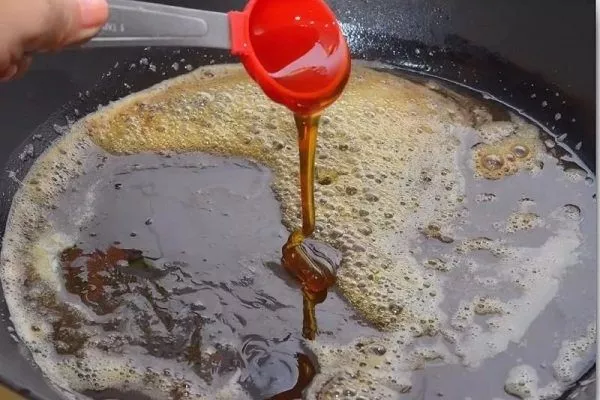
If you've already purchased honey and returned home, place a clean frying pan on the stove and add a small amount of the honey product. If it's counterfeit, the mixture will foam, splash, and bubble, indicating the addition of sugar or other substances.
The real product should quickly take on the structure of caramel, but at the same time not have a caramel flavor or aroma.
Testing with bread
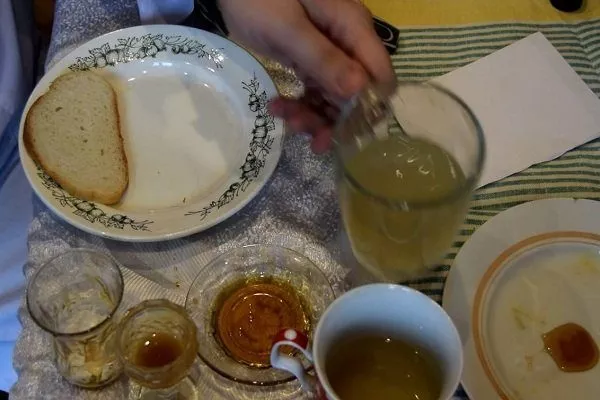
The "Tasty" method is considered effective. Here's how to conduct the test:
- Pour honey onto a plate so that it covers the entire surface by 0.5-1 cm.
- Cut a slice of white bread.
- Place it on the beekeeping product and press lightly (to ensure tight contact between the two components).
- Wait 2-4 hours (depending on whether the honey is liquid or already candied).
Take out a piece of bread and examine it. If the honey is real, it will begin to penetrate the bread's structural pores. If it's artificial, this won't happen. In fact, the crumb may completely disintegrate, soften, and combine with the liquid.
Chemical pencil test
This item has been used for many decades to conduct various experiments. Testing honey for quality and naturalness is no exception. Here's how:
- Spread a thin layer of the beekeeping product on a white sheet of paper.
- Take a chemical pencil and draw it over the mass several times (try to write/draw something).
If the product contains sugar syrup, water, etc., the label will appear after 1-3 minutes (depending on the amount of additives and the type of ingredients). Since the real product also contains some water, this will also happen, but over a longer period of time.

Other methods
There are several other methods that people use:
- Black tea. Brew black tea and add 1 tablespoon of honey to 200 ml. With this product, the drink will become slightly cloudy, but without sediment, and the honey itself will be darker.
- Paper napkin (serving). Drop a small amount of honey mixture onto it and wait 3-4 minutes. If it's fake, a wet spot or double ring will form around the drop (there's added water or other ingredients).
- Ammonia. It is used in the same way as vinegar (hissing occurs, etc.) and at the same time as iodine (only in this case the fake mixture turns brown).
Where can I buy a quality product?
Many people prefer store-bought honey, assuming that the producer undergoes all quality control procedures before releasing it for sale. However, this is not always the case, as some producers are unscrupulous and even produce counterfeit products.
To avoid this, buy the product only from a reputable company and carefully read the ingredients. Even if it's factory-packaged, the container should contain nothing but honey.
It's best to purchase bee products directly from beekeepers or at fairs. Before purchasing, be sure to check the necessary documentation, including the apiary's passport and laboratory analysis data.
How is honey counterfeited?
Most often, sellers use primitive methods to adulterate honey—diluting it with water, chalk, flour, starch, or selling an unripe, synthetic product. How to recognize the type of counterfeit:
- Synthetic processing method. For this purpose, they use inverted sugar syrup (or, in extreme cases, molasses). They artificially add colorings, flavorings, and other additives, making it difficult for a layperson to distinguish from real honey by its appearance.
It's most often found in factory-made products. If the manufacturer is responsible, they'll always indicate this on the packaging. - Dilution method. To increase the volume, sellers add regular water to honey. This isn't harmful, but not everyone wants to pay for a cheap product. Moreover, such products don't have a long shelf life. It's even worse if the additive is inverted sugar syrup, which consists of glucose and fructose. Such a product will never crystallize.
Another option is to dilute fresh honey with last year's or older honey. To do this, it is heated to 80°C, which completely destroys its beneficial properties and promotes the formation of hydroxymethylfurfural (a harmful aldehyde). - The honey is unripe. It was harvested too early—before the bees had evaporated the moisture and sealed the nectar in the combs (only then does it ripen). This type of honey contains between 40 and 70% water (the acceptable limit is 21%).
This is fraught with a fermentation process, which produces toxic substances, leading to intoxication of the body.
There are beekeepers who don't hesitate to sell honey from sick bees. These diseases are not transmitted to humans, but the chemicals used to treat insects remain in the honey, causing harm to health.
How to avoid spoiling honey after purchasing it?
Even real honey requires special care during storage and transportation. Failure to adhere to these requirements will result in spoilage. Please note the following:
- Capacities. Store honey in the correct container—glass only. Avoid metal containers, as they oxidize, and plastic (especially those not intended for food use), as plastic releases harmful substances when stored for too long.
- Conditions. It should be kept in a cool place. The optimal temperature is 5-15°C. If stored for no more than 3-5 months, a thermometer reading of 15-20°C is acceptable.
- Shelf life. Ideally, 12 months, but it's generally accepted that honey can be stored for several years (depending on the variety). This is true, but the storage conditions must meet the standards.
- Tightness. This is a must, as moisture penetration promotes fermentation. Furthermore, honey absorbs foreign odors well, which can ruin the flavor and aroma.
- Illumination. Avoid exposing honey to sunlight or artificial light, as this will destroy its beneficial properties. Store honey in a dark place.
- Rules of application. It is prohibited to heat honey products above 60°C – all microelements and vitamins are destroyed by heat, so honey is of no benefit.
It's best to store honey in a pantry, cabinet, refrigerator, or cellar. Never place the jar near a gas or electric stove/oven or heating appliance.
Before purchasing and testing honey for quality, consider the location of the apiary. If there's a highway or production plant nearby, avoid the product, as it will contain lead and other harmful substances. Choose the method for determining naturalness that best suits your needs.
When honey forms "honeycombs" in water, it's a physical phenomenon called Benary cells. Such honeycombs form with any liquid, provided the liquids have different densities. One salesman said something, and the fools carried on…