
A wax press is a device that extracts wax from honeycombs. There are several types of this equipment, each with its own specific operating mechanism. Ready-made wax presses are available commercially, but you can also make your own. In any case, the equipment must be used strictly according to the instructions.
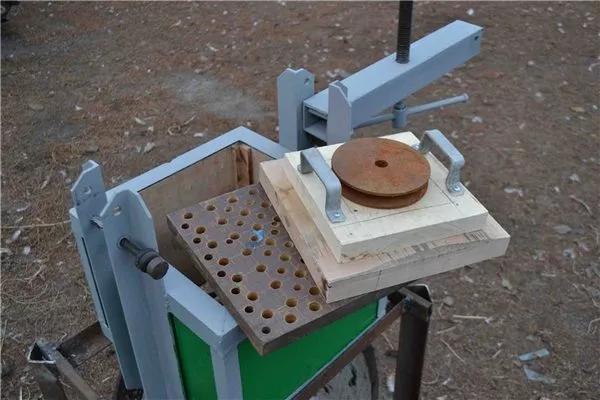
Types of equipment, their design and operating principle
| Name | Type | Capacity | Operating principle |
|---|---|---|---|
| Manual design | Manual | 5 frames | Heating in water, spinning |
| Voskopress Kulakova | Electric | Depends on the model | Automatic heating, spinning |
| Industrial (factory) type | Industrial | Large volumes | Wax tape production |
There are three main types of wax presses: manual, Kulakov, and industrial (factory). They serve the same purpose, but differ in size and design:
- Manual designThis device has a very simple design. It's a 43-centimeter cylindrical container that holds five frames from a nest. It features an iron mortar with grates, a special pressure screw, and a wooden support. A manual wax press operates simply: the wax is heated in water, liquefied, and pressed out.
- Voskopress KulakovaThis design consists of an electric tank with a water heating element and drain valve, a separator, upper and lower sieves, a power drive, and a filter bag (usually made of linen). Kulakov's wax press operates on the same principle as manual equipment, but the process is automated: the heating element heats the water, which then maintains the temperature.
- Industrial (factory) type wax pressThis type of equipment is the most complex. It is used by large-scale production facilities, but is impractical for small apiaries. A distinctive feature of this type of device is the type of product it produces: wax ribbon. The design consists of a large hopper with an electric heater and a special drum from which the wax ribbon is removed. It also includes vacuum tanks, special nozzles, and discs for varying the width of the wax ribbon. This system is used for large volumes of raw material and requires specialized operating and maintenance skills.
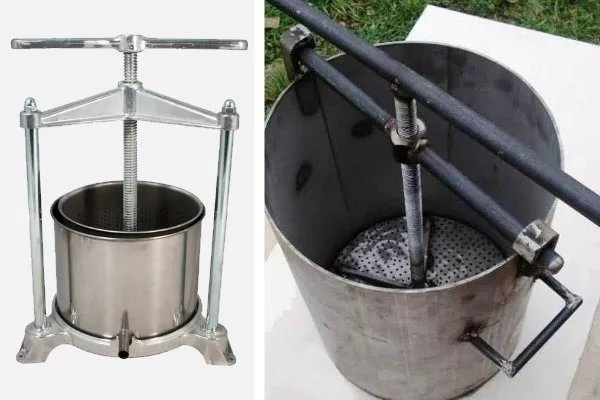
Manual wax press
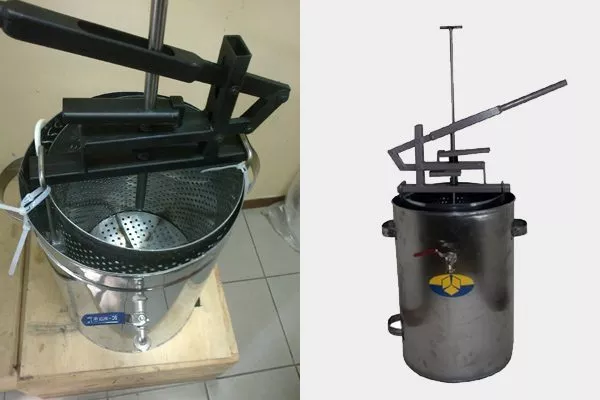
Voskopress Kulakova
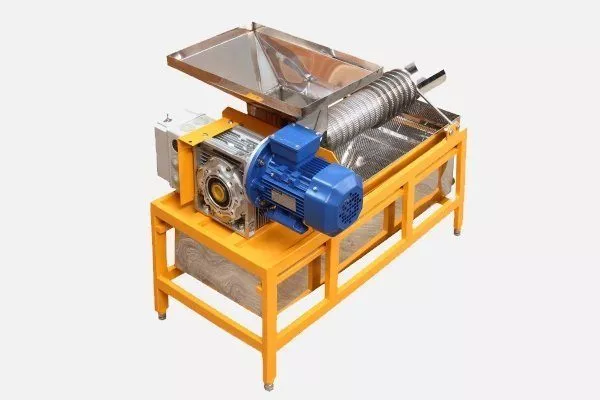
Modern industrial wax press
The type of equipment used determines the quantity and quality of the resulting raw material. With a manual device, processing 2 kg of honeycomb takes 3-4 hours. Kulakov's wax press processes twice as much raw material in the same amount of time, while industrial equipment processes 5 kg of raw material per hour.
A factory-made wax press cannot be assembled and used in a typical apiary, and Kulakov's device requires voltage stability—voltage fluctuations shorten the equipment's lifespan.
How to make a wax press with your own hands?
You can make your own wax extractor using a variety of methods. Finding the right container is crucial—it should be large enough, airtight, and heat-resistant.
Often people make their own wax press from washing machine drumsYou'll need two of these containers. To seal the bottom drum, remove the impeller and weld the resulting hole. From the second drum, keep the top stainless steel cylinder with the lid, and for reinforcement, weld 30 cm stainless steel pipes crosswise. Attach the screw vertically.
The video below shows how to make a wax press from an old washing machine drum:
It is possible to make a wax press based on a wooden barrelThe disadvantage of this device is its short lifespan—constant temperature and humidity fluctuations are detrimental to the wood. Another challenge is maintaining the container, especially cleaning it.
The piston for a homemade wax press is best made of a steam-powered type. The body has small holes for filling with water.
Another option for a homemade design is gas cylinderYou should proceed as follows:
- Cut off the bottom of the cylinder.
- Weld the resulting hole using sheet steel.
- To secure the support for stability, you can use pipes or thick corners.
- To make thermal insulation, you can use polystyrene foam, mounting foam, or wood.
- Secure the car jack by welding a transverse steel strip.
- Provide a drain hole for the wax.
When using homemade constructions, bags for the raw materials are important. They must be sufficiently thick and durable. Jute is best. Polypropylene bags are also suitable for single-use.
- ✓ The bag must be made of jute for reusable use.
- ✓ Polypropylene bags are acceptable for single use.
- ✓ The density of the material must prevent the penetration of small wax particles.
Watch the video to see how a homemade wax press made from a metal can, stand, and jack looks and works:
Instructions for use
The specifics of using a wax press depend on its type. Handheld device apply according to the following algorithm:
- Place a grate on the bottom of the mortar.
- Place a bag with 2 kg of honeycomb into a mortar.
- Pour water – the bag should be completely filled.
- Place the structure on the fire, keep the boiling raw materials on the fire for another 15 minutes until the mass becomes homogeneous and mushy.
- Remove the mortar from the heat, install the pressing grid and screw.
- Press on the raw material bag, and the wax that floats to the surface is poured into a container.
- Add hot water and heat the mortar – this is necessary for the wax to become liquid.
When using a manual wax press, you should always follow the same procedure. When the wax no longer floats to the surface, the process is complete.
Voskopress Kulakova should be used as follows:
- Place the structure on a flat surface.
- Pour hot water into the tank – fill it halfway (at least 30 l).
- Turn on the heater.
- Insert the bag into the separator.
- Chop the raw materials by hand, place them in a bag in 3 cm layers, placing drainage material between each layer.
- Close the filled bag by pressing it with the top sieve.
- Install the separator in a water tank.
- Boil the raw materials for at least 2 hours.
- Install the power mechanism, use the lever to set the rod to the squeezing mode - the process lasts at least an hour, the frequency of the efforts slowly increases.
- Open the tap at the top of the tank, placing a clean container underneath it beforehand – the squeezed wax will drain here.
- Maintain the water temperature in the tank at 90 degrees to speed up the process.
- Boil the raw material for at least 2 hours before pressing to ensure better wax separation.
- Use drainage material between layers of material to improve filtration.
Watch the video tutorial on using Kulakov's wax press:
When using Kulakov's wax press, the amount of raw material directly depends on the pressing time. To speed up the process, add hot water (90 degrees Celsius) and pre-boil the raw material for at least two hours.
Regardless of the type of wax press used, the final step in using it is cleaning the device. After thorough cleaning, the entire equipment is completely dried. Ignoring this precaution will shorten the lifespan of the device.
A wax press is a device used to produce wax. It can be manual or automated, and can be purchased ready-made or made yourself. Wax presses are relatively simple in design. The quality of the final product and the speed of its production depend on the type of equipment used.