
Before storing, pollen must be thoroughly dried. For this purpose, any beekeeper can make a special drying rack using available materials and tools. After drying in such a device, the pollen will be dry, preventing it from becoming damp due to excessive moisture or mold, remaining fit for consumption for a long time.
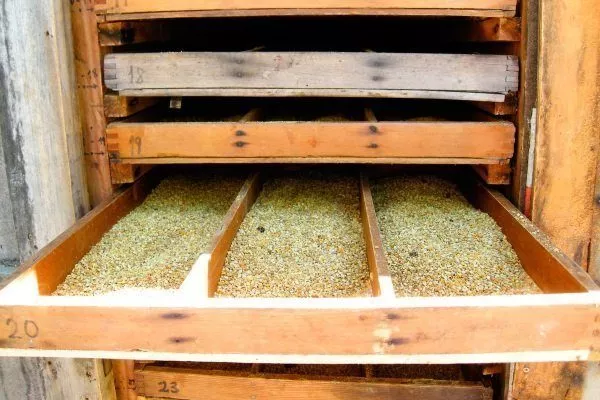
Benefits and methods of drying
Every beekeeper knows that pollen should never become damp or saturated with moisture, otherwise it will become moldy and contain toxic substances, becoming poisonous. Consuming it can be harmful to human health and cause serious poisoning. To prevent this, pollen must be thoroughly dried before storing. Hobby beekeepers often use two methods for this:
- Dry the pollen in a suitable room without special equipment.To do this, take clean white paper and spread the bee product in a thin, even layer. Carefully ensure that this layer is no thicker than 2 cm. Stir the pollen regularly to prevent it from spoiling. This drying process should only be carried out in a room that meets a number of requirements:
- is darkened, since there is an opinion that sun rays have a negative effect on the quality of pollen, destroying useful enzymes and vitamins in it;
- is clean and dust-free, since dust mixes with pollen, leading to its contamination and deterioration;
- It is possible to maintain the required temperature (20-40°C) in it so that the bee product does not become moldy or spoil.
Many beekeepers dry pollen in the attic under the roof. The drying time depends on the type of pollen and can range from 24 to 48-72 hours.
- A special dryer is usedThis method is preferable because it allows for easy creation and maintenance of the required microclimate for drying and allows for processing more pollen. A suitable device can be purchased or built at home, saving significant costs and ultimately producing a dryer with the required performance characteristics. The problem is that most commercially available devices are designed for professional household use and are designed for industrial-scale pollen drying.
A homemade drying rack can be made from readily available materials, such as a regular cabinet, kitchen shelf, or drawer. All you need to do is drill a few holes for ventilation. If possible, you can add a fan to ensure only warm air flows into the drying chamber. Experienced homeowners can experiment and explore the most unexpected options.
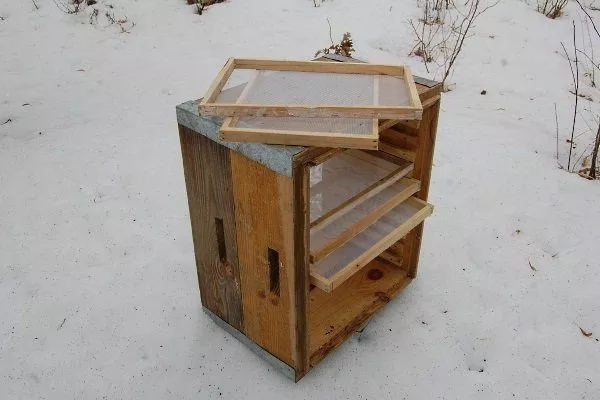
How to make a drying cabinet?
If you collect large amounts of pollen daily, free-drying is impossible, so it's best to use a drying cabinet. To make one yourself, you should first understand the drying process itself, which is as follows:
- Warm air contains more water vapor than cold air.
- It is believed that 1 kg of fresh flower pollen contains approximately 300 g of water. If 1 cubic meter of air is heated to 38-40°C, it can remove a maximum of 54.3 g of moisture.
- Thus, to dry 1 kg of product, 5.5 cubic meters of air heated to 38-40°C are required.
It's difficult to maintain reliable air circulation in a homemade pollen drying cabinet, so a fan with a minimum airflow of 22 cubic meters per hour is required. Generally, the following materials are required for pollen collection:
- wooden boards or smrekolit (pressed wood fiber boards);
- sheet metal;
- electric fan;
- 100 W electric heating elements – 2 pcs.;
- wooden frames – 10 pcs.;
- fine mesh net.
- ✓ Wooden boards or smrekolite for the dryer body must be at least 15 mm thick to ensure sufficient thermal insulation.
- ✓ Fine mesh screens for grates should have mesh sizes no larger than 1 mm to prevent pollen from escaping.
Once you have prepared everything you need, you can begin assembling the cabinet:
- Assemble a wooden cabinet structure from slabs.
- Install an electric fan at the top of the cabinet.
- The part of the cabinet where the fan will blow air should be covered with sheet metal.
- Cover the underside of the pull-out wooden frames with fine-mesh mesh. Place the resulting grids on both sides of the cabinet, spaced 5 cm apart.
- Install electric heating elements in the center of the drying chamber to maintain a constant temperature by heating the air. This will prevent the pollen on the lower racks from becoming damp due to condensation released from the rapidly cooled air.
Flower pollen should be spread on the pull-out racks of a prepared cabinet maintained at 40°C. This cabinet can dry up to 15 kg of product per day, with a moisture content of up to 6%, depending on its original condition. Pollen processed this way retains its original color.
It is better to keep the assembled drying cabinet outside rather than indoors.
Learn how to make a versatile dryer that can be used to process pollen, mushrooms, fruits, and other produce in the following video:
How to convert an old cabinet into a drying rack?
If you have an old wooden cabinet on hand, you can use it as the base for a future drying unit. All you need to do is cover it with sheet metal, make shelves from thermal cassettes, poke a few holes for air circulation, or install a fan. The finished unit can be used to dry not only pollen, but also vegetables, mushrooms, and fruits.
To assemble the structure, you need to prepare the following tools:
- an old small wooden cabinet;
- heater (heater);
- fan.
You can make a dryer in a couple of steps:
- Equip the cabinet with a fan and a heater.
- Drill several small holes to improve ventilation.
- Install shelves.
The principle of this device, without automatic controls, is that a fan from the room draws air through a heater, which dries the pollen. The drawback of this simple design is that it doesn't dry the pollen well in damp weather.
You can make a budget-friendly drying rack with pull-out frames using the instructions in the video below:
Homemade drying rack from a beehive body
If you have a multi-body hive, you can use one of its bodies to make a dryer according to the following instructions:
- Install a fan heater in the finished hive body.
- Connect two 145-frame housings together, then fit them with metal corners to prevent them from falling apart. This will create a drying chamber. It will be one large chamber that holds 10 Dadant frames.
- Make several boxes no more than 20 cm high. Stretch a nylon mesh over the bottom.
- Nail special slats into the chamber so that the drawers can slide freely.
- Place the finished boxes one above the other in the chamber like a shelving unit.
- Make a blind lid and cover its top with foil for additional insulation.
Basically, the dryer is assembled like a hive, with a fan heater at the bottom, a drying chamber in the middle, and a lid on top. This device operates using convection, lying on its side.
To prevent mold formation, pollen in such a dryer should be placed in boxes in one thin layer.
Electric pollen dryer from a refrigerator
A drying cabinet can be easily made from an old refrigerator by following these instructions:
- Remove all parts from the refrigerator body except for the insulation.
- Drill holes in 6 rows on the inside of the walls.
- Insert 5 mm high rods into the holes.
- Place pollen-filled porches on the rods. They are best made from stainless steel, with the edges bent 3-4 cm.
- Install a 250W heater at the very bottom of the case.
- Place a fan next to the heater, which can be salvaged from old household appliances. For example, you can use an electric motor from an old tape recorder with homemade blades.
The operating principle of such a dryer is similar to a heater, as all the air flows from the bottom up, ensuring high-quality drying of the produce. The temperature is maintained at 37-40°C thanks to a built-in thermostat. It is advisable to build two such devices, one for drying the pollen and the other for pre-drying.
An electric dryer offers several advantages. It allows you to quickly obtain the highest-quality bee product, and it can be used both in the garden and in the apartment, as it is safe and easy to use.
Detailed instructions for making a drying rack for bee pollen, herbs, and berries are shown in the following video:
How to assemble a chest dryer?
You can construct a drying rack from a standard chest – a large wooden box with a hinged lid used for storing household items. The chest is 150 cm long, 75 cm high, and wide enough to accommodate a standard frame. Here's how to make a drying rack:
- Make a chest of the specified dimensions from three-layer plywood and bars.
- Place frames measuring either 435x300 mm in two rows or 435x145 mm in four rows into the box.
- Place two pans filled with sand on the bottom of the chest.
- Bury a 100-watt light bulb in the sand. They will be used as heating elements.
- Insert X-shaped wires into the sand above the light bulbs. Place small tin circles on them for better heat distribution.
- Instead of frames, place slats on the shelves of the chest. Place 6 pollen troughs on them, leaving gaps between the walls for warm air circulation. The troughs themselves should be made of stainless steel, with the edges bent 3-4 cm.
- Place the thermometer in the center of the long wall, level with the bottom trough. Place it 4 cm from the wall.
Using this device, beekeepers have come to the conclusion that it's best to place the troughs containing fresh pollen only on top. This is because the troughs below them will dampen the troughs above them, slowing down drying. Meanwhile, six troughs can hold 6-7 kg of pollen, which will dry for three days. A pair of 100-watt bulbs will maintain the temperature at 36-39°C.
If drying is carried out in hot weather, the lid of the chest should be raised by 1-2 cm so that the temperature in the chamber does not rise above 40°C.
How to make a dryer with infrared lamps?
There's a special method for drying pollen that involves irradiating it with infrared rays. These rays not only heat the surface of the product but also penetrate the interior, ensuring rapid drying.
To make a device with a similar operating principle, you need to prepare the following materials:
- small wooden box;
- 250W infrared lamps;
- thermostat;
- fine mesh grid.
The dryer is assembled according to the following instructions:
- Drill several ventilation holes in the walls of the box and the lid.
- In the upper part of the chamber, install radiation lamps at a distance of 200 mm from each other, as well as from the pollen layer.
- Place a fine-mesh grid on the bottom of the box.
- Install a thermostat in the chamber to prevent the pollen from overheating. To achieve this, the temperature inside the box should not rise above 40°C.
Pollen is poured onto the grid in a 15-20 mm thick layer. It is estimated that one 250 W infrared radiation source can dry 200 g of pollen in 8 hours of operation.
An alternative to a homemade design
If you can't build your own dryer, you can purchase a pre-fabricated one. Electric "Sadochok" devices are popular among beekeepers. They are lightweight and easy to carry. The choice of dryer depends on the size of your plot.
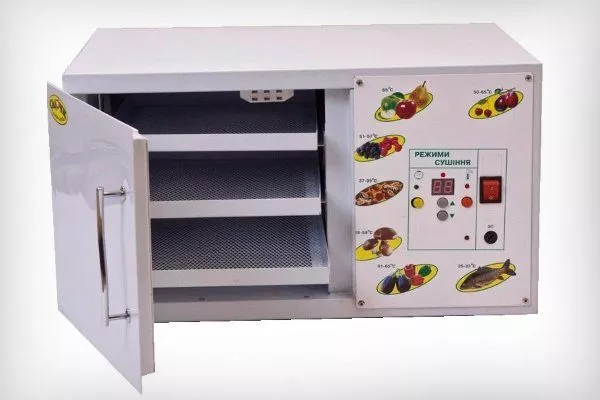
Here are some popular models:
- Sadochok 0.5The 450-watt device can handle up to 9 kg of pollen. It can process 50 kg of product per month. It comes with 5 trays.
- Garden-1mIts power is slightly higher—650 W—so it can dry 15 kg of pollen in a single cycle. This figure can reach 100 kg per month. The device consists of five trays.
- Garden-2mThe most productive device, with a power output of approximately 950 watts, can hold up to 30 kg of pollen, yielding 160 kg per month. It has 9 trays.
Regardless of the power, the device will ensure high-quality pollen processing, preserving all its beneficial properties and meeting standard standards. Furthermore, the dryer itself is very simple to operate:
- Before loading raw materials, warm up the chamber.
- Load pallets with pollen.
- After drying, wait up to 20 minutes for the product to cool and be ready for storage.
Another advantage of this device is its ability to control the temperature, allowing the beekeeper to set it anywhere from 20 to 60°C. Furthermore, it is completely safe and reliable, as it features double protection.
The difficulty of storing pollen
Once pollen is removed from the hive, it should not be stored immediately, as it contains approximately 30% moisture, which will quickly cause mold, bacteria, and rot. Damp pollen becomes toxic and hazardous to health.
To prevent pollen from spoiling, it must be dried before storage, keeping the humidity level below 10%. This product retains its beneficial properties and can be stored for up to 2 years.
To ensure the flower pollen is sufficiently dry, gently squeeze it with your fingers. If it doesn't crumble and remains firm, it's ready for storage. If the pollen can be crushed between your fingers, it's still damp and should be dried further.
There's another indicator of the pollen's readiness. The removal of excess moisture is indicated by the hard clumps that form after the drying cycle. To ensure the pollen is properly moist, drop these clumps onto a wooden surface. If you hear a dull thud, the drying process has been successful.
Before placing the processed pollen into jars, it should be sifted or treated with an air stream to remove excess impurities.
Pollen is a useful beekeeping product with medicinal properties, so it's beneficial to preserve it for storage. To do this, it needs to be dried to remove moisture and mold. For this purpose, even professional beekeepers use homemade drying racks, which can be made in a couple of hours using only household items.