
A pollen trap is a device used to collect valuable pollen. Manufacturers sell inexpensive devices, but they may not be suitable for the hive or bees. Therefore, some beekeepers make their own.
Purpose of the pollen trap
Bees feed their young with pollen, but humans need it for other purposes. Beekeepers can use the collected pollen for medicinal purposes or sell it.
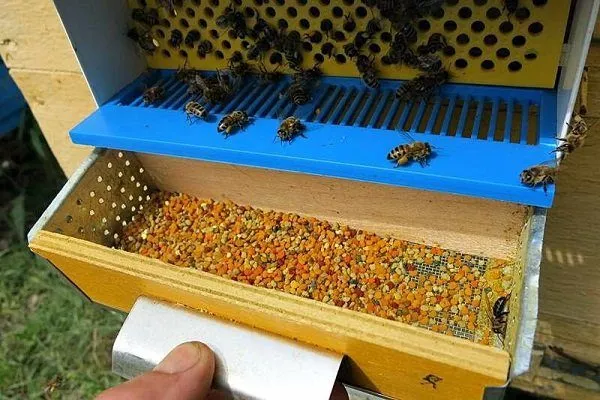
Bee pollen is a colorful granule composed of millions of grains of pollen collected by bees from flowers. This remedy can restore health damaged by poor ecology.
The pollen collector is installed for approximately one week. They should not be installed in early spring, as the insects will suffer from a lack of protein food and will have problems with brood rearing.
General structure and operating principles
A pollen trap is a fairly simple device, resembling a box densely pocked with holes. All pollen traps, whether industrial or homemade, are designed and operate on the same principle.
The design of pollen traps:
- a device - a box hung on the entrance - a crack through which bees enter their hive;
- the bottom of the box serves as a landing board;
- a grid is fixed in the pollen trap;
- There are also holes for drones on the sides of the box and in the grate itself;
- Materials of manufacture: wood, plastic, metal.
- ✓ The wood must be treated with antifungal compounds to prevent rotting.
- ✓ The plastic must be food grade and UV resistant.
- ✓ Metal parts must be made of stainless steel or coated with an anti-corrosion compound.
Operating principle:
- The lower part of the device, replacing the landing board.
- When bees crawl through the holes, they lose their pollen.
The holes in the grate should be large enough for bees to crawl through, but at the same time, pollen from their legs should be collected - the size of the insects is taken into account.
How does the collection take place?
Every day, worker bees fly out of their hives to forage. Some workers carry nectar, others pollen on their legs. Some individuals can collect both products at once. Bees carrying honey will easily slip through the holes in the screen, but pollen collectors will get slightly stuck.
Pollen collected on bees' legs prevents them from passing freely through the openings. Getting stuck and squeezing through, the insects lose all or part of the collected pollen. Pollen that falls from the bees' legs falls downwards. It spills through the grate, ending up in the collection box.
- ✓ Presence of flowering honey plants within a radius of 3 km from the apiary.
- ✓ Optimal air humidity is 60-70% to prevent pollen from sticking together.
- ✓ Air temperature not lower than 15°C for bee activity.
What else you need to know:
- the amount of pollen collected depends on the presence of flowering plants, the working condition of the family, and the air humidity;
- pollen collection does not affect the amount of honey collected or the sowing (fertilized eggs laid in the cells of worker bees);
- About 50-75% of the pollen is collected through the pollen trap, the remaining 25-50% goes to the bee colony, and this is quite enough to feed the larvae.
In good seasons, a single bee colony can yield 5 kg of pollen or even more. Using a pollen collector does not negatively impact brood, comb health, or wintering. However, honey production may decrease.
Bees, losing pollen, can adapt to new, unfavorable conditions over time. Having adapted to the conditions of entry into the hive, they bring in more and more pollen each time, and their collection decreases.
Pollen storage
Bee pollen spoils quickly, so it is removed from the hives daily. To prevent the pollen from spoiling and preserve its beneficial properties, it is stored in a special manner.
Options for storing pollen:
- With honey. Freshly harvested raw materials are mixed with honey in a 1:1 ratio, grinding them into a homogeneous mass. The resulting mixture is placed in wooden barrels. It can also be stored in glass containers. Thick honey is poured on top and the container is hermetically sealed.
Instead of honey, you can use sugar; take twice as much - 2 kg for every kilogram of pollen.

- In dried form. Fresh pollen is spread on plywood sheets in a layer up to 2 cm thick and placed to dry in a dry, shaded area with a draft. The best storage option is under an outdoor canopy. The raw material is stirred periodically until it reaches the desired consistency.
Dried pollen retains its color and beneficial properties. It is stored in airtight containers, such as heat-sealed plastic bags.
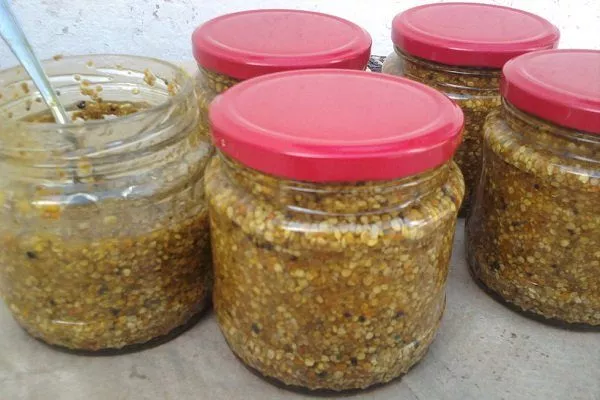
To test the readiness of the dried pollen, sprinkle it from a height of 20 cm onto a sheet of plywood. The finished pollen will produce a ringing, metallic sound. The pollen clumps will be difficult to crush. At this point, the pollen is completely ready for storage.
Storage conditions:
- temperature — from 0 to +15°С;
- the room is dry, without foreign odors;
- Freezing is undesirable, as it significantly reduces the beneficial properties of pollen.
Types of pollen traps
Today, beekeeping uses both external and internal pollen collectors. Each type has its own design features, advantages, and disadvantages.
Bottom (internal)
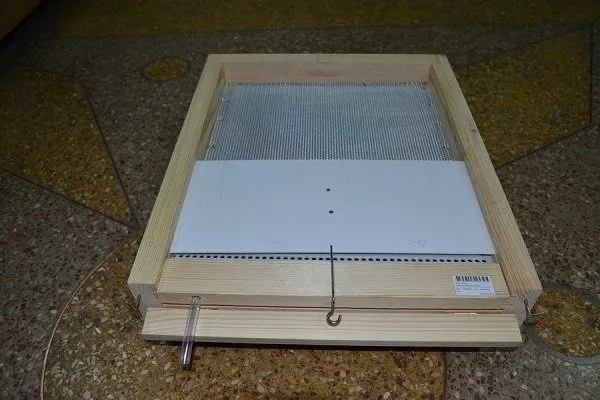
Internal pollen collectors have a separate body, which is placed on the bottom of the hive, or they themselves serve as the bottom.
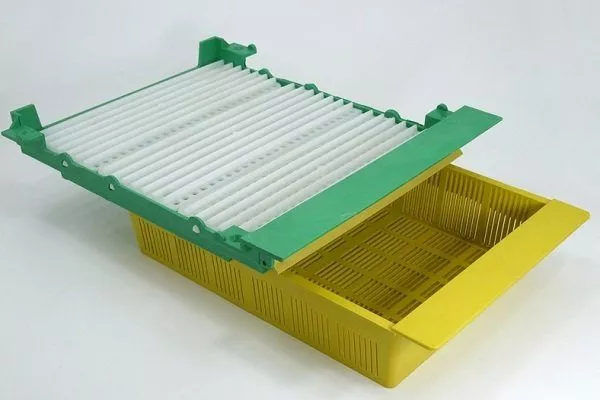
Design features of internal pollen collectors:
- components - body, two grids, pull-out drawer or basket, flight hole;
- the entrance is located above or below the basket;
- It is possible to install a structure between the hive bodies - this improves the quality of the pollen.
Pros:
- pollen is very safe, moisture does not get into it;
- larger basket (container) volume than external analogues;
Cons:
- More materials are required for manufacturing;
- To remove the pollen basket located inside the hive, under the entrance, you have to disturb and irritate the bees, so in unfavorable weather (rain), collecting pollen is not recommended - the family may go into a frenzy.
Wall-mounted (external)
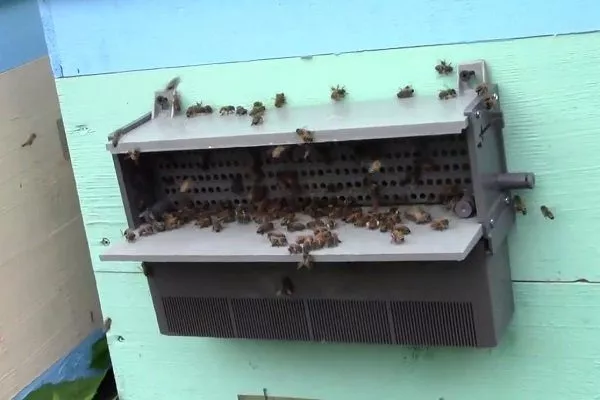
They are hung on the outside of the hives, on the entrance. They can be made of wood or plastic.
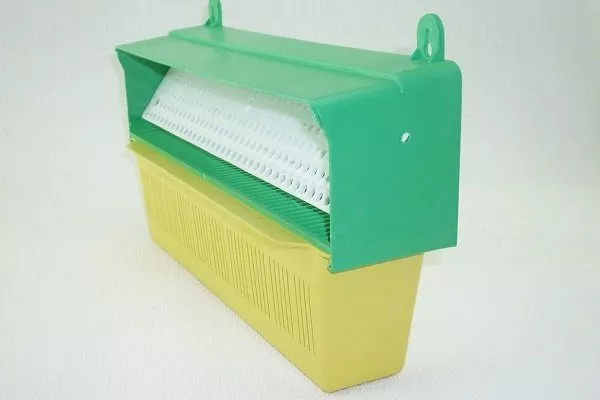
Design features of the external pollen collector:
- constituent elements - body, two grates, basket;
- one grid is needed to let bees through and collect pollen;
- the second grid separates the body and the basket, it serves as a filter, preventing debris from getting into the collected pollen;
- The basket (container) collects pollen lost by bees when passing through the grate.
The basket is filled in 1-3 days - the speed of collection depends on weather conditions.
Pros:
- safe for bees;
- provide good ventilation;
- prevents moisture accumulation;
- easy to dismantle and maintain;
- If the hive has two entrances, the pollen trap can be used for both the lower and upper entrances;
- easy to use;
- low cost.
The only drawback of external devices is that they have to be removed when it rains.
How to choose a pollen collector?
Beginner beekeepers choosing a pollen collector for the first time may be unaware of many of the nuances of these devices. To effectively collect pollen, there are several key points to consider when choosing one.
What to look out for:
- Is there a visor? It prevents water from getting into the pollen collection box during rain. A small canopy or no canopy at all is unsuitable. Water getting into the container will ruin the entire pollen load.
- Diameter of holes in the collection container. The holes shouldn't be too large or too small. If they're too large, the container will collect dead bees, while if they're too small, pollen will spill onto the ground.
- Collection capacity. If the volume is too small, you'll have to change it too often. Otherwise, pollen will fall onto the ground.
- The number of holes in the grid for the passage of bees. If there are few of them, the bee colony will experience constant discomfort.
- Width. It is desirable that the pollen trap matches the width of the hive.
- Container. You need a large, roomy, and deep tray. But not too wide. This is because bees typically enter the hive along one side, so the container will fill unevenly. This can cause pollen to spill onto the ground.
- Container fastening. It must be firmly and securely attached to the pollen trap.
- Holes. If they are not treated correctly, the bees will be injured during the passage.
- Disabling the grille. There are pollen traps with a grate that's difficult to remove. However, during windy weather or for other reasons, it can close automatically.
- Material. Metal devices tend to get very hot in the sun. It's better to choose a plastic or wooden pollen trap.
How to choose the diameter of the grill holes:
- for large bees of the Central Russian breed - 5.2 mm;
- for Carpathian and steppe Ukrainian - 5 mm;
- for Caucasians - 4.8 mm.
If you provide Caucasian mountain bees with a grid with large holes, only large pollen will fall into the container.
Review of pollen collector models
There are a wide variety of pollen collectors on the market, varying in material, design, price, country of origin, and other parameters. These devices are inexpensive, ranging from 200 to 600 rubles.
Examples of pollen collectors:
- PSP-2 Nectar. The hive is made of plastic and secured with metal screws. It features a removable pollen collection box, a ventilation window at the bottom, and shortened exits for the bees. Weight: 600 g. Price: 190 rubles.
- 3X "Apis". It is hung on the front wall of the hive. The holes are 5 mm in diameter and contain 180 holes. The device weighs approximately 300 g. It is made of plastic. Price: 180 rubles.
- 2D-Mini 210 mm. A plastic external device that hangs on the front wall, opposite the lower entrance. The upper entrance is closed, and the landing board is removed so that the pollen collector fits snugly against the front wall of the hive. The diameter of the holes is 5 mm. It weighs approximately 300 g.
- PSP-2 Spectrum. It has a plastic body and metal mounting screws. It has extended exits for bees. Price: 235 rubles.
- Pollen trap for hive entrance LYSON. Made of wood. Price: 1,200 rubles.
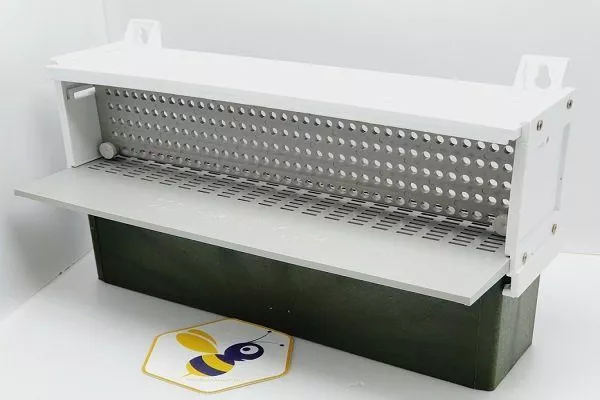
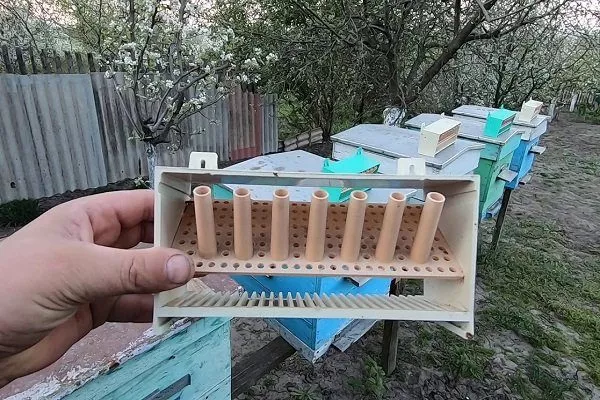
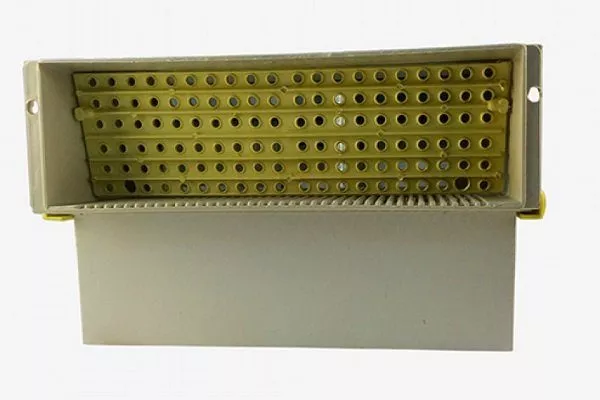
Pollen trap diagrams
The pollen trap collects 40-50% of the pollen. You'll need 0.30 mm diameter wire.
The device consists of:
- two side boards;
- baskets with mesh;
- pollen collection grid;
- lids.
There are two holes in the side:
- at the bottom - 4x6 cm, for installing a box for the baseboards;
- at the top - 2x4 cm, for the grid that collects pollen.
The pollen trap box is 30 cm long and 6 cm high, and is covered on top with a wire mesh, which guides the bees to the entrance.
Design features of pollen traps:
Arriving at its home hive, the insect lands on the landing board, from where it crawls onto the metal mesh covering the pollen collection container. Next, the bee squeezes through the double mesh, and from there, it falls onto the frames.
A bee exiting the hive along the bottom encounters a grate. It turns, walks parallel to the grate, and approaches an opening in the side. It exits through this opening. Bees exiting along the top wall enter a 10 mm gap—this gap remains between the lid and the hive wall. This means that bees also exit the hive bypassing the grate.
Some pollen traps have a dozen metal tubes (8-10 mm in diameter) placed in the front wall, flush with the hive floor. These tubes are used to allow bees to exit the hive, bypassing the grating.
Large apiaries typically use bottom pollen traps, which allow bees to easily enter the hive through the entrance and end up on the bottom. However, to reach the brood comb, they must pass through a horizontally positioned opening in the grid.
The device is equipped with a barrier valve. When it is raised, bees enter the nest bypassing the screen. When it is lowered, bees enter the nest only through the pollen screen.
Design of PU-6
The first pollen trap was invented by American beekeeper Farrar back in 1934. Since then, the design has undergone numerous modifications and improvements, but the principle remains the same: collecting pollen using a grid. Below are the design details of the PU-6 devices.
The device is assembled from:
- frame with a lid - made of glued plywood;
- Pollen collection grids - made from food-grade polystyrene;
- container for collecting pollen;
- horizontal aluminum grille - it covers the top of the box;
- tubes - bees and drones come out through them.
Design parameters of PU-6:
- length - 450 mm;
- height - 180U;
- width - 120 mm;
- tube diameter - 10 mm;
- number of tubes - 4;
- the diameter of the pollen collecting grid holes is 4.9 mm;
- The number of holes in the pollen collection grid is 248.
A horizontal grid is attached between the pollen collection container and the vertical grid. Its holes are 10 mm long, 3 mm wide, and the distance between rows of holes is 2 mm.
Pollen collection container parameters:
- volume - 1512 cubic meters. cm;
- height - 62 mm;
- weight - 1.3 kg.
Manufacturing technology
Commercial pollen collectors aren't suitable for all beekeepers, either because they have too few holes or because their diameter is inappropriate. To obtain a device with the required characteristics, you'll need to make one yourself. Fortunately, there's nothing particularly complicated about its design; the key is to ensure all dimensions are correct.
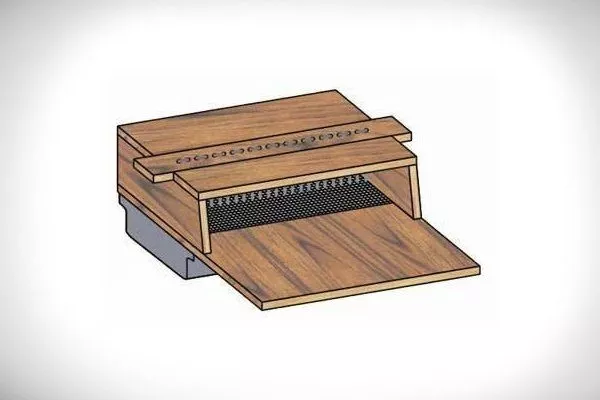
A pollen collector can be made from boards or even parts of an old refrigerator, from oriented strand boards and other materials.
How to build a pollen collector:
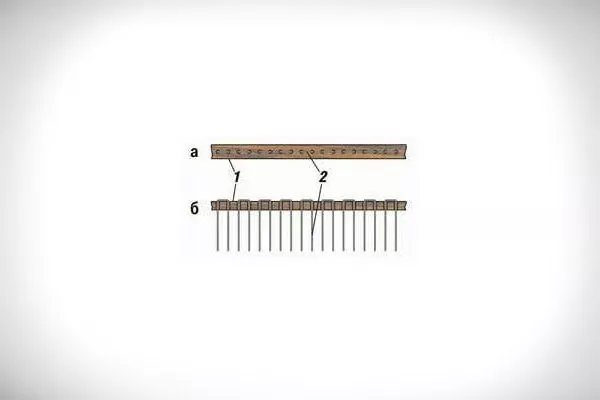
- You will need a bar in which you should drill holes of the appropriate diameter, depending on the breed of bees.
- Thread fishing line through all the holes. This will act as a barrier. Bees will lose some, or perhaps all, of their nectar as they try to get past it—depending on their luck.
- The pollen trap, assembled according to any of the existing designs, is hung in front.
- Insert the bar into the gap located in the lid of the pollen collector.
- Cover the landing board with a 3x3 mm mesh net to ensure the pollen falls into the box.
All the structural elements of the pollen collector can be seen in the diagram.
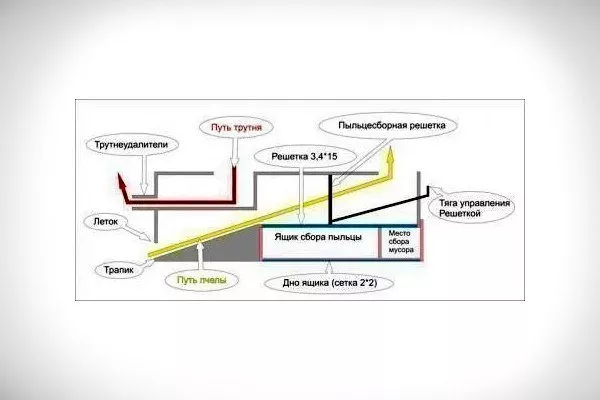
What elements does a pollen trap consist of?
- two side boards;
- box/container - it is covered with a net;
- pollen collection grid and cover;
- A pollen box is installed at the bottom, and there should be an opening at the top for pollen collecting grids/bars.
- The length of the box is approximately 40 cm.
- At the top is a wire mesh that the bees will use to navigate to their hive.
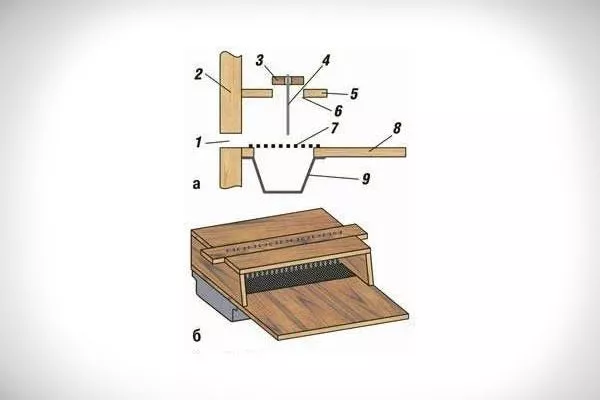
Bees arriving at the hive can land on the landing board and then on the mesh. From there, they move into the grate and then into the brood frames.
How to install a pollen trap?
The installation of the device doesn't go unnoticed. The bees get angry. Half of the colonies swarm. But don't think the bees realize their pollen is being stolen. They're irritated by the reduced passages and shortened entrances.
The hive must have removable landing boards, as the bottom of the pollen collector will serve as these. The front wall of the hive must be perfectly smooth, without any gaps. If the hive has two entrances, install the device on both of them; if there are four, install it on the two left or two right entrances. Cover the remaining entrances with mesh.
How to install a pollen collector:
- Remove the landing boards and replace them with the fixtures, securing them with screws or self-tapping screws.
- Keep the bee entrance grate open for a few days to allow the bees to get used to it.
- Late in the evening, turn the grate to allow the bees to pass through.
- Place a container to collect pollen.
Now, when flying out to fetch prey, the bees will have to pass through the device's slits. This way, they will confidently return home the same way. This procedure must not be disrupted—anything new to which the bees are unaccustomed will frighten them. They may fly away and settle in other hives.
Video on how to install a pollen collector:
Hives typically have two entrances, and bees collect far more pollen than they need. Therefore, beekeepers can confidently collect pollen, obtaining another valuable bee product in addition to honey. And it requires virtually no effort—the pollen, thanks to the pollen collector, will fall into the container automatically.