
Bee colonies need to be fed at least twice a year to stimulate their brood production. The first feeding should be done in the spring, before the honey plants begin to bloom, and the second in the fall, before the winter food supply is replenished. To organize bee feeding, special feeders should be used. These come in various types and can be made at home from scrap materials.
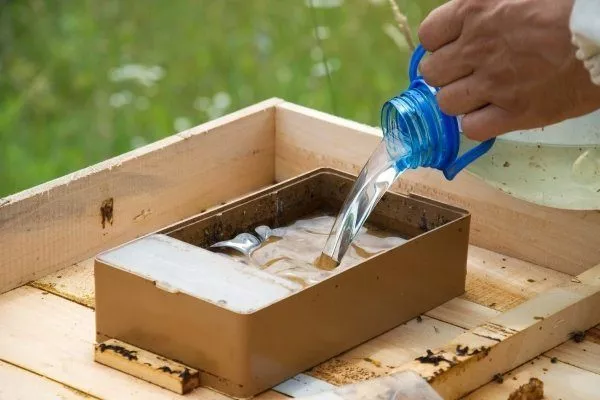
Requirements for the feeder
Bee feeding structures can come in different sizes and shapes, but the standards for them are the same and look like this:
- the capacity of the feeder should be up to 4 kg;
- insects must have free access to food at any time of the day and in any weather;
- bees should not drown in sticky syrup while feeding;
- When feeding, any contact with insects is excluded;
- the beekeeper has the opportunity to assess the volume of syrup remaining in the feeder in order to add a new portion as needed;
- the design is easy to maintain, as it will need to be cleaned and washed regularly in the future;
- Insects from neighboring hives are blocked from accessing the contents of the feed tank.
- ✓ The material must be resistant to sugar syrup and not emit harmful substances.
- ✓ Preference should be given to materials that are easy to clean and do not absorb odors.
If the feeder is poorly designed, it is dangerous for the bees, as they will drown in the syrup, become injured, or become hypothermic, which will ultimately lead to a decrease in the hive's productivity.
Types of structures
There are a wide variety of bee feeder models, made from a variety of materials—wood, plywood, metal, plastic, and even foam. These designs are generally divided into several types, which we'll discuss below.
| Name | Material | Capacity | Installation type |
|---|---|---|---|
| Ceiling | Wood, plywood | Up to 4 kg | Under the ceiling of the hive |
| Framework | Tree | Up to 4 kg | On a mat or hanging |
| Above-frame | Wood, aluminum, plastic | 0.5-2 l | Above the hive frames |
| External | Wood, metal, plastic | Up to 4 kg | On the back wall of the hive or at a distance |
Ceiling
This type of feeder is ideal for multi-body hives, as it can be easily installed under the ceiling. It consists of a rectangular body, the interior of which is divided by vertical partitions. Experienced beekeepers recommend considering the following points when making one:
- Splinters and twigs can be used as internal partitions. However, some experience working with these materials is required, as there is a risk of bee death on the sticky splinters.
- You can also make a raft out of four-ply plywood, 4 mm smaller on each edge than the feeder itself. Cut 3-4 mm wide strips into this rectangle, then wax the entire thing. This raft is very comfortable for the shoulders, as they won't get dirty or stuck in the syrup.
- You can create a small gap in the feeder to prevent bees from entering. The box should be covered with glass or a cushion. To fill the container with food, simply slide this barrier aside.
- Funnels are convenient for pouring syrup into the feeder. This is made possible by first making a hole of the appropriate size in the feed compartment.
It's best to hang a ceiling feeder in the summer to provide the bees with a stimulating feed. Initially, you can use strained cappings. The bees will extract the honey from it and begin building honeycomb cells, which will later serve as rafts.
At the end of December, the insects should be fed with dissolved honey, filling half the feeder. Every few weeks, the nest should be checked to replenish the food supply. This should be done until the cleansing flight.
The ceiling feeder is easy to use and has a comfortable structure for bees, preventing them from drowning in the syrup. It also helps maintain the optimal temperature of the feed, as the bees warm it during their flights.
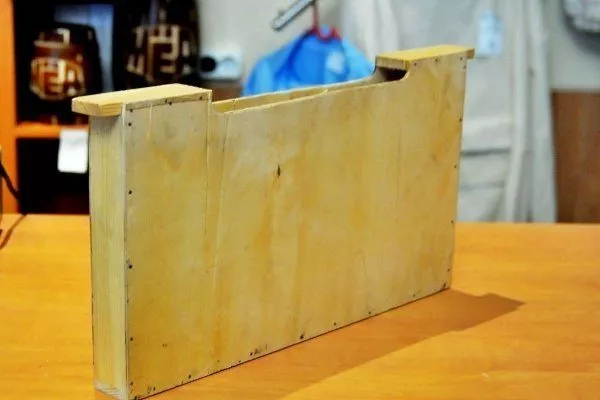
Framework
This feeder is a small wooden container with an open top. It's the length and height of a standard honeycomb frame, but slightly wider. It can be installed in the hive in two ways:
- placed on a special mat;
- They are hung on the wall near the nest, using special protrusions on the top bars or hooks.
Sugar syrup is poured into the frame feeder through a funnel. To prevent insects from drowning during feeding, a special raft or grate should be placed inside the container.
Above-frame
This box-type feeder is placed in the hive above the frames. It completely encloses the bees' nest, preventing them from escaping during feeding. It has two to three compartments, one of which serves as a passage (8-10 mm), and the others as cells for filling with sugar syrup or honey.
The feeder box is made of corrosion-resistant materials, including wood, aluminum, and plastic. The box should be rectangular in shape and have a capacity of 0.5 to 2 liters.
The top wall of the box is installed so that its top edge rests against the lid, leaving a 2-5 mm gap at the bottom for feed to flow through. The top of the over-frame model can be covered with plywood, glass, or other transparent material to monitor the volume of syrup or honey. Holes should be made in the lid for feeding.
A similar design is shown in the photo:
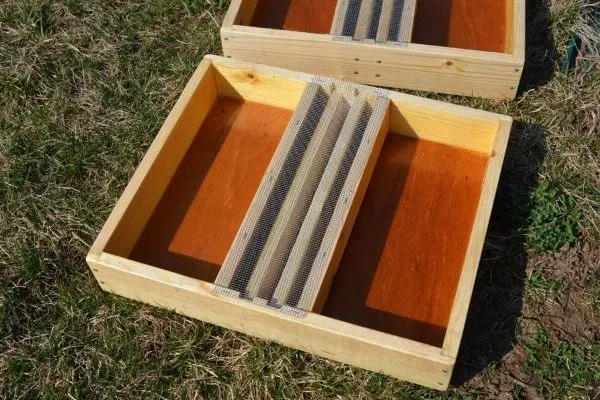
This feeder should be installed on a canvas mat directly above the hive frames. The feed slot should be perpendicular to the frames. To allow the bees to enter the feeder, a small hole should be made in the canvas mat opposite the entrance.
The container can be filled with food in a thin stream through the outer opening. To attract the bees, drop some food in front of the entrance and on the frames. After this, the feeder can be covered with a lid and insulated with a pillow.
External
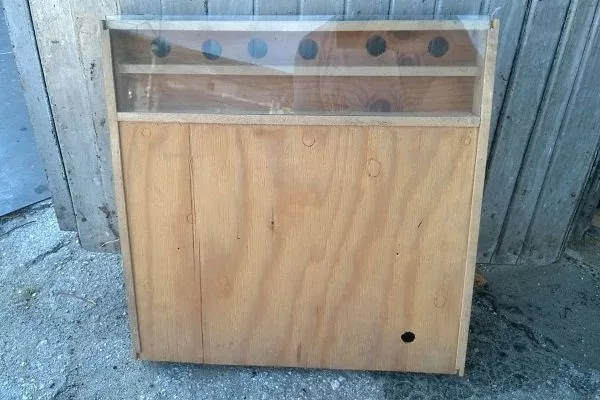
Outdoor feeders consist of a sturdy box with a hinged lid. When constructing a lid, consider the following guidelines:
- To ensure that insects can easily enter the box, a small hole must be made in its back wall.
- A special bowl for filling the container with food should be placed inside. A raft should also be placed inside to ensure the bees are completely safe and don't drown in the syrup.
The prepared feeder can be hung on the back wall of the hive or placed at a distance from it. It can then be filled with syrup and, if desired, supplemented with branches, rafts, or grass. This makes feeding very simple, especially if there are no other apiaries nearby.
An external feeder has a significant drawback: the feed quickly cools down and stops attracting bees. Furthermore, it's quite difficult for a beekeeper to control the amount of feed a particular colony receives.
How to make bird feeders from a plastic bottle?
These feeders are considered a real find for beekeepers, as they are inexpensive to manufacture and have a simple structure. They also allow for easy control of feed flow, as any holes can be sealed with tape. Furthermore, these designs are very easy to use, as they are quick and easy to clean.
Feeders made from plastic bottles are an ideal option for hives with a low lid.
It's important to note that plastic hive feeders can be horizontal or vertical. We'll discuss how to make each type separately.
| Name | Material | Volume | Peculiarities |
|---|---|---|---|
| Horizontal | plastic bottle | 2 l | Holes with melted edges |
| Vertical | plastic bottle | 1.5-2 l | Adjusting the number of holes |
Horizontal
To make such a feeder you need to prepare:
- a 2-liter dark-colored plastic bottle;
- scotch;
- nail (awl) with a diameter of at least 1.5 mm;
- pencil or marker.
The product is assembled in the following order:
- On one side of the bottle, closer to the neck, draw a line and at the same distance from each other depict 5-7 dots with a diameter of 1.5 mm.
- Place the bottle flat and use a hot nail to make holes at the marked points. The insects will feed through these holes. A hole diameter of 1.5 mm is optimal, as it allows the bees to easily reach the food without falling into the feeder.
It is better to make the holes with a hot nail, since in this case they will have melted edges, so the insects will not get injured while feeding.
- Seal the prepared holes with tape, and then pour the syrup into the bottle.
The finished feeder can be installed in the hive in two ways:
- Make supports from two wooden blocks. Place a bottle of syrup horizontally on them, making sure the holes are facing downward. Place the feeders inside the hive, then remove the tape.
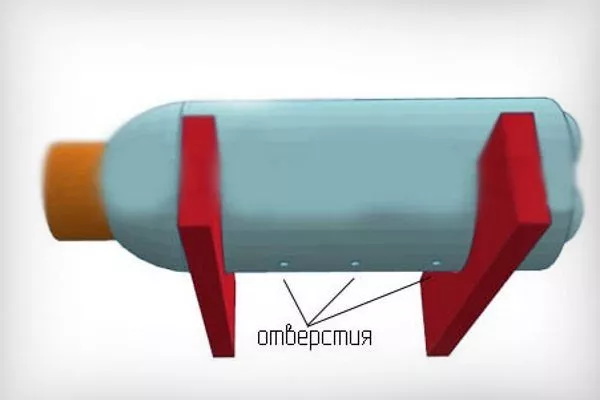
- Prepare a mounting location for the feeder on the hive ceiling. Cut a hole in the shape of a bottle, but smaller, to prevent it from falling on top of the honeycomb frames. Place the feeder in the prepared opening, openings facing down, and then remove the tape.
It's worth noting that the feeding syrup has a viscous consistency, as its sugar concentration is approximately 60-70%. This prevents it from leaking out of the reservoir too quickly, allowing the bees to feed without any restrictions or quantity limitations.
Vertical
To create a vertical feeder, you will need the same items as in the previous version, namely:
- plastic bottle with a capacity of 1.5-2 liters;
- nail (awl);
- pencil or marker;
- scotch.
A similar container is made as follows:
- Using a hot nail, make 1.5 mm diameter holes 1-3 cm from the bottom of the bottle. Keep in mind that the thicker the fertilizer, the more holes you'll need. A total of up to 12 holes are possible.
- Seal the holes with tape. This can be used to adjust the number of holes, and thus the rate at which the fertilizer is applied.
- Pour syrup into the bottle through the neck until it is 3/4 full, screw on the lid, and then turn it upside down.
- Place the container vertically in the hive between the wall and the frame, and then remove the tape.
It is worth noting that a vertical feeder can be made of a box type, as shown in the photo:
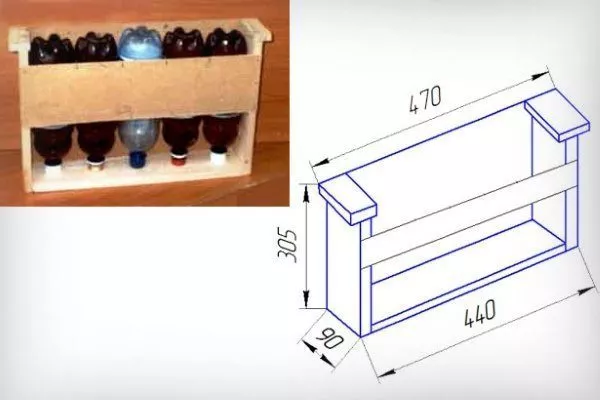
In this case, it is necessary to make several feeders that will need to be installed in a ready-made cassette, which must be attached near the bees' nest.
The following video clearly demonstrates how to make simple and effective bee feeders from plastic bottles:
It's best to use a bottle-mounted ceiling feeder in the fall, as bees need a concentrated, viscous syrup at that time. In the spring, however, they require water, so the feeders should be filled with liquid feed. This will quickly leak out of the bottle, which is unacceptable, so you'll need to use a different type of feeder.
Homemade bird feeders from cans
Every home has a tin or glass jar. You can also use one to make a homemade bird feeder using the instructions below.
| Name | Material | Volume | Peculiarities |
|---|---|---|---|
| From a tin can | Brutal | Depends on the bank | Thin walls conduct heat well |
| From a glass jar | Glass | 1 l | 8 layers of gauze |
From a tin can
It might seem like a tin can is an unsuitable material for making a bird feeder, but this is not the case, as this material has a number of advantages:
- has thin walls that conduct heat well, so the food in the tank does not freeze for a long time;
- It is easy to wash, which makes it much easier to care for the feeder.
To make a feeding container, it's best to choose wide, small jars. Here are the instructions:
- Wash the jar with detergent, then wipe it dry and pour in the fertilizer.
- Cover the top with a cotton cloth, making sure its edges reach the middle of the jar. Cheesecloth can be used as an alternative, but it will need to be folded in 3-4 layers.
- To prevent the fabric from slipping, secure it with an elastic band.
- The container should be inverted and placed above the nest, above the frames. For better access to the food, it can be raised slightly by placing blocks underneath. Make sure to leave some space between the two.
From a glass jar
In this case, the operating principle is practically the same. The instructions are as follows:
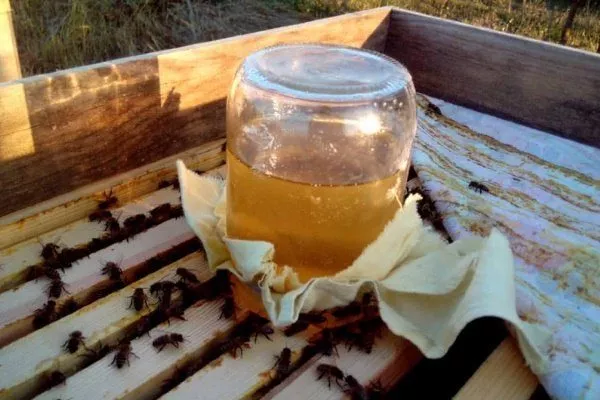
- Prepare a 1-liter glass jar and pour the nutrient syrup into it.
- Fold a large piece of gauze into 8 layers, moisten with water and squeeze out, then apply to the neck of the jar and tie or secure with an elastic band.
- Place plywood on top of the gauze, then turn the jar upside down and place it on the top platform of the hive. After this, you can remove the plywood. The syrup will gradually seep through the gauze, allowing the bees to feed.
Instructions for making a ceiling bird feeder
This box-type reservoir is versatile and can be built by beekeepers with carpentry skills. Its structure is as follows:
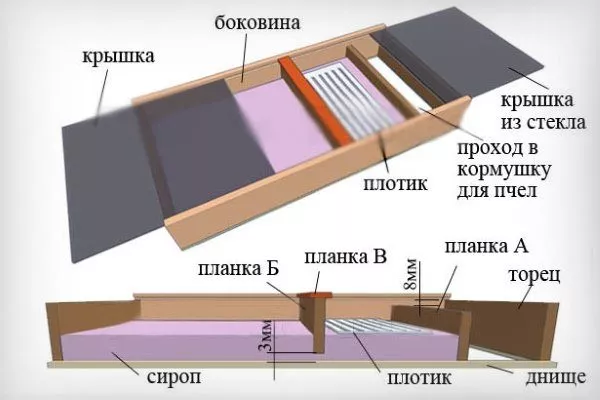
This feeder is a box whose length corresponds to the length of the hive from the back to the front wall. It is divided into three compartments, as shown in the diagram:
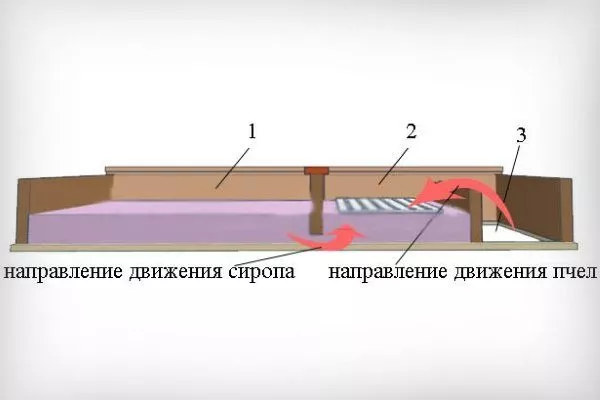
Let's find out in more detail what these departments are:
- The compartment where you need to pour the syrup.
- A feeding compartment with a raft for the bees, which can be made from several materials: foam, plywood with drilled holes, or plastic mosquito netting. The partition separating the first two compartments should be 1-3 mm from the bottom.
- A small compartment through which the bees access the feeding chamber. The partition between them should be 8 mm from the top. There is no bottom at the bottom, allowing the bees to pass freely.
Having understood the principle of constructing a feeder, you can make its parts using the following drawings:
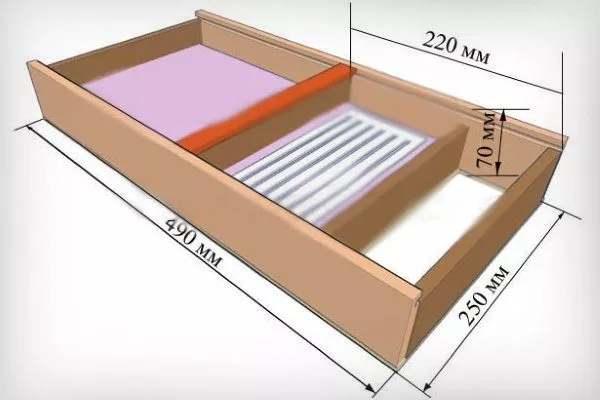
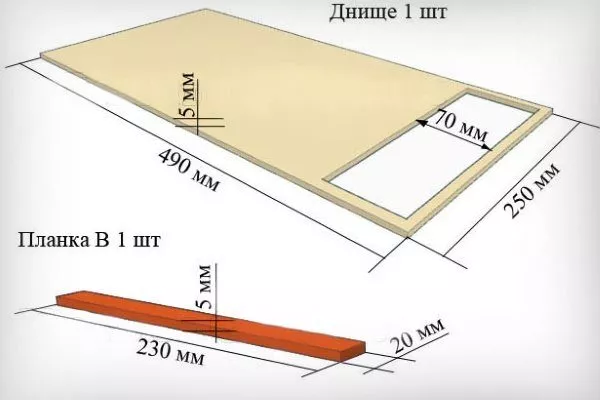
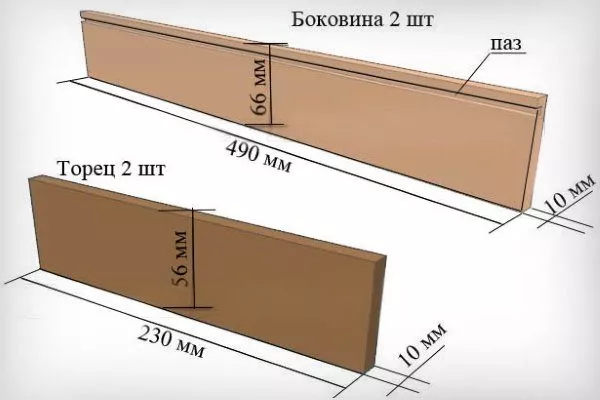
When manufacturing a box-type tank, the following recommendations should be taken into account:
- Make grooves on the top of the side walls into which to place the lids.
- Cover the feeding compartment and the bee passage with a shared glass lid to monitor the syrup volume and feeding process. The filling compartment can be covered with a fiberboard lid.
- The end and side walls should be made of wood, and the bottom should be made of fiberboard or plywood, with its smooth side facing the inside of the tank.
- The structure must be assembled, glued, and nailed or screwed together. It's recommended to use sealant and PVA glue with fine sawdust added.
- Treat the joints with wax or a mastic made from equal parts rosin, paraffin, and wax. Apply the hot mixture to the walls and grooves of the structure, then heat it with a blowtorch. This will ensure the feeder is completely airtight.
The finished structure should be installed directly into the folds or onto the base. In the latter case, it's necessary to provide an opening in advance for the bees to access the syrup.
You can see the process of assembling a ceiling-mounted bird feeder made of wood in the following video:
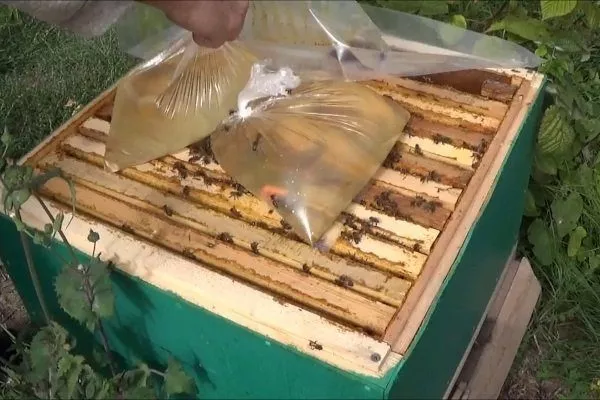
A simple feeder made from a plastic (food) bag
To create a budget-friendly feeder, you can use a regular, medium-sized food bag. Follow these steps:
- Pour the syrup into a clean bag and then tie it tightly.
- Open the lid of the hive and put out the prepared bag.
- Using a syringe needle, make 7-10 holes in the bag.
- Close the lid of the hive.
How to make a bird feeder from foam?
You can make a feeding container out of high-quality foam. It's best to choose the kind used for packaging furniture and appliances, rather than loose construction foam. Also, keep in mind that high-quality foam doesn't smell.
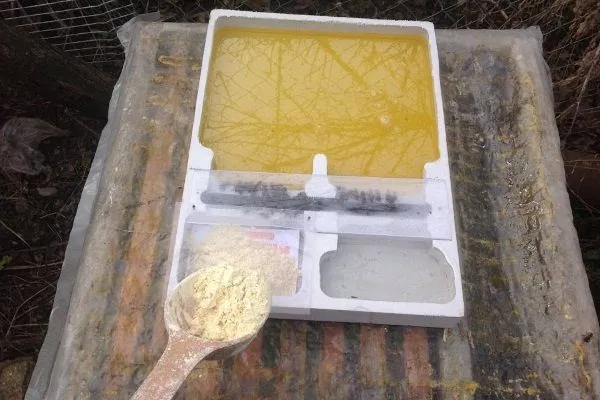
To make a bird feeder you need to prepare:
- foam sheet;
- a conical container made of food-grade plastic with a diameter of 20 cm (the neck of a plastic bottle);
- chintz fabric;
- knife;
- elastic band.
Having prepared everything you need, you can begin assembling the structure:
- Cut a 3 cm thick disk out of foam plastic, making sure it fits the bottle neck diameter exactly. You can use a heated knife or wire for this.
- Place the disk on the bottle so that their surfaces are in the same plane.
- On the outer surface of the disc, make small 5 mm wide grooves, running perpendicular to each other from one edge to the other. The distance between them should also be 5 mm. For easier groove cutting, it's better to use a melted hot metal rod rather than a knife.
- In the central part of the disk, prepare several holes with a diameter of 7 mm, and then melt 4 grooves on its sides, the depth and width of which should be 5 mm.
- If the feeder has a large diameter or the foam is not strong enough, you'll need to strengthen the structure. To do this, install a spacer between the disk and the bottom of the feeder's neck. To make the spacer, you can use a plastic bottle, cutting off its bottom and neck to create a cylinder. A groove should be cut around the edges to allow air and food to pass through.
- Make a filter using calico fabric. Cut a circle from it, a few centimeters larger in diameter than the container. Fill the feeder with syrup, then secure the fabric with a rubber band. Smooth out the folds, then turn the structure upside down and place it on slats over a baking sheet.
- If syrup spills out, the filter is too thin. To reduce the amount of feed passing through, you can use a cloth folded in several layers. If the filter surface remains dry, it is too dense and will need to be replaced with a thinner cloth.
Ideally, a small amount of syrup should come out through the filter – no more than 1 tablespoon.
Making a Vasilek over-frame bird feeder
The Vasilek is a type of over-frame feeder shaped like a rectangular container, the interior of which is divided by a partition. Each compartment has a special "volcano" in the center. These should be covered with glasses or 500 ml plastic buckets. The finished structure should be installed on the hive lid or roof plate.
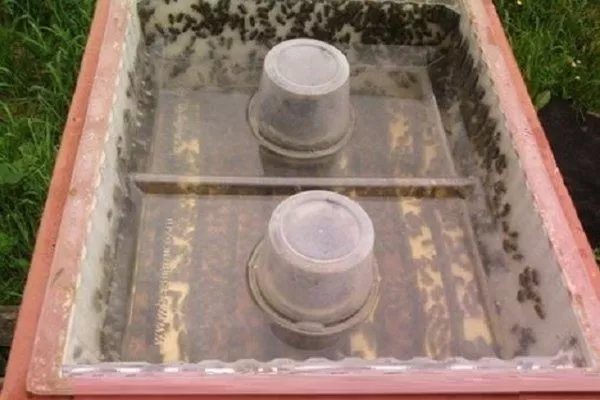
When constructing the Vasilok, it is better to use transparent plastic, as it will increase the feeding rate of insects and is easy to clean.
Helpful tips
When making your own bird feeders, it's best to choose natural or environmentally friendly materials. To make the right choice, consider a few things:
- If polyethylene material is used, it is better to choose transparent food-grade polyethylene, as it contains fewer harmful substances.
- It is better not to use colored polyethylene and plastic materials, as they are made from recycled materials.
- One of the cleanest and safest materials is polystyrene foam.
There are many bee feeding options available that are safe for bees and easy to use. To save money, you can easily make your own feeder by choosing environmentally friendly materials and following the provided instructions and drawings.