
You can buy a honey extractor or build one yourself. The design and operating principles of homemade devices are similar, but they can be made from different materials: wood, metal, or plastic. It's important to determine the dimensions of your future honey extractor and prepare the necessary materials and tools.
The design and operating principle of a homemade honey extractor
The device is made from various materials, but it operates on the same principle: centrifugal force generated by a drum. Honeycombs are uncapped with a knife and placed into cassettes. When the device is turned on, the drum begins to rotate, creating centrifugal force that causes the honey to fall onto the walls of the device and flow down them. A hole is drilled at the bottom, through which the final product flows into a special container.
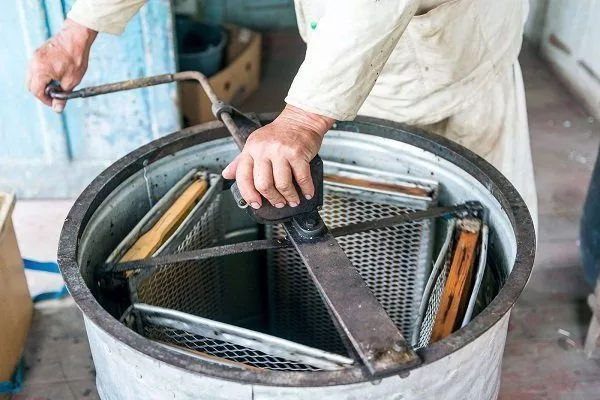
Regardless of the design, they are all constructed identically and consist of an internal section and an external container for collecting the final product. The honey extractor houses the drive that powers it, the rotating rotor, and the frames that hold the cassettes. The drive can be manual, foot-operated, or electric.
Honey extractors can be manufactured in two different designs. The difference lies in the arrangement of the frames. This principle is used to distinguish between chordial and radial designs. In the former, the cassettes are attached along the inner walls of the tank on the chords of a circle. In the latter, the frames are radii of the circle, extending from the center in rays.
The number of frames in a honey extractor can vary. The scale of the process should determine this. Designs can range from 1-2 frames to several dozen (usually up to 48).
Determination of sizes
The dimensions of the installation being manufactured should be based on the number of frames it will need to accommodate. This figure is influenced by the size of the apiary and the number of hives within it. Insect productivity also depends on the type of honey plant and weather conditions. The maximum figure is used as a basis.
For a homemade installation, a diameter of up to 65 cm is sufficient. Larger structures are justified for large-scale projects and large apiaries.
Necessary materials and tools
When choosing a suitable material, its resistance to various impacts and food contact tolerance are important. The design can be based on:
- tree – the device can be assembled entirely by yourself or you can use a regular barrel;
- plywood – the material is attractive due to its light weight, which is important during operation and when transporting the honey extractor;
- aluminum – light and durable material, low price;
- stainless steel – durable and affordable material, attractive due to its long service life and ease of maintenance;
- plastic – light weight, easy to care for, economical.
An old washing machine, or more precisely its drum, is a convenient option for a honey extractor. It's best to use Soviet-era "Alma-Ata" or "Sibir" machines as a starting point.
Regardless of the material used for the installation body, it is essential to prepare the following elements:
- capacity for the final product;
- reinforcement or metal rods of suitable sizes;
- bearing;
- pulley;
- shaft (axle);
- belt;
- honey drain tap;
- nut for fixing the tap;
- universal silicone sealant;
- mesh on cassettes or wire or thin metal rods for its manufacture;
- corners and aluminum rivets for fixing;
- electric motor for drive;
- protective net;
- rotor;
- rheostat (nichrome spiral);
- bracket (vertical movement).
The list of necessary tools depends on the material used to make the honey extractor:
- For woodworking, it's best to use a jigsaw or circular saw, but a regular hacksaw will do just fine. For fasteners, stock up on screws or nails and the appropriate tools—a screwdriver, drill, or hammer. Glue can be used instead of fasteners. To smooth the material, use a plane (or, if possible, a jointer).
- To make a plastic honey extractor, you can use a hacksaw, a soldering iron, or a welding machine.
- When using aluminum or stainless steel, you will need a grinder.
Making a honey extractor yourself
The nuances of making a honey extractor yourself depend on the materials you choose.
Wooden
Various types of wood are suitable for making honey extractors, but only those that do not contain resin. Dryness is essential.
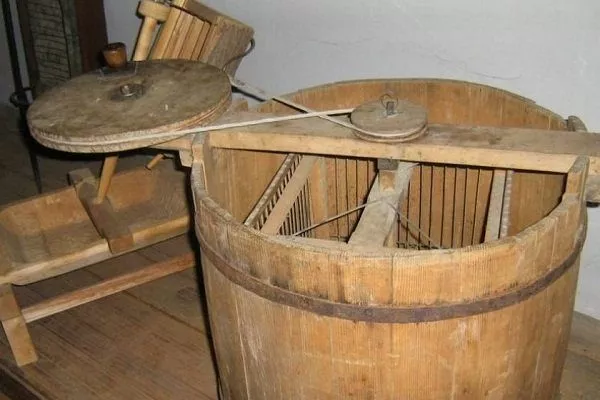
The sequence of actions is as follows:
- It's more convenient to make the drum octagonal. The rotor will need to be installed inside and the frame mounts will need to be arranged.
- It's best to construct the side walls of the structure from a single, solid board. All the material should be leveled so that its thickness is no more than 20 mm. The optimal board width for the sheathing is 190 mm.
- Drill a drain hole in the bottom of the front wall. A diameter of 20 mm is sufficient. For the hole, prepare a wooden plug with a rubber seal or make a tap. In the latter case, use a sealant.
- For the stand, use wooden blocks measuring at least 30 x 50 mm. Attach the legs to the bottom at an angle, and for security, connect them with crossbars and seal the joints with glue. The height of the legs should match the height of the container into which the honey will flow.
Plywood
Plywood ensures the lightweight construction. The material should be of medium thickness—10 mm is ideal. A plywood honey extractor is manufactured in the same way as a wooden structure.
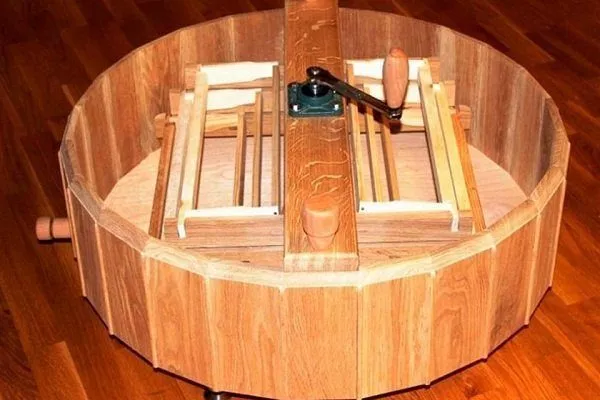
The frame can be secured with small nails or wood glue. After gluing the side panels, use a metal hoop to tighten them – this will increase the strength and reliability of the structure.
The inside of a plywood honey extractor should be treated with wax. Apply it in several layers.
Aluminum
A tank, large saucepan, or other aluminum container can be used as the body. Make a drain hole in the bottom of the body and install a faucet.
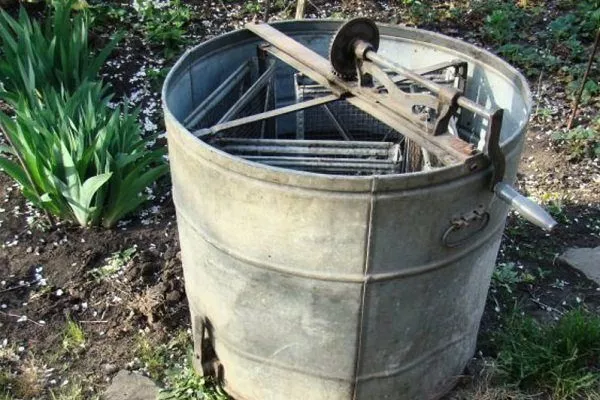
This type of installation is attractive due to its ease of manufacture – the housing is already ready, so all that remains is to install the drive and make fastenings for the frames.
Made of stainless steel
This type of honey extractor is manufactured similarly to the aluminum version. The only difference is the material used for the container.
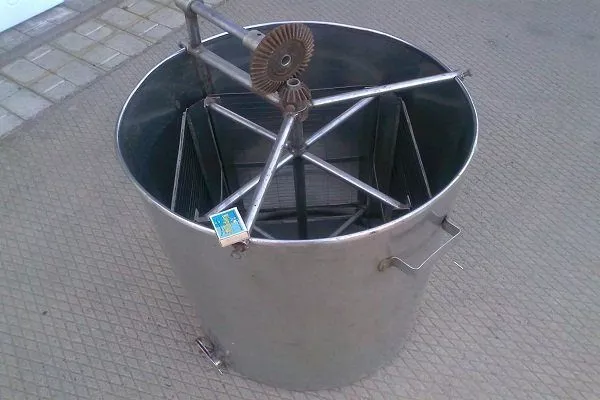
If you can't find a ready-made container for the enclosure, you can make one yourself. You'll need sheet stainless steel, which is available at any hardware store. The best way to connect the two is with a welding machine. If you don't have one, you can join the edges of the metal with rivets and ensure a tight seal with cold welding or silicone sealant—no special equipment or skills required.
Made of plastic
Plastic is one of the simplest and cheapest options. A plastic barrel is ideal. If the container is cracked or otherwise damaged, it can be repaired with a soldering iron. A strip or piece of plastic of the appropriate size is sufficient. The soldering iron melts the material and, after cooling, it becomes securely fixed.
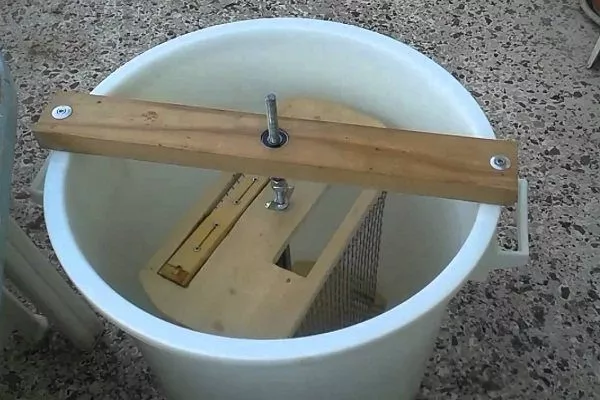
To repair the damaged segment, use the same type of plastic as the one used on the damaged segment. The best option is to cut a piece or strip of material from the same container.
In the lower part of the housing, a drain hole is made according to the standard algorithm, and a tap is fixed and treated with a sealant.
From the washing machine
The washing machine drum is appealing for its versatility. It can be combined with a frame made of a suitable material.
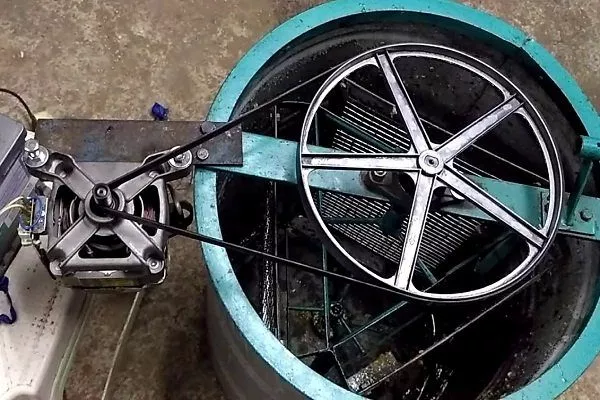
One option is to use two drums of different sizes. The larger structure will serve as the body of the honey extractor. It must be sealed.
The algorithm for creating a honey extractor is as follows:
- The bottom of the smaller drum must be cut off. It is then installed into the structure's body.
- Three metal rods must be welded to the inside of the lower part of the unit at three different points. Their other ends must be secured with a welding machine to a bearing, into which a metal shaft of the appropriate diameter and length (can be crimped and cut to the required size) is inserted. Fastening is ensured by self-tapping screws.
- Attach a pulley to the top of the shaft pipe and a handle to the bottom. Connect them with a belt.
- Make a drain hole in the bottom of the main tank and install a tap.
You can see how to make the simplest honey extractor in the following video:
Cassettes
The cassettes are one of the most important parts of the system and are essential for its proper functioning. They are responsible for securing the frames, which are the source of honey.
Various materials are suitable for cassettes. For greater reliability and longevity, choose stainless steel. Cassettes can also be made from other iron or wood. The latter option is typically used for wooden and plywood honey extractors.
The main component of the cassettes is the mesh. It acts as a kind of cover for the honey frames. The material must be secured with rivets and corners.
When cassettes are made correctly, the frames should slide easily into them and fit snugly against the mesh walls. Failure to do so may result in comb deformation during operation.
Honey extractor cassettes can be secured in different ways. The key is to consider the type of device—radial or chordal. A radial unit is easier to assemble, but its efficiency is lower, albeit slightly. The choice depends on your skills and preferences.
When making your own honey extractor, it's best to choose a radial mount, as it's universal. This is especially important if your apiary uses frames of different sizes.
Drive
A honey extractor operates by rotating a circular motion, driven by a drive. It can be of any type, but electric drive is more practical, as it minimizes human labor. A manual drive is also an option, which is appropriate for small apiaries, where the processing volume is negligible.
For the electric drive of the honey extractor you need electric motorThe motor should be small and powerful—90 watts is sufficient. For the electric drive, you can use a car engine or a geared motor, which provides windshield cleaning. The advantage of the latter option is the availability of two different speeds.
- ✓ A protective mesh should be installed not only to protect the engine from insects, but also to prevent foreign objects from entering the device.
- ✓ All electrical components must be insulated from possible contact with honey or water.
The product is usually processed in an apiary, and the processed honeycomb may contain insects. To prevent them from getting into the engine, care should be taken. protective net.
The electric honey extractor needs to be equipped switch, which can be a relay from a washing machine. Drive disk It is assembled from a rotor, a rheostat and a bracket.
Stand for honey extractor
A stand is not a required component of a honey extractor, but its inclusion simplifies operation and increases reliability. It can be made from rebar using a welding machine.
The base of the stand is a ring. Its diameter should be larger than the diameter of the honey extractor body. A rim ring from a ZIL or KAMAZ truck can be used. Weld the legs and bracket to the main part of the stand. The height of the structure should be adjusted to the volume of the honey extractor body and its capacity.
The stand's legs should be reinforced with rigid ribs. To ensure long-lasting durability, paint or coat the structure with a metal primer.
You can see how to make a stand for a honey extractor in the following video:
A honey extractor is essential equipment for an apiary. You can make one yourself from a variety of materials. To do so, you'll need to gather the necessary tools and materials. It's important to correctly size the structure and its cassettes. The success of your honey extractor depends on these factors.