
Honey extractors are a type of apiary equipment. Medunitsa brand equipment allows for the extraction of honey by centrifugation. There are several models of honey extractors, divided into three main types. These types of equipment have certain advantages.
Advantages of the device
Using honey extractors Medunitsa provides the following benefits:
- processing of any volume of products:
- the ability to process honey with different characteristics;
- wide range of models;
- high quality – high-quality materials are used, all products are certified;
- the ability to purchase components separately;
- ease of transportation and maintenance.
Varieties, model overview
Medunitsa honey extractors come in chordial, radial, and combined (chordial-radial) varieties. Each type has its own advantages and a comprehensive range of models.
- ✓ Consider the volume of honey production to determine the required honey extractor capacity.
- ✓ Pay attention to the type of drive (manual, electric, automatic) depending on your capabilities and preferences.
- ✓ Check compatibility with the frame types (Dadan, Root, half-frame) used in your apiary.
Chordial honey extractors
A distinctive feature of this type of equipment is the arrangement of the frames within the cassettes. They are mounted along the chord of the equipment drum, hence the name of this type.
The Medunitsa range of chordial honey extractors includes 15 products, among which the following stand out:
- The Medunitsa 4 with a synchronizer. The unit is designed for four Dadan or Root frames, producing 80 frames per hour. It has an electric drive (belt drive). It weighs 65 kg. A time relay can be installed as an option. This model costs 47,000 rubles.
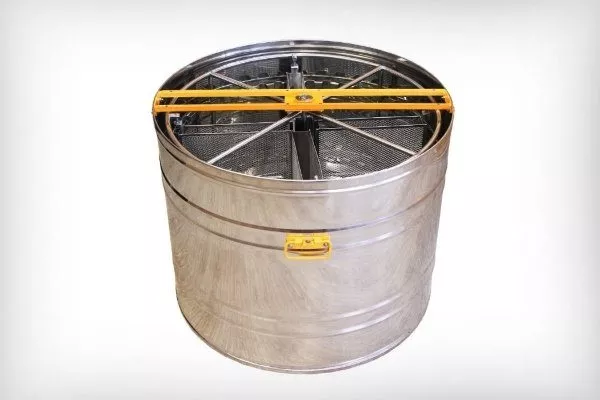
- Medunitsa 10. The device is designed for 10 Dadan or Root frames, with a throughput of 120 frames per hour. It weighs 100 kg and is equipped with an electric drive (semi-automatic operation). The price is 105,000 rubles.
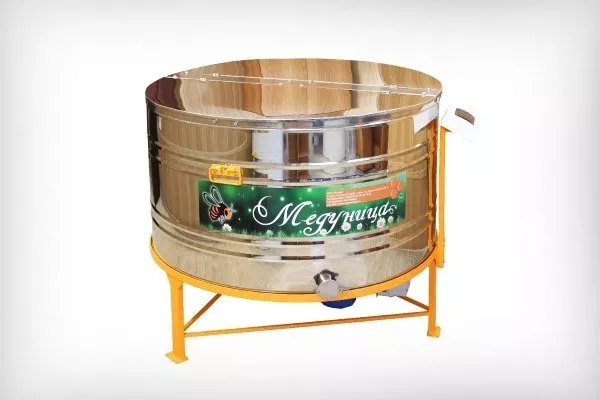
- Medunitsa 20 Auto. This fully automatic device holds 20 Dadan or Root frames. It weighs 120 kg. It has an electric drive and a touchscreen control panel, producing 140 frames per hour. It costs 131,000 rubles.
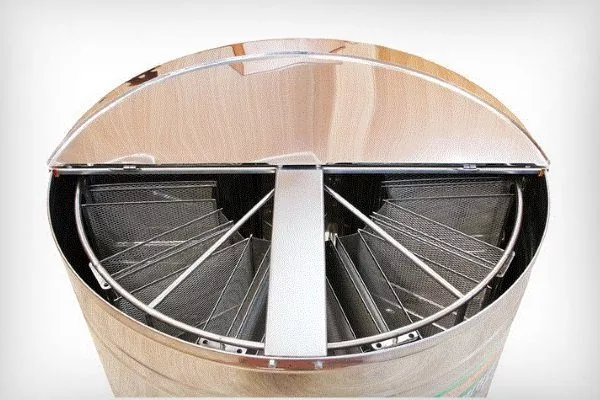
- Lungwort 4r. This is the most affordable chordial honey extractor, costing only 32,000 rubles. Designed for 4 Dadant frames, it features a manual drive and an hourly output of 24 frames. It weighs 55 kg.
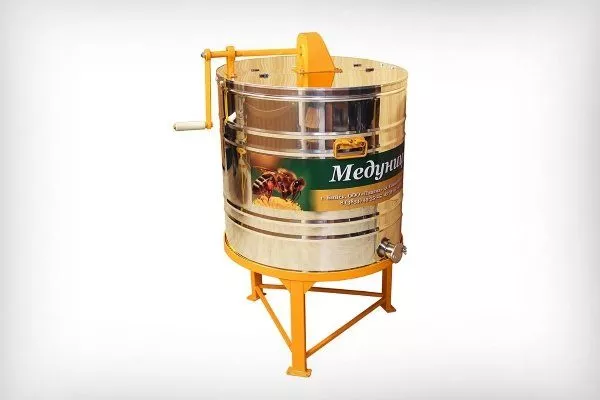
- The Medunitsa 3 is designed for three non-standard frames and features an electric drive. It weighs 50 kg and costs 39,000 rubles.
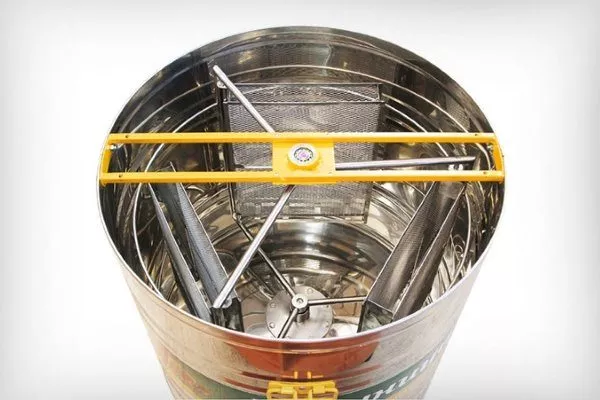
All models are made of stainless steel. The range also includes honey extractors:
- Lungwort 4;
- Lungwort 3p;
- Lungwort 3x3;
- Lungwort 6 Ruth;
- Medunitsa 6 Route Auto;
- Medunitsa 4 Auto;
- Lungwort 8;
- Medunitsa 8 Auto;
- Medunitsa 10 Auto;
- Lungwort 20.
Radial honey extractors
The distinctive feature of this type of honey extractor is that the frames are provided with special grooves that are cut along the rotor's radius. The model range includes 10 products:
- Medunitsa 36. This semi-automatic model has an electric drive and weighs 51 kg. It can extract 18 Root frames or 38 half-frames of Dadan honey, with a throughput of 40 (108) frames per hour. The average price is 37,000 rubles.
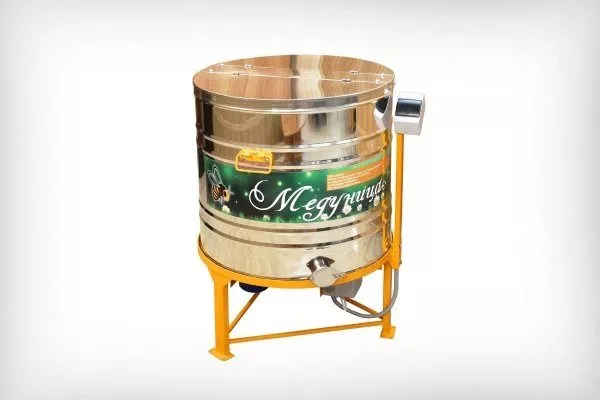
- Medunitsa 36 Auto. It differs from the previous model in that it features automatic operation and costs approximately 51,000 rubles.
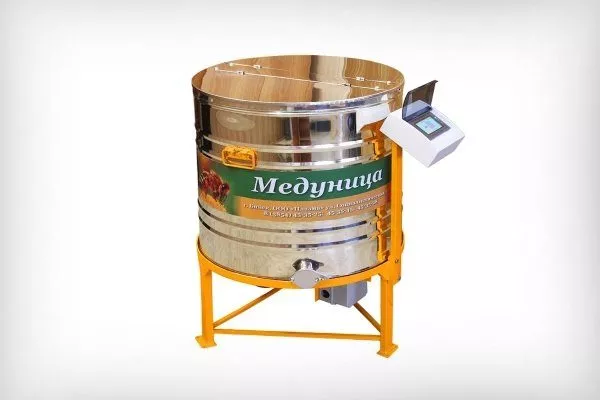
- Medunitsa 44 and Medunitsa 44 Auto. Both models are designed for 22 Root frames or 44 half-Dadant frames, with a throughput of 66 (132) frames per hour. Both models weigh 75 kg. The semi-automatic honey extractor costs 47,000 rubles, while the automatic one costs 61,000 rubles.
A video review of the Medunitsa 44 honey extractor in action is presented below:
- Medunitsa 48 and Medunitsa 48 Auto. Both models hold 48 Root frames, half-Dadant frames, or 24 Dadant frames. They produce up to 120 frames per hour and weigh 80 kg. The semi-automatic model costs 63,000 rubles, while the automatic model costs 77,000 rubles.
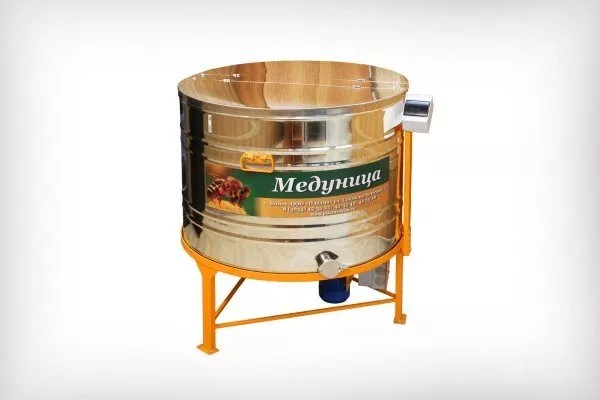
- Medunitsa 30x60 and Medunitsa 30x60 Auto. Both models are designed for 30 Dadan frames, 60 Root frames, or half-Dadant frames, with a throughput of up to 180 frames per hour. The unit weighs 95 kg. The semi-automatic model costs 83,000 rubles, while the automatic model costs 96,000 rubles.
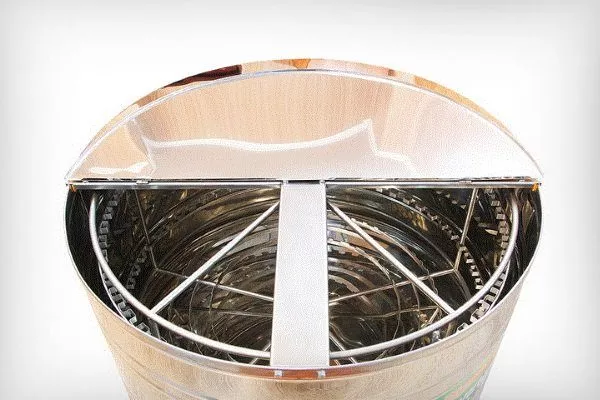
- Medunitsa 40x80 and Medunitsa 40x80 Auto. Both models are designed for 40 Dadan or Root frames or 80 semi-Dadan frames, with a throughput of 120 (240) frames per hour. Each unit weighs 95 kg. The semi-automatic model costs 83,000 rubles, while the automatic model costs 96,000 rubles.
Chordial-radial honey extractors
This model range combines the capabilities of both chordial and radial honey extractors. Ten models are available:
- Medunitsa 4 Combi and Medunitsa 4r Combi. The first model is semi-automatic and has an electric drive, while the second has a manual drive. Both honey extractors are designed for 4 Dadant or Root frames or 8 half-Dadant frames in chord mode. The radial mode is designed for 18 Root frames or 36 half-Dadant frames. The units weigh 56-57 kg, and have an hourly output of up to 80-108 kg. The semi-automatic model costs 43,000 rubles, while the manual model costs 38,000 rubles.
Watch the review of the Medunitsa 4 Combi honey extractor in the following video below:
- Medunitsa 4 Combi with synchronizer and Medunitsa 4 Combi Auto. The first model is semi-automatic and features synchronized cassette rotation, while the second is automatic and electric. In chordal mode, they accommodate 4 Dadant or Root frames or 8 half-Dadant frames, while in radial mode, they accommodate 20 Root frames or 40 half-Dadant frames. Productivity is up to 120-160 frames per hour, and the units weigh 70 kg. The semi-automatic model costs 52,000 rubles, while the automatic model costs 66,000 rubles.
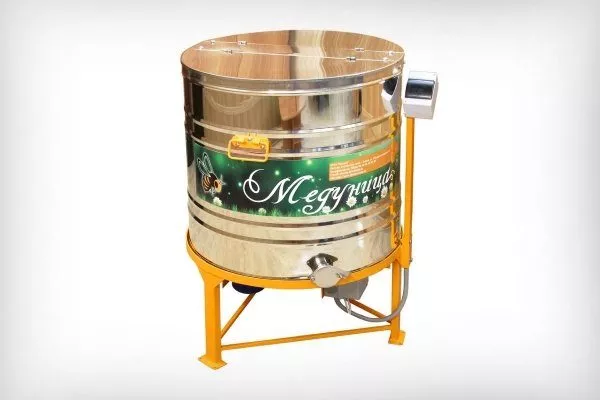
- Medunitsa 8 Combi and Medunitsa 8 Combi Auto. The first model is semi-automatic, the second is automatic. Both are electric and weigh 95 kg. In chordal mode, the unit is designed for 8 Dadan or Root frames or 16 half-Dadant frames, while in radial mode, it is designed for 48 Root frames or half-Dadant frames. The throughput is up to 144 frames per hour. The models are priced at 83,000 and 92,000 rubles.
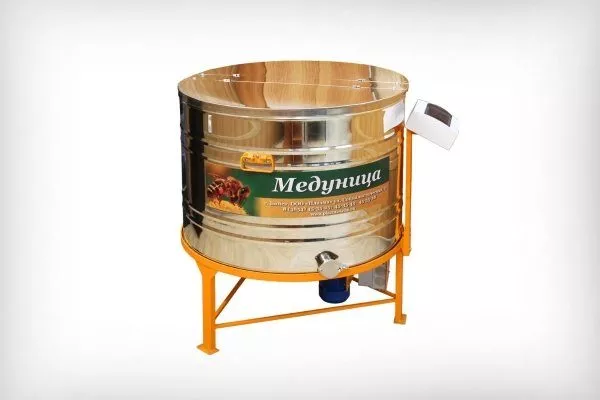
- Medunitsa 30x60 Combi and Medunitsa 30x60 Combi Auto. These semi-automatic and automatic models can accommodate 10 Root or Dadant frames or 20 half-Dadant frames in chordal mode, and 30 Dadant frames, 60 half-Dadant frames, or Root frames in radial mode. They produce up to 120 frames per hour and weigh 105 kg. These models are priced at 110,000 and 124,000 rubles, respectively.
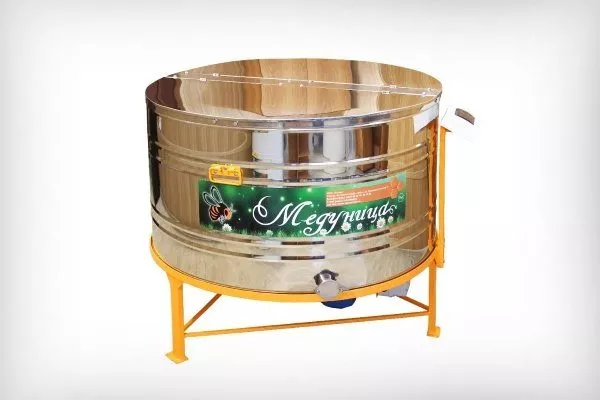
- Medunitsa 40x80 Combi and Medunitsa 40x80 Combi Auto. The semi-automatic and automatic models are designed for chordal mode, holding 10 frames of Root or Dadant honey, or 20 half-frames of Dadant honey, and radial mode, holding 40 frames of Root or Dadant honey, or 80 half-frames of Dadant honey. Productivity is up to 120 frames per hour, and weight is 105 kg. Prices for these models are 110,000 and 124,000 rubles.
Transportation and maintenance
Medunitsa honey extractors are designed for easy transport from the apiary. The units' tanks are protected by special crossbars, preventing damage during transit.
Honey extractors are designed in such a way that they are easy to maintain, regardless of the type.
Medunitsa honey extractors are available in a wide range of products and price points, allowing you to find the perfect option to suit your needs and capabilities. This equipment is characterized by high performance, quality, and ease of maintenance.