
The bee entrance is essentially the entrance to the hive and performs a number of important functions in creating the proper microclimate within the bee colony, requiring special attention from the beekeeper. Below, we'll explore the requirements for an entrance, its shape and location, and how it's manufactured.
What is this?
In scientific literature on beekeeping, it is indicated that the entrance is an opening in the hive, which is made on the front wall of the body and performs the following functions:
- provides honey bees unimpeded access to the outside world and back into the hive;
- reliably protects bees from predators, rodents and other pests;
- allows you to regulate ventilation and natural air exchange inside the nest;
- can participate in the creation of forced ventilation;
- briefly delays the shoulders that arrive with the bribe and fly out;
- Allows you to quickly and comfortably clean hives from debris and dead bees.
- ✓ The wood must be resistant to rot and moisture, such as larch or oak.
- ✓ The thickness of the material must be at least 20 mm to ensure the strength of the structure.
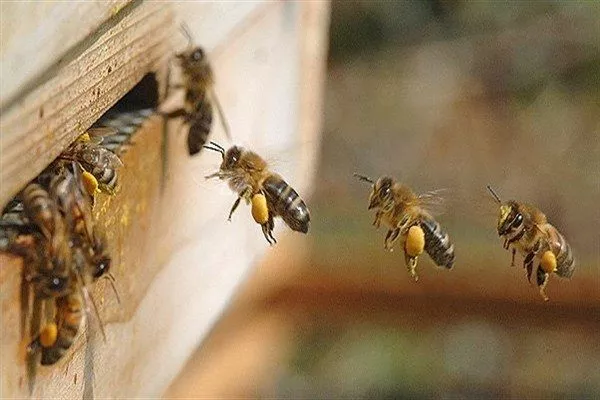
The entrance is an important part of the hive, as it provides the bees with a comfortable entrance and exit into the hive, and also promotes good ventilation at any time of year.
Classification by shape and location
These are important characteristics of the “door”, on which the microclimate inside the case will depend.
By form
The opening can have a variety of shapes, depending on the hive design, climate, and the beekeeper's preferences. Here are some popular types:
- RoundIt's considered a universal option and, according to many beekeepers, allows bees to comfortably fly in and out of the house. It can be located in the upper, central, or lower part of the hive.
- RectangularIt is 60-70 mm long and approximately 10 mm high. It provides good ventilation for the shoulders, being located both at the top and bottom of the body. It is primarily found in southern latitudes.
- SquareThis form is not very popular and is more often used by beekeepers from the southern regions.
- TriangularIt's considered the most natural, as this is the type of hole bees make in wood. Therefore, many beekeepers, seeking to create the most natural conditions for their bees, cut a triangular entrance into the hive.
- Across the entire width of the wallSuch openings are typical for regions with warm climates. They are not used in cold climates, as it is extremely difficult to maintain optimal temperatures in hives with such an entrance during winter. If a full-width passage is made in multi-body Dadant hives, it significantly facilitates the bees' work and also allows them to avoid wasting energy on ventilation in hot weather.
By location
| Name | Location | Size | Functions |
|---|---|---|---|
| Lower | A little higher than the "floor" of the bee house | 200x10 mm | Removal of dead bees and debris, passing the main volumes of pollen and nectar |
| Upper | At a distance of 4-5 cm from the upper edge of the body | Diameter up to 20-25 mm or 12x10 mm | Protection from robber bees, good air exchange |
According to this parameter, the flight holes are often of two types:
- LowerThese are located slightly above the floor of the bee house. The optimal distance from the bottom edge is 6-7 cm. These holes are often called "garbage holes" because the bees use them to remove dead bees and debris. However, the bottom entrances are the most important, as they allow the bulk of pollen and nectar to pass through. According to the standard, the size of such an opening should be 200 x 10 mm, but in multi-body hives, it is made across the entire width of the bottom.
- UpperThey help protect the hive from robber bees and promote good air exchange. They come in various sizes and shapes, but are often round (up to 20-25 mm in diameter) or longitudinal (12 x 10 mm). These holes are drilled 4-5 cm from the top of the hive. In summer, their length is adjusted using a screen, and in winter, they are completely closed. For greater convenience, the top entrance is made rectangular, and its size is adjusted using a sliding wooden block of the same shape.
The entrance should be made at the front of the hive so that the bees, especially queen bees, did not wander in search of the "door".
Standard sizes
The dimensions are determined by the hive shape, but the optimal diameter for a round entrance is considered to be 20 mm, while a rectangular entrance is typically 65-70 mm wide and 10 mm high. The entrance size can be adjusted depending on the colony's strength and the time of year. For example, in spring, it can be narrowed to 50 mm, and in summer, widened to 150 mm. However, excessive bending in either direction is avoided, as this can have negative consequences:
- If the hole is too small, it will be difficult for the bees to enter and exit the hive. Considering that bees must overcome this obstacle dozens of times a day, their leg hairs will wear out faster and their wings may even break. Furthermore, a small hole will starve the hive of fresh air, which will impact honey production. To correct this oversight, the beekeeper will have to ventilate the nest, which will require considerable time and effort.
A narrow opening in summer will hinder air exchange, which threatens to reduce the strength of the family and its death.
- If the hole is too large, drafts can form in the hive, posing a deadly threat to the bee colony. During hot weather, ventilation can be quite intense, but in winter, the airflow should be reduced, otherwise the hive will become cold and damp.
Direction
In a book by the pioneering Russian beekeeper N. M. Vitvitsky, it is stated that the best direction is the north side, since bees build honeycombs according to the Earth's magnetic field.
Meanwhile, when determining the optimal direction, it is worth considering the local climate: in cold regions, the entrances should be turned to the southeast, and in warm regions - to the northeast.
The following video explains whether it's worth pointing the hive entrance north:
How to make a flight hole with your own hands?
When constructing a hive entrance, beekeepers must pay special attention to calculating its optimal parameters, as any error will negatively impact the bees' performance and productivity. We'll discuss various construction options below.
| Name | Form | Location | Size |
|---|---|---|---|
| Round | Round | Upper, central or lower part of the body | Diameter up to 20 mm |
| Rectangular | Rectangular | Top or bottom of the case | Length 60-70 mm, height 10 mm |
| Square | Square | Southern regions | Sides not less than 2.5 cm |
| Triangular | Triangular | The most natural conditions | Bottom 3-4 cm, thighs 1-2 cm |
| Across the entire width of the wall | Full width | Regions with a warm climate | Height about 2 cm |
Round
The diameter should not exceed 2 cm. It can be prepared without additional installation, following these instructions:
- Drill a hole with a large drill bit of the appropriate diameter.
- Manually expand it to the required size.
- Sand the edges of the hole to make them smooth, otherwise the bees may get injured by getting caught on the sharp edges.
- Attach a larger diameter latch to the edges using the latch principle.
The video below shows how to make a round flight hole and attach a landing board:
Square
The size is determined by the strength of the bee colony and climatic conditions. According to the standard, the sides of the square should be no less than 2.5 cm.
A square entrance hole is made using the same principle as a round one. First, you need to drill a hole, then manually sharpen the corners and sand the sides.
Rectangular
Slots of this shape are made simultaneously at the top and bottom of the housing. Their optimal dimensions depend on the location:
| Location | Length, cm | Width, cm |
| Upper | 6-7 | 1 |
| Lower | 20 | 1 |
To create such a tray, use a sharp wood saw to cut out the desired shape, then carefully seal the edges. The top tray should be cut 4-5 cm from the ceiling, and the bottom tray should be cut 6-7 cm from the bottom.
Triangular
A triangular shaped gap is often made with the following parameters:
- bottom side – 3-4 cm;
- hips – 1-2 cm.
It also needs to be cut out with a saw, and then all sides sanded to ensure there are no protrusions. The damper needs to be attached with screws, and its dimensions should be slightly larger than the entrance hole itself.
Full width
Typically, it's installed in multi-body Dadant structures at the bottom of each body, spanning its entire width. Its height is approximately 2 cm.
To make such a gap, you need to prepare the following materials and tools in advance:
- wooden blanks for the "floor" (bars, plywood sheet);
- a gate valve on guides or a perforated barrier mesh;
- fasteners (nails or dowels);
- small screws for attaching the mesh;
- saw;
- drill.
The instructions for preparing a flight hole across the entire width of the body are as follows:
- Assemble the frame for the bottom of the hive using 6 wooden blocks. They must be carefully nailed together.
- Place a sheet of plywood cut to size on the frame and attach 3 more bars on top of it.
- Install the first tier on the resulting structure, and the subsequent floors on top of it.
- The distance between the plywood and the bottom of the next tier is the entire length of the flight hole, which must be covered with a damper or mesh.
The plywood structure has a service life of no more than 3 seasons, since over time it gets wet and deteriorates.
The entrance gate and landing board
Specialized entrance gates, also known as barriers or restrictors, have been mentioned several times before. They deserve special attention, as they perform important functions:
- allow you to narrow or widen the passage, adjusting its limits to the potential of the bee colony;
- participate in maintaining an optimal microclimate in the hive;
- protect insects from "uninvited guests".
These are small plates, one of which has cutouts and moves freely. Commercially available models are often made of wood or plastic. They typically have perforated grilles for air exchange, but not for bee flight. Such a device can be attached to the hive wall through the central hole using a screw or self-tapping screw.
Of course, you can also make a valve yourself using the following raw materials:
- plastic;
- wood;
- a dense metal grate (preferably stainless steel);
- a thin tin plate.
The valve is made using two parallel parts—a profile and a cover. The procedure is as follows:
- Adjust the selected material to the shape of the entrance, but in slightly larger dimensions, and then drill numerous holes with a diameter of up to 8 mm along its perimeter for perforation.
- Bend one side 180° to form a guide panel.
- Place the part on the landing board and secure it to the wall of the hive using screws.
Inexperienced beekeepers neglect the landing board, but this approach is misguided, as it ensures a comfortable landing for the bees. Without one, the overburdened insects will fall, which will inevitably impact the colony's productivity and productivity.
To make it easier for insects to land, some beekeepers also place slanted boards on the ground.
You can learn about the proper flight hole and landing board from the video below:
Adjusting the flight holes at different times of the year
The prepared "door" does not always have to be wide open, as the ventilation mode needs to be adjusted depending on the time of year.
In winter
The hive entrances require special care during wintering, when the bees are confined to the nest and unable to influence airflow. At this time, the greatest danger isn't even the cold, but the dampness and stuffiness that forms under the canvas. Read on to learn how to properly prepare bees for winter. Here.
After consuming food, bees, along with their vapors, release a large amount of carbon dioxide, which settles as frost on the walls of the hive and has the following characteristics:
- has the highest thermal insulation properties among all gases (3 times higher than the thermal insulation of felt);
- heavier than air, so it settles at the bottom of the nest;
- In high quantities, it slows down the metabolism of bees, thus putting them into a state of semi-sleep, in which they use their vital resources more economically.
Some beekeepers construct hives with a hermetically sealed bottom entrance or over-insulate them. They hope that the carbon dioxide will displace the air from below and fill the hive, creating a feather bed for the bees, who will expel the excess through the open top entrance. However, this approach doesn't meet beekeepers' expectations, as excessive insulation leads to the following negative consequences:
- air circulation and water vapor evaporation are disrupted, which is why mold and dampness appear on the walls;
- An excess of carbon dioxide is produced, causing the bees to become too restless and eventually die.
To prevent such consequences, it is necessary to create a good winter entrance, which will prevent the rapid evaporation of carbon dioxide, but at the same time will not allow its excess, as well as excessive dampness inside the nest.
- ✓ The temperature inside the hive should not fall below 4°C in winter.
- ✓ Humidity should be maintained at 75-85% to prevent dampness.
To achieve this, the lower entrance should be opened to the length of the mouse-proof screen, and the upper entrance should be completely open. Additionally, the canvas at the back wall can be folded back by about 1 cm to allow air to escape under the roof. However, during severe frosts, especially from the beginning of wintering until the first weeks of February, the lower entrance can be closed and then reopened later to provide fresh air for the insects during the egg-laying season. Ensure that the temperature inside the hive does not drop below 4°C.
Experienced beekeepers note that strong bees in a moss house or in a yard overwinter much better with open entrances. Only in severe frosts should they be covered with netting or thin canvas. If the colony is weak or incomplete, and overwinters in freezing temperatures, the entrances can be closed up to a third or completely plugged. In particularly severe frosts accompanied by winds, the entrances should also be covered with reeds or straw. This covering should be removed immediately after the thaw.
You can learn more about how to organize wintering of bees in the wild.here.
In the spring
Until the moment of full development bee colonies There's still some free space outside the nest, so it's best to narrow the entrance slightly, leaving about 5 cm. As the colony grows and more brood are born, it should be gradually enlarged to ensure the insects have access to the required amount of fresh air.
Release bees in the spring flyby You can do this while there's still snow. This usually happens in March. If the entrances are covered, it's best to open the top entrance fully, not the lower one. This is because bees rise to the top of the nest and actively move around under the canvas, as this is where the food is and where it becomes warm, while the lower part is still cold. After the bees fly around, they will begin to warm and ventilate the nest, so you can open the bottom entrance wide.
In the case of weak bee colonies, the lower entrances should be closed in the spring, otherwise thieving insects can plunder the entire nest.
In summer
At this time of year, raspberries, acacias, and other honey plants are in bloom, so nectar production exceeds consumption. As a result, bee colonies expand, so experienced beekeepers build second and third floors above the nests, creating multi-body hive.
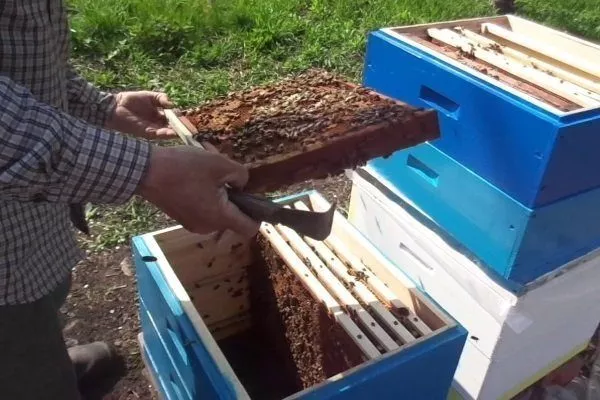
At the same time, all entrances should be left open. Bees on the landing board will actively flap their wings, pumping fresh air into the nest. However, even this won't be enough during the most active foraging period, so it's worth placing wedges between the hives and creating special slits for additional ventilation.
In summer, special attention should also be paid to the direction the hive entrances face. If they face south, they should be moved north. The south side is the hottest, so the bees will pump warm air into the hive, while they need cooler temperatures more.
You need to turn the hive's entrance northward, not in one go, but in several stages. Otherwise, the bees will arrive at their usual spot with a heavy load and encounter a solid wall instead of a door. In this case, they'll start crawling along it, searching for a crack. If they don't find one, they may scatter to neighboring colonies.
If a "beard" of insects forms on the landing board in the summer, it means that the inside of the hive is too hot, so all the entrances should be opened as much as possible, and holes should be prepared to increase ventilation.
In the fall
During this season, special attention should also be paid to the direction of the entrances. The west side is considered optimal, as it receives the late autumn sun.
The fact is, between September and October, bees' mood shifts to pre-winter. They fly less and less each day, but they need to make the last of their supplies and seal their storage areas with protective seals, otherwise the honey will breathe during the winter, increasing the humidity in the nest.
A bee entrance is part of the technological apparatus used by a beekeeper to control the colony's vital processes, including their wintering, spring reproduction, and honey flow. Therefore, the creation of such openings must be approached with the utmost care, as must their adjustment throughout the seasons.