
Entrance gates are an essential element of the entrance, allowing you to regulate its clearance. There are several types of these gates, made from various materials. The principle of using a gate gate is simple. You can buy a gate gate or make one yourself—there are several designs available.
Types and design features
There are two types of entrance barriers: rectangular and round. Each type has its own specific characteristics.
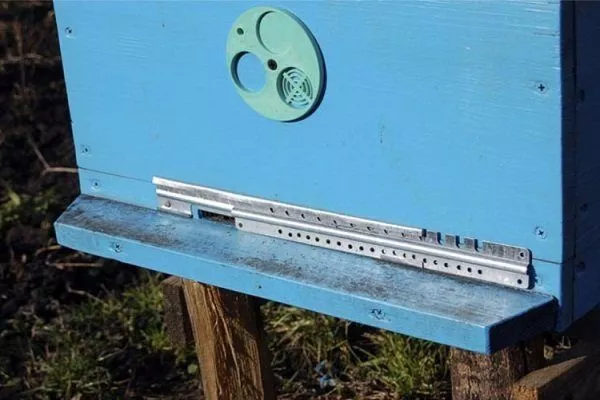
Rectangular shape It is considered obsolete. It looks like a door latch and can have two or more positions.
A rectangular barrier is attached to a slit-shaped entrance. There are several different designs for the barrier:
- solid;
- 2 grates;
- 2 grates and additional holes.
Round barrier It's considered a more modern option. It's easy to install and easier to use. Another advantage is its greater number of features:
- closes half of the exit;
- completely blocks the exit;
- opens access;
- opens the ventilation.
The round gate valve also comes in several design variations, which determines its functionality. The price difference is negligible.
Entryway barriers can also be shaped like a cone, a butterfly, or other configurations. These are all subtypes of the round gate.
Besides the shapes and design features, the difference lies in the material used. Factory-made flight barriers are usually made made of metalThe advantage of a metal latch is its long service life and reliable rodent protection. The disadvantage is that it quickly cools down in cold temperatures, causing the hive to become chilled.
- ✓ Consider the climatic conditions: metal cools quickly, wood retains heat, plastic is an intermediate option.
- ✓ Assess the risk of damage by rodents: metal is the most resistant, wood the least.
The factory flight barrier can be made made of plasticIt will also last a long time, but unlike metal, it won't cool the hive. The downside of a plastic latch is that it's less resistant to rodents.
Another material for flight hole barriers – treeIt's most often used for homemade structures, but you can also find wooden gates made by manufacturers for sale. The main advantage of wood is its long-lasting heat retention. The material is not a deterrent to rodents, but it can swell and jam from moisture. Its short lifespan is also a drawback. The appeal of wood for making a homemade gate screen is its ease of processing.
You can learn about the different types of flight barriers in the following video:
How to choose?
When choosing an entrance barrier for a finished hive, you should focus on the entrance itself:
- The shape of the entrance and the shape of the valve must be the same.
- The design of the screening entrance determines its functionality and ease of use. It's best to choose a design with two grates and openings. This model is more expensive, but it performs multiple functions.
- An important criterion is the size of the entrance screen. It must completely cover the entrance, meaning it must match its diameter or width and height.
- A factory-made product may not be suitable if the hive is homemade and the entrance is non-standard. In this case, it's worth considering making your own slide.
Principle of use
Using a flight hole screen is quite simple. It is attached using profiles or a screw—the mounting details depend on the device's shape and design.
- Check the smooth movement of the valve or rotation of the round stopper.
- Make sure all holes are correct for the entrance and are free of burrs.
- Check the reliability of the attachment of the barrier to the hive.
A rectangular slide usually slides to the side. By adjusting its position, you can fully open or close the entrance, or restrict access by half. The barrier can also be designed to partially close the entrance. This doesn't interfere with the bees' normal activity, but it does protect the hive from mice, a serious threat to the apiary.
If the screen is equipped with a grate, it is usually used to close the entrance when the bees are swarming. The grate doesn't interfere with the worker bees, but it does create an obstacle for the queen and drones. As a result, they remain in the hive, and bees without a queen cannot fly away.
If the barrier has a segment with additional openings, the bee entrance can be completely blocked. The openings in this case provide ventilation.
The circular barrier is attached with its central section above the entrance. It rotates around its axis so that the required segment is positioned opposite the entrance. The operating principle is the same as for the rectangular barrier.
Making a flight barrier with your own hands
You can make your own entrance flap. This is done not so much to save money, but to create a custom design that perfectly fits the entrance in shape and size.
You can make your own entrance screen from a variety of materials—metal, plastic, wood, plywood, or plexiglass. The configuration options are limited only by the beekeeper's imagination.
Rectangular metal gate valve
For this type of entrance barrier, it's best to use stainless or galvanized steel. A material thickness of 1 mm is sufficient. The width of the barrier should match the entrance, and the length should be up to 25 cm.
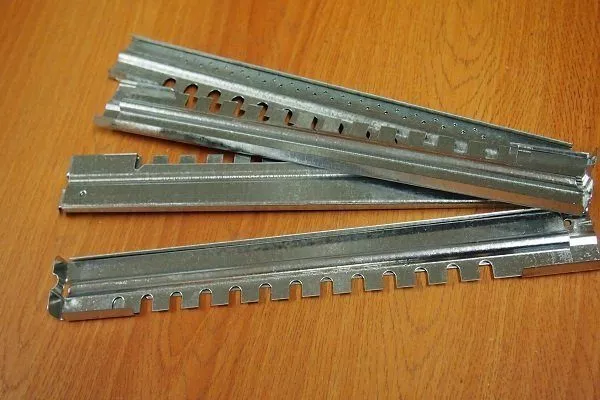
Manufacturing algorithm:
- You need to prepare at least two plates. Make a round hole in the center of one of them.
- The lower and upper edges of the plate must be bent into a step.
- Attach the step bases above and below the entrance. The distance between the hive walls and the main part of the plate should be sufficient to accommodate and slide another metal plate, which will serve as a barrier.
- You can create several segments on a single plate or make several plates. There should be a full plug, a segment or plate with ventilation holes, and a queen and drone barrier. This latter function can be achieved by cutting slits along the bottom edge of the metal strip large enough for a worker bee to pass through.
- One end of the metal latch strip must be bent. This will act as a stop and a handle for movement. If using a single plate with different segments, then after installation, the other end must also be bent, which will serve as a stop.
Round flight barrier
A round barrier can be made from metal, plastic, plexiglass, or plywood – the manufacturing process is the same:
- A circle must be cut from the desired material. Its radius must match the diameter of the entrance hole.
- A hole must be made in the center. Using a screw or wood screw, attach the finished barrier above the entrance. It must move freely around its axis and lock into place.
- The finished circle must be divided into segments. Each segment must correspond to the dimensions of the entrance. Typically, four segments are made:
- blind part;
- half-closing of the flight hole;
- with a small hole for ventilation;
- the presence of an opening for insects.
To learn how to make a round entrance screen, watch the following video:
Wooden flight hole screen
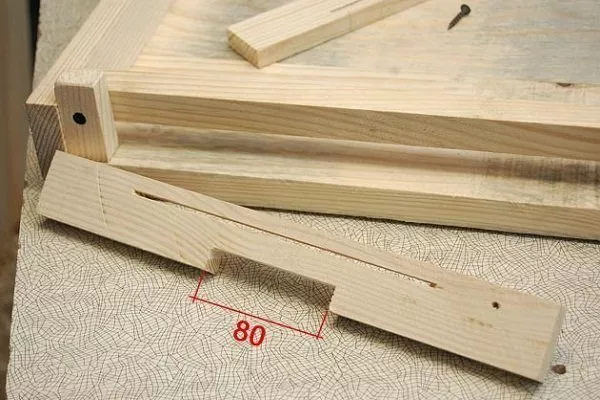
This design is simple and is made for a slit-shaped entrance. The barrier is a wooden block that is attached to the entrance. The next steps are as follows:
- Make a groove on the side of the flight hole - slats will be inserted here on both sides.
- A rectangular exit for insects is cut out on the outside.
- The slats are inserted from both sides and should touch tightly in the center, completely blocking the passage. They should be equipped with handles for ease of movement and containment. Each slat should be a few centimeters longer than half the width of the block. They should move freely but tightly. By sliding the slats apart and together, you can completely block the entrance, leave a passage for insects, or a small gap for ventilation.
An entrance screen is an essential element of a hive. It serves several functions. Screens can be made from various materials and in several configurations. You can buy a ready-made device or make your own.