
Not all bees live in communities. There are insects in which each queen produces brood. These species cannot coexist in a group or share a hive. This fact led to the construction of bee hotels—small, individual houses housing only one colony, led by the queen.
What are bee hotels?
Bee hotels are structures built to attract bees. The main reason for their creation was the decline of the bee population. They work as follows:
- People build housing that can attract pollinators.
- A bee uses an object as a nest.
- An insect lays eggs in the hotel.
- When warm weather arrives, several more individuals emerge that are capable of pollinating the plant.
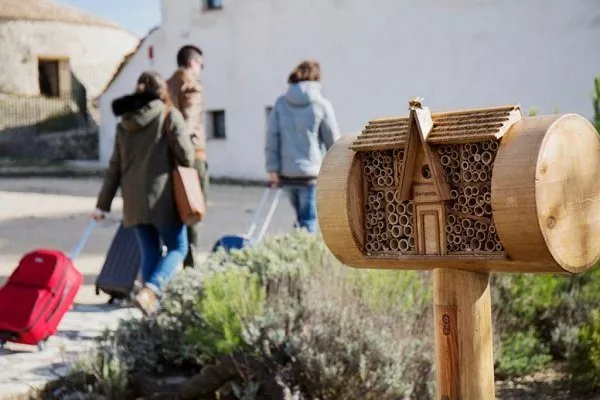
Reproduction isn't the only reason bees move into hotels. They spend the winter in these houses, sheltering from precipitation. Honey cannot be harvested from such colonies.
There is practically no familiar habitat left for bees in the modern world.
Types and design schemes
Bee hotels vary in appearance and structure. They share several common features:
- the material used is wood, bamboo or old brickwork;
- all holes are made at a slight angle so that precipitation cannot get into the “rooms”;
- The hole inside is smooth and even.
Several types of insect hotels can be found around the world:
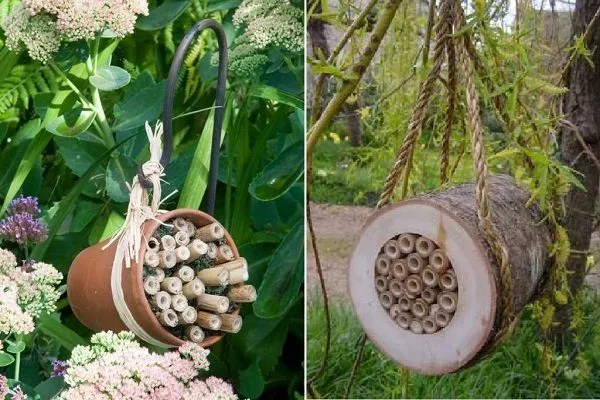
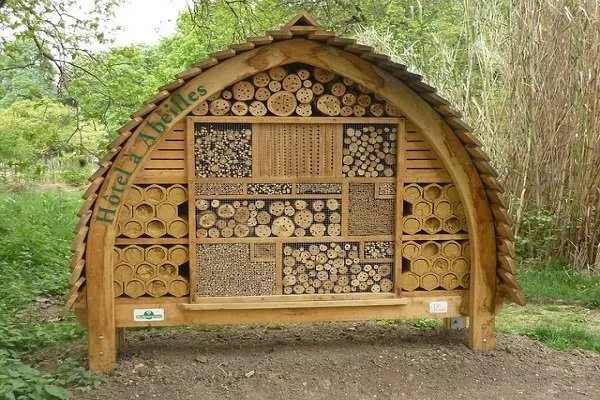
- Surrounded by succulents. It's made from small logs. The building material is arranged in a semicircle. The succulents are used only for external decoration.

- In the shape of a diamondAny bio-based material can be used in construction. These hotels are often sold ready-made.
- A hotel designed for one species of bee. Although the hotel is small, the structure is functional enough. It can be built from wood or bamboo.
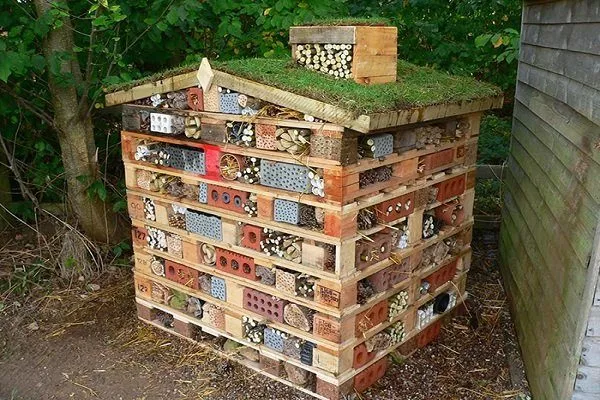
- Multi-level. Any construction materials can be used in the composition. In this case, pallets are used. They are used to create a simulated chimney, which also serves as a home for the bees.
- In a terracotta pot. The most economical type of hotel. In addition to a pot, you'll need bamboo reed and raffia.
- From pieces of cinder block and bricks. Bamboo stalks are also used to create additional openings for insects.
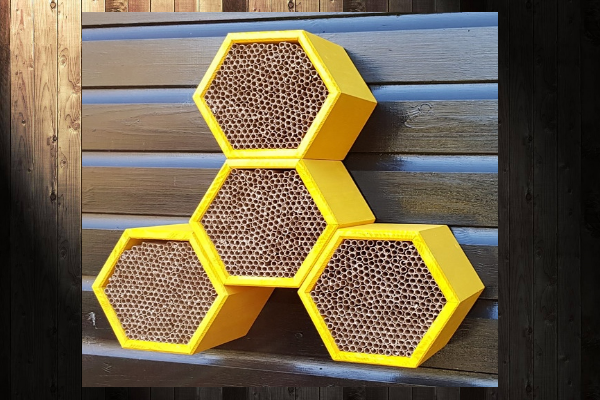
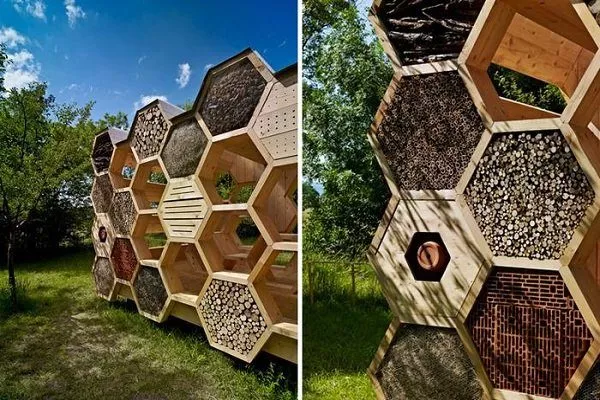
- In the form of honeycombs. Made from wood and small perforated logs, the structure is quite large. It can provide shelter from the summer heat and rain while simultaneously increasing the bee population.
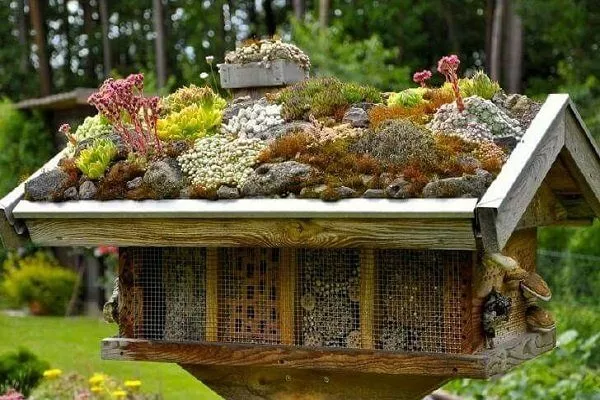
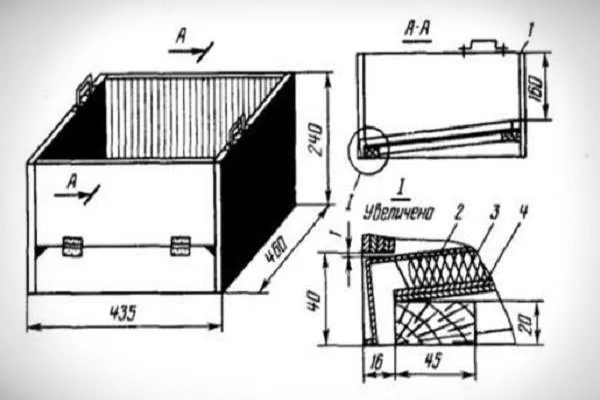
Almost every hotel is planted with flowers or other annuals. This makes it easier for the bees to find food.
How to use them correctly?
Only bees use the structures. All humans have to do is look after the hotel and maintain it properly. Those who have been working with insect hotels for a long time offer several tips on how to make the hotel comfortable for use:
- When purchasing or building a hotel, consider its size. It shouldn't be too large. The structure needs to be cleaned and the material inside the holes replaced every year, and if there are many bees in the hotel, this can be difficult.
- Protect the structure from adverse weather conditions. Ideally, the house should have a 7 cm overhang.
- When constructing the hive, use only organic materials. Wood treated with special solutions will repel bees and negatively impact their brood.
- Place the hotel so that the morning sun's rays hit the structure. Solitary bees love warmth.
- Make sure the nesting holes are always filled. Some bees produce brood several times a year.
- Don't throw away the cocoons. They can be useful for sealing holes and attracting insects.
Where are the most popular places?
Building bee hotels is a popular trend. Many countries have hotels, but not all are popular. The most remarkable insect structures include:
- Place des Jardins in Paris. The facility was created specifically for red bees. The hotel is equipped with 300 rooms dedicated to this species of insect.
- K-Abeilles in America. The essence of this hotel is that it's designed in the shape of a honeycomb. Bees live in the structure alongside humans. The area is 20 square meters. The structure is hollow. The walls constitute the insect hotel, and inside there are benches for visitors to relax.
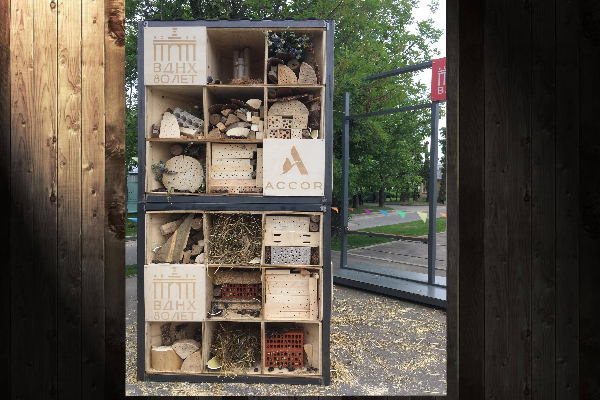
- At VDNKh. Previously, bee hotels in Moscow were only located in zoos. Now, anyone can observe the lives of bees. The hotel was built to provide overwintering for the insects.
How to make it yourself?
Before you begin building a bee hotel, it is recommended that you familiarize yourself with some of the features:
- the building needs a roof and a wall that can protect the hotel from bad weather;
- When constructing the frame, do not use synthetic materials;
- Leaves cannot be used as a filler, as they are a good source of pathogenic fungi that can infect bees;
- The contents of the hotel must be securely fastened; a large mesh can be used.
The construction of a bee hotel consists of several stages:
- Make a frame:
- It is best to build external walls from boards that are not treated in any way.
- The frame should be 15-20 cm deep. Attach it to the plywood. This will form the back wall.
- Measure the frame and build the roof. It should be slightly larger than the frame.
- Secure the top covering, but so that there is a slight slope.
- Cover the resulting frame with sealant or paint.
- Leave the structure in the fresh air to allow the chemical smell to completely evaporate.
- Take care of the rooms (with holes where the bees will live):
- If the material you're using doesn't have any holes, make some. The diameter shouldn't exceed 1.3 cm. Keep in mind that not all insects are the same, so make the holes different sizes. Leave 1-2 cm between them.
The length of one room is equal to the length of the frame, i.e. 15-20 cm. - Connect all the rooms together.
- Insert the resulting composition into the frame.
- Use sandpaper to remove any splinters or debris left over from drilling.
Optimal hole parameters- ✓ The diameter of the holes should vary from 2 to 10 mm to attract different types of bees.
- ✓ The depth of the holes should be at least 10 cm to provide sufficient space for the development of offspring.
- If the material you're using doesn't have any holes, make some. The diameter shouldn't exceed 1.3 cm. Keep in mind that not all insects are the same, so make the holes different sizes. Leave 1-2 cm between them.
- Set up a hotel. Attach the hotel to a fence, tree, or other secure structure. The structure should face south.
You can see the algorithm of actions clearly in the video:
Peculiarities of bee colonization
The first to settle into hotels are females. They build hotel chambers in each hotel room. The bees use dirt, chewed plants, etc.
Once the queen has created a cozy nest, she begins laying eggs. When the tube is completely full, she seals the opening.
An insect may leave its location if:
- It is cold in the hotel, so it needs to be installed in such a way that sunlight hits the structure most of the time;
- there is high humidity inside the hotel;
- There are no places in the area where bees could get food for themselves.
Bee hotels are gaining popularity. These structures help boost bee populations and thus improve pollination efficiency. There are several types of hotels. You can choose any type to build throughout your plot, but it's important to follow expert advice.