
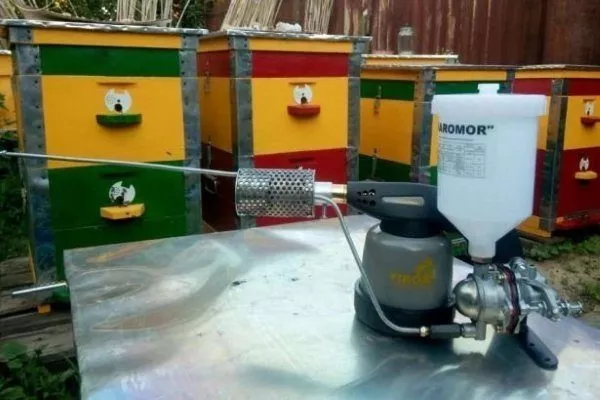
A varomor, or smoke cannon, is a device used by beekeepers to fumigate bees. Beekeepers use fumigation to protect their bee colonies from mites and other diseases.
Description and characteristics of the device
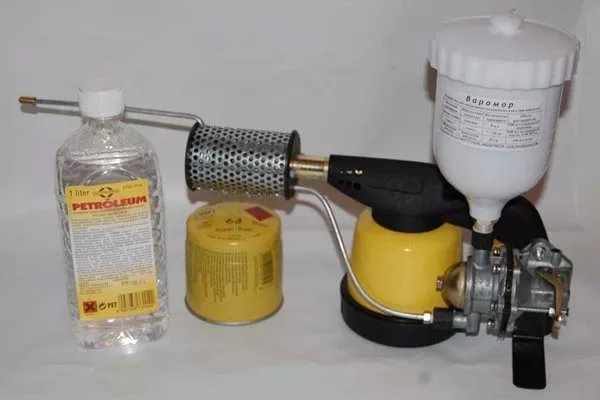
Smoke cannons are sold at any specialized beekeeping store. The device resembles a small sprayer or atomizer, but instead of liquids, it sprays vapors. Smoke cannons sold in stores come with:
- cylinder, capacity 190 g;
- kerosene (1 l);
- instructions.
The Varomor's effectiveness is based on its directional action. The gun has undergone several upgrades over its history. The latest version weighs 1.95 kg when loaded. Dimensions:
- length – 47 cm;
- height – 30 cm;
- width – 15 cm.
The smoke gun's capacity is 100 bee colonies in 2-3 hours.
Components
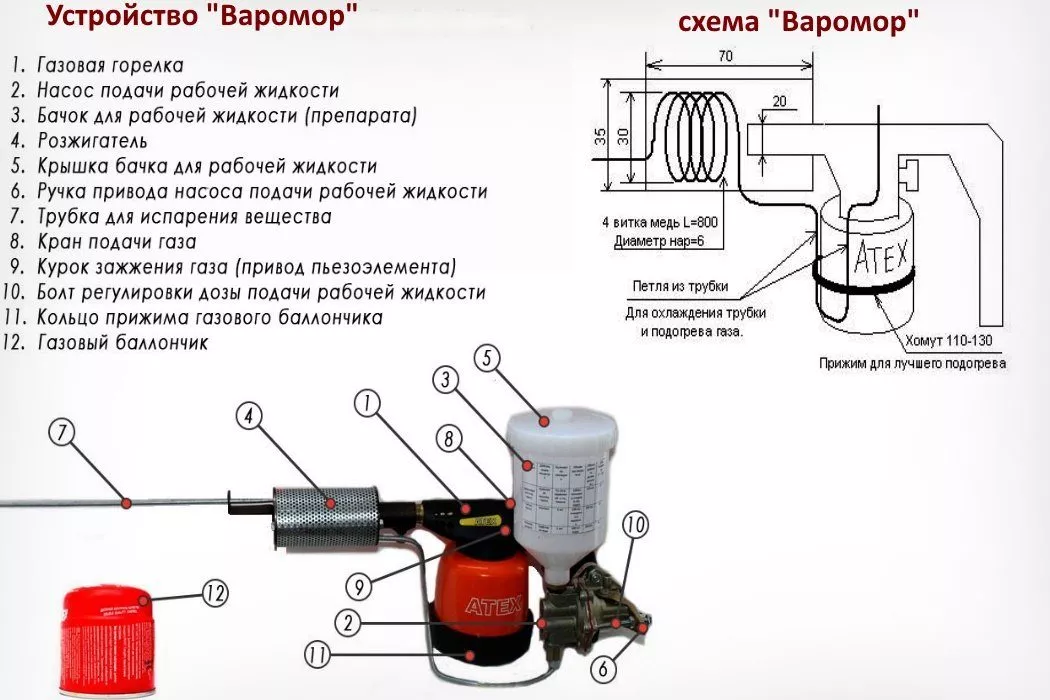
The smoke cannon consists of 12 components:
- pump - it supplies the working solution;
- tank – the working solution is poured into it;
- tank lids;
- pump drive handles;
- bolts - they regulate the volume of solution used;
- threaded connection with a solution filter;
- fryer;
- gas cylinder;
- rings that hold the gas cylinder;
- valve controlling the gas supply;
- injectors;
- gas burner;
- trigger that ignites the gas.
After practical testing, each new modification was modified and improved. The device is comprised of high-quality components and assemblies, ensuring trouble-free operation and trouble-free operation.
Operating principle
The smoke cannon works by vaporizing a medicinal solution poured into a tank. To evaporate the liquid, gas is supplied and the burner is ignited. The solution, moving through a tube toward the outlet, is heated by the burner to a temperature that converts it into steam. The heating element saves gas, while the medicinal solution evaporates efficiently.
The vapors from medicinal liquids irritate bees. The insects become active, and mites shed rapidly if fumigation is intended to kill them.
The use of Varomor is permitted in the production of environmentally friendly beekeeping products.
When should hives be treated?
The effectiveness of fumigation is greatest in early summer. The fumigation agents used are toxic to humans and should not be allowed to come into contact with honeycombs. Therefore, before fumigating the hives, the honey is extracted.
When working with a gun, consider the following points:
- It is recommended to fumigate hives in the evening to protect against mites, mold and diseases.
- If there is no wind, the entrances are left uncovered. Otherwise, the entrances are closed for 30 minutes.
- If brood is present, fumigation is interrupted. The smoke is released in two bursts, with a 10-minute break between each burst. The hive is treated again after 24 hours. This fumigation method helps rid the colony, including the brood, of mites.
In the fall, additional treatment is carried out if necessary. This is done to kill mites, which, having abandoned the colony, congregate near the entrance. Treatment is carried out at a temperature of 2-8°C.
Read more about treating a beehive for mites in next article.
Step-by-step instructions for use
Once the fumigation solution is ready, it's poured into the tank. To do this, unscrew the tank cap and pour in the solution. Once the liquid is poured, replace the cap.
The further course of action:
- Open the gas valve by turning its handle counterclockwise. Press the trigger to light the burner. Adjust the liquid flow so the flame is positioned below the outer protective contour of the burner.
- After waiting 1-2 minutes, start feeding the solution using the pump drive handle.
- Pump the solution into the system; clouds of smoke should emerge from the nozzle. At this point, the drive handle should be in the extreme position—pull it all the way. As soon as you release the handle, the liquid will begin to flow. The dispenser will dispense exactly 1 cubic centimeter of solution.
- Insert the nozzle into the hive through the entrance, 1-3 cm deep. Typically, 2 cubic meters of smoke is sufficient for treatment if a chemical such as bipin is used. If an acid such as bisanar or thymol is used, 4-5 cubic meters are required.
- After finishing fumigation, close the gas supply valve.
- Solution No. 1 is not used for fumigation in two cases: if there is a barren queen in the hive and if the ambient temperature is above 30 °C.
Mixing liquids
Solutions of various compositions and purposes are loaded into the smoke cannon. The ingredients are mixed strictly according to the instructions. The solution composition must best suit the intended purpose. Beekeepers have three solution options to choose from. To calculate the volume of the working mixture and its components, it is necessary to consider the number of bee colonies to be treated and determine the required liquid rate per hive.
- ✓ Consider the ambient temperature: some solutions are ineffective at temperatures above 30°C.
- ✓ If there is a barren queen in the hive, avoid using solution No. 1.
Standards of preparations for treating bee colonies in the table
| Solution No. | Preparation | Active ingredient | Amount of drug | Volume of solvent | Volume of working solution, ml | For processing bee colonies, pcs. |
| 1 | Oxalic acid, thymol | Oxalic acid, thymol | 15 ml each | 100 ml of ethyl alcohol | 120 | 25 |
| 2 | Tactician bipin | Amitraz | 5 ml | 100 ml of purified alcohol | 105 | 50 |
| 3 | Clartan, Mauritian | Taufluvanil | 5 ml | 100 ml of water | 105 | 50 |
First solution
After calculating the volume of the active ingredient—crystalline oxalic acid and thymol—the acid is mixed with ethyl alcohol (at least 96%). The resulting mixture is heated in a water bath so that the water temperature does not rise above 50°C.
Once the acid crystals have completely dissolved, the mixture is ready. Next, add thymol and stir until smooth. If done correctly, the resulting mixture will evaporate vigorously when heated without forming crystals. The mixture remains stable for three weeks from the date of manufacture. This composition is approved for use in the production of environmentally friendly products.
Second solution
To prepare the solution, purified kerosene is mixed with Tactic and Bipin (or Bipin-T). The ingredients, taken in the required proportions, are mixed until a whitish, homogeneous solution without sediment is obtained. The prepared solution is suitable for use for several months.
Third solution
Water and tau-fluvanilate are heated in a water bath at 40-50°C until the solution dissolves. The solution is filtered before use and then poured into the Varomor tank.
Safety rules
The Varomor is a simple but dangerous device. Failure to use it correctly can result in injury or poisoning. Safety precautions when fumigating bees with a smoke cannon:
- Observe safety regulations regarding the handling of gas cylinders and flammable substances.
- Avoid mechanical damage to the device, as this may result in gas or working solution leakage.
- Do not drink, eat or smoke while operating the smoke gun.
- When fumigating bees, wear a respirator or gas mask.
- Do not store the device in a living space. When transporting, pack the Varomor in a box.
- If you notice any malfunctions in the operation of the device, contact gas equipment service specialists.
Varomor Maintenance
When servicing a smoke gun, follow these rules:
- Unless there is an urgent need, do not disassemble the device - there is a risk of breaking the seal.
- To prevent scale buildup inside the hoses, periodically flush the system with a vinegar solution (1 tablespoon per 100 ml of vinegar). This is necessary if using solution #1.
- Periodically clean the filter built into the dispenser.
- Before switching to another solution, the solvent of the other solution is pumped through the gun.
- Before storing the device, wash it with kerosene.
Bees should be checked for mites in the fall. Parasites can become resistant to treatments, and fumigation will not be effective. If mites persist, the poison should be replaced promptly.
How to make a smoke cannon with your own hands?
Given the simplicity of a smoke cannon, it's easy to make one yourself if you have the necessary tools and materials. A homemade smoke cannon costs half as much as a store-bought one. Assembling a homemade smoke cannon takes just a few hours. However, assembly is a bit of a hassle. You'll also need materials and tools. Some parts will need to be purchased, but the rest can be made yourself.
Check out the aftermarket to buy parts from old VAZs or Moskvichs:
- fuel pump;
- spark arrestor flask;
- 4mm brake pipe.
If you find a flask, you won't have to make one. To make this unit, you'll need sheet metal. Also, buy the following at an auto market:
- nipples;
- bolt – for steam adjustment;
- bolt – for fastening.
The flange will be firmly fixed to the tube using bolts.
Necessary gas equipment:
- burner – take one with a piezo ignition, this is the most convenient option;
- replaceable gas cylinders - they are changed during operation of the device;
- nozzle for gas stove.
Go to a hardware store and buy a 200-300 ml plastic spray can and some fum tape.
Before assembling the smoke gun, perform a number of preparatory tasks:
- Clamp the fuel pump in a vice and remove the copper tubes. To remove the tubes, twist them. Tap the inside of the tubes with a thread. The pump is made of aluminum, so proceed with caution.
- Take the fuel pump and drill a hole in its mount for a bolt to adjust the flow of the medicinal solution. This job is best left to a machinist.
- Near the end of the brake line that will be threaded into the spark arrester, form a spiral with 4-5 turns. Its diameter should be 10 mm smaller than the diameter of the spark arrester's bulb. It's best to first form the spiral and then measure its diameter. Based on this measurement, calculate the spark arrester's dimensions. Drill holes in a sheet of sheet metal of the appropriate dimensions. The hole drilled in the front wall of the bulb should match the diameter of the brake line.
- Make a flask from any oval object. Weld the joint, then weld on the front plate. Attach the tube to the spark arrestor with a coupling. Drill a hole in the flange and thread it for a bolt. Or hire a lathe specialist to do this job.
- If you purchase a spark arrestor, the procedure changes slightly. First, measure the inner diameter of the spark arrestor, and then form a spiral on the tube, taking into account its size and the gap.
Assembly:
- Screw the fittings into the fuel pump lines. Before doing this, wrap them with Teflon tape to ensure a tight seal. Chamfer the inside of the fitting that secures the line to ensure a tight fit.
- Place the tube coil into the spark arrestor flask. Secure the flask with bolts pre-installed into the holes on the coupling flange; 1 cm of tube should protrude from the hole. Attach the gas stove nozzle to the end of the tube. Place the gas cylinder into the burner and screw the bolt into the hole on the fuel pump foot.
This video will help you make the Varomor cannon yourself:
Beekeepers' reviews
According to user reviews, the Varomor is one of the most effective mite control devices available. It's easy to use, convenient, and reliable. Its pest control effectiveness is 85%. Beekeepers who have tried the Varomor smoke cannon claim there's simply nothing that can break. It's a super device, essential for any apiary.
The Varomor smoke cannon is a valuable tool for beekeepers. By purchasing a ready-made smoke cannon, you'll be armed with an effective and convenient device for controlling bee pests and diseases.