
Thymol is quite popular in beekeeping. It is used for the treatment and prevention of various diseases in beesThe drug is administered in various ways, each with its own specific dosage regimen and frequency of application. Thymol should be used with caution.
Composition, release form
Thymol is based on the substance of the same name. It is a monoterpene phenol and a hydroxy derivative of cymene. This element is found in some essential oils (including thyme oil), and can be extracted from them through distillation.
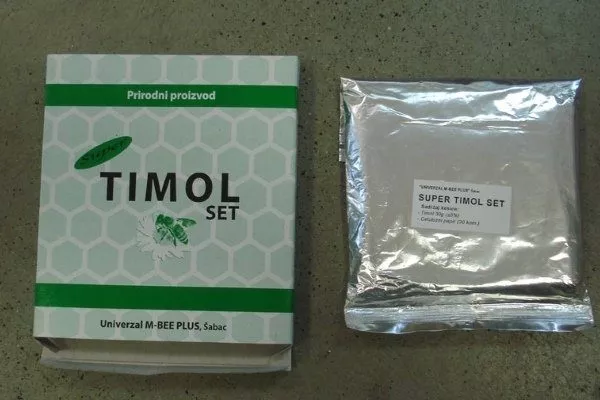
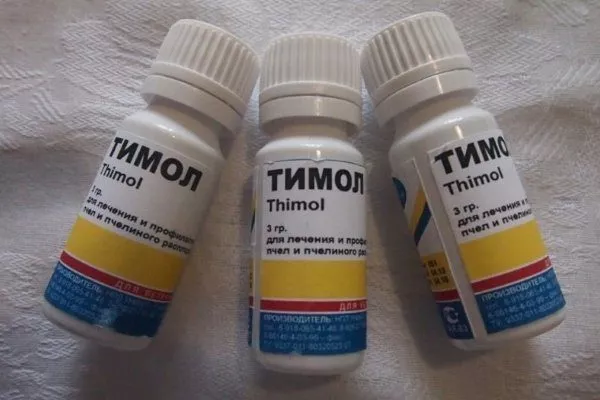
The product is available as a white powder or crystals. In beekeeping, it is sold in thick polyethylene or foil bags or glass or plastic bottles. Thymol for bees is available in various dosages: 3, 5, 8, 10, and 500 g.
Thymol has a pungent taste and a distinctive odor. It is practically insoluble in water, but a solution can be prepared using hot liquid (sugar syrup).
Pharmacological properties
Thymol has a wide range of beneficial properties. The following effects are important for beekeeping:
- anti-tick;
- antibacterial;
- antiparasitic;
- fungicidal;
- anti-inflammatory.
Thymol is mainly used to combat Varroa mitesAfter treatment with the product, they fall off, and the fertility of females decreases. The product is also used for prevention. nosematosis, rottenness, ascospherosis.
Rules for use in beekeeping, dosages
Thymol is used in beekeeping at specific times of the year. These are early to mid-spring, when the bees are emerging, and autumn, when bee colonies are growing.
Thymol is used in various ways:
- Dry spraying. The amount of product for this treatment should be calculated based on the number of frames—0.25 g of Thymol per frame. Spray it on the top bars of the frames. Two treatments should be carried out at weekly intervals. If the bees are severely infested, three treatments are effective. In this case, the interval between treatments should be four days. After the final treatment, wait 2-3 days and then place several sachets of the product in the hive.
- Place the preparation into small cloth bags—the ideal size is 10 x 10 cm. Use no more than 15 g of the preparation per bee colony. Place the prepared bag over the nest near the back or side wall of the hive. After a few days, check the preparation's condition—knead the bag; if the amount is insufficient, add more powder. The bag should be kept for a total of two weeks. This method is especially popular when varroatosis or an increased risk of it (the appearance of drone brood).
- Add Thymol to CandyA dose of 1 g of the product per 1 kg of this feed is sufficient. The product should be thoroughly mixed with candy and given to the bees at a rate of 40 g per frame. As a preventative measure, this feed is given once. For therapeutic purposes, this mixture is given to the insects three times, with a weekly interval.
- Thymol is also added to sugar syrup. To prepare this supplement, first pour the preparation into hot water, then add sugar. 3 g of the supplement is needed per 25 liters of water. The prepared supplement is applied in the evening, 0.1 liter per frame. The procedure should be repeated 3-4 times, with intervals of 3-4 days.
It is recommended to administer Thymol to bees when the ambient temperature is between 7 and 27 degrees Celsius. This temperature range is essential for the drug to be most effective.
After applying Thymol using various methods, it is recommended not to open the hive for 2 days. This is necessary to maintain the maximum effective concentration of the product.
- ✓ The absence of mites at the bottom of the hive 48 hours after treatment indicates the effectiveness of the drug.
- ✓ Decreased activity of bees may be a sign of an overdose of Thymol.
The product can be hazardous to humans, so it's important to take protective measures when using it: wear a thick gown, rubber gloves, safety glasses, and a gauze mask. After handling, wash your clothes, and wash your hands and face thoroughly with soap and water. If the product comes into contact with your skin, rinse immediately with plenty of cool water.
Contraindications, restrictions on use, side effects
When used according to the recommended dosage and precautions, Timol has no contraindications in beekeeping. It is not recommended to administer the medication to a weak bee colony or one with fewer than 3-4 streets.
For humans, contact with skin or mucous membranes can cause irritation. If the substance enters the bloodstream in large quantities, cardiac arrest and even death are possible.
Combining Thymol with camphor or menthol is unacceptable. Concomitant use of Salol is also prohibited.
The drug is harmless to bees when administered in the recommended doses. Thymol does not pose a risk to brood and does not affect the taste or quality of bee products (honey, propolis, bee bread etc.).
Use of Timol by any method should be stopped at least one week before honey extraction. Once this is done, the resulting product can be used as usual—it is completely safe.
Expiration date and storage conditions
Store the medication in its original packaging, unopened. Store in a dry place and away from ultraviolet radiation. Keep out of the reach of children and away from food and human medications.
It's important to maintain optimal storage temperatures of 2-25°C. If all conditions are met, the product can be used for 2 years.
Thymol is an effective beekeeping product used primarily for the treatment and prevention of varroa. The medication can be administered in various ways, and the dosage depends on the chosen method. It is important to remember storage conditions and precautions when handling the product.