
In the fall, beekeepers are preoccupied not only with preparing honey bees for winter but also with ridding them of pests. One of the most successful methods for eliminating pests is a special heat chamber, in which bees undergo heat treatment. What kind of chamber is this, what is its purpose, and how does it work? Let's explore further.
What is a thermal chamber?
Like any other insect, bees are susceptible to various parasites, which can not only damage their population but also significantly reduce it. A heat chamber is designed to rid bees of these pests. It resembles a small gas stove, but without burners. It's a small box with glass inserts and a hole. It's ventilated and heated, powered by electricity.
The operating principle of the device is simple:
- Bee frames with insects are placed into the device.
- The chamber is tightly sealed and heated to 48˚C. To ensure even temperature distribution, the chamber is made to rotate.
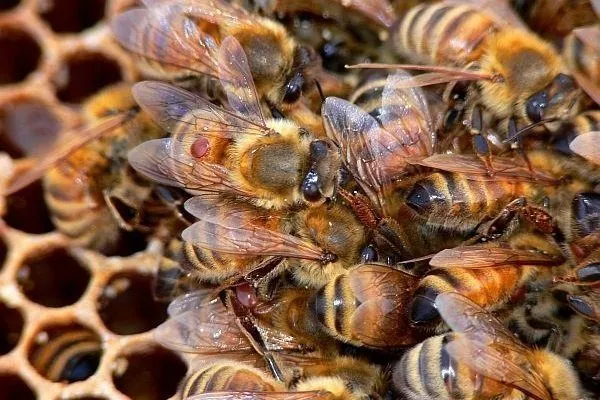
- When heated, the spaces between the bees' abdominal rings widen. This is where the dangerous parasite, the Varroa mite, lives. As a result, the pest can no longer cling to the bee and falls.
One procedure takes no more than 15 minutes.
It's worth noting that a temperature of 48˚C is well tolerated by bees and is only lethal to mites. Furthermore, the treatment itself increases bees' resistance to fungal and viral diseases.
| Camera type | Processing time | Efficiency | Peculiarities |
|---|---|---|---|
| 1st generation | 25 minutes | Average | Uneven heating, risk of steaming bees |
| 2nd generation | 25 minutes | Average | Rotating cassette, but return of the pliers is possible |
| 3rd generation | 15 minutes | High | Heated air flow, but problems with bee distribution |
| With a flat cassette | 7-8 minutes | Very high | Even heating, minimal risk of ticks returning |
Types of thermal chambers
There are three generations of thermal cameras, each improved over time. There are also flat-cassette cameras, which differ from their classic counterparts. Each option is worth exploring separately.
1st generation (Khrust chamber)
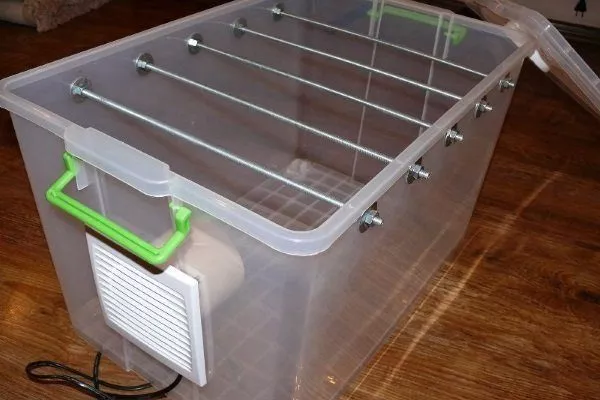
A primitive camera, which consists of the following parts:
- housings with windows and hand holes;
- nets for collecting parasites;
- heater;
- thermometer;
- cassettes;
- funnels.
The Japanese design was used as a basis. The main drawback of the Russian version is that the bees are treated for 25 minutes instead of the recommended 15 minutes. This occurs because the system is heated to the required temperatures essentially twice:
- Before loading the cassette.
- After inserting the cassette.
The need to reheat the chamber is due to the fact that the temperature drops by 10-15°C after placing a cold cassette with bees in the unit.
Prolonged exposure to elevated temperatures negatively impacts bees, causing some insects to even die. The trays are designed to hold 1.5 kg of insects. Many bees simply become exhausted due to overcrowding and the lack of ventilation holes and entrances.
2nd generation
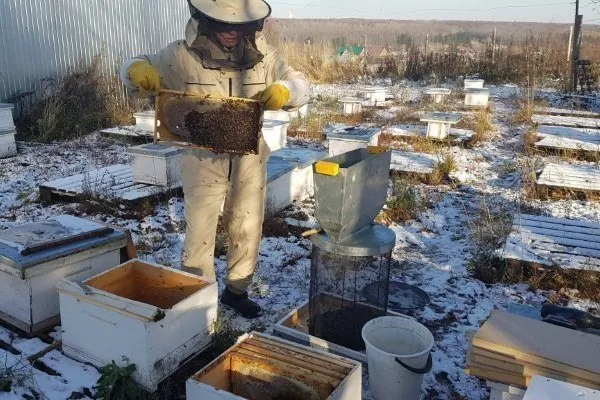
This design features a rotating cassette, meaning it can move in a simple circular motion or in a jerky motion on mixed axes. This eliminated the need to manually shake the cassette, but temperature inconsistencies remained across the chamber; for example, the corners were colder than the center, and the top was much warmer than the bottom. Processing time remained virtually the same—up to 25 minutes.
These chambers also developed another drawback: mites that fall off can reattach to the bee's body at the bottom of the structure due to constant movement. A reattached parasite will not leave its host, so heat treatment does not always result in complete removal of the parasite.
3rd generation (Yu. Malinka camera)
This device uses a heated air flow. It prevents the bees from being steamed, but other drawbacks have been identified. The cassette is cylindrical and immobile, so the bees cluster at the very bottom when they move in the direction of the air flow. This makes it much more difficult to rid them of parasites.
Numerous attempts were made to improve the apparatus, but they did not produce the desired result.
Flat cassette version
This design has virtually no weak points. The housing contains a single-walled cylinder, and the temperature difference between its different sections when the fan delivers heated jets is only 0.1°C.
The cassette is a mesh cylinder into which bees are dropped using a funnel. They are then shaken and spread out in a single layer along the bottom. A fine mesh is located at the bottom of the cylinder, preventing the bees from returning to their original habitat. The entire process takes an average of 7-8 minutes.
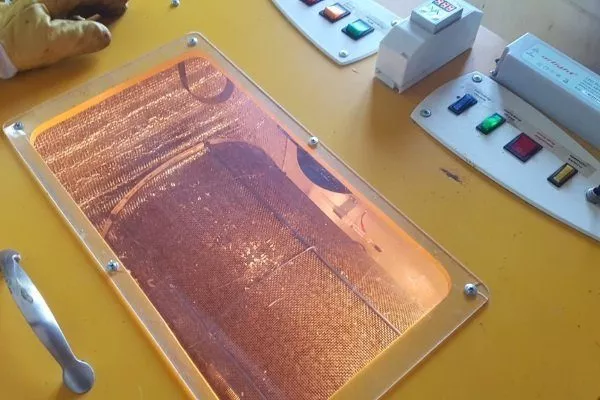
This device is considered the most effective for treating bees, as its efficiency is close to 100%.
How to make a thermal chamber with your own hands?
Experienced beekeepers know that you can make a heating machine yourself and that you don't need any special skills to do it.
Necessary materials and tools:
- screwdriver;
- saw;
- lumber - bars measuring 3x3 cm;
- plywood sheets 6 and 10 mm;
- wood screws, nails;
- 4 incandescent lamps with a power of 40 or 60 W;
- connection cable;
- voltage stabilizer;
- rectifier or power supply;
- mesh cassettes with minimum cell size;
- fan;
- two thermometers.
The size of the camera directly depends on the size of the frame.
Step-by-step instructions:
- Cutting timber and assembling the frameCut the timber to the required dimensions and assemble the camera frame.
- Cutting plywoodCover the walls with 6 mm plywood sheets, and place a 10 mm sheet on the bottom.
- Drilling holesTo observe the behavior of insects and mites, a viewing window is made, for which holes must be made in the upper and lower parts.
- Installing a viewing windowUsing silicone adhesive, attach the glass to the plywood, making sure to glue it to the outside, not the inside, otherwise the adhesive may heat up and release harmful chemicals. Place the plywood and glass on top of the chamber.
- Installing a fanWarm air should be distributed evenly. To achieve this, install a small fan. To ensure it operates smoothly and doesn't become a shoulder trap, it should be mounted separately. Some people use small computer coolers, placing them above the heating elements (see the example in the photo below).

- Installation of heating elementsAttach the incandescent bulbs to the upper corners of the box above the fan, and route the wire outside to connect to the power supply. This can be done where the door closes or through an additional entry point drilled with a drill.
- Installing thermometersIt's better to use a dedicated thermostat, as it allows you to set an upper temperature limit beyond which the temperature won't rise, as the thermostat will automatically shut off. With a thermometer, you'll need to constantly monitor the temperature. Plug it directly into a power outlet, and insert the sensor into the chamber and position it in the very center. The thermometer should be equidistant from the lamps and clearly visible through the window.
- Installing the doorBuild its frame from wooden blocks and then screw it in place. Hang the door on strong hinges and secure it with a latch.
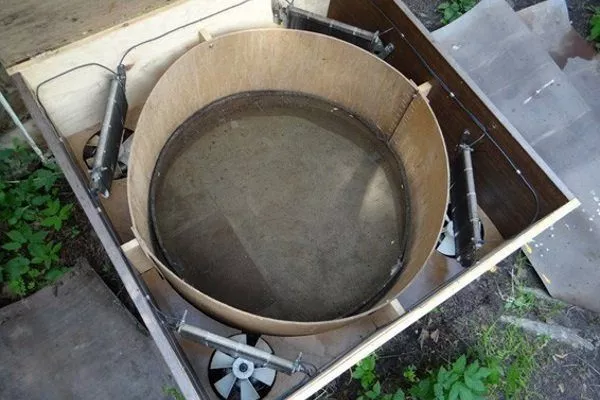
When working with a swarm, keep in mind that incandescent lamps also emit some heat after being turned off, so it's worth setting the thermostat slightly below 48°C, for example, 46.5 degrees Celsius.
How to carry out heat treatment?
Proper beekeeping is the key to success, so it is important to follow some basic rules:
- Treat bees without a queen, as her presence will cause the swarm to form a ball around her, raising the temperature by a couple of degrees. Furthermore, the queen is rarely attacked by pests.
- The treatment should not exceed 12 minutes. If it exceeds 18 minutes, hungry bees, as well as those with full intestines, will die. If the treatment time cannot be reduced, use smoke to force the bees to fill their crops with food beforehand, or allow them to fly for a while to empty their intestines.
- If the ambient temperature during heat treatment is below 11°C, preheat the grates to 18°C, otherwise the mite will remain on the bees.
- Shake the bees from the frames into the cassette using a funnel. After 15 minutes, begin heat treatment.
- Place the cassettes in a chamber preheated to the desired temperature. Place paper underneath the cassette to make it easier to collect any fallen parasites.
- After this procedure, keep the bees in a room under red light for 15 minutes, and then return them to the hives.
Drones should not be treated as they die in high temperature conditions.
Video: DIY heat chamber for beekeeping
The following video offers a detailed review of the homemade camera:
So, heat treatment of bees is an important and responsible process that will help eliminate pests and preserve the population. A heat chamber can be built at home; you just need to follow certain rules, follow the instructions, and avoid mistakes.