
Treating bee colonies for mites is an important measure that protects the insects from this parasite, which carries various viral diseases. There are three main methods of pest control: physical, biological, and chemical. The health of the insects at different times of the year depends on the correct anti-mite treatment.
General characteristics of the pest and the need for treatment
The Varroa mite is a pest that wreaks havoc on bee colonies. It not only attaches itself to bees and feeds on their blood, but also transmits dangerous diseases that kill honey plants. Mite infestations significantly weaken colonies.
The pest has an oval, flattened, brown body. Its width is 1.8 mm and its length is approximately 1 mm. These parasites live for about 10 months. Varroa mites thrive at 70% humidity, and the optimal temperature is 34-36 degrees Celsius.
Pests attack bees. Up to seven mites can parasitize a single bee. When they infest honey plants, pathological processes begin to develop in the bees' bodies. The bees become apathetic and are unable to fight off various diseases due to weakened immunity.
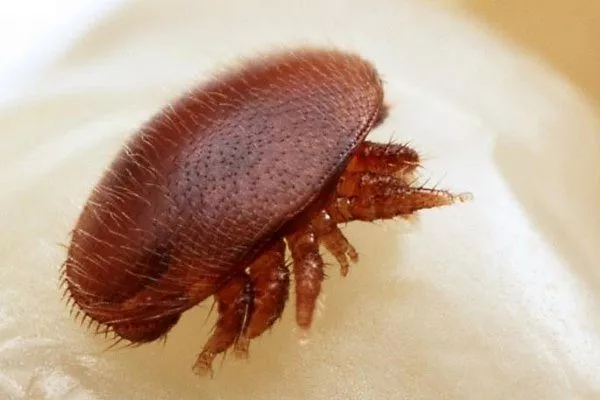
Varroa mite: The female mite finds bee brood cells and lays her eggs there.
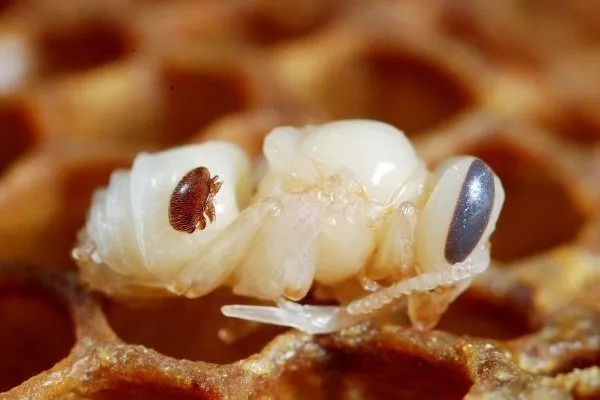
Unsuspecting bees seal the cells where the mite develops and begins to parasitize the pupa.
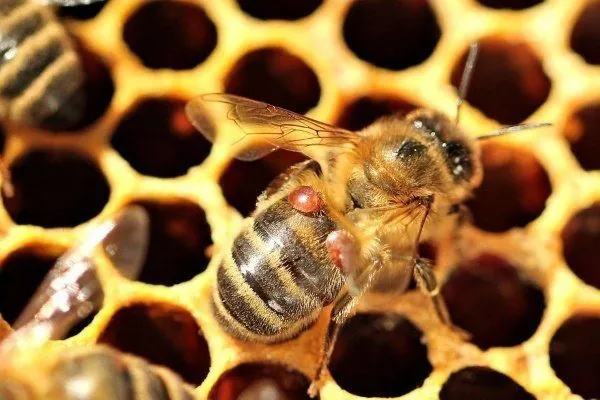
Adult mites parasitize bees, feeding on their blood and lymph. Without parasite treatment, bees are born with developmental defects, and their numbers decline over time.
If the mite infects a larva, a tiny bee emerges. Its body lacks fat, and its surface is dull. Adult drones and bees infected with Varroa lose the ability to fly and are unable to properly feed their brood.
How to treat bees for varroatosis and whether this disease can be prevented – read here.
Timing of anti-mite treatment of bees
Apiary owners must carry out insect treatments to prevent the development of mites in hives, as well as for treatment purposes if an infestation has occurred.
Treatment is scheduled for spring, typically in March, when only a small amount of honey remains in the hives. Treatment can also be carried out in the fall: if Varroa is not removed before winter, the bees will not be able to survive the cold weather and will likely die.
The arguments in favor of measures to prevent mites in bees are:
- decrease in the number of bees at this time of year;
- the ability to minimize insect losses in each hive, since insects infected with mites do not survive until spring.
To assess the extent of mite infestation, you can use this testing method:
- Take a glass container with a capacity of 0.5-1 liter.
- Bring it to the honeycombs and carefully fill it with bees, moving from the bottom up.
- Select 20 insects. There is no need to select the queen.
- Repeat the steps for each frame.
- Cover the containers with bees with lids. Be sure to make holes in them to allow air to enter.
- In a separate container, pour 500 ml of water and place on the fire.
- Shake the jar with insects and place it in a container of water on the stove.
- Swirl the jar, bringing the temperature inside to 50 degrees Celsius. At this temperature, the ticks release their prey, separating from them.
- Gradually bring the temperature to a boil, remove the insects onto a plate using a slotted spoon.
- Count the number of bees and the number of mites that fall from them.
If the mite infestation rate is less than 0.5%, preventative measures are sufficient. If the rate is higher, treatment is necessary.
Methods for treating bees against mites
There are 3 main methods known to combat the problem:
- physical – thermal treatment of insects;
- biological – use of acids;
- Chemical – the use of special preparations with an aggressive effect: such agents are used in cases where other methods have failed.
| Method | Efficiency | Safety for bees | Difficulty of use |
|---|---|---|---|
| Thermal exposure | High | High | Average |
| Smoke treatment | Average | High | Low |
| Biological drugs | High | High | Average |
| Chemicals | Very high | Average | High |
| Traditional methods | Low | High | Low |
Thermal exposure
This method of treating bees for mites involves raising the temperature in the hive to 48 degrees Celsius. At this temperature, the pests become uncomfortable and leave the body. The thermal treatment lasts 8 minutes (per hive).
To raise the temperature to the required level, you need to use thermal chambers. This equipment is available at specialized stores.
The advantage of this type of treatment is the absence of harmful fumes and chemical particles that could get into the honey.
This method of tick removal is not very popular. This is due to a number of factors, including the following:
- lack of results in the case of a widespread insect plague due to a tick infestation;
- risk of steaming bees;
- risk of insect burns;
- the possibility of reduced immunity in honey plants;
- risk of injury to insects.
Heat treatment of hives is carried out once a year. Experts say this method guarantees the absence of mites in the hives for the entire following year.
Smoke treatment of ticks
This method, although simple, is popular because it produces good results. To treat the hive, you'll need an old canvas and a smoke cannon. The canvas is coated with propolis and placed in the cannon. The smoke released quickly kills the parasite: within 30 minutes of treatment, dead mites appear on the bottom of the hives.
Besides propolis-infused canvas, smoldering oak bark or leaves can also be used as a smoke source. These materials pose no harm to honey plants. Some beekeepers use a mixture of wild rosemary and horseradish root.
The best device for treating hives with smoke is the Varomor smoke cannon. It operates on a similar principle to a smoker, but uses less smoke.
When treating hives with smoke, remember the need for personal protective equipment.
This video shows how to treat hives for mites using a smoke cannon:
Biological drugs
The following are used against mites in bees:
- Formic acidThis substance is diluted to a concentration of 85-87% before treatment. Pour 40 ml of the solution into a special container designed for the acid and hang it in one corner above the nest. The acid evaporates within 3-5 days. This treatment should be carried out at an air temperature of 15-25 degrees Celsius.
- Oxalic acidOnly 2 grams of the substance are required for a high-quality hive treatment, making this product more cost-effective. Oxalic acid is added to the hive after being slightly warmed. Otherwise, the application method is similar to the previous one.
Chemicals
The following preparations are used to combat mites that infect bees:
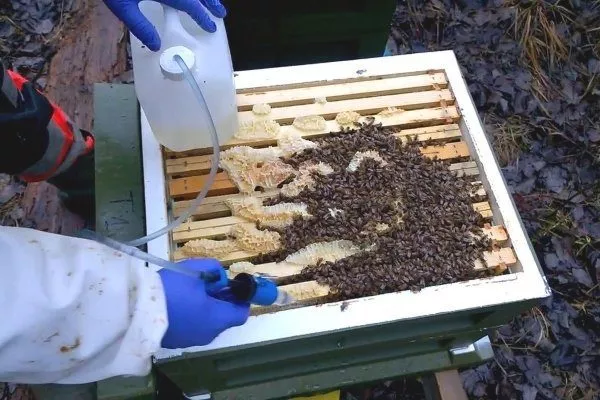
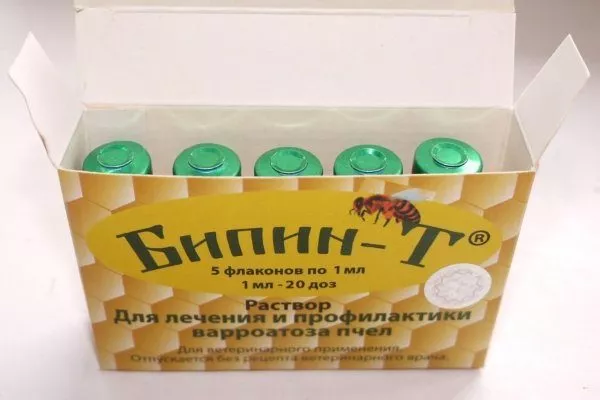
- Bipin, Bipin-TThese preparations contain a powerful active ingredient, amitraz. They are effective not only against mites but also against other harmful parasites. The solution is used as an emulsion. The hive is treated on the day the solution is prepared. It should be instilled between the frames using a syringe, pushing out a few drops at a time. Treatments are carried out twice, with a 7-day interval between each treatment. Bipin and Bipin T do not affect the quality of honey or the health of the bees, but it is not recommended to treat hives with weak swarms with these preparations.

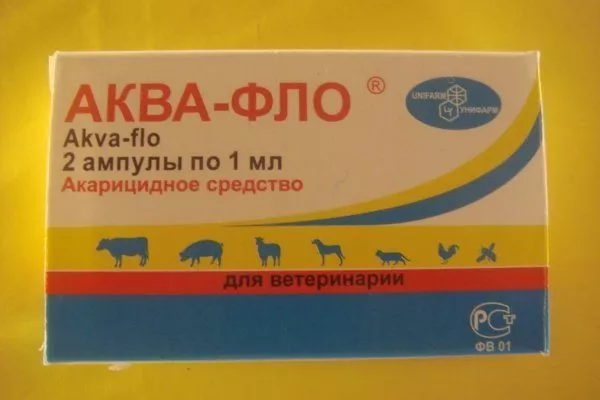
- Aqua-FloThis product is moderately toxic. It is used from spring to fall, but only if there is no brood in the hive. A solution based on Aqua-Flo is sprayed between frames using a standard syringe. After the initial treatment, repeat the procedure (after 5-8 days). Honey collected after the hive treatment can be consumed within two weeks of spraying with Aqua-Flo.
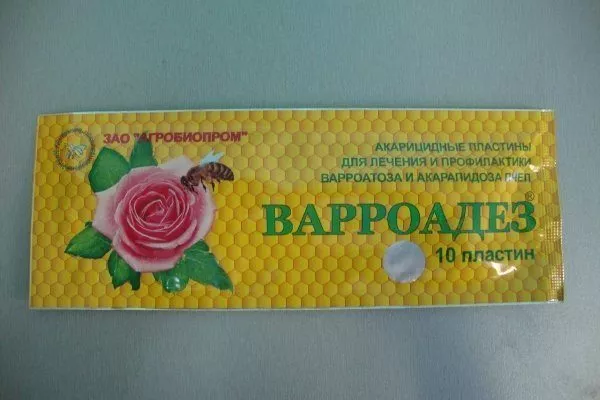
- VarroadesThis product consists of wooden strips coated with a special acaricide that effectively combats the parasite. It is recommended to use Varroadez in the fall, after the honey harvest is complete. One wooden strip is sufficient for six frames. They should be placed in the middle of the hive. If the colony is weak, it is better to hang Varroadez between the combs. The strips are effective for one month; after this period, they should be renewed.
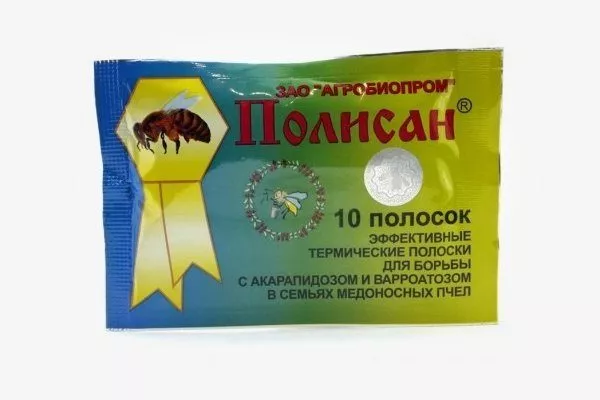
- PolisanThis product also comes in strips, but they're made of cardboard. Their surface is impregnated with an acaricide that kills mites. The strips should be lit and then extinguished. They will smolder, producing acrid smoke. Hives should be treated with Polisan in the morning or evening.
To avoid making a mistake when choosing a product, you need to purchase it in specialized stores.
Traditional methods
To reduce the risk of bee mite infestation and boost the insects' immunity, you can also use folk remedies such as:
- Pine infusionTake spruce or pine needles, pour boiling water over them until the needles are completely covered, and let the mixture steep. You can also add a little crushed garlic. Combine the mixture with sugar syrup (1 part infusion to 5 parts syrup) and feed it to the bees.
- A product based on the Zvezdochka balmTake 6 packages of this ointment and dilute it in 3 liters of water. Apply the prepared solution to a plastic sheet and place it on the bottom of the hive.
- Medicinal fertilizer with hot pepperTake crushed pepper, pour a liter of boiling water over it, and let it steep for 24 hours. Then mix it with sugar syrup (120 ml of pepper infusion per 1 liter of syrup). You can also make the remedy more effective by adding 20 ml of propolis tincture (10%).
- Thyme vaporsSimply collect the plant, chop it up, and place it in cheesecloth, tying it into a bag. Place it on frames and cover with plastic wrap until the plant material dries. Once this happens, replace the thyme with fresh thyme. Use this method throughout the summer.
- Alcohol and lavender oilFor this method, you'll need a vaporizer. Place it on the frames and fill it with alcohol, adding a few drops of lavender oil. Leave it for three weeks. Add more if necessary.
Preventive measures
To minimize the risk of bee mite infestation, the following rules must be followed:
- Avoid purchasing infected bees and thoroughly inspect all new bees in your hives;
- regularly check hives for parasites;
- limit the likelihood of bee theft;
- carry out seasonal treatments against ticks;
- destroy frames with the first and last brood;
- Place hives not too close to each other, at a height of more than 30 cm.
Varroa mites infest large numbers of bees, causing mass deaths. To prevent the parasite from spreading, seasonal hive treatments are essential.