
The Varroa mite, the causative agent of a dangerous bee disease and a vector of various infections, is widespread throughout the world. We'll discuss the pest's development, infection methods and symptoms, and control and prevention measures in more detail later in the article.

Description and life cycle
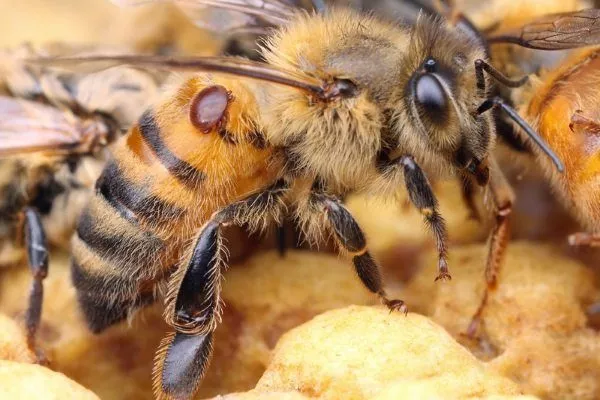
The Varroa jacobsoni mite is an ectoparasite that lives on bees. It has a very flat body, resembling an inverted oval saucer, with protruding lower limbs covered in hairs. The mite's four pairs of legs allow it to crawl and help it cling to the bee.
The female's body is transversely oval, brown or dark brown, and measures 1.6-2 mm. It is visible to the naked eye. The mouthparts are piercing and sucking and are usually hidden under the body. Using these, the female pierces the bee's chitinous integument and feeds on the hemolymph of adult bees, larvae, and pupae.
Among the specific morphological features of Varroa females, the following can be distinguished:
- the presence of a movable part of the peritremal tube, which allows for the regulation of breathing in various living conditions;
- a unique body shape that ensures the mite is securely attached to the bee's body;
- the presence of small teeth on the chelicerae, directed backwards, which prevent females from falling out of the wound on the host's body;
- a springy covering on the body that prevents the insect from sticking during its life in the bee brood.
The male is smaller and almost round (about 0.8 mm in diameter) and is visible only in the brood. Its body is grayish-white or slightly yellow. The pharynx lacks powerful muscles and is barely visible. The mouthparts serve only to transfer semen during fertilization of the female. The ends of the legs have suckers.
The life cycle of the Varroa mite consists of the following stages:
- The mother mite (adult female) gets from a worker bee or from a drone onto the honeycomb.
- The mite enters the cell containing the larva just before it is sealed. This often occurs in drone brood, but can also occur in bee brood.
- After the cell is sealed (after three days), the female tick begins laying eggs (on average, one egg per day, for a total of about five). Each egg is 0.5 mm long. A larva develops within it, which transforms into a nymph with four pairs of limbs.
- The nymph (protonymph) emerges from an egg measuring 0.7 mm.
- After a single molt, the next stage begins—the deutonymph. The female measures 1.3 mm by 1 mm, while the male is 0.7 mm in diameter. Their chitinous shell is quite soft and whitish in color. They feed on hemolymph.
- While in the cell, the male fertilizes the young females, after which he himself dies of starvation. Therefore, only female mites are seen on adult bees.
- After the young bee has completed its development, it leaves the cell. The mites, including the adult female, follow it. They climb onto the bees (drones and workers) and remain there until the next egg laying. Each female mite is capable of laying eggs several times. Young females have a lighter-colored chitinous shell than adults. Only after a few days does it gradually darken.
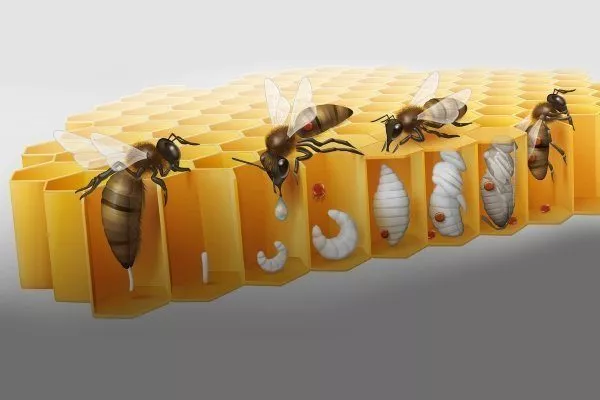
The entire development cycle, from laying an egg to becoming an adult tick, lasts:
- for females – 8-11 days;
- for males – 8-9 days.
In summer, the female lives for 2-3 months, and in winter, for about 5 months. During the winter, due to the lack of brood, varroa cease reproducing, and 7-10% of them die.
In early spring, with the emergence of brood, and throughout the summer, the number of mites in a bee colony increases approximately 20-fold. In the fall, when their numbers in the colony decline, the pests move on to uninfected bees.
Varroa females remain viable outside the bee colony:
- in empty hives on honeycombs – 6-7 days;
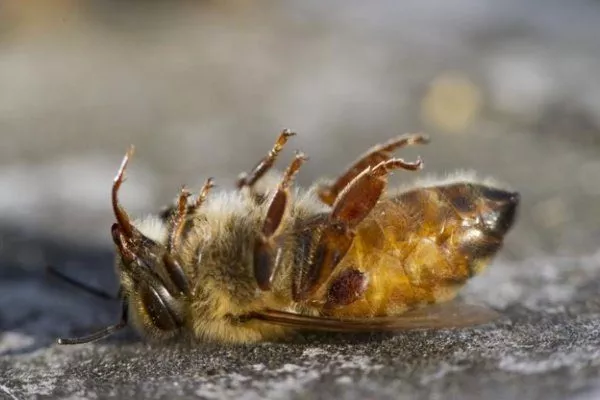
- on bee/drone corpses – 3-5 days;
- on pupae – 7-11 days;
- in wax-perga crumbs – 9 days;
- on honey plant flowers – 1.5-5 days;
- in sealed brood - 30 days;
- in open brood – 15 days.
Females can starve at temperatures of 22-25°C for up to 5-6 days. At low outside temperatures or in the presence of harmful substances in the air, the mite stops breathing and retreats into the honeycomb, making control measures more difficult.
Typically, up to 5 mites attach to a worker bee, 7-8 females to drones, and 12 and 20 to worker and drone pupae, respectively. Location of parasite localization:
- between the first and second abdominal segments;
- between the thoracic segments;
- in the joints of the chest and head, chest and abdomen.
Unchecked varroa reproduction leads to the death of a bee colony within 2-5 years. The more mites in a hive, the sooner the colony dies.
The parasite develops well in weak families and old dark brown combs.
Methods of infection
Varroa jacobsoni causes a severe invasive disease of larvae, pupae and adult bees called varroatosisThis disease is one of the most pressing problems in beekeeping and causes colossal damage.
In the summer, the mite spreads from sick bees to healthy ones through:
- wandering bees;
- robber bees;
- during migrations of apiaries;
- families standing on the flight of bees;
- with swarms;
- when buying and selling bees and queens;
- when introducing infected brood into families;
- when bees come into contact with plant flowers;
- for all work involving the transfer of honeycombs from one family to another;
- from other insects (bumblebees, wasps);
- when storing cut drone brood in the open air.
Varroatosis spreads at a rate of 6-11 km over three months, depending on the bee population in the region. Drone colonies are the first to be affected.
The spread and increase in numbers of the pest is significantly higher in areas with hot climates.
In addition to varroa, varroa is dangerous because it can transmit pathogens that cause infectious bee diseases (American foulbrood, nosema, paratyphoid, etc.). Mixed diseases accelerate the progression of the disease and lead to massive bee mortality.
Signs of infection
The disease progresses unnoticed for the first two years. Then, a large number of mites appear (especially in summer), infecting up to 30% of bees. Bees and drones develop characteristic defects:
- absence or incomplete development of legs and wings;
- body deformation;
- The brood is distinguished by its variegated coloring.
Other signs:
- Bee losses increase sharply, primarily in October and November. During this period, infestations increase severalfold.
- In the autumn and winter, bees become exhausted more quickly, resulting in families dying or emerging from hibernation very weakened.
- During wintering, bees behave very restlessly - they make noise and jump out.
- The bottom of the hives is covered with dead bees, on which brown mites can be seen.
- With a high degree of varroatosis infection, the death of bee families begins in the first half of wintering.
- After the main honey harvest, heavily infested colonies abandon their hives upon returning from migration. Even ample food doesn't stop them.
Methods of control
To combat the mite, a comprehensive set of measures must be implemented, including general organizational, specific beekeeping, and veterinary measures. It is necessary to maintain, feed, and breed bees, as well as employ zootechnical methods for varroa control and systematically conduct anti-acaricidal treatments.
Pest control must be continued annually and in a comprehensive manner.
It's crucial to reduce mite numbers after the final honey extraction. This will allow the bees that hatch and will overwinter to survive with minimal infestation. This also reduces stress when feeding the bees. The next treatment will be most effective after the brood rearing process is complete (during winter). In the spring, drone brood removal is used to reduce pest numbers.
Conventionally, measures to combat these parasites can be divided into two groups.
Medicinal
When using chemicals, you should follow the basic recommendations:
- The use of chemicals before or during honey collection is prohibited. In many regions, spring treatments are risky, as honey collection often begins earlier than planned. As a result, chemical residues remain in the honey.
- Use only approved medications (failure to comply with this rule is punishable by quality control authorities and is determined by testing bee products for the presence of drug residues). For example, formic acid can only be used in the form of an Illert tablet, even though other forms are more effective and better tolerated by bees.
- Before use, it is imperative to carefully read the instructions.
- Any combs left in the hive during processing (except for formic acid treatment) cannot be used as honeycomb. They must be melted down as quickly as possible.
- During pumping, it is essential to separate wax particles (through a sieve or gauze) from the honey, as medications may get into it.
The day before each treatment, the hive is placed on a tray, using two options:
- through a hinged lid at the back, or a large entrance;
- lifting the lower body (the bees begin to worry).
However, the most suitable option is a mesh bottom with a tray underneath. While monitoring such a tray, the bees remain calm. It's important to avoid disturbing the bees at all times before treatment.
Chemicals are used to kill or severely damage the mites. The medications evaporate in the hive, are fed to the bees, and are absorbed through their bloodstream. The medication can also be released through contact with the bees (via the strips they crawl on).
Let's look at some of the acceptable medications.
1Pericin
This medication acts through the blood and targets parasites not in the brood, but directly on the bees. It should be used exclusively during the broodless winter period (twice, a week apart, unless combined with other medications). It can be used at 0°C or slightly below freezing.
Pericin is fat-soluble, so its particles remain in wax and honey.
Consumption:
- for a family in two buildings – 25-30 ml of emulsion;
- in one case (or division) – 20 ml.
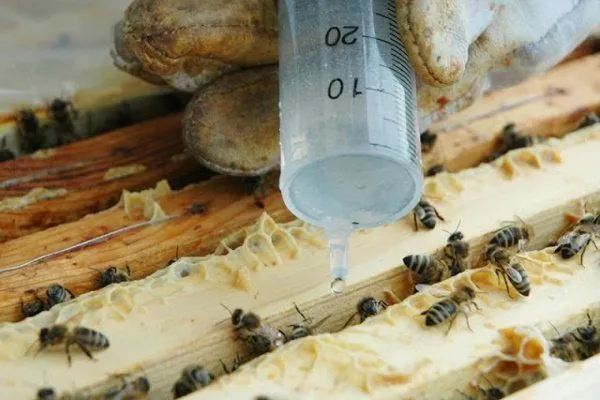
The amount depends on the colony size, but the recommended dosage of 50 ml is often too much. Bees can be treated with pericin solution using either a special dosing kit or a disposable syringe.
2Apitol
This drug is water-soluble and easily penetrates honey, so it should be used with caution.
It is strictly forbidden to combine apitol with food or use it during feeding.
This treatment is recommended when ticks have developed resistance to previously used treatments. Treatment is performed at low temperatures during the breeding season. Apitol is sold as a powder that must be dissolved in a large amount of liquid.
3Formic acid on Illert tiles
The method is based on the evaporation of formic acid from the surface of the tile, which then penetrates the mites with the incoming air, thereby affecting them externally. The product should be applied in the evening with the hive entrance open, at an air temperature of 12 to 20°C.
The use of the drug during honey collection is prohibited.
If you do not combine this method with others, the frequency of treatment will be 3-4 times with breaks of a couple of weeks.
Before treating with formic acid, remove the wax bridges from the top bars of the frames. Then, smoke the combs to expose the queen. In single-body hives, place one tile per frame; in double-body hives, place two. Then close the hive. If the tiles are too thick, place an empty super on top.
A negative effect may occur – there is a risk of losing the uterus.
When working with Illert tiles and formic acid, be sure to wear waterproof gloves and safety glasses.
4Cecafix
The application of this agent is similar to that of pericin. However, cecafix has the advantage of being better tolerated by bees.
5Bayvarol
- ✓ Ensure that Bayvarol strips are evenly distributed throughout the hive to ensure maximum contact with the bees.
- ✓ Check the hive for bees that may be trapped by the strips to prevent them from dying.
The product consists of special strips that are suspended along the perimeter of the central aisle between the honeycombs (four strips per colony in double-hull hives). The bees are exposed to the strips through close contact. The manufacturer recommends leaving Bayvarol in place for six weeks; however, this may lead to excessive concentrations of the medication in the wax. Therefore, the optimal time for leaving the strips in the hives is three weeks.
Gloves should be worn when handling. Proper disposal of Bayvarol is essential; disposing of the strips in trash or waterways is prohibited.
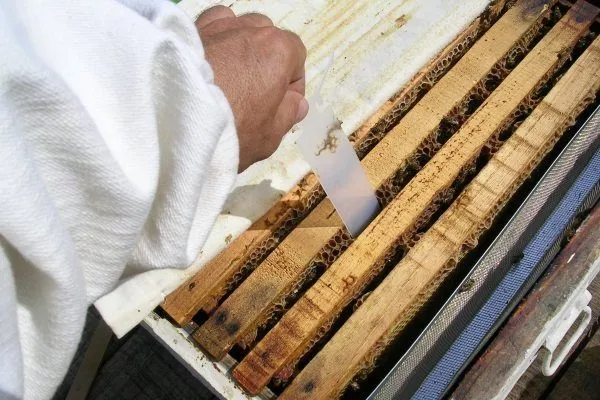
Biotechnical
The essence of these methods is that the beekeeper interferes with the course of their biological development in order to destroy mites. These include:
- Removing drone brood – Certain combs containing capped brood (drone brood), where female mites lay eggs, are destroyed. Drone brood is typically frozen for this purpose. This method should be started in late March or early April.
- Destroying the honeycomb trap With the queen trapped inside. The queen is placed three times, one at a time, on empty comb in a frame cage for 10 days. This allows the queen to lay eggs inside the cage. Within 10 days, no open brood remains outside the cage containing the queen, and the mites migrate to the open brood in the trap comb to reproduce. This brood is destroyed (frozen).
- Heat treatment Trapped combs or all combs containing brood are heated to a temperature harmful to mites but acceptable for bees. This method is effective but labor-intensive.
Medicinal and biotechnical control methods can be successfully used in combination. Their combination will help keep tick numbers at a harmless level and compensate for the shortcomings of individual methods. Moreover:
- the number of medications used is reduced;
- the content of chemical residues in wax and honey is reduced;
- the number of ticks is reduced to an acceptable level.
Each beekeeper should develop their own pest control strategy, which will depend on the design of their hives, beekeeping technology, climate, and food supply.
Preventive measures
To reduce the damage caused by the Varroa mite, various preventative measures should be taken:
- Acquired colonies and captured swarms require at least one treatment (for example, a swarm with pericin, and the rest with formic acid). The number of parasites on the tray determines whether further treatment is necessary.
- Regular inspections of the tray and drone brood for parasites should be carried out.
- It is extremely important to coordinate varroa treatment with neighboring beekeeping farms to achieve good results and avoid re-infestation.
- Use control methods regularly, do not miss the periods most suitable for their implementation.
- Regular cleaning and disinfection are essential. Following basic hygiene rules will help prevent the spread of mixed diseases.
- It is necessary to re-melt the honeycombs in a timely manner.
The video explains in detail the characteristics of the Varroa mite, analysis of mite infestations on larvae and adult bees, treatment methods, medications for pest control, and the timing of their use.
Varroa mites are dangerous pests that cause a fatal disease that can cause serious complications in apiaries. However, today, there are numerous ways to combat these parasites and prevent their occurrence and spread.
Hello, Natalia!
This is a beekeeper and blogger writing to you. This is the first time I've seen such a great article with pictures and text that I'm amazed by.
I just don't understand why there aren't any comments asking questions or discussing the topic. After all, communication is a great way to gain experience, and it also promotes the article, increasing traffic.
The blogger's income increases.
In my article "Preparing Your Apiary for Winter | Stage 2: Feeding Bee Colonies /29/," I linked to another article about nosematosis. However, your site piqued my interest. I registered, started browsing through the articles, and found you.
Natalia!
Thank you very much for the article.
Good luck.
07:53 09/25/2021
Sincerely, Vladimir Engovatov
P.S. If you wish, you can find me on the Internet.