
If a sow isn't nursing her piglets, this should be a warning sign, as a sow normally lies quietly, offering her teats to the piglets. There are many possible causes for this, ranging from physiological abnormalities to psychological issues.
Why doesn't the sow feed her newborn piglets?
The sow refuses to nurse her offspring in various ways—by rolling over onto her stomach or by displaying aggression, chasing away and biting the piglets. However she does this, it's important to determine the cause of this behavior. Otherwise, there's a risk of losing the litter.
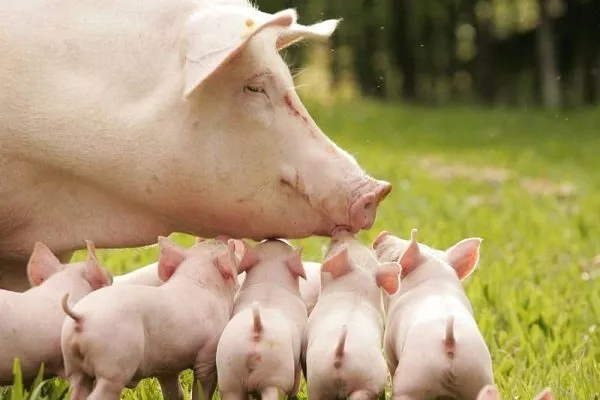
Lack of milk
A lack of milk causes the sow to allow her offspring to approach, but only for a very short time, after which she turns away or pushes them away. The following factors contribute to the disappearance of colostrum:
- Experienced stress. The pig must be kept in proper conditions - clean, comfortable, with sufficient water, not in a crowded area, etc.
Stressful situations also include fear, for example, when strangers enter the stall, loud music plays, she hears sharp sounds, etc. This not only makes the sow wary, but she fears for her babies. - Malnutrition. This is one of the most common causes, as diet affects the fullness of the mammary glands and the quality of the milk itself. Feed the sow specialized compound feeds and mixtures, vegetables, fruits, and clean water.
- Pathological disorders. These include conditions such as mastitis, postpartum uterine inflammation, and endocrine imbalance (commonly known as hypogalactia). These conditions can lead to a sharp decrease and even complete cessation of lactation.
To prevent these and other phenomena, follow the recommendations of experts:
- provide the pig with high-quality feed, water should be readily available;
- do not overload the digestive system - the first feeding after farrowing is done after 11-12 hours (in this case, the food should have the structure of a liquid mash);
- exactly 24 hours after giving birth, transfer the female to a full diet;
- If the litter is more than 12 individuals, and the female is slightly weakened, give her food with a high concentration of fats;
- If the sow hardly gets up, be sure to get her up three times a day, and 3 days after farrowing, organize outdoor walking;
- Avoid stressful situations and do not handle piglets too often.
Lack of teats with a large number of piglets
First-time sows typically give birth to around 7-8 babies, while older sows give birth to around 12. This is the number intended by nature itself, as the sow has the same number of nursing nipples.
Some breeds (most often Large Whites) produce significantly larger litters, so not all piglets get to nurse. They could, once full, make room for others, but there are always leaders in the herd who are known for their insatiable appetite. Weaker individuals are left without food.
In such cases there are three options:
- Control the feeding process yourself, adding those who haven’t eaten yet;
- Transfer any extra piglets to a sow that can nurse them;
- Transfer them to artificial feeding, for which cow's milk and other formulas are used.
Reduced maternal instincts
First-time sows have a lower maternal instinct. It's no surprise that she won't let the piglets approach her. To remedy this, bring the piglet to the sow's nipple while calming the sow.
If colostrum isn't being produced, milk the sow. When the babies begin to suckle, maternal instincts emerge.
There's a more serious cause: MMA (mastitis-metritis-agalactia). The disease is most common on large pig farms, but it can also occur on private farms.
Features of the syndrome:
- detected in 30-40% of sows;
- includes 3 diseases at the same time;
- consequences - decreased milk levels, lethargy of the female, loss of appetite, increased temperature, constipation and, most importantly, the absence of maternal instinct (even if it was present during the first farrowings);
- develops at least 12, maximum 48 hours after labor;
- manifests itself towards livestock by aggression or rolling over onto its stomach.
- ✓ Simultaneous presence of mastitis, metritis and agalactia.
- ✓ Development of symptoms within 12-48 hours after farrowing.
- ✓ Aggression or rolling over onto the stomach as the main behavioral signs.
Experts identify many causes of MMA, but the most common are the following:
- stress in the female due to complicated and prolonged labor, which caused a sharp increase in the amount of the hormone cortisol in the blood serum;
- excessive diet during pregnancy;
- lack of vitamins B12, K, selenium, fiber;
- lack of physical activity if the sows are not walked but kept in a stall;
- first farrowing;
- genetic predisposition;
- disorders in the endocrine system;
- bacterial infection – streptococcus, staphylococcus, Klebsiella spp, E. coli, Citrobacter spp, etc.
The last factor is considered the most dangerous and common. Bacteria are found everywhere, including in the bodies of healthy pigs, but they do not affect animals unless favorable conditions are created.
This includes failure to comply with sanitary and hygienic requirements during farrowing, stressful situations, and improper feeding, which significantly reduces immunity.
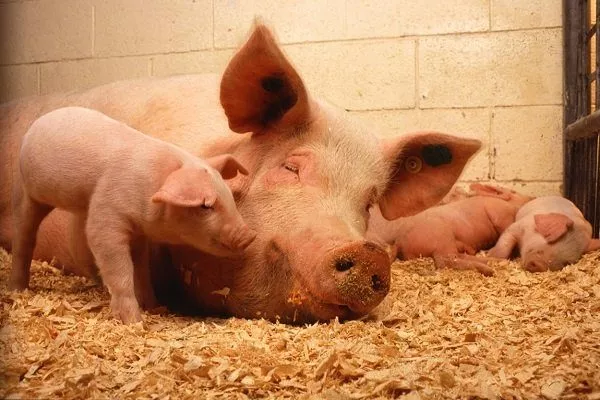
Postpartum depression with aggression towards offspring
Just like humans, animals also experience postpartum depression, especially in first-time mothers and those nearing the end of their reproductive years.
The danger in this case lies in the increased aggression of the female towards the piglets, which leads not only to refusal to feed, but also to cannibalism and the deliberate crushing of the piglets.
During postpartum depression, the sow does not lose the ability to breastfeed, but because this does not happen, she experiences pain in her nipples and perineum. Be sure to help her by wiping her with a soft towel soaked in warm water several times a day.
How and what to feed piglets?
When a sow is not nursing her litter and there are no other sows on the farm capable of providing milk for the piglets, the piglets must be nursed independently. This is especially important during the first three days after birth. Do not feed them cow's milk during this period. Use colostrum replacers.
On the first day
Before feeding day-old piglets, carefully review the sow's feeding instructions. First and foremost, the interval between feedings should be 30 minutes, but no more than 45 minutes.
If food is not given within 30 minutes, the babies will pounce on it, which leads to overeating and subsequent gastrointestinal upset.
How to feed yourself:
- Prepare a clean bowl and pour the colostrum replacer into it.
- Bring the piglet closer and wet your finger.
- Run it along the animal's palate, which will cause it to show a sucking instinct.
- Remove your finger from its mouth and place it back in the bowl. The baby should follow your finger with its snout. If it doesn't, gently lower its muzzle until it touches the food.
There are two main “dishes” used as a colostrum substitute.
Recipe #1:
- boiled water – 30 ml;
- granulated sugar – 2 g;
- raw chicken egg – 1 pc.;
- Biomycin drug – 1 g;
- 1% iron sulfate – 10 ml;
- aminopeptide – 2.5 g;
- vitamin complex – 1 ml (1 part vitamin D, 2 parts vitamin A).
Recipe #2:
- raw eggs – 4 pcs.;
- granulated sugar – 15 g;
- salt – 2 g;
- fish oil – 15 g.
Regardless of the recipe, mix the ingredients and heat the mixture in a double boiler to a temperature of 37 to 39°C. If there are too many heads and there's no time to teach them to eat from a bowl, use a baby bottle with a nipple.
Since these mixtures are very high in calories, it is permissible to give them every 90 minutes instead of 30. As a result, the number of meals is reduced to 16 times a day.
Other features:
- Dosage on the first day is 40-50 ml.
- Do not exceed the feed norm, as this will lead to overeating.
- Do not reuse the prepared mixture - if there is any left, pour it out.
- When preparing, first pour half the dose into the water, mix thoroughly, and then add the remainder. Otherwise, it will be difficult to create a lump-free solution.
- Be sure to measure the temperature of the mixture. If it's above 39-40°C, the piglet will burn itself; if it's below 39-40°C, it won't get enough.
- After each feeding, wash the dishes thoroughly. It's also a good idea to sterilize them to prevent infection.
In a week
Introduce complementary feeding 5-7 days after birth. This is how the piglets' bodies begin to adapt to the new food. This is a kind of preparation for the adult diet.
What to give:
- cow's milk;
- skim milk during distillation;
- extruded grain;
- bone meal;
- chalk;
- charcoal.
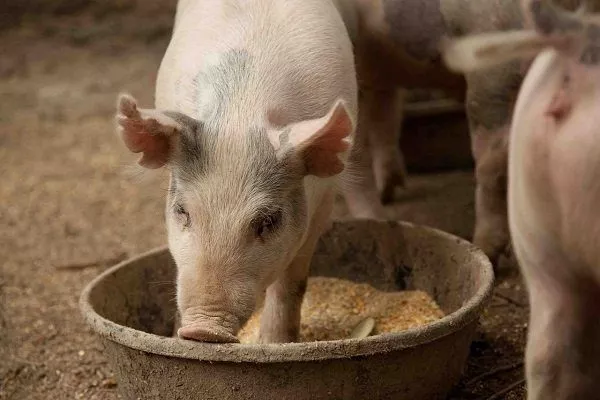
After 10 days, you can finely grate the beets, carrots, and pumpkin, and chop the silage. Raw vegetables are acceptable, but boiled vegetables are best. On the 13th day, green fodder is allowed.
If the farmer doesn't have time to prepare a balanced diet, buy a complete ready-made formula, such as Prestarter. If the piglets don't like the taste and refuse it, add 2-3 drops of fish oil to the feed.
When to transition piglets to adult food?
Based on pig breeding technology, there are 2 periods for transferring piglets to an adult diet:
- for commercial production – from 30 to 45 days;
- for the production of breeding pigs - about 60 days.
Early weaning promotes faster weight gain, but it has a negative impact on the sow, as she must produce milk for a certain period. If she doesn't nurse, there are no problems.
Rules for transferring piglets to adult food:
- Give 1 to 1.5 liters of fresh milk or yogurt per day;
- Reduce the dosage gradually - every 10 days reduce by 200 ml, and in the remaining ten days by the last 100 ml;
- Be sure to give up to 1.5 kg of green juicy grass;
- don't forget to walk the animals during the summer, thanks to which the piglets cope with stress (which occurs when changing food) much easier;
- the daily dosage of food concentrates is 0.8 kg, grass or hay flour – 0.2 kg;
- The norm for boiled potatoes is from 0.5 to 1 kg, carrots and beets – 0.3-0.4 kg.
Follow these requirements for 1-1.5 months, after which increase the dosage by 30% and reduce the frequency of feeding to 5 times a day.
Is it dangerous for a sow to refuse to feed her offspring?
Every newborn animal is in dire need of mother's milk, as only it can maximally saturate the body with nutrients and strengthen the immune system of fragile cubs.
It's 100% digestible, unlike any other food, no matter how high-quality. If piglets don't receive sow's milk, the following consequences can occur:
- low immunity, which increases the risk of infection and other diseases;
- iron deficiency, since the required amount of this microelement is not available in other types of milk, and this contributes to the development of anemia;
- blueing of animals due to lack of glucose;
- fatal outcome.
If a sow doesn't feed her piglets, the piglets experience a "maternal hunger," especially if her parenting instincts are weakened. Consequently, almost 25% of the piglets die, even when the farmer provides high-quality artificial feeding.
How does housing and care affect the behavior of the sow after farrowing?
If pigs are kept in unsanitary, uncomfortable conditions, they will not gain weight or produce high-quality meat. This is especially true for sows, as they are preparing to become mothers. It's important to pay attention to their feeding, as an improper diet will prevent them from producing milk.
Consequences of improper care and maintenance for the sow and piglets:
- infectious diseases develop, which contributes to the death of the female and offspring, miscarriages;
- diseases of the sow lead to the fact that the babies are born prematurely, sick, with defects, etc.;
- If the air temperature in the pigsty is below the thermometer reading of 17-20°C, the female spends too much energy on her own heating, while other processes in the body slow down, which also causes a miscarriage.
If a sow refuses to nurse her litter, immediately determine the cause to resolve the situation as quickly as possible. If necessary, contact a veterinarian for an examination—the sow may be ill. If you're introducing piglets to a new sow, wipe them down with the bedding provided in the new sow's pen.