
Pork lard is produced at home after slaughtering a pig using various methods. However, few people know the benefits of this unique product, as well as its negative characteristics, so it's important to understand this issue. Salting, marinating, and even smoking lard in various ways are all possible at home.
The benefits and harms of pork lard
From a functional perspective, lard is a nutritional reserve for any living organism. It contains numerous beneficial substances, including vitamins A, E, and D, retinol, carotene, and tocopherol. Its macro- and microelements include magnesium, selenium, manganese, calcium, phosphorus, sodium, zinc, iron, copper, and potassium.
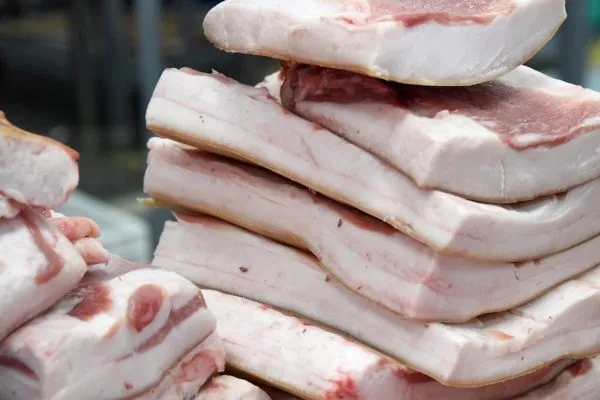
The basis of pork fat is made up of saturated fatty acids, that is, triglycerides (oleic, palmitic, arachidonic, linolenic and linoleic acids).
If we talk about nutritional value, lard contains:
- 1.4-2.9 g proteins;
- 5.5-7.7 g of water;
- 88-90 g fat;
- 0.6-0.7 g of ash;
- 0 g carbohydrates.
The calorie content depends on the form in which the product is consumed. For example, 100 grams of salted lard contains about 800 kcal, smoked lard contains approximately 900 kcal, and boiled lard contains only 500 kcal.
Thanks to its rich composition, pork fat also has a therapeutic effect on the body, which is why it is used for a variety of health problems. Its beneficial properties include:
- The acids they contain act as building blocks at the cellular level. They participate in hormone synthesis and metabolism, especially cholesterol metabolism. Triglycerides promote the elimination of toxic compounds from the body and strengthen the immune system.
Arachidonic acid is a beneficial omega-6 fatty acid, which has a beneficial effect on the heart muscle. Doctors recommend eating lard for those with heart disease. - The product contains selenium, which is quickly and easily absorbed and acts as a powerful antioxidant. Selenium is a major nutrient deficiency in the human body, and lard can compensate for this deficiency.
- The sebum product is able to cleanse blood vessels and remove not only toxins, but also heavy metals.
- It has a choleretic and lipid-releasing effect.
- Traditional medicine recommends using lard to treat joints—a cut slice can be applied to the affected area or bruise for several hours.
- If you have a toothache, apply lard to the gums, always salted. It relieves pain, reduces inflammation, and draws out pus.
- Since ancient times, lard has been used in cosmetology – for making creams, hair masks, eyebrow and eyelash masks, and winter lipstick.
- Lard regenerates damaged tissues and cells; it is commonly consumed after fractures and even major surgeries.
- Athletes eat lard to build muscle mass.
Many people believe that lard is a food that quickly increases body weight. On the one hand, this is true, as it's high in calories. But if consumed in moderation, it won't harm your figure. And when combined with exercise, it can help build muscle mass.
Lard also acts as butter during large feasts—eat 2-3 slices before drinking alcohol. The coating in the stomach prevents the alcohol from being absorbed, preventing intoxication. Furthermore, alcohol combined with fat is absorbed in the intestines, and is eliminated more quickly.
What parts of the carcass are used for lard?
Fat is found in almost all parts of the pig, but in each zone it differs in structure and other characteristics:
- Back. The back fat has a uniform consistency and is never layered with meat. It is divided into two subtypes: shoulder fat, where the edges of the fat are tapered and the fat itself is somewhat tough, and loin fat, with a thick layer of fat that becomes very soft and tender after salting. The first type is best smoked or boiled, while the second is considered universal.
- Sidewalls. This is where the fat is unevenly distributed, with a thin layer of meat that is light in color. The fat on the sides can be salted without control—it doesn't absorb excess salt.
- Cheeks. The cheeks contain a slightly shiny, uneven layer of lard. It consists of three layers: lower fat, a thin layer of meat, and upper fat. It's best to use a wet salting method; don't add too much salt, otherwise the meat and fat will become tough, oversalted, and not very tasty. The skin is very thick.
- Neck. The pork here is tender, the fat is somewhat tough, and the rind is thick. It's not recommended to salt this product. To soften the dense texture, you can hot smoke it or boil it. Keep in mind that raw neck fat is very difficult to cut.
- Lumbar region. Also known as gammon or ham, the bacon is very soft and tender, slightly loose and spongy on the back, and slightly stretchy when bitten. It may contain several layers of meat, but the top is always flaky. Suitable for any type of curing.
- Abdominal part. Another name for this cut is "podcherevok." The fat is multilayered—thin bacon and thick, meaty layers with a dark red hue. Due to the large amount of meat, the salt content should be reduced by 10-15% compared to the recipe. This cut is used to make bacon, prosciutto, and similar items.
- Trim. This fat is considered third-grade because it is trimmed from all parts of the carcass. It's not ideal for salting, as the pieces have different textures.
There's also internal fat, but it's not considered lard, as it's used to render pork fat (the result is lard). Despite this, many experts salt it, too.
How to trim fat from a carcass correctly?
Regardless of whether the pig is a lard or meat breed, the fat must be trimmed properly after slaughter. If the animal is raised for lard production, it must be fattened according to a special fattening schedule, which allows the fat layer to reach 10 cm or more.
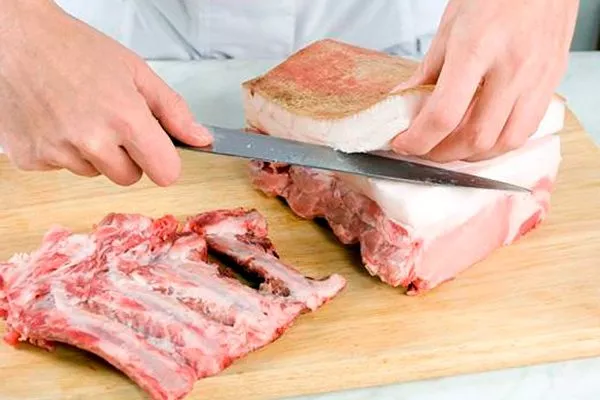
If you want to extract meat, trim off the fat with a sharp knife after cutting the carcass into 6 or more pieces. To remove the fat, proceed as follows:
- Clean the carcass of its entrails.
- Send her to “rest” in a cool place.
- After 40-45 minutes, cut the carcass into two parts along the spine.
- Cut off the tenderloin immediately.
- Using an axe, cut each half carcass into 3 parts - back, middle and front.
- Using a sharp knife, trim the fat from each piece. Hold the fat with the skin on with one hand and trim it from the meat with the other.
Storing fresh lard
Fresh lard shouldn't be stored at room temperature, as it begins to spoil within 5-6 hours, and even sooner if it's very hot. When refrigerated, its shelf life is 3 to 5 days, so the best options are salting, boiling, smoking, or freezing. Freezing can keep the product for up to 4 months.
When freezing, follow these rules:
- You can freeze it in one large piece or in a cut-up form – into portions;
- pre-rinse the lard and dry it thoroughly with a towel;
- Wrap each piece in a plastic bag, cling film, or parchment paper.
What kind of lard is suitable for salting and smoking?
While we already know which parts of pork fat are suitable for curing and smoking, there are other criteria for choosing lard for these purposes. Consider the following:
- Floor. Choose sow over boar, especially if it's uncastrated (the fat will have an unpleasant aroma and flavor). Sow fat and meat are always more tender and soft. To determine whose fat it is, smell it—a boar's lard will have a urea flavor.
It also happens that when you sniff it normally you can’t smell it, so lightly burn it – the aroma will definitely appear. - Taste and softness. To do this, try a thin slice. The flavor should be pleasant, and the texture should be tender (easy to chew). If you don't want to try it, you can simply pierce the bacon with a wooden skewer or knife.
Another way to check for hardness is to run your fingernail across the surface. If only a small amount comes off, the lard is tough and therefore unsuitable for pickling. - Crust hardness. To understand whether the skin is soft or too hard, just feel it.
- Quality and freshness to the touch. You can judge the quality of lard by feeling it. It shouldn't stick, but it should be greasy. Another indicator is that it should be slightly moist, but not slippery.
- Thickness. For salting, it's best to buy thicker lard—it's tastier and more tender than thinner. The same goes for the skin.
- Color. Avoid buying lard with a yellowish or reddish tint. If it's yellowish or reddish, it's starting to spoil, and if it's reddish, the pig was slaughtered during mating season or improperly (not allowed to bleed). Lard should be white or slightly pink.
- Bristle. If you plan to eat lard with the skin on, choose bristle-free varieties for salting and smoking. Sometimes the hairs are invisible, but you can easily check for them: run your finger (preferably your fingernail) across the skin in the opposite direction of the bristles – you'll feel them.
- ✓ Check for the unpleasant odor typical of uncastrated boars by lightly burning a piece of fat.
- ✓ Assess the softness of the lard by piercing it with a wooden stick or knife – it should give in easily.
Types of salting
To ensure that salted or smoked lard tastes good, it's important to properly salt it (even before smoking). There are many methods, but among all the recipes, only two types stand out: dry and wet. Regardless of the method, periodically rotate the pieces to ensure even salting.
The salt should be of medium grind, as too coarse salt is poorly absorbed into the bacon, and too fine salt forms a crust on the surface.
A simple method of dry salting
This is the most common dry-curing method. It requires only salt. The optimal ratio is 100 g of No. 2 salt (ground) per 1 kg of lard. Ground black pepper is the only acceptable ingredient.
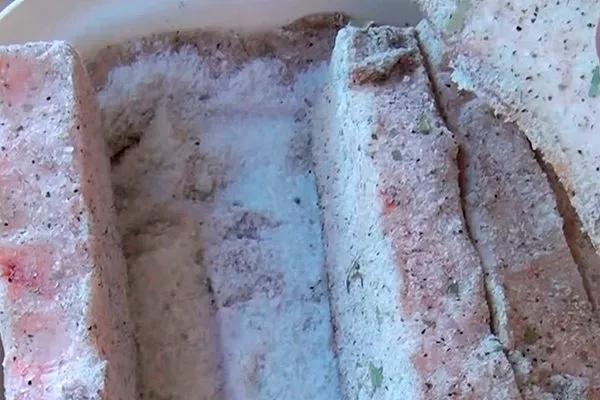
Salting rules:
- Place salt in a container in a layer of about 5 mm.
- Cut the lard. There are two ways to do this:
- cut pieces to the required size;
- Make cuts on the large pieces down to the skin.
- Place salt in another bowl. Roll the pieces of lard in it on all sides. For faster salting, rub the salt in with your hands.
- Place pieces of lard in a container with salt at the bottom.
- Sprinkle generously with salt on top.
The lard can be left as is or weighted down. If the lard is being salted for eating, it can be kept in the salt for up to 10 days; if it's being smoked, it can be kept in the salt for no more than three days.
Dry salting with spices
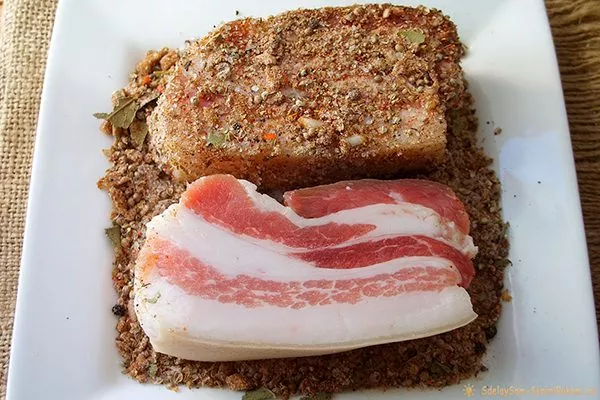
If you love a flavorful, lard-based product, use spices. The salting principle is identical to the previous method, but you need to add seasonings to the salt. The amount you add depends on your taste and preferences. Spices you can add include bay leaves, paprika, coriander, cloves, various peppers (including red hot), and garlic.
Pork in brine
A simple wet method involves using brine. For 1 kg of lard, you'll need:
- 10 g citric acid;
- 1 liter of water;
- 100 g salt;
- 5-7 black peppercorns and 3-4 allspice;
- 2-3 pcs. bay leaf.
How to cook – step-by-step instructions:
- Bring the water to a boil.
- Pour in all ingredients.
- Bring the brine to a cool state.
- Pour in the lard cut into pieces.
The salting time is 7 to 10 days. The smoked lard will be juicy.
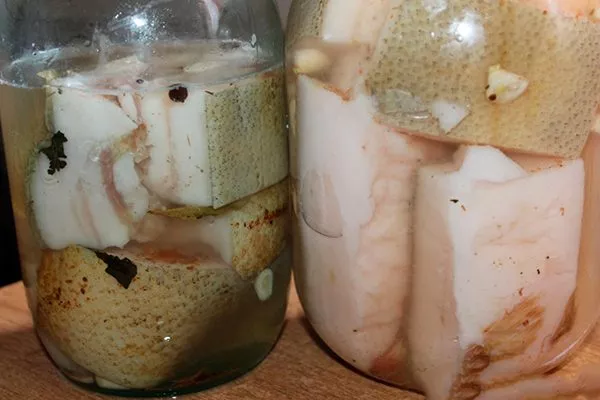
Pork in brine
Brine is a marinade made with a generous amount of salt. In many countries, brine is prepared naturally, by sprinkling lard with salt (or perhaps spices), placing a very heavy weight on it, and then removing it when the brine separates.
But most often, brine is prepared artificially. For it, you'll need:
- 1 kg of lard;
- 200-250 g of salt;
- 1 liter of water;
- spices and seasonings to taste.
How to pickle:
- Boil water and add salt and spices.
- Cool to room temperature.
- Drop a raw egg into the marinade to test its strength. It will float in a good brine.
- Place the lard in a container and cover with brine.

You can smoke it after a couple of weeks; the lard will be slightly salty. Experts recommend placing sliced garlic between the pieces of lard.
Combined ambassador
With the mixed method, simple dry salting is first used, but with the obligatory application of oppression.
Next, do this:
- Place the container with the weight in the refrigerator for 4 days.
- Prepare a classic brine.
- Pour it over the lard without removing the dry salt beforehand.
- Place in the refrigerator for two weeks.
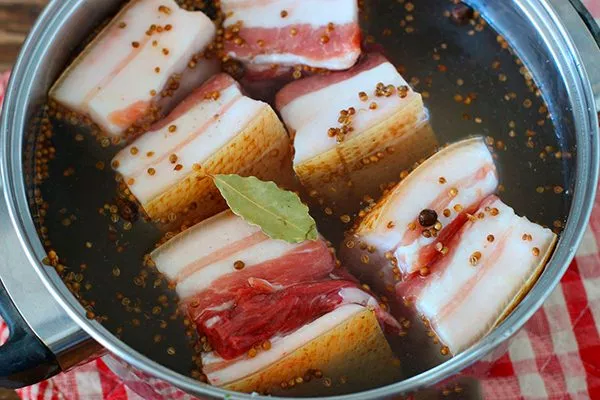
Warm Ambassador
The warm marinade method involves using hot brine, which reduces the preparation time of the salted lard. It can also be used for further smoking.
What you will need:
- 1 kg of lard;
- 1 liter of water;
- 50 g salt;
- 10 g sugar;
- 6-7 black peppercorns, 3-4 allspice;
- 6-7 cloves of garlic;
- bay leaf and other ingredients to taste.
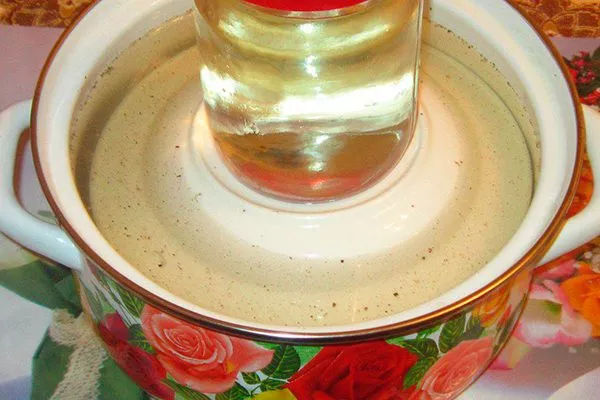
Cooking instructions:
- Cut the lard into portions.
- Place it in a bowl, layering each layer with garlic.
- Cook the marinade.
- Pour boiling brine over the lard.
- Place some weight on top.
- Leave for 4 hours to cool at room temperature.
- Place the container in the refrigerator.
The bacon will be ready in 3 days.
Salting with onion peels
This technique is also considered fast; the lard turns out very soft because it's boiled thoroughly. The color will resemble smoked (the onion skins release pigments).
What to prepare:
- 1 kg of lard;
- 1 liter of water;
- 50 g salt;
- 100-150 g of onion peel;
- 2 bay leaves;
- 5-6 peppercorns;
- 5 cloves of garlic.

Step-by-step cooking process:
- Place the water on the fire and bring to a boil.
- Pour in all the ingredients, but place the husks at the bottom and the lard on top.
- Simmer for 20-40 minutes, depending on the hardness of the bacon.
- After turning off the stove, leave the lard in the “broth” until it cools completely.
- Remove from the pan and place the bacon in a colander to drain all the water.
- Place in the refrigerator for 24 hours.
An unusual, quick way to pickle
Another quick salting method involves boiling the lard, but in water rather than brine. The ingredients are the same as for warm salting, but use ground peppercorns instead of whole peppercorns. The garlic and bay leaf are also finely chopped.
How to cook:
- Mix all ingredients.
- Rub the lard with the mixture on all sides.
- Place several pieces at a time in a thick plastic bag – 4-5 pieces are ideal. Seal tightly.
- Boil the water.
- Place the bags of lard in boiling water.
- Cook for at least 1 hour.
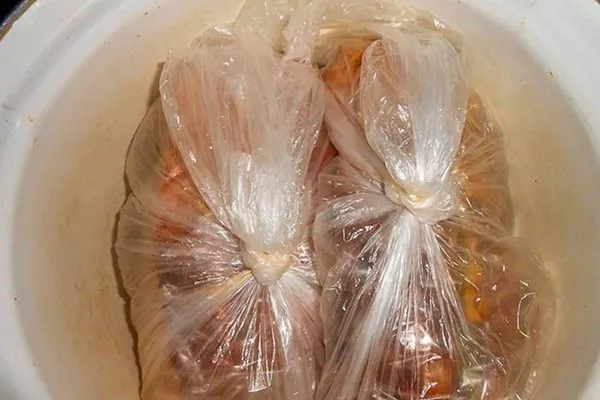
Experts recommend using two bags at once, which ensures strength and reliability. You can smoke the lard after it has cooled. However, it's best to refrigerate it for a day.
Smoking lard at home for sale
Many people prefer smoked lard not only for its piquant aroma and flavor, but also because smoking destroys all pathogenic microorganisms, especially with the hot method. You can smoke lard yourself to achieve both delicious and beautiful results. For this, use salted bacon, either wet or dry cured.
Features of smoking
A special smokehouse is used for smoking lard, but if you don't have one, you can use improvised materials. Please note the following:
- What kind of utensils do you need? The container should be made of wood (oak, beech, aspen), but you can also use metal – it must be something that does not oxidize or rust.
- What kind of wood is used for smoking lard? For exceptional flavor and aroma, use aspen, alder, or ash. Fruit trees (cherry, pear, apple) are even better. Avoid birch, pine, spruce, thuja, juniper, and similar trees, as the lard will be tasteless, slightly bitter, and unsightly.
- Preparing lard for smoking. For smoking, it is important to use salted and dried lard - so that it contains a minimum of moisture.
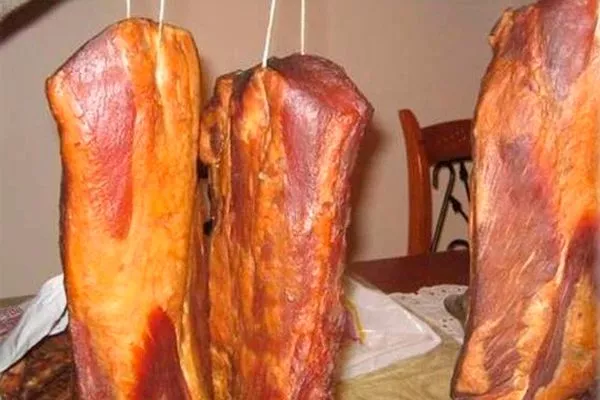
Cold smoked lard
This technology uses cold smoke (maximum temperature of 25 degrees Celsius). Smoking time is 72 continuous hours, assuming the pieces are not very large. However, the larger the pieces, the longer the smoking process.
Advantages of cold smoking:
- longer storage compared to the hot method (about 2 months);
- the lard will be fatty because the fat is not rendered;
- The woody aroma is especially noticeable.
Flaws:
- You can’t use hard lard – only tender and soft;
- smoking duration.
The smoking principle is as follows:
- Place the lard on the smoker grate or hang it (depending on the model).
- Close the device.
- Light a fire with sawdust or firewood.
- Set the temperature to 25 degrees.
- Connect the smoke through the hose.
- Leave for 2-3 days.
- Check for hardness.
- ✓ Cold smoked lard is ready when its surface becomes dry and acquires an even color.
- ✓ Hot smoked lard is ready when it can be easily pierced with a knife and has an appetizing golden hue.
Hot smoked lard
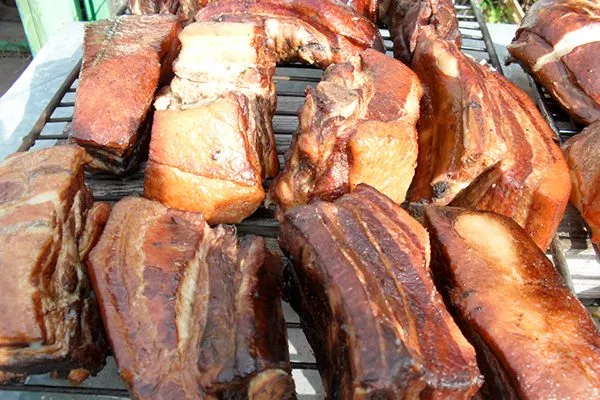
Hot smoking involves the introduction of hot smoke. Smoking time is minimal—from 1 hour to 48 hours, depending on the temperature of the smoke introduced. For example, at 40-50 degrees Celsius (104-122 degrees Fahrenheit), smoking will take 1-2 days, while at 60 degrees Celsius (140 degrees Fahrenheit), smoking will take only 1-2 hours.
Advantages:
- the structure turns out to be very soft (like boiled lard);
- You can smoke without pre-salting, but to improve the quality of the salting it is better to do this;
- all pathogens are completely destroyed;
- smoking speed;
- You can even use hard lard.
Flaws:
- the bacon turns out to be lean;
- Long-term storage is prohibited – only 5-7 days in the refrigerator.
How to hot smoke at 60 degrees:
- Place firewood or sawdust with leaves into the smokehouse.
- Spread the lard inside the device.
- Light the fire and set the desired temperature.
- After 30 minutes, remove the lard and check for doneness.
- If it hasn't smoked enough yet, put it back in the smoker, but keep in mind that the next time you can open the door no sooner than 20 minutes later.
While opening the smokehouse at any time is permitted during cold smoking, it is prohibited during hot smoking because the interior of the device will cool quickly, and the lard must always be hot. Other considerations:
- Hang the bacon so that not a single piece falls off, as the product becomes too soft under the influence of hot smoke;
- do not allow the temperature to exceed;
- Install drip trays as the fat will drain.
How to smoke lard without a special device?
If you don't have access to a smokehouse, you can prepare smoked lard like this:
- in a saucepan or cauldron - foil is placed on the bottom, sawdust and a grate on top, the container is placed on the stove or fire;
- in the oven - you must not forget to place a drip tray underneath;
- in a multicooker - the method is identical to a cauldron;
- using liquid smoke – the lard is boiled, baked or marinated in it.
Pork lard isn't as unhealthy as many people mistakenly believe. It's not only safe, but also recommended to eat. The key is to not overdo it with portions. Lard can be easily salted at home using a variety of methods, and if desired, it can even be smoked. Both cold and hot smoking are used for this purpose.