
An extruder or pelletizer is a good choice for both a growing agricultural farm and a business producing feed, granulated fertilizers, or other similar products for sale. This equipment is not intended for personal farming, but for farmers, a feed extruder pelletizer is a good investment with a long-term perspective.
Operating principle of extruders and granulators
Extrusion is the process of converting a plastic mass by forcing it through a special mold. Extrusion transforms the raw material into a finished product with specified characteristics (shape, length, thickness, etc.). Extruders can handle a variety of materials, including metals, plastics, and food products.
The extruder's operating principle is based on two main processes: plastic deformation and extrusion. Raw material is fed into the extruder, where it is heated to a plastic state, making it soft and formable. Then, under the action of a screw (a rotating auger), the material is extruded through the extrusion head. At this point, the material is formed according to the geometry of the head. After exiting the extruder, the material cools and hardens, acquiring its final shape.
A granulator is a device that presses (compacts) crushed and prepared raw materials, giving them the shape of granules (pellets).
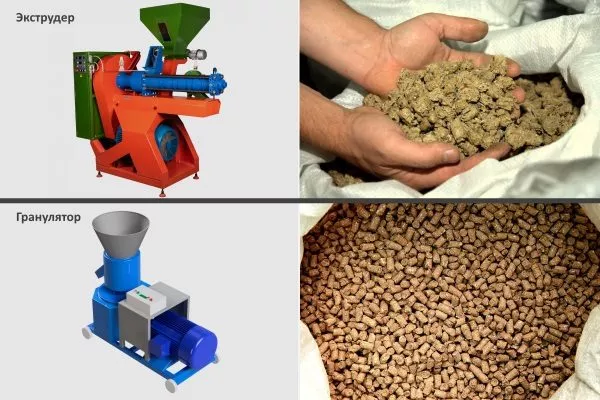
What is the difference between an extruder and a granulator? The extruder can be loaded with grain, soy, or other raw materials, producing easily digestible and sterile feed in the form of corn sticks. The pelletizer requires pre-prepared raw materials (crushed, cleaned, and moistened) to produce a dense pelleted feed that is more economical to consume (animals become full faster, while consuming less). In both cases, the feed is ready to eat and has a long shelf life.
Where and when is this equipment used?
Extruders are used in a wide range of industries. They are widely used in the food industry for the production of frozen foods and snacks, as well as in agriculture for the production of animal feed.
Granulators are used not only in agriculture for the production of compound feed, but also in various industries, for example, for the production of iron ore pellets and fuel pellets from crushed wood.
- ✓ Consider the production volume: for small farms, a household crusher is sufficient, for large farms, an extruder or granulator.
- ✓ Pay attention to the type of raw material: extruders are suitable for raw materials without pre-treatment, granulators require crushed and moistened raw materials.
Pros and cons of an extruder and a granulator
Extruders have a number of advantages:
- It is possible to add grain and other raw materials without prior processing (and it is not a problem if they are rotten or contain weeds), which saves the farmer time and resources.
- Thanks to the technology of processing raw materials with high temperature and pressure, the feed is easily digestible and safe for consumption (animals grow healthier and are less likely to get sick).
- The food smells good and is eaten with pleasure by animals, and it does not need to be pre-soaked.
The main disadvantage of the extruder is that the cost of this device is high, so it is suitable only for large livestock farms and feed producers.
Advantages of granulators:
- Granulated food takes up less space, but its nutritional value is quite high.
- Before pressing, vitamins, medications and other additives can be added to the raw materials (they are better preserved in granulated feed).
- It is possible to granulate not only grain mixtures, but also grasses, pine needles, straw, sawdust, manure, etc.
A significant disadvantage of the granulator is that it requires only pre-prepared, mixed and crushed raw materials to be fed in (therefore, you will have to purchase additional equipment).
Feed extruder-pelletizer
A feed extruder-pelletizer combines these two devices. It converts raw feed into pellets, improving their nutritional value and digestibility. This type of extruder is widely used in livestock and poultry farming, producing high-quality, balanced feed for various livestock and poultry species.
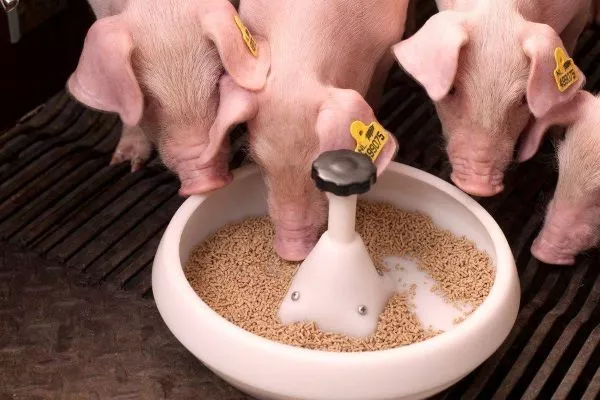
A feed extruder-pelletizer operates by feeding raw feed into a screw drum, where it is mixed, ground, and heated. The processed feed is then extruded through special dies, forming pellets of the desired size.
Whether it's better to buy an extruder-granulator like this or a separate piece of equipment... or simply a crusher—it's up to each individual to decide. However, it's worth considering that prices for store-bought feed are rising year after year, and not all manufacturers can boast high product quality. Extruders and granulators, on the other hand, allow farmers to prepare nutritious feed themselves, thereby optimizing costs and increasing animal feeding efficiency.