
In the wild, sheep's diet consists primarily of roughage. However, during the winter, farmers face the challenge of feeding their sheep in penned conditions. Maintaining adequate feed standards and caloric intake is also crucial. Read more about how and what to feed sheep at home.
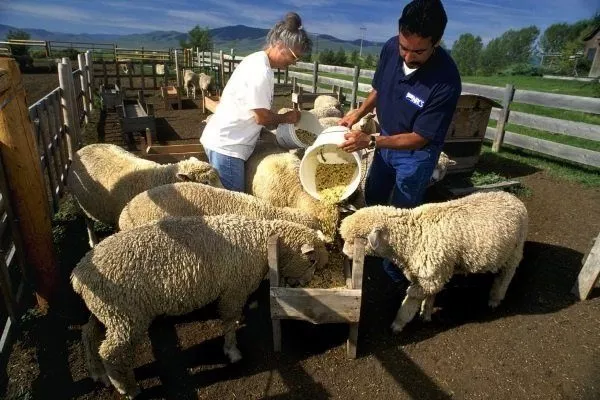
Composition of the sheep diet
Since sheep are herbivores, their diet consists primarily of plant foods. However, to ensure healthy growth and proper development, various supplements are added to their feed, as well as fortified with vitamin and mineral complexes.
- ✓ The optimal moisture content of silage for sheep should be 60-65% to avoid acidification and ensure good palatability.
- ✓ To prevent rumen tympany in sheep after grazing on dewy grass, it is necessary to keep the animals on a fasting diet for at least 2 hours before grazing.
Succulent plant foods
| Name | Growing season | Productivity | Disease resistance |
|---|---|---|---|
| Clover | Perennial | High | High |
| Plantain | Perennial | Average | High |
| Dandelions | Perennial | Low | Average |
| Nettle | Perennial | High | High |
| Couch grass | Perennial | High | High |
In summer, succulent feeds make up to 85% of the total forage volume. This includes green grass and silage. Animals eat green grass in pastures. The most nutritious vegetation is considered to be:
- clover;
- plantain;
- dandelions;
- nettle;
- couch grass;
- other meadow grasses.
Sometimes sheep eat various thorns. Don't disturb them, as even weeds are beneficial for their health.
An exception is grasses wet with dew. While these are palatable to sheep, they are still harmful. Eating such greens can lead to rumen bloat (the largest part of the stomach), known as tympany, and requires veterinary attention. While not contagious, it often leads to death due to rapid rumen bloat and gas formation. For this same reason, sheep are not allowed to graze after rain.
Before sending animals to graze in a meadow, be sure to check that it is free of poisonous plants. The following plants pose a danger to sheep:
- datura;
- hemlock;
- hellebore;
- henbane;
- celandine;
- lily of the valley and others.
It's good if trees grow in the pasture. This will diversify the sheep's diet with young shoots and twigs. Wood also contains a large amount of nutrients, minerals, and vitamins. This has a positive effect on weight gain and the quality of the sheep's wool. Therefore, if grazing near a forest is not possible, it's a good idea to stock up on branches in advance.
Sheep are given shoots of the following garden and wild shrubs and trees:
- apple trees;
- cherries;
- pears;
- aspen;
- honeysuckle;
- birches;
- ash;
- hazelnut;
- poplars;
- willows and others.
Branch feed is collected in July. Branches are cut to lengths of 50-60 cm and up to 1 cm thick at the base. They are tied into bundles, hung under a ventilated shelter that protects the bundles from rain and sun, and dried for 10-15 days. The brooms are stored in a dark, dry place.
- Select branches up to 1 cm thick and 50-60 cm long from the recommended tree species.
- Tie the branches into bundles no more than 25 cm in diameter for uniform drying.
- Hang the bunches under a well-ventilated canopy, protecting them from direct sunlight and rain.
- Dry for 10-15 days until the leaves are completely dry.
- Store brooms in a dry, dark place with good ventilation.
By mid-summer, the nutritional value of greens begins to decline, so it is necessary to begin introducing additional feed.
In the video below, the breeder talks about feeding his sheep:
Silage
Silage is a cheap, nutritious, succulent feed for farm animals, which is prepared by fermenting the green parts of various plants.
For sheep, it consists of several components:
- forage crops - corn, sunflower;
- vegetable garden waste — carrot and beet tops, cabbage and lettuce leaves;
- sown herbs - vetch, alfalfa, lupine, Jerusalem artichoke, clover, fescue and others.
The grass is placed in trenches or holes, compacted with mashers, and covered with plastic film. Adult animals are fed the silage at a rate of 3-4 kg per day.
Fermentation produces large amounts of acetic and butyric acids in the feed, giving it a rather sour taste that sheep don't like. To prevent this souring, you can:
- First, the moisture content of the green parts of the plants is reduced to 60% by wilting;
- Chopped straw is added to silage, but in doing so, the straw absorbs plant sap, which is released and usually lost during ensiling.
Potato tubers, crushed into a pulp, are also added to the silage. This speeds up the ensiling process and makes the feed more nutritious.
Roughage
This type of feed is given to the herd in the spring, fall, and winter. Dried succulent feeds such as straw, hay, and silage are added to the diet.
Straw
A sheep should be fed no more than 2.5 kg of straw per day. Although it provides virtually no nutritional benefit to the animal, it quickly satisfies hunger and increases the nutritional value of the food. Due to prolonged cold weather in winter, it is a must-have. It is prepared from the following crops:
- wheat;
- oats;
- alfalfa;
- barley;
- millet.
Spring straw is considered the most beneficial—it's richer in nutrients than winter straw. Straw is not recommended for young animals or breeders. Sheep prefer steamed straw with the addition of chopped root vegetables, pulp, and concentrates.
Hay
Harvesting begins in the summer, when plants have accumulated the most nutrients. It is harvested at a rate of up to 3 kg per head per day. Meadow hay, consisting of a variety of grasses such as clover, sweet clover, alfalfa, vetch, brome grass, wheatgrass, and others, is considered the most beneficial and nutritious.
The better the quality of the hay, the healthier and happier the animals will be. After all, for them, hay in winter is not only food but also a pastime. In cold weather, sheep are unable to roam and are forced to occupy themselves with chewing.
Haylage
This is a thin-stemmed grass forage harvested early in the growing season, dried to a moisture content of 50%. Silage is stored in anaerobic conditions, meaning without oxygen. Some sheep farmers don't prepare silage, which is a big mistake, as it contains many vitamins.
Roots
In the garden, root crops are sown in beds that are grown directly for feeding to animals.
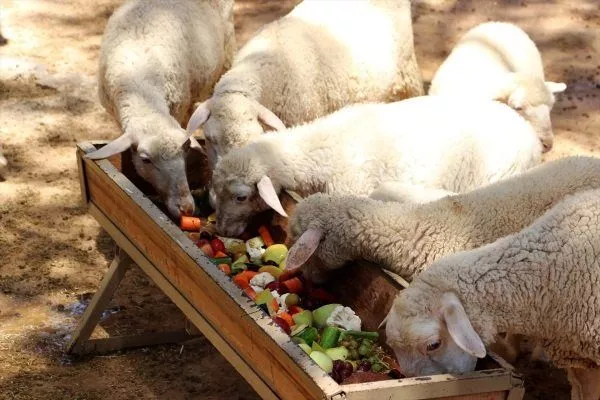
Crops containing a large amount of coarse fibre (cellulose) have a positive effect on the digestion of sheep:
- beet;
- carrot;
- winter rape;
- rapeseed;
- oilseed radish;
- potato;
- turnip.
Beets and carrots are given fresh. Potatoes should be boiled, as they can cause bloating. Sometimes animals may refuse a particular type of root vegetable, in which case they should be fed mixed vegetables or mixed with grain feed.
Root vegetables are especially beneficial for suckling and lactating sows, as well as for young animals. They are fed chopped at a rate of 3-4 kg per head per day.
Melon feed
Sheep love pumpkins and zucchini most of all, and they never miss an opportunity to indulge. Unlike many plant-based feeds, they are richer in vitamins. While growing zucchini directly for the flock is very expensive, introducing them into the diet increases weight gain and has a positive effect on milk production in lambs.
Concentrated feed
This is the most nutritious type of feed, but it shouldn't be the mainstay of an animal's diet. It provides a lot of energy and contains proteins, vegetable oils, and starch, but is very low in essential nutrients. Concentrates are essential in the winter diet.
There are several types of concentrated feed:
- Compound feed — This is a universal industrial feed. It contains all the nutrients in an optimal ratio, but it still does not contain all the necessary nutrients.
When purchasing, be sure to consider the intended use of the feed. There are universal mixes, and there are those that meet the nutritional needs of specific animals. For example, feed for lambs, stud rams, pregnant does, or animals being fattened. - Legumes - peas, lupine, alfalfa, beans.
- Cereals - barley, wheat and oats, as well as corn grains.
- Oilcakes and meals. They are obtained from soybeans, sunflowers and corn.
- Bran. Only oat ones are suitable.
One ewe requires approximately 150 g of concentrate per day, a ram meat breed - 600 g.
Mineral supplements
Table salt, bone meal, and chalk are essential in sheep's diets. The dosage of supplements is calculated individually for each individual sheep, depending on their sex, age, and health status. Salt licks, which are additionally fortified with minerals and vitamins, are available in stores.
Salt deficiency in animals is easily detected by their behavior. They actively begin licking their owners' hands, licking away salty sweat. Some newbies to sheep farming mistakenly believe this is a sign of affection and tenderness.
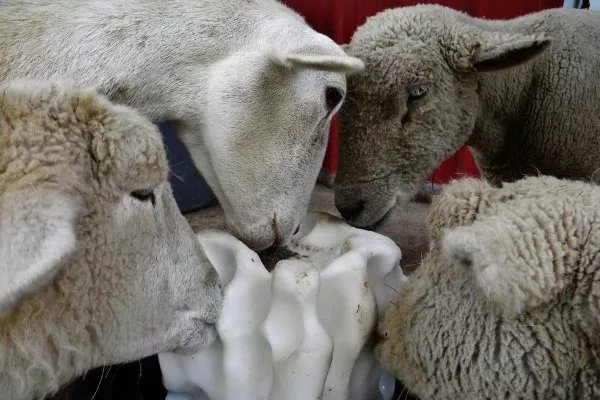
Mineral deficiency negatively impacts the health of sheep and leads to stunted growth of young animals, reduced productivity, loss of appetite and its perversion, brittleness and wool loss.
Signs of deficiency of some chemical elements:
- If adult birds chew wood, wool, rags, and bones, it indicates a phosphorus and calcium deficiency. In young animals, a deficiency of these elements can lead to rickets.
- Involuntary muscle contractions indicate magnesium deficiency.
- With a prolonged sodium deficiency, sheep experience loss of appetite, lethargy, and lick various objects.
- Iodine deficiency leads to damage to the thyroid gland.
- A lack of cobalt leads to exhaustion of the animal and a perversion of appetite.
- When there is a lack of copper, sheep suffer from diarrhea.
- Zinc deficiency causes eczema to appear on the skin.
However, it's not just a deficiency but also an excess of macro- and micronutrients that can be harmful to health. For example, an excess of fluoride in the body can cause teeth to become stained and brittle.
Therefore, sheep's diet should be as varied as possible. Legumes accumulate 4-6 times more calcium than grains. Root vegetables contain a lot of potassium, but little phosphorus and calcium. Bran, on the other hand, is rich in phosphorus.
Calcium is a vital element for animals. Their bones consist of 99% of this element. Sources of calcium include meat and bone meal, milk, and green mass of legumes. Mineral supplements include dolomite flour and chalk.
Each head of cattle should receive 5-15 grams of chalk, dolomite, or bone meal per day. This is placed in feeders that should be freely accessible. Adults receive 5-15 grams per day, young cattle receive 5-8 grams, and lambs receive 3-7 grams.
Animal supplements and drinking regime
Animal supplements are specialized feeds given to sheep during specific periods of their lives—pregnancy and mating. Eggs, cottage cheese, milk, and whey are included in the diet.
As for drinking, water should always be clean, fresh, and freely accessible. During warm weather, provide cool water, and in winter, warm water to compensate for the lower ambient temperature. Pregnant (pregnant) and lactating females, as well as young animals, require increased amounts of water.
Feeding standards in different seasons
Depending on the time of year, the animals' diet undergoes significant changes, but to prevent them from suffering from digestive disorders, new foods are introduced gradually.
Spring
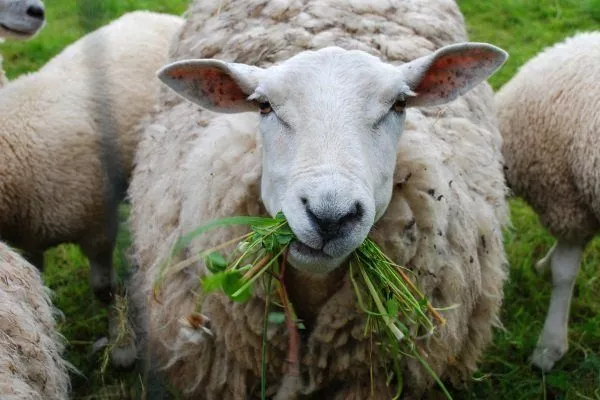
In spring, the sheep's diet is supplemented by succulent feed. Young green grass appears in the meadows, and the animals graze on it during the day.
At night, hay is placed in the manger-feeders to prevent digestive problems. Grain concentrates (700 g) and minerals in the form of salt licks are also added to the diet.
Summer
During this period, the entire herd is fed succulent feed. Feeding and lactating females require 8-9 kg of greens, while castrated rams and other females require no more than 7 kg. The herd should be on pasture for at least 13 hours; in this case, additional supplements are minimal.
The young eat depending on their age:
- 4-9 months – 4 kg of greens per day;
- from 1 to 1.5 years - 6 kg.
They are also given concentrates (200 g), root vegetables, salt and hay (no more than 1 kg per individual).
Autumn
The nutritional value of green, succulent fodder diminishes. High-quality hay (3 kg per head) and 4 kg of melons and root vegetables combined are added to the diet.
They also enrich the diet:
- mineral supplements;
- silage;
- compound feed.
Winter
The owner feeds the sheep himself, since the animals are forced to spend all their time in the barn.
Approximate winter menu (per 1 head/day):
- hay (legume, cereal) - 4 kg;
- silage - 4 kg;
- root vegetables and melons - 4 kg;
- compound feed - 300-400 g;
- mineral supplements.
Feeding ration for individual sheep
Depending on the age and condition of the sheep, the diet changes.
Feeding newborn and young lambs
The diet of young animals depends on their age, which can be divided into three periods:
- Newborn lambsThose who are on breast milk or a breast milk substitute. If the baby is orphaned for some reason, they are fed artificially. The formula is prepared from:
- cow's milk, heated to 30°C;
- 2 chicken eggs;
- fish or goat oil.
For up to 5 days, lambs are fed from a nipple up to 5 times a day, then they are gradually taught to eat from a bowl and the number of meals is reduced.
- 10-20 days of life. From the 10th day of life, lambs begin to be accustomed to hay, branches and vegetables - carrots and beets.
- Lambs, starting from the 20th day of life. Starting on the 20th day, gradually introduce concentrates. Start with 75 g for a one-month-old lamb, increasing the dose to 350 g by four months of age.
Oatmeal broth and cake are fed to the growing generation as supplementary feed. These will help replenish the young lambs' vitamins:
- grass meal from legumes;
- pine flour - based on 500 g of substance per 1 kg of mass;
- sprouted barley and oat grains;
- fish oil - 10-15 g.
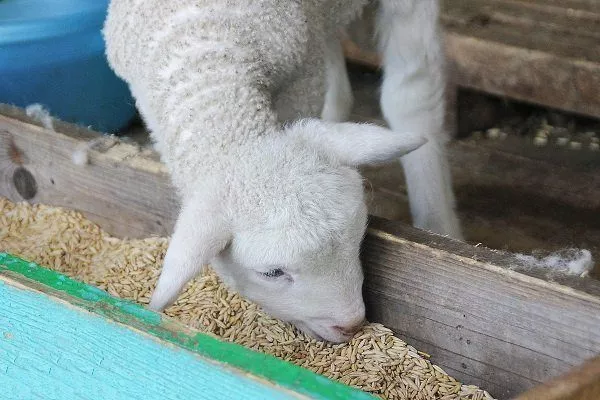
In addition to succulent feed, they are also given concentrates: 50 g for 1-month-olds, 150 g per day for 2-month-olds. The youngsters are given small amounts of water four times a day.
Diet of pregnant and suckling ewes
During pregnancy and lactation, females need to be fed highly nutritious foods. The table below provides a sample diet.
| Name of the feed | Norm, g/day |
| Hay from grain crops | 500 |
| Legume hay | 500 |
| Straw | 500 |
| Silage, green succulent fodder | 3,000 |
| Grain and concentrates | 300 |
| Mineral supplements | 15 |
4 weeks before lambing of sheep The amount of hay in the diet is reduced and replaced with compound feed. The mother's diet changes again after the lambs are born. Per day, she will need:
- hay - 1 kg;
- succulent feed - 4 kg;
- concentrates up to 500 g.
It's best not to feed grain during the first week, as their rumen often becomes clogged. During this time, females are kept separate from the herd and fed only grass and hay.
Nutrition of breeding rams
These animals require good, nutritious feed year-round. Two months before mating, the amount is doubled. In summer, in addition to lush grass, concentrates are always fed.
A breeding ram requires the following daily requirements:
- succulent feed - no more than 3 kg;
- high-quality hay - no more than 2 kg;
- concentrated feed - 600 g.
During the period mating in sheep the diet is changed - the proportion of bulky feeds is reduced, protein foods are introduced:
- hay - no more than 1.5 kg;
- cake and bran - no more than 200 g;
- carrots - 500 g;
- grain concentrates (mixture of peas, oats and barley) - 1 kg;
- chicken eggs - 2 pieces;
- fish meal - 100 g;
- milk - 800-1000 l;
- cottage cheese - 200 g.
During the winter, stud rams are given 2 kg of hay (1 kg can be replaced with straw), 500 g of concentrates and no more than 4 kg of boiled potato tubers.
Feed should provide the breeding ram with all the necessary nutrients, but it's important not to overfeed him. An overweight animal loses its nutritional value and becomes ill.
Sheep diet for fattening
Individuals selected for slaughter are intensively fattened for 2-2.5 months so that their meat, wool and sheepskin acquire the best qualities.
Moreover, fattening young animals requires less feed than adult animals. Feed savings can also be achieved by fattening animals on pasture. Wether rams (castrated rams) gain weight best on pasture without any additional feeding.
If sows that have recently given birth to lambs are sent to slaughter, then it is necessary to introduce concentrated feed - 300-400 g per day.
When fattening adult individuals, concentrates containing a small percentage of protein are introduced, since their growth has already ended, and their weight increases due to fat deposits.
If grazing is not possible, the sheep are left in the stall and fed intensively with the following feeds:
- rude;
- juicy;
- beetroot;
- boiled potatoes;
- concentrates.
When stall-fed, feed is given three times a day. The daytime ration should be higher in calories than the evening ration.
Duration of fattening sheep:
- Adults are fed for 60 days;
- Young animals separated from their mothers at the age of 3-4 months require longer fattening - 90-120 days.
What is prohibited to feed sheep?
There are a number of products that worsen the general well-being of sheep and can cause their death:
- Bread. Under no circumstances should they be given to young animals.
- Whole vegetables. The taboo also applies to whole vegetables, which are pre-chopped before being fed to animals.
- Some types of hay and marsh grassAvoid hay that contaminates sheep's wool. This includes feather grass hay, as well as hay containing burdock and other thorns. Also harmful to sheep are all marsh grasses, hay made from acidic grains such as sedge, and hay from forest and coarse grasses such as reeds and horsetails.
Organization of the regime
Animals kept without free range are fed 3-4 times a day in a barn, with food placed in a common bowl. However, they develop a keen appetite outdoors, so if possible, it's best to feed them outside.
Hay and mown grass are placed in mangers. Closed models are used for concentrates and mash. Vegetables and root vegetables are cut into small pieces before serving.
Before watering, the animals are fed succulent feed, and after drinking, they are fed concentrated feed. Hay is given in the morning, concentrates and succulent feed are given during the day, and hay and straw are fed in the evening.
Reviews from sheep breeders
Every experienced farmer has developed his own system of feeding sheep, which has been developed over the years and through trial and error.
Sheep are considered one of the most low-maintenance domestic animals. However, farmers need to establish a proper regimen and create an optimal diet for their sheep so they don't leave their owners without milk, meat, and wool.