
An electric shepherd is an electronic device that can replace a shepherd and his dogs. This special device helps keep a flock within strictly defined boundaries. Let's explore how this works and the benefits of using such a device.
What is an electric fence?
For centuries, flocks of sheep have been tended by shepherds. Under their watchful eye, the voracious herbivores move from pasture to pasture. By changing feeding locations, the sheep receive plenty of succulent green fodder—there's no need to prepare or distribute feed. feeders.
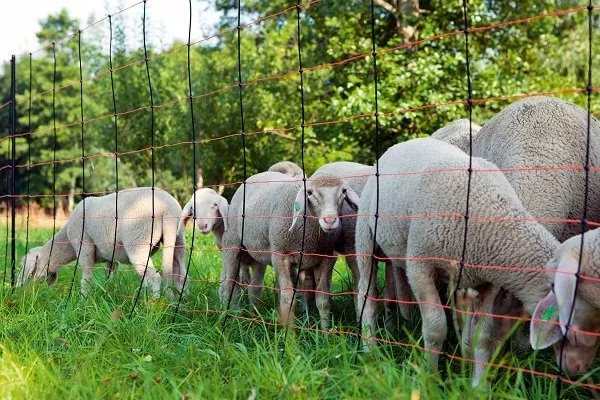
A special device for grazing livestock—an electric fence—is now commercially available. This device allows livestock to be confined to a specific area by enclosing it with an electric fence. It is made of weather-resistant mesh or wire.
There are two types of electric fences:
- Temporary - these are mobile structures that can be moved from place to place.
- Constant — these are stationary structures that do not change location throughout the season.
What does an electric fence consist of:
- wire;
- support posts - metal or wooden, up to 1 m high;
- power source - solar panel, battery, generator.
Manufacturers can equip the device with electric mesh of various sizes, to suit the flock owner's needs. Some flock owners need to fence a small plot of a few acres, while others need to fence vast tracts of land spanning several hectares.
The operating principle of the device
Electric fences operate based on the behavioral reflexes of sheep. They are extremely peaceful and at the same time timid animals. The mere sound of a noise or the sight of a predator is enough to send them scattering in all directions. To prevent the flock from wandering off into the surrounding area, electric fences are installed.
The fencing effect is achieved through mild electric shocks given to the animals when they attempt to leave the fenced area. After receiving a few shocks, the sheep quickly learn not to approach the dangerous perimeter.
The electric fence solves the following problems:
- keeps the herd in a given area without the help of a shepherd;
- protects sheep from attacks by wild predators - it shocks not only those inside the pen, but also those who approach it from the outside;
- maintains herd size - prevents loss of individuals.
The electronic shepherd is convenient as a temporary corral. Sheep can be herded there while repairs, cleaning, or disinfection of the barns are underway.
Advantages and disadvantages
The "electric shepherd" device is designed for livestock farmers who enjoy integrating technology into their farming. To decide whether replacing shepherds with an electronic device is worthwhile, consider all its pros and cons.
Advantages:
- Economic benefit. Purchasing the device allows you to save on hiring a shepherd. Although it's not cheap, it pays for itself fairly quickly—in just 2-3 months.
- Reliability. "Invisible fences" are made from modern materials that are resistant to external influences, corrosion, temperature fluctuations, moisture, and other factors.
- Mobility. The equipment can be moved from place to place if it is necessary to change the pasture.
- Safety. Sheep gathered behind an "invisible fence" are protected from all harm. They won't wander off, get lost, or be attacked by wild animals.
- Autonomy. The structure can operate remotely from power grids using alternative energy sources.
Although electric shepherds have many advantages, many farmers prefer to entrust their flocks to regular shepherds.
Flaws:
- installation and dismantling of electric fencing requires time and effort;
- quite a high cost, especially if you order a custom-made fence;
- does not allow to completely abandon the staff;
- require certain experience in working with electrical installations;
- Maintenance of the fence requires a lot of electricity, which is an additional expense;
- the battery wears out.
Purchasing an electric fence doesn't mean you can completely do away with human workers. A human is needed to monitor the animals' well-being, provide them with water, feed them, and milk them. The only thing an electric fence eliminates is the need for a constant presence in the pasture.
How to set up an electric pen for sheep?
Sheepfold They are set up where food is available, so that animals can graze without the risk of becoming separated from the flock. Permanent pens are built near a water source and food supplies.
How to set up an electric pen for sheep:
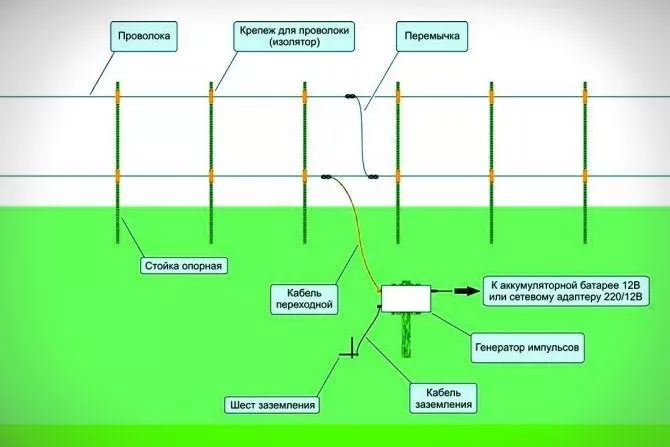
- Install posts at intervals of 5-10 m around the perimeter of the area where the sheep will be housed. It's best to use metal posts—they'll last longer.
- Place insulators on the posts - you will be running the fence through them.
- Pull the wire through the insulators. Three rows are typically used, with equal spacing between them. Large-mesh wire mesh can be used instead.
- Connect the structure to a low-voltage generator. Once the fence is connected to a power source, a small current flows through it, acting as an "invisible shepherd" for the timid flock.
- Check the battery charge level or solar panel condition before installation.
- Make sure all insulators are properly installed and undamaged.
- Check the integrity of the wires and their connection to the insulators before connecting to the power source.
Selection criteria
To ensure that an electric fence is optimally suited to your intended purposes and operating conditions, it's important to choose the right device. There are a number of criteria that should be considered when choosing an electric fence for sheep.
- ✓ Voltage level safe for sheep, but sufficient to scare them away (usually 5-10 kV).
- ✓ The distance between the wires takes into account the height of the sheep and their jumping ability.
Selection criteria:
- Purpose. When choosing a suitable sheep grazing device, decide immediately whether you'll be using it as a temporary or permanent fence. In the former case, choose a small enclosure, while in the latter, choose one several times larger than a mobile option.
- Material of supports. Wooden ones are cheaper. They are less durable and not as strong as their metal counterparts.
- Number of gates. Their number is selected depending on the feasibility and available terrain.
- Nutrition. Pay attention to the source of power for the fence. If it's a battery, what's its capacity? Find out if the design includes grounding.
- Number of cores. Pay attention to the number of conductors in the wires. Keep in mind that many manufacturers today exaggerate their technical specifications. It's known that the actual cross-section of a conductor can differ by almost half from the stated one.
As a result of such disturbances, the wires begin to overheat. They not only shock the sheep but also burn them. - Visuality. Sheep need to not only feel the electric shocks, but also see real boundaries to know where not to go.
- Guarantees. Choose the option in which the manufacturer promises warranty repair.
When purchasing an electric fence, be sure to check its operation and all electrical connections to avoid purchasing a useless device.
Features of operation
Installation and operation of an electric fence, like any device powered by electricity, requires users to know the basics of its use.
What is required from the person responsible for the operation of the electric fence:
- correct placement of equipment around the perimeter of the pen;
- timely connection of the fence to the power source.
What is important to remember when installing and operating the device:
- When installing an electric fence, it is important not to forget about grounding wires and insulators - they will prevent dangerous electric shock;
- It is strictly forbidden to touch live parts, despite the low voltage;
- Do not adjust the equipment while it is energized;
- If a thunderstorm begins, the power supply to the structure must be turned off;
- Warning signs about voltage should be placed around the perimeter;
- It is prohibited to contact the installation elements during rain;
- operating temperature range: from -30 to +65°С;
- It is prohibited to operate the unit in conditions of humidity above 90%.
Rating of manufacturers and models
Today, the market offers a wide range of ready-made electric fences with various parameters and designed for various applications. Finnish, Russian, and New Zealand manufacturers hold leading positions in this niche.
Electric fencing equipment is sold both as a kit and individually. You can buy inexpensive posts in one place and order the electric mesh and power supply in another.
Finnish products
Among the leaders of the rating is the Finnish company "Olli." Its products are considered economical, efficient, and reliable. The company offers consumers ready-made kits. All that remains is to install them correctly.
The standard set includes the following components:
- wooden poles;
- a fence made of three rows of wire;
- gate;
- battery.
There are kits designed for lengths from 300 m to 3,000 m.
Russian products
In Russia, electric fences are manufactured by Rix-TV. This company produces livestock monitoring equipment designed for a wide range of applications.
Advantages of domestic equipment compared to imported ones:
- lower cost;
- Possibility of manufacturing electric fences according to individual orders.
Standard equipment:
- metal poles;
- galvanized three-row fence - for fencing areas up to 3 hectares;
- two power sources - from the battery and from the 220 V network;
- comes with signs warning of danger.
The IE-200 from Montazhzagotovka CJSC is also worth considering. This electric fence is attractive because it has two batteries—an external one and a built-in one. The kit comes with a 300-hectare fence.
Products from New Zealand
Products from the New Zealand company Speedrite have proven themselves quite effective. Their equipment allows for adjustable pulse frequency.
The set includes:
- pillars;
- fences of different sizes;
- combined power supplies.
Is it possible to make an electric fence with your own hands?
There are craftsmen who can build a homemade alternative to a commercial electric fence. This will require a design—you can order one from a specialist or find one online.
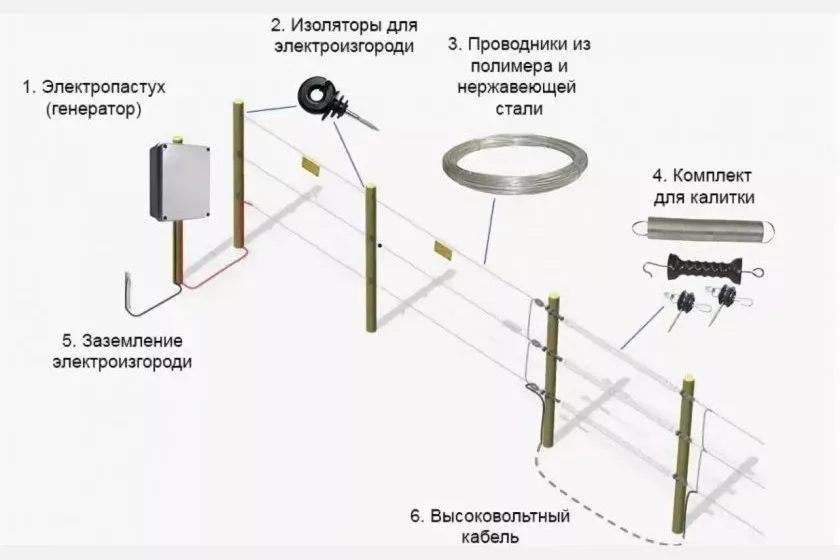
To create an electric fence you will need:
- power supply;
- generator (step-down transformer 220/12 V);
- wires;
- columns;
- insulators;
- switchboard (power cabinet).
Making an electric fence requires a certain amount of knowledge. You need to understand electrical engineering and electrical installation.
Instead of insulators, you can use plastic bottles, instead of wires - wire, and the wiring can be secured using scraps of car tires.
Manufacturing procedure:
- Dig the posts into the ground in the same way as you would install them for a regular fence.
- Attach insulators, either purchased or homemade, to each post.
- Stretch three strands of wire—steel or copper. The former is less durable. Paint the wires in spots so they're visible to both animals and people.
- You can buy a pulse generator or build one yourself. It can be powered by a 220V network, a battery, or solar panels—your choice.
To scare off livestock rather than electrocute them, you need a generator of short pulses repeating at a specific frequency. This generator can be made from an off-the-shelf transistor, which will transmit the pulses to an ignition coil—one from a passenger car.
The ignition coil performs two functions: it creates voltage and transforms it into pulses. In a car, these pulses are transmitted to the spark plugs; in an electric fence, they are transmitted to the fence. Once the structure of poles and wire is installed, it is connected to a pulse generator.
How to assemble a pulse generator yourself:
Nuances that should be paid attention to during installation of the structure:
- Correctly calculate the height of the posts. This determines whether the sheep will be able to leave the perimeter. The posts should not be lower than 1 m, otherwise the sheep will simply jump over the fence. To prevent animals from entering the perimeter, stretch at least three rows of wire.
- The distance between adjacent electrical wires should also be carefully considered. From the ground to the first row – 25 cm, between the first and second wires – 55 cm, between the second and third – 90 cm.
- The power of the electric pulse is determined by the length of the animal's fur. The longer and denser the fur, the greater the charge. For long-haired cattle, 11-12 kW is sufficient.
Video on how to build an electric fence yourself:
Peculiarities of sheep habituation
Sheep are intelligent animals, especially when it comes to their safety. A few shakes are enough for them to understand that they shouldn't approach the fence, much less touch it. Sheep very quickly develop a pen-restraint reflex.
To prevent fearful animals from becoming stressed, they need to understand why they feel an unpleasant stimulus and what is causing it. This means they need to be able to see the fence. Therefore, the fence wires shouldn't be too thin.
If the electric fence wires are invisible, animals may inadvertently apply force and tear them, despite the shocks. This would disable the monitoring system, and the animals would wander off.
Where can I buy it?
Electric fences are widely available at livestock supply stores. They can also be ordered from the comfort of your home from online stores specializing in such products, such as https://elepas.ru, https://kletki-market.ru/, and others.
You can not only choose an electric fence that suits your needs but also order delivery. Online stores typically deliver throughout the Russian Federation.
Electric fencing for sheep is a promising solution, offering a tentative step toward automation in livestock farming. The cost-effectiveness and feasibility of such fences is being demonstrated through practical use. On small farms, such equipment eliminates the need for a shepherd, but requires a human operator for maintenance and relocation.
I read your article a long time ago, but I'm only writing a review now because we've already tested the device over the summer. We bought a temporary electric shepherd. It really does solve several problems at once and is well worth the cost. At least it's cheaper than hiring a shepherd, who might suddenly get sick or start drinking. We received some solid advice, thank you!