
Mating sheep and the subsequent birth of their offspring is a necessary process in the life of any farm. Breeders adhere to specific techniques, prepare meticulously, and select only mature animals for reproduction. Ewes are ready to mate at a specific time of year, and it's important not to miss the moment.
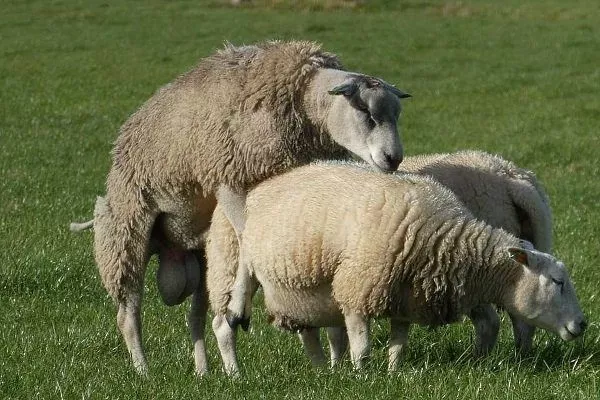
How can you tell if a sheep is in heat?
Sheep reach sexual maturity at the age of 6-7 months, but only when they reach a weight of 40-50 kg.
(at 10-11 months), they are mated. The estrous cycle lasts approximately 15-17 days, but can be much longer. It is constant for each female. The average estrus period is 3 to 12 days.
The duration of the estrus phase is short, and care must be taken to ensure that insemination occurs, otherwise after some time the ewe will again require a male.
Animals typically mate only at certain times of the year, depending on the region and breed. For most, mating begins in late summer or early fall and lasts until spring. During the mating season, estrus begins, and its approach can be determined by the following signs:
- At the beginning of estrus, vaginal mucus is transparent, then it becomes cloudy, viscous, and later acquires the consistency of gruel.
- The vaginal tissues swell.
- The animals lose their appetite and their behavior changes. Females are receptive to approaching males and do not flee when they attempt to mate.
Preparing for mating
Herd animals are prepared for mating in advance. All animals must undergo a medical examination, and their diet and routine are also adjusted:
- females are weaned from lambs;
- Over the course of 2 months, milking is gradually stopped;
- When natural insemination is chosen, rams are kept away from ewes in darkened areas for several weeks.
Farmers who care about the health of their animals must provide them with proper nutrition during the pre-mating period. Both males and females receive a varied diet, supplemented with certain nutrients. The diet must include foods rich in vitamins A and E, phosphorus, and potassium. These include carrots, fresh green grass (grass), bone meal, and concentrates.
Breeding pairs are carefully selected. Animals must be healthy and physically strong (old, lame, or thin individuals are culled). Before mating, ewes of both sexes must undergo a veterinary examination, which includes:
- examination for mastitis (females);
- assessment of general health - hooves and teeth;
- hygienic procedures, cutting off dirty hair that interferes with mating.
- ✓ Weight and age appropriate for first mating (60-70% of adult weight).
- ✓ Absence of genetic diseases and good physical condition.
- ✓ Blood group compatibility testing to avoid Rh incompatibility in offspring.
A farmer explains and demonstrates how pairs are selected for mating in his video:
Mating techniques (types of insemination)
In recent years, artificial insemination of sheep has become widespread, allowing one ram's sperm to inseminate up to 1,000 ewes. It is typically used in industrial sheep farming. However, traditional mating methods are also used on larger farms:
- manual;
- freestyle;
- harem;
- cool.
The most imperfect method, which offers no guarantees, is the free-range method, where rams are kept with ewes in the same flock for an extended period (1.5-2 months). At least three stud rams are needed for every 100 ewes. This method is only suitable for large flocks and for mating females that remain unmated for some reason after a mass mating. The free-range method has a major drawback: rapid wear and tear on the stud rams.
Harem mating, where a group of 30-40 sows is assigned a special pasture or pen and a single male is brought in, increases the chances of successful mating. This method is suitable for small farms.
During a class mating, rams are introduced into the flock of ewes during the mating season, where the mating is to take place. All males are divided into two groups and brought into the flock one at a time, allowing for the selection of inseminators for specific females.
Only the manual method guarantees individual selection. This method selects a suitable male for each female. An adult ram performs 2-4 matings per day, and usually all are successful. This type of mating is only possible on farms with a small herd, as it requires significant labor and time.
How is ram sperm obtained?
Artificial insemination has several advantages over traditional insemination. Sheep can be inseminated anywhere, anytime, in any quantity, and without fear of spreading disease. It's important to follow the instructions: measure the dosage, use disinfected equipment, and use high-quality biological material.
As a rule, frozen ram semen is delivered to farms, as it is cheaper to use than chilled semen.
Ram semen is collected manually—not only for insemination but also to test its quality. The ejaculate is collected outdoors in warm weather and in an arena in cold weather. Artificial vaginas, made of rubber tubes with an elastic opening, are used to collect the semen. This method is the most widely used, but semen can also be collected manually, using a sperm collector, or through electroejaculation.
How ram sperm is collected is shown in the video below:
Early mating of sheep
Experienced farmers recommend mating a ewe for the first time when her live weight reaches 60-70% of that of an adult ewe—about 45 kg. Her body is strong enough for pregnancy, but she hasn't gained enough weight to make mating and raising her offspring a challenge.
Females are generally ready to mate at 1-1.5 years of age, but some precocious breeds reach the desired body weight by 9 months. At this point, the first mating can begin. Sometimes breeders rush and mate young females at 4-6 months of age. This is considered premature and often results in miscarriage, stillbirth, or the death of the ewe.
Knowing that young ewes go into heat, but not wanting to mate them at a tender age, farmers keep them separate from rams.
Insemination rules
While free mating allows rams to choose which female to mate with, manual insemination requires careful selection of partners, constant observation, behavioral monitoring, and monitoring of results. Mating two ewes isn't as simple as it seems. Farmers adhere to specific rules to control the process. They must choose the right time, place, and animals for a successful mating.
The main points that sheep breeders pay attention to:
- Animals are bred in a separate closed room or enclosure during the period of sexual heat.
- During this period, the rams are kept separately from the ewes in a private enclosure.
- Uncovered females are brought to the inseminator, waiting for coverage at least twice.
- It is important to take care of the health of animals, i.e. keep them clean and in good shape, and do not allow them to become obese.
The mating process
When inseminating ewes, farmers consider the reproductive characteristics and the expected—desired—time of lambing. An unspoken rule recommends mating animals in the fall so that lambing occurs in the spring. This is also around the time when sheep enter heat. Gestation lasts approximately five months (150-153 days), allowing the optimal mating time to be calculated.
Video review of the mating process in sheep:
Depending on the chosen method of insemination—natural or artificial—farmers allocate the necessary time for the procedure. Artificial insemination can take over a month, as the sow, whose estrus lasts one to two days, is inseminated twice. The procedure is repeated after 15 days if conception does not occur.
The artificial insemination plan is drawn up in advance and executed exactly on time.
Ewes are artificially inseminated at special stations using syringe catheters. Semen is dosed at 0.05 ml and introduced into the ewes' vaginas. It is important to maintain a comfortable room temperature, no lower than 18 degrees Celsius, as ejaculate is sensitive to cold shock.
- Conducting a veterinary examination of sheep to exclude diseases.
- Prepare a room with a temperature of at least 18 degrees.
- Using only sterile instruments and high-quality biomaterial.
Artificial insemination achieves higher conception rates than natural mating. It's faster and safer, performed under specialist supervision, and farmers don't need to keep rams in the flock.
Determination of pregnancy
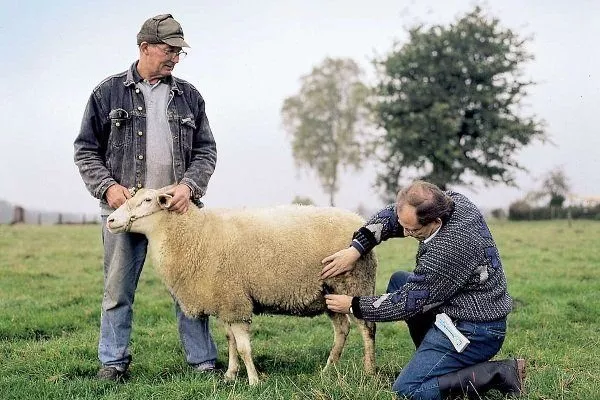
The first sign that a mating was successful is the ewe's failure to return to estrus after 2-3 weeks. However, a lack of estrus does not necessarily indicate a failure to conceive; reproductive system problems may be to blame. Therefore, farmers recommend using additional methods to help determine the ewe's condition. Signs of pregnancy include:
- Uterine enlargement. This is determined by palpation of the abdomen. Pregnancy in ewes is only detected starting in the third month of pregnancy. This examination is performed on an empty stomach.
- Vibrations in the uterine arteries. In the second half of pregnancy, they can be felt through the anus.
- Mucus on the cervix, the presence of which is determined using a vaginal speculum 20 days after insemination.
It's believed that a pregnant ewe becomes calmer, but this isn't always true. Members of the opposite sex can help determine pregnancy. The reflexology method involves the presence of a ram and other females—both mated and unmated. A sexually mature male is introduced into the pen with the ewes, easily distinguishing them from others and showing no interest in the pregnant ones.
Preparing for lambing
Pregnant ewes require special care—careful handling, but not restricting their movement. Experienced and attentive farmers will avoid stressing the animal, which can lead to miscarriage (which can happen even in late pregnancy). Furthermore, pregnant ewes need a varied, high-quality diet, enriched with vitamins. It's advisable to use specialized feed.
Before giving birth, the wool is sheared from the udder and between the hind legs of the sheep.
Two weeks before the expected lambing date, the ewes' enclosure is insulated, cleaned, and the bedding changed. Ewes are placed in separate pens of at least 2 square meters. The optimal temperature, especially during winter lambing, is no lower than 5 degrees Celsius. During lambing, a person should be on duty near the pregnant ewes to determine which ewes are about to give birth. This can be determined by the following signs:
- the animal's behavior becomes restless;
- the udder swells and the belly sags;
- The genitals – their external part – increase in size.
The process of childbirth
Compared to other animals, sheep give birth without complications, but they still require human supervision to assist the animal in the event of an emergency. If all goes well, 20-30 minutes after the onset of labor, the amniotic sac appears, ruptures, and a lamb emerges. It emerges muzzle and front hooves first.
If the fetus is large or not positioned correctly, the farmer should assist with delivery:
- between contractions, correct the position of the lamb;
- During pushing, gently pull the baby's legs;
- If the amniotic sac has not ruptured, it is cut or burst.
The birth was successful, but the ewes are restless and lie down again, indicating there are multiple lambs. The time interval between lamb births is 10 to 20 minutes. The lambs are allowed to lick the newborns, and if she refuses, they are wiped with a clean cloth and their airways are cleared of mucus. The placenta will be expelled within 1-2 hours after birth, but if this does not happen, a veterinarian is called.
Mating is a natural process that still needs to be monitored by farmers, including free mating, where ewes choose their mates. Sheep farmers plan ahead and may even advance the hunting season. They provide the animals with safety and comfort, change their diet, wean lambs, and stop milking the females regularly. Successful conception and birth guarantee a strong flock.