
Insemination of sheep is considered an important procedure for breeders. Both artificial and natural insemination methods are used in livestock farms. However, each method involves numerous subtleties. Only by taking all stages and conditions into account can the procedure be carried out successfully and safely for the animals.
Reproductive age of sheep
Sheep reach sexual maturity at 6 months, but only after they reach a weight of at least 40–45 kg. Breeding is typically done at 10 months.
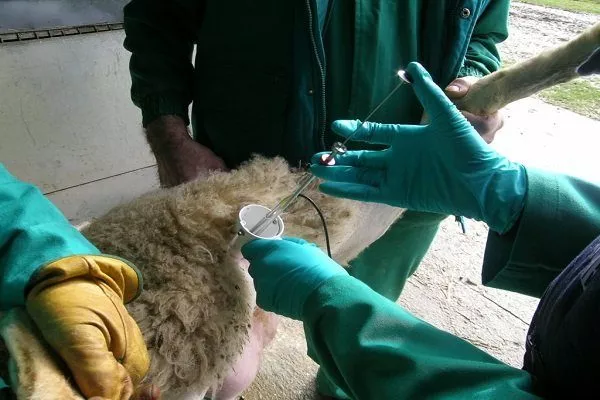
Each female has a regular estrous cycle—from 15 to 18 days—and the estrus phase lasts a maximum of 12 days (minimum 3). It is during this time that insemination is important.
The time of year plays a significant role. The period begins in the last months of summer and ends in the first months of spring.
Early mating of sheep
Early mating, starting at 4-5 months, even if the required weight has been achieved, is not recommended. There are many reasons:
- the body of the yarka is not yet strong, therefore labor often ends in death;
- high risk of miscarriage;
- birth of stillborn lambs.
The optimal age for successful mating and birth is considered to be 10–15 months, but not later (if the ewe weighs more than 50 kg, difficulties will arise).
Conditions for insemination
Farmers first select males and females and prepare them for mating well in advance. There are several mating methods, but regardless of the chosen method, the procedure must be carried out under appropriate conditions:
- indoor air temperature — from + 18 to + 23°C;
- no drafts;
- silence (so that there is no extraneous noise or loud sounds).
Mating is considered impossible if the female has not yet entered heat. The ewe's readiness must be checked before introducing the male.
Identifying signs of heat
The main sign that a female is entering heat is estrus. Its approach is determined by the following symptoms:
- swelling of the vaginal tissues (increase in size);
- mucus secretion - at first it is transparent, after 2-3 days it becomes cloudy and very viscous, and just before the estrus it turns into a mushy state;
- loss of appetite;
- behavioral change - ewes easily allow males to approach them (but it happens that a female initially runs away from a ram, but then approaches him herself - this is normal).
If artificial insemination is used, males of both sexes are placed in the same pen. The males are fitted with special aprons. Full mating does not occur, but the ewes' readiness is clearly visible. This is often done with test rams.
Once the farmer identifies the ewes, they are moved to a separate room for insemination. If the female does not become pregnant after insemination, the next procedure is performed 15–18 days later. This is the estrous cycle of sheep.
Experienced farmers recommend synchronizing heat, which allows for quick mating. This ensures that all females lamb at the same time. How to speed up the process:
- megestrol acetate is added to the feed for 8 days (5 mg per day per individual), after 9 days injections are given with the serum of pregnant mares (dosage 1000 IU);
- the second option - foam pessaries are soaked in 40 mg of megestrol acetate and inserted into the vagina for 14 days;
- increase daylight hours to 12–14 hours, but this method is considered unprofitable;
- For males, 3% sodium bromide is used from 1 to 7 ml per day per head and 2 g of caffeine.
Preparing for mating
Without careful preparation, it's impossible to obtain healthy offspring. Farmers must first select the animals, and then carry out the actual preparation, which involves several stages.
Selection of queens
If a ewe has already given birth, she is prepared for the next litter immediately after the lambs are weaned. Future ewes are selected according to the following criteria:
- Health status. The most important indicator is that the sow should be free of any illnesses (mastitis, lung disease, etc.). The condition of the front teeth is also noted. If the incisors are loose and the molars are strong, the sow is considered fit for insemination.
- Fatness. A strong ewe's constitution indicates her ability to handle the birthing process without complications. However, a thin, yet healthy and active ewe with a well-developed udder is not rejected. However, if the ewe is thin and the udder is stuck, she is not suitable for breeding.
The selection process is carried out daily, after which the breeding stock is formed. Exactly 30 days later, the females are examined again, vaccinated, and given an anti-mange bath.
Features of the breeding flock:
- the herd consists of individuals of the same breed;
- the flock contains only females (their age is approximately the same);
- pay attention to the origin of the sheep, which simplifies the process of selecting a male;
- take into account the quality of the wool - only one type of coating is included in one group (semi-fine wool, uniform / non-uniform, etc.);
- It is permissible to introduce young females to the mothers; after lambing, the mothers will, if necessary, nurse other mothers' babies, but this method is rarely used, as there is a risk of malnutrition of the young.
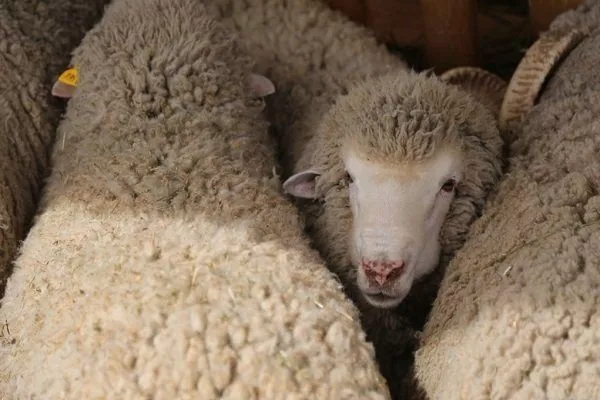
Preparation of queens
The initial step is to wean the ewes from their lambs, and completely stop milking 60 days before mating. The following steps are also taken during the preparatory stage:
- males are placed away from females and kept in a semi-dark room if natural insemination is planned;
- they carry out shearing (long hair interferes with mating);
- The last inspection is carried out 6–8 days before mating.
Feeding is increased at 30–50 days—ewes require vitamin E, A, potassium, and phosphorus. Bone meal, green grass, carrots, and various concentrates are introduced into the diet, and silage and eggs are fed, along with salt. If lush grass is unavailable, watering frequency is increased to three times per day.
Preparing the rams
The stud, like the queen, must be healthy. But the most important criterion is sperm quality, which is tested in the laboratory. Other factors to consider include:
- condition of the hooves - if there are any diseases, they are treated;
- age minimum 15-18 months;
- absence of lameness;
- for clots or lumps near or on the scrotum.
- ✓ Laboratory testing of sperm quality is essential to rule out infertility.
- ✓ Absence of genetic diseases in the pedigree to prevent hereditary pathologies in offspring.
Preparation begins 45 days before mating. What to do:
- preventive treatment;
- vaccination;
- improve the feeding diet - be sure to give barley, bran, oilcake, oats (1-2 kg of mixture per day);
- if 3 or more rams are bred per day, the rams are given 1.5–2 liters of skim milk, 3 eggs and 1 kg of carrots;
- They are trained to use machines with artificial vaginas, which will facilitate the mating process - first once every 5 days, then every 2 days (additionally, old sperm are removed from the genital tract);
- They exclude the influence of heat, so males are kept in the shade.
To properly organize mating, test rams are necessary. Their supplementary feeding is also increased.
Types of insemination
There are many methods for inseminating sheep. They are divided into two main types: natural and artificial insemination. Most farmers prefer the latter, although the former also has many advantages.
Natural
This method involves direct mating of the female and male. It has different subtypes:
- Free. Mating occurs naturally, with ewes and rams in the same pen. The main advantage is that no manual labor is required.
But there are more disadvantages. Not all ewes are mated, as it's impossible to track the mating process of each individual. It's impossible to schedule lambing, and a large number of stud rams is required (reducing the workload on males). - Manual. The main drawback is the need to use a cage. The female is placed next to it, and the male is allowed to approach.
Two to four matings are carried out per day. One ram inseminates four ewes. This method is highly valued by livestock breeders because it allows for individual selection of breeding stock. - Cool. This method involves introducing rams into a flock of ewes for 30–45 days. Up to three males are needed for every 100 ewes. They are kept together only during the day and separated at night. The main advantage is that the rams used are proven and trained.
- Harem. One ram is introduced into a flock of 50 females. Otherwise, the species is identical to the previous one.
Artificial
Artificial insemination typically involves the use of sperm injected into the female's vagina. This method is considered the most effective and safe, as it eliminates the risk of infection with reproductive bacteria. Other advantages:
- the amount of semen from one nest can fertilize up to 30 or more queens (it is enough to keep 1–3 producers);
- it is possible to obtain sperm from absolutely any corner of the world (it is frozen for transportation);
- select the healthiest individuals;
- pregnancy in females occurs with almost 100% probability;
- convenient planning of lambing time;
- During the mating period, about 1000 ewes are inseminated with the sperm of 1 ram.
But there are disadvantages:
- you have to pay for semen;
- the artificial insemination procedure is carried out by a specialist (to carry out the process independently, you will first have to gain experience);
- special equipment and tools are required.
Timing and rules of artificial insemination
To inseminate ewes on time, count 24 hours from the onset of estrus. Then, semen is collected and, simultaneously, test rams in aprons are introduced to the ewes for 20–30 minutes. This allows for the selection of ewes that are fully ready for mating.
To calculate the lambing time, simply add 150 to 155 days to the day of insemination. This is how long a sow will be born before giving birth. Ewes are artificially inseminated twice a month (since the estrous cycle lasts about 15 days).
If more than 45 flocks are housed in one area, cyclical insemination is used. This is especially true when there are two insulated pens for each 5 breeding flocks. Specific features of cyclical insemination:
- Every day for 5 days, a selection of queens ready for fertilization is carried out;
- they are immediately inseminated and placed into a new herd (it is formed in an amount of 25% of the total flock size);
- in the next 5 days the same manipulations are carried out and a new herd is formed;
- take a break for 14–20 days;
- carry out 2, 3…. 6 cycles with identical breaks;
- the last time fertilization is done within 20-25 days.
Preparation and process of artificial insemination
Artificial insemination requires specialized tools and equipment. The list is quite extensive:
- vaginal dilator (usually comes with a speculum and forceps or a longitudinal slit);

- a sheep chute - made of wood or metal, with a fence on 3 sides (the female is secured with belts or ropes);
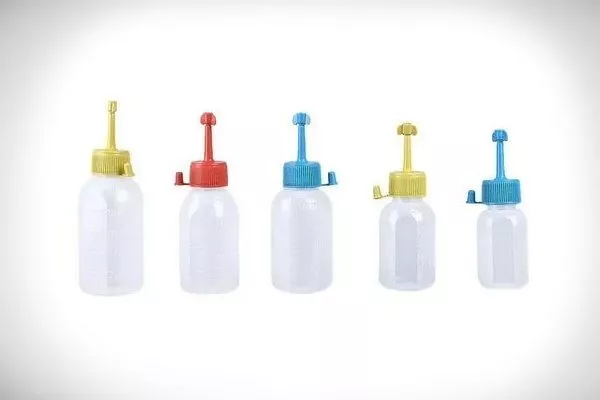
- several containers for sperm and saline solution - it is advisable to use polyethylene ones (they are easy to squeeze out the liquid from);
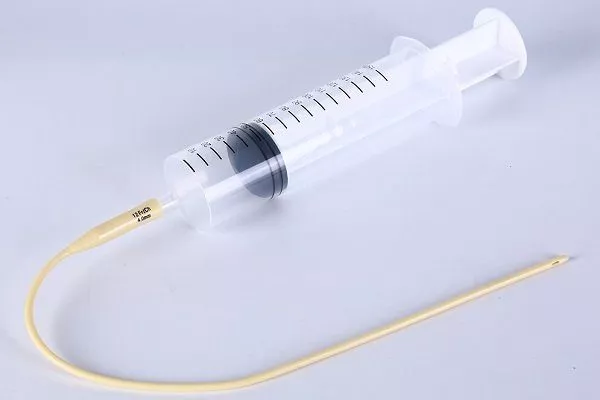
- a catheter with a syringe for introducing semen into the vagina;
- lubricating gel - to make it easier to insert the catheter;
- cotton wool, gauze, rags;
- any antiseptic;
- medical gloves.
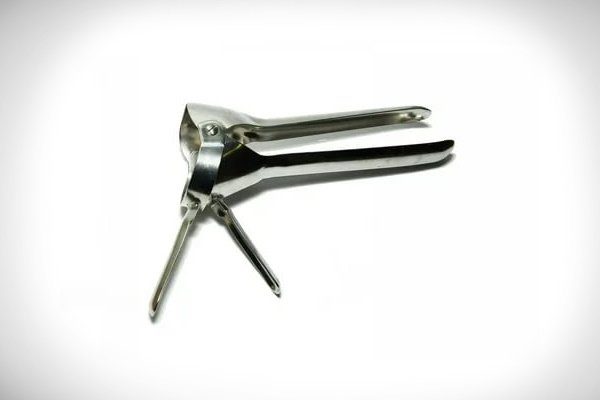
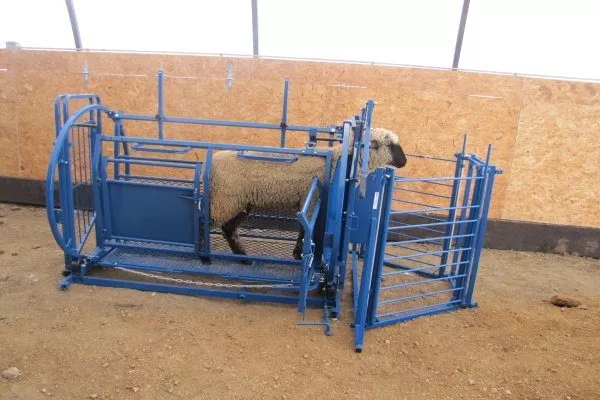
- Check the stability of the machine and the reliability of the belt fastening.
- Treat all machine surfaces with an antiseptic 24 hours before the procedure.
- Make sure there is free access to the ewe from all sides to facilitate insemination.
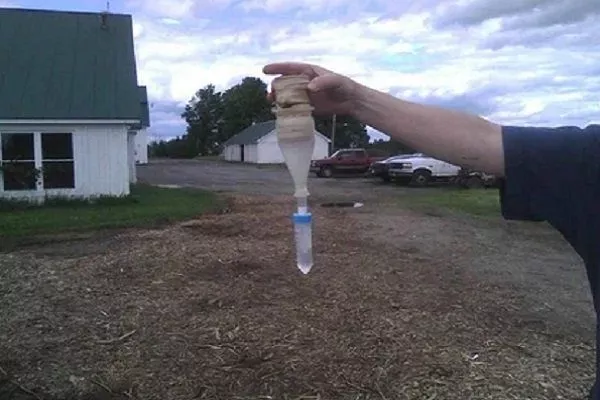
First, a semen sample is collected. Here's how to do it correctly:
- Excite the ram - bring him to the females, but be sure to put a protective apron on him.
- Stand to the right of the male.
- Use your left hand to pull back the prepuce, and use your right hand to pull the artificial vagina over the animal's genitals. Do this at a 30° angle to the horizontal plane.
- When ejaculation occurs, remove the vagina and turn it so that the fluid does not leak out.
- Release the air and remove the sperm collector.
There are two more methods of collecting sperm, but they are not popular:
- from the vagina of a sheep after mounting;
- using electrodes - they are inserted into the animal's rectum, a voltage of 25-30 V is applied, and the ram emits sperm.
Be sure to check the quality of your sperm. If you can't do this in a lab, evaluate it visually. Indicators of good sperm:
- Color. It should be white, although a yellow tint is acceptable. Gray/blue coloration indicates a low sperm count, bright yellow indicates the presence of urine, pink indicates blood, and green indicates the presence of exudate (pus).
- Smell. The seminal fluid of rams has a slight “aroma” of sweat.
- ConsistencyCreamy and smooth - without impurities or flakes.
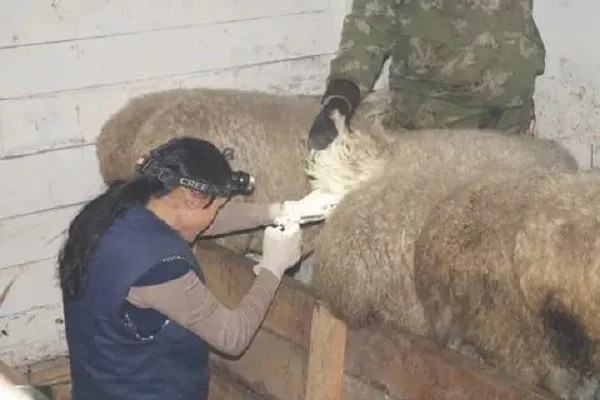
Step-by-step instructions for artificial insemination:
- During the heat, take the ewe out of the flock and place her in a stall.
- Secure the animal with straps, completely preventing movement.
- Prepare a saline solution (1%) in advance. Treat the mirror with it.
- Treat all other instruments with alcohol.
- Insert the dilator into the vagina.
- Attach the catheter (tube length at least 22–25 cm).
- Draw 0.05 ml of seminal fluid into a syringe.
- Insert the catheter into the vagina by 3 cm, inject the sperm.
- Remove the catheter and dilator.
- Treat the sheep's genitals with a furacilin solution.
Determination of pregnancy
Conception in a ewe is primarily determined by the presence or absence of estrus after mating. If no discharge appears after the cycle (15-18 days), the procedure was successful. To accurately determine pregnancy, pay attention to the following signs:
- the abdomen increases in size, as the uterus begins to stretch during the development of the embryo - feel this area with your fingers, but not earlier than after 3 months and be sure to do it on an empty stomach;
- vibration occurs in the arteries of the uterus - it can be felt if you insert a finger into the anus;
- presence of mucus on the cervix - insert a speculum into the vagina 20-25 days after insemination.
One of the surefire natural methods is to introduce a male to the ewes. Rams typically show no interest in pregnant females.
Pregnant ewes require special care; otherwise, the risk of miscarriage or stillbirth increases. To prevent this, follow these rules:
- do not restrict movement;
- feed only high-quality food;
- diversify your diet - add fresh vegetables and fruits;
- eliminate any stress (do not shout, do not make sudden sounds or movements);
- Keep the pen/enclosure clean.
Preparing for lambing
Keep the queens in a separate room. Each head requires 2–3 square meters of space. Maintain a consistent temperature of at least 5°C.
Approximately 1.5 to 2 weeks before the expected due date, insulate and clean the ewe's area. Clean out feces and other debris frequently, and disinfect the walls and floor with antiseptic. Be sure to trim the hair around the udder and vagina.
The process of childbirth
Ewes rarely experience complications with lambing. Lambing usually proceeds quickly and smoothly. However, if an emergency arises (she can't deliver her lamb), human assistance is essential. How a ewe gives birth:
- labor begins - it is manifested by anxiety of the uterus;
- after 20–25 minutes the amniotic sac comes out;
- after that it bursts;
- A lamb is born face forward.
How to help in an emergency:
- If you notice that a partially emerged lamb cannot get out, pull it by its front legs;
- If the pushing lasts a long time and the baby does not appear, periodically change the mother’s body position;
- If the blister has not burst, cut it with a disinfected knife with a very sharp end.
After the lamb emerges, keep an eye on the lamb. If it doesn't rise, another lamb is on the way. It takes a maximum of 20 minutes to emerge, but sometimes as little as 10 minutes.
After lambing, the mother licks her baby. If the ewe is weak, bring the baby to her. If the ewe refuses to perform the procedure yourself, wipe the baby with a clean cloth and clear the airways (they are clogged with mucus).
Insemination of sheep (even artificially) is a normal process. It gives farmers the opportunity to control the production of healthy, high-quality offspring. Breeders have many options. But for all options, the key factors remain the correct selection of the ewe and ram, as well as the creation of appropriate living conditions before, during, and after insemination.