
Lamb is a nutritious, healthy, and delicious product, which is why many farmers raise these animals. To produce high-quality meat with an attractive appearance, it is necessary not only to provide the sheep with high-quality feed and care, but also to strictly adhere to slaughter and butchering standards.
Preparing a ram for butchering
Preparation for slaughter should begin one day before the upcoming procedure, and in certain situations, 1-4 weeks before the process.
- ✓ The blade length of the slaughter knife must be at least 15 cm to ensure a deep and clean cut.
- ✓ The sharpening angle of the skinning knife should be 20-25 degrees for optimal gliding over the skin without damaging the meat.
Helpful tips:
- If you are talking about animals intended for meat production, shear them a month before slaughter so that the wool has time to grow back well, ensuring high-quality sheepskin along with the meat.
- Just before slaughter, isolate the ram from the rest of the flock and do not feed it for 10-12 hours. This ensures complete intestinal emptying, eliminating the risk of rupture and fecal contamination.
Water consumption during this period remains normal to simplify the skinning process, as a dehydrated body makes this task more difficult. - An important step in preparation is the hygienic cleaning of the animals on the day of the procedure. After a thorough cleaning, present them to the veterinarian for an examination and a health report.
- Prepare the slaughter area in advance. Depending on the animal's chosen position during the procedure—lying down or suspended—you should prepare the area accordingly, either by covering it with a tarp or by installing a reinforced crossbar on posts or tree branches.
- Use the sharpest knives possible, including straight blades for cutting arteries and butchering, and curved blades for skinning. Pre-sharpening your tools is essential to ensure flawless results.
Characteristic features of the main parts of the carcass
Lamb butchering is a series of specific operations, including slicing, boning, and trimming. The end goal of this process is to obtain meat that is categorized for ease of cooking.
The meat is divided into separate parts: loin, shoulder, neck, etc. Each cut of meat is intended for a specific dish, and professional chefs know how to properly select and use each of them.
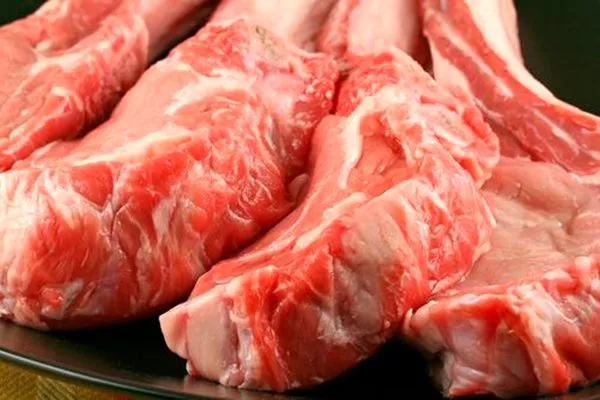
Carcass processing is an art, and proper execution of all stages is essential to preserving the meat's flavor. The lamb carcass is divided into three parts:
- The front legs of lamb together with the neck are the shoulder part.
- The middle part is the sternocostal part.
- Hind legs and ham.
Each cut has its own purpose and is suitable for preparing specific dishes. For example, the rib section is perfect for making delicious lamb short ribs. The back ham is considered a delicacy due to its tenderness and minimal fat.
| Method | Processing time | Number of parts received |
|---|---|---|
| Traditional | 2-3 hours | 22 |
| Simplified | 1-1.5 hours | 5-6 |
How to cut a carcass correctly?
Experienced butchers know that cutting a lamb often involves dividing it into 22 pieces along each joint. Below is a simpler diagram that allows you to cut the lamb carcass into 5-6 pieces first:
- Using a meat grinder or a meat cleaver, cut the drumsticks at the knee joints. This will make separating the skin from the carcass easier. The skin comes off easily, working from the bottom up. It's recommended to have an assistant to help you hold the wide skin effectively.
- Place the carcass belly down and, following the spine, cut it into two large pieces using a meat cleaver, having first cleaned out the entrails.
- From each resulting portion, separate the ham, as this is generally considered the most tender cut and suitable for holiday dishes. The ham can be divided into the shank and fillet by cutting it crosswise into two equal parts.
- From each front part, separate the shoulder blade by first feeling the shoulder blade bone and making a cut along it.
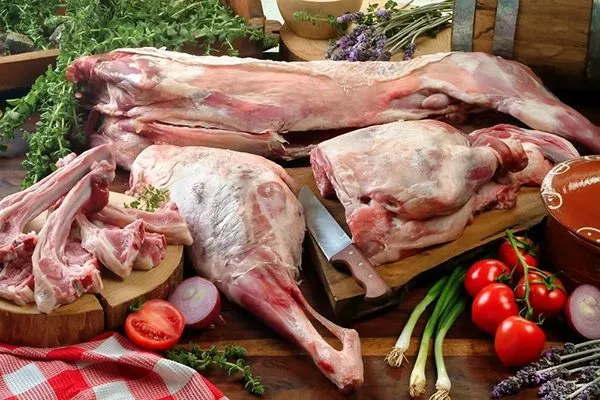
The final step is separating the neck section – it can be divided into several pieces according to your taste and the weight of the lamb.
Removing the entrails
To remove the internal organs, careful incisions must be made along the ram's abdominal cavity, ensuring thorough removal without damage. Pay particular attention to the gallbladder to avoid damage.
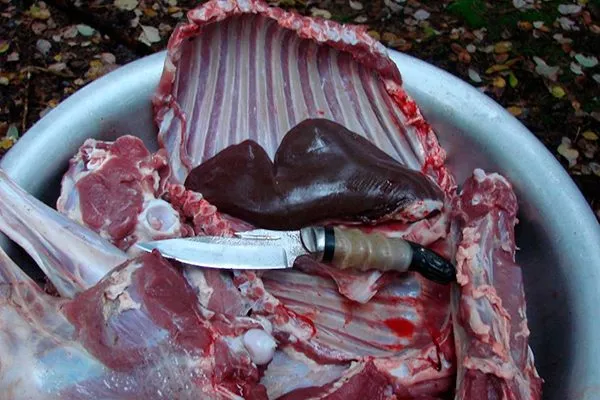
The process of removing the entrails of a sheep is carried out as follows:
- Remove and ligate the rectum.
- Make an incision into the trachea and pull out the esophagus, then remove the heart and lungs.
Cutting
Carcass cutting is a simple yet painstaking process. The process requires attention to ensure the correct portions are obtained.
Scheme of cutting
Lamb butchering must be done following important guidelines to preserve the integrity of the carcass. Step-by-step instructions:
- The carcass should be divided into two halves: the front and back. To do this, make a cut across the belly, reaching the back. When the knife touches the spine, carefully bend the carcass, creating a cut between the vertebrae.
If you have difficulty cutting the spine with a knife, you can use an axe, but make sure it's clean. Try to avoid crushing the spinal bones, so only cut between the vertebrae. - Next, move to the rear of the carcass, starting with separating the fat tail and then moving toward the legs. To separate the legs, use the joints to gently loosen them. Then, make a cut along the tendon, separating the hindquarters and femur at the acetabulum.
The process of separating the front part is similar to separating the back, starting from the legs.
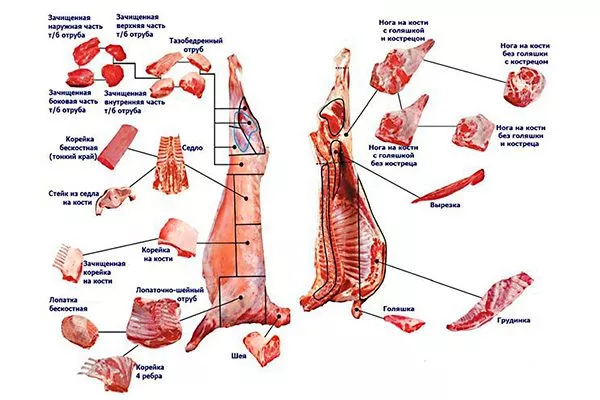
Now separate the ribs from the spine on both sides. The decision to remove the fat is up to you.
Processing lamb shoulders
Processing a butchered lamb becomes more convenient if you process each part separately for further use. For example, you can separate the meat for broth, shashlik, or mince.
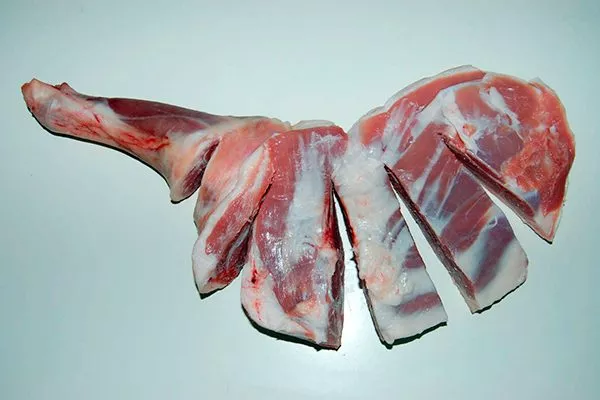
Before storing the meat in the refrigerator, pat it dry with paper towels to remove excess liquid. The process of cutting lamb, especially the shoulder, involves the following steps:
- Removal of the upper hymen.
- Removal of tough tendons.
- A cut along the knee joint to remove a large piece of meat.
- Separating the leg and flesh from the shoulder blade.
- Cutting the flesh from another joint.
- Removal of a quarter of the scapula.
This way, you'll get a trimmed lamb with the broth bones and shank intact. Half a lamb can feed a large family or prepare ingredients for future cooking.
Working with the hind limbs
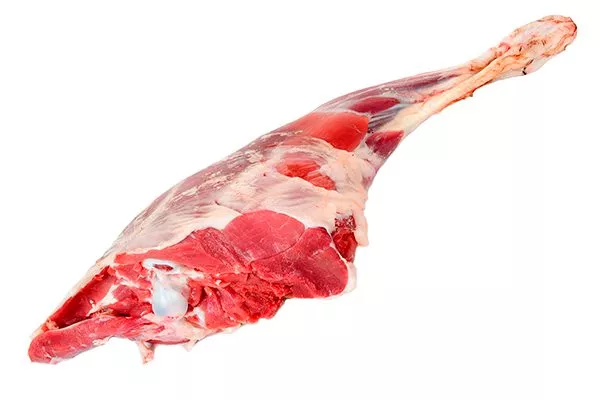
Cutting the hind limb is the most labor-intensive step. The sequence of actions is as follows:
- Cut the femur from the rear of the carcass at the acetabulum.
- Carefully loosen the connecting joints.
- Divide the limb into sections, following the tendons.
- Separately remove the fat layer to obtain lean meat.
Features of boning the middle cut
The process of deboning the middle cut has its own peculiarities. Follow these recommendations:
- Place the back section with the ribs on the table surface. Use the last lumbar vertebra as a reference point.
- Remove the muscles from both sides, starting from the sharp ends, then clean off the cartilage.
- After this, begin cutting the meat from the brisket, and then move on to cleaning the loin.
- Once you've finished working on one side, turn the lamb over to work on the other side.
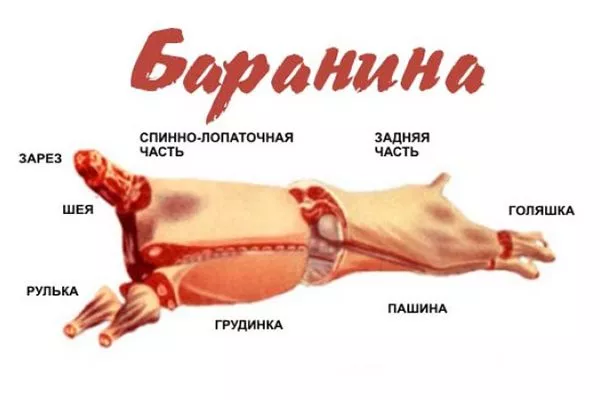
The meat is removed from the transverse processes. Hold the tissue and pull it back with one hand while the other uses the tip of the knife. Continue this process until the ribs are completely free of tissue. Once the trimming is complete, proceed to the neck, down to the last cervical vertebra.
Working with mutton fat
Reheating lamb fat at home is an easy process. An oven is most often used for this task, as it's considered the fastest and most reliable method of melting fat.
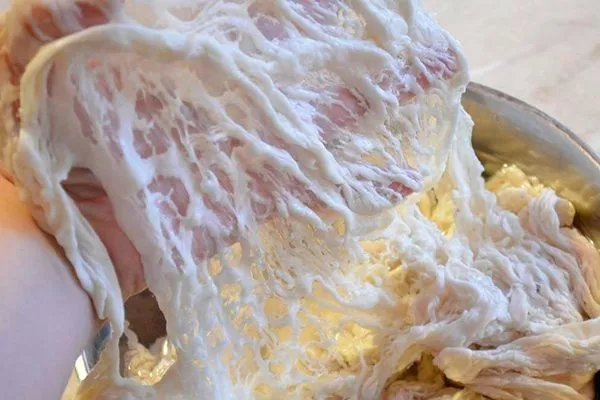
The process of working with fat:
- Cut a fresh piece of lamb fat into small pieces and soak in plenty of cold water for 1 hour. This step is necessary to remove blood clots and connective tissue debris.
- Remove the lard from the water, rinse thoroughly and place in a cast iron or clay container.
- Spray the product generously with water and place in the oven for 1.5 hours, provided that the melting point of the lamb fat does not exceed 150°C.
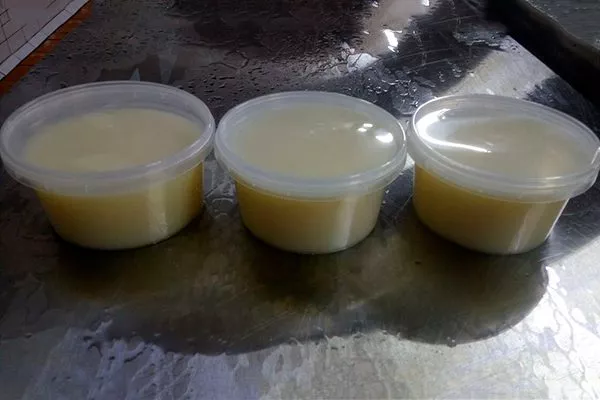
Remove the rendered fat from the oven, strain it through a sieve lined with cotton cloth and pour it into a convenient container for subsequent storage.
How to cut up a sheep's head?
In Asian cultures, a ram's head is considered a delicacy, offered only to special guests after being boiled (usually along with the lower limbs).
To prepare the head, a thorough cleaning is necessary: wash it, extract the teeth, and separate the lower jaw, which is often discarded. Then, the eyes, brains, and tongue (the latter is usually prepared separately) are removed, and any dirt is removed from the ears.
After this preparation, you can begin cooking—a process that lasts approximately 5-6 hours, until the meat begins to easily separate from the bones. The final step is a short roasting in the oven or stove.
Watch the video to see how to quickly butcher a lamb:
Selection of pieces for culinary purposes
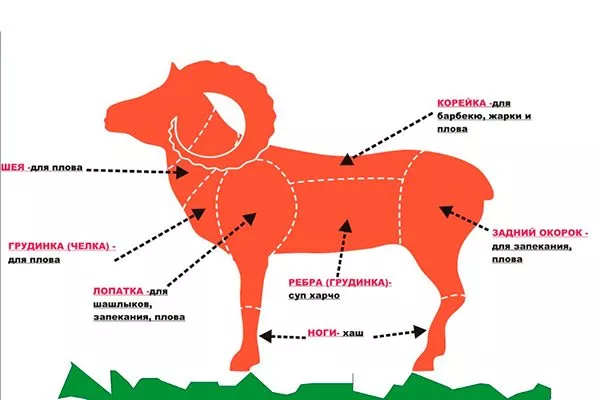
Central Asian and Caucasian cuisines favor unique methods of cutting lamb, reflecting their national traditions. They avoid cutting the bones, opting instead for joint-based cutting. Many cultures traditionally use lamb for main dishes such as pilaf or shashlik.
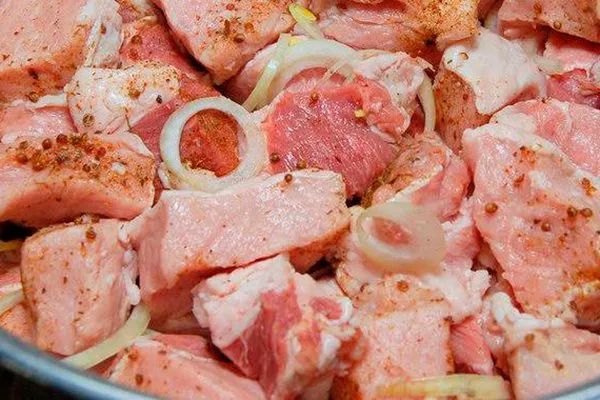
When choosing meat, it is important to consider the cooking method to bring out all the flavors of the product:
- For stewing, it is recommended to use the shoulder, neck or parts of the loin.
- The following parts are best suited for making shashlik: tenderloin, brisket, ham.
- By adding fat tail fat, pilaf is prepared, and cuts from the drumstick, neck and brisket are suitable for stew.
- The most delicious shashlik roast is made from ham.
Meat quality categories
Lamb is usually classified into first and second grades. First grade lamb is characterized by well-developed muscles, and subcutaneous fat covers the carcass primarily. Small gaps, such as those found on the ribs and pelvis, are possible. The sharpness of the vertebral processes in the back area is one of the characteristics.
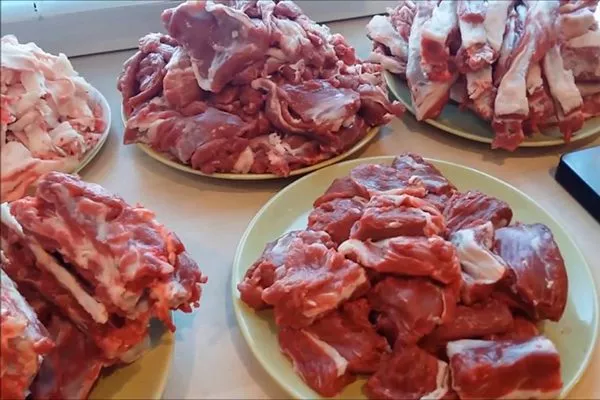
Proper lamb butchering technique is key to ensuring high-quality, flavorful meat. From slaughter to carcass dressing, every step requires attention and experience. Butchering skills are an art, and perfecting them leads to the best results in lamb preparation.