
Sheep meat has been eaten for centuries, but it wasn't until 10,000 years ago that these animals were domesticated. Lamb is considered not only delicious but also extremely nutritious, and raising sheep is profitable. Because they produce several products simultaneously—meat, fat, tail fat, wool, hide, milk, horns, and hooves.
Description of the meat of rams and sheep
Not everyone likes lamb, as it has a distinct flavor and aroma distinct from chicken, pork, and other meats. However, this only applies to meat from uncastrated or older rams. If a sheep is slaughtered before the age of one and a half years, the meat is considered the most valuable.
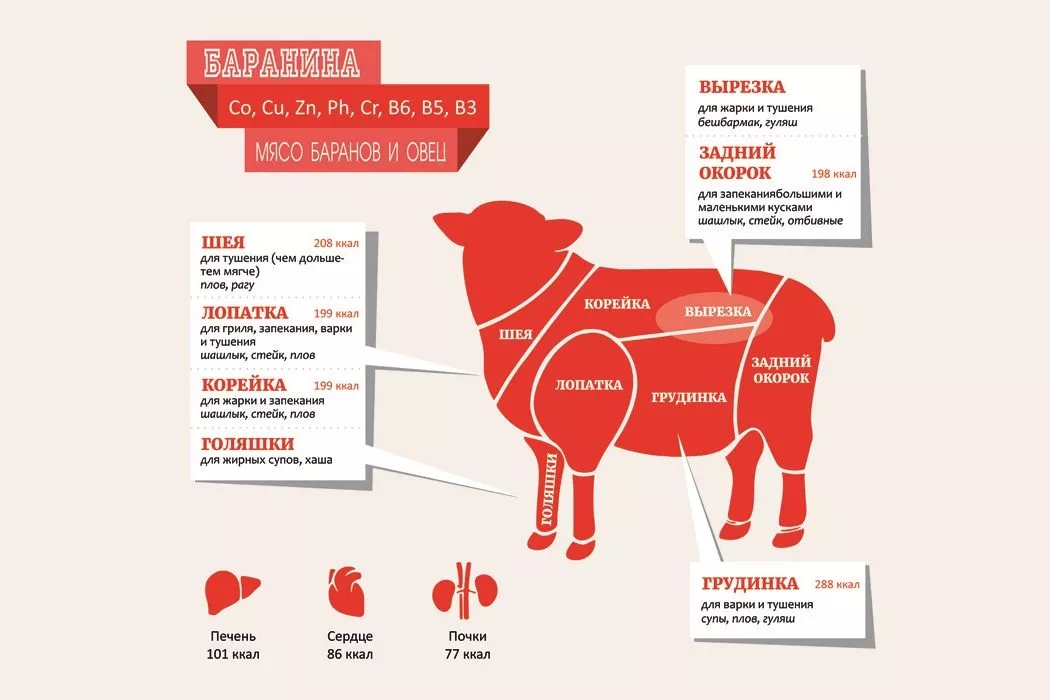
Color and other characteristics of lamb
Lamb is dark red, but slightly lighter than beef. The fat from the tail is whitish and firm, but if the lamb is older, the fat is yellow and the meat even darker. At this point, the texture also becomes tough, which is why ground meat is made from this meat.
- ✓ The meat of young animals has a lighter color and a less pronounced odor.
- ✓ Premium quality fat tail fat should be white and elastic, without yellowness.
Nutritional value of lamb:
- contains about 16.0-16.5 g of proteins;
- fats – 15.0-15.5 g;
- water – 65-67.5 g;
- ash – 0.7-0.8 g;
- carbohydrates – maximum 0.6 g;
- fiber – up to 0.5 g;
- cholesterol – 50-70 mg.
Caloric content depends on the type of preparation:
- boiled – maximum 290-291 kcal;
- fried – 300-320 kcal;
- stewed – 260-268 kcal.
What types of sheep meat are there?
Sheep meat is divided into two main types, depending on the age of the animal:
- lamb – up to one year;
- Lamb – from one year and older.
Benefits of lamb
Lamb is considered a valuable meat because it contains many beneficial elements. These include vitamins A, B3, B5, B6, B12, E, D, PP, and K. It also contains other nutrients, such as zinc, magnesium, potassium, iron, lecithin, amino acids, tryptophan, protein, and more. This makes lamb particularly beneficial for the following conditions:
- diabetes mellitus;
- metabolic disorder;
- atherosclerosis;
- vascular and cardiac dysfunction;
- caries;
- thyroid dysfunction;
- gastritis and low acidity;
- problems with the pancreas;
- cough and colds;
- chronic fatigue, etc.
The harm of lamb
Eating lamb, or any other meat, daily for long periods of time is not recommended. It promotes the accumulation of various substances in the body, which can lead to overdose, such as hypervitaminosis.
The condition may also worsen if there are contraindications—it's no wonder that the concept of fasting exists in the religions of all nations. This is a time when the body rests from animal products.
There are a number of contraindications, so you should not consume lamb frequently if you have the following problems:
- gastritis with increased acidity of gastric juice;
- gastric ulcer and duodenal ulcer (with high acidity);
- digestive problems (fatty parts of meat are prohibited);
- chronic pathologies of the kidneys, pancreas and gallbladder.
If sheep have taken antibiotics or hormonal stimulants during their life, those with liver problems should not consume such meat. These medications contain substances toxic to the liver.
The benefits and harms of ram fat tail
The fat tail is the fatty deposit found in the ram's tail. This fat is considered the most valuable and is always considered premium grade.
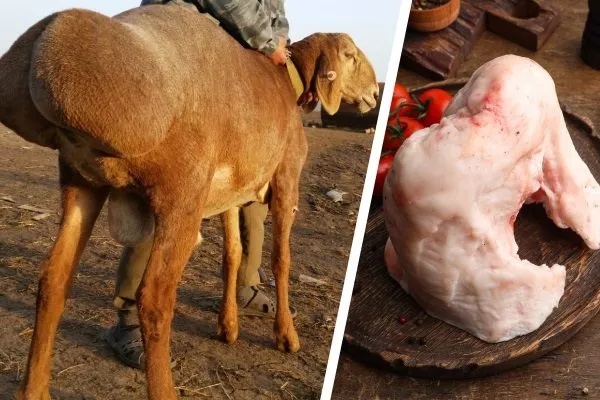
Immediately after its extraction, the fat is rendered or used as lard. But there are other varieties:
- the highest - is capable of melting at low temperatures, since it is soft, therefore the maximum amount of useful elements remains in it;
- the first one has a greyish tint, as it is extracted from raw meat or internal organs, and has a taste of pork cracklings;
- the second one is characterized by a cloudy hue and a characteristic taste, and is cut from the surface of the lard.
Premium fat tail fat is most often used by chefs in Eastern countries for preparing pilaf because of its distinctive flavor and aroma. Fat tail fat contains numerous minerals, vitamins, and other beneficial substances, but most importantly, it contains 2-3 times less cholesterol than beef and almost 4 times less than pork fat.
The unique feature of premium fat is that it is completely devoid of proteins and carbohydrates, but contains 99.7 g of fat, which is 166% of the fat content per 100 g of product. Consequently, the calorie content reaches almost 900 kcal.
The indications and contraindications are the same as for lamb, but there's one caveat: fat tail fat should not be consumed by those who are obese. In many countries, fat tail fat is believed to prevent aging and prolong life.
Lamb in cooking
Lamb pairs well with any side dish, but is especially prized in pilaf, beshbarmak, shurpa, manti, shashlik, and similar dishes. Lamb is most often roasted, which is especially typical for Passover. In various countries, lamb and fat tail are combined with dates, apricots, garlic, marjoram, pomegranate, dill, mint, and rosemary.
How is the pre-slaughter weight of animals assessed?
A ram's pre-slaughter weight is necessary to calculate its meat yield. To do this, immediately before slaughter, when the sheep has fasted for 24 hours, it is weighed. This determines its live weight. After this, the carcass must be weighed, which consists of:
- torso;
- tail;
- heads;
- fat;
- kidneys and other internal organs.
Standard weights for sheep slaughter
| Name | Age for slaughter | Average weight | Productivity |
|---|---|---|---|
| Kuibyshev breeds | 12-18 months | 95-105 kg | High |
| Texels | 12-18 months | 130 kg | High |
| Dorpers | 12-18 months | 140 kg | Very high |
The standard body weight for slaughter depends on the specific breed and age of the animal. For example, for young animals, the average weight is 40 to 50 kg. For adults, the following standards apply:
- Korkov breeds – 120-130 kg;
- Kuibyshev varieties – 95-105 kg;
- texels – minimum 130 kg;
- Dorpers – from 140 kg.
If you need to slaughter a lamb at around six months of age, its weight should be equal to that of a yearling. Otherwise, there's no point in slaughtering it.
How to increase the weight of sheep raised for slaughter?
Farmers raise rams not only for their own use but also for sale, so it's important to learn how to properly slaughter and butcher the animal. And to accelerate weight gain, you need to know how to fatten rams.
Basics of fattening and weight gain
| Name | Type of feed | Daily intake | Efficiency |
|---|---|---|---|
| Oats or barley straw | Rude | 500 g | Average |
| Fodder beet | Juicy | 1000 g | High |
| Mixed grass or corn silage | Juicy | 5000 g | High |
| Grain and forage mixture | Concentrated | 200 g | Very high |
To ensure successful and rapid fattening, it's important to choose the right breed. Meat-wool and meat-fat varieties are best. However, keep in mind that the offspring of hybrid breeds from abandoned ewes will not be as productive. Recommended meat breeds:
- Kuibyshev;
- Hampshire;
- Lincoln;
- North Caucasian;
- Gorky;
- Romney Marches.
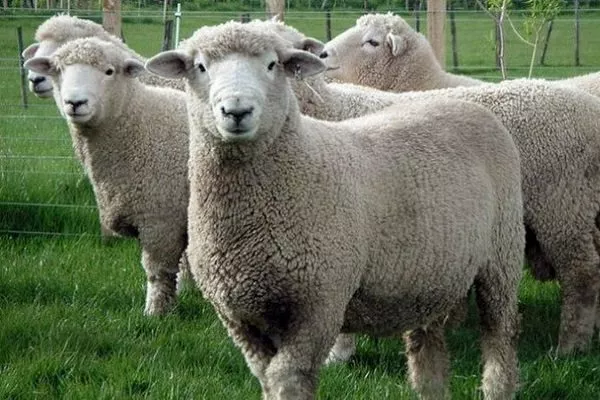
To achieve high growth rates, animals need salt, calcium, etc., so please refer to the table, which shows the average daily requirements of substances by age:
| Age in months | Live weight in kg | O.K.E. | Protein | Salts | Calcium | Phosphorus | Vitamin A |
| 2 | 17-18 | 0.32 | 38-40 g | from 3 to 5 g | 1.4 g | 0.9 g | 4 mg |
| 3 | 24-25 | 0.75 | 90-100 g | from 3 to 5 g | 3 g | 2 g | 5 mg |
| 4 | 31-32 | 1.0 | 145-150 g | from 3 to 5 g | 4 g | 2.5 g | 7 mg |
| 5 | 38-39 | 1.2 | 135-140 g | from 4 to 5 g | 5 g | 3 g | 8 mg |
| 6 | 45-46 | 1.4 | 125-130 g | from 5 to 8 g | 5.2 g | 3.2 g | 9 mg |
Weight gain varies between adult sheep and young animals, as it depends primarily on protein concentration. Therefore, adult cattle require the following amounts of roughage:
- 500 g oats or barley straw;
- 1000 g fodder beet;
- 5000 g of forb or corn silage;
- 200 g of grain feed mixture.
If rearing and fattening are carried out exclusively in stall conditions or culled rams are used for this purpose, then the diet should consist of bulk feeds:
- 700-800 g of mixed grass hay;
- 2500 g corn silage;
- 1000 g fodder beet;
- 400 g of feed mixtures (concentrates).
In all cases, vitamin and mineral premixes are required, the amount of which depends on the instructions for a specific drug.
Features of some fattening technologies
The method of fattening cattle depends directly on the forage supply. If grazing space is limited and year-round grazing is unavailable, stall-fed cattle are used. However, if large pastures with high-quality forage are available, then fattening is the preferred method.
Processed feed mixtures
For fattening before slaughter, it's best to use processed feed mixtures. This feed has optimal chemical and physical properties, allowing for faster absorption of nutrients and improved digestibility by the sheep. This also contributes to increased weight gain and shorter fattening periods.
Rules for preparing the mixture:
- Chop succulent feed into fractions of 3 to 5 cm in size, and coarse feed should have parameters of 2 to 3 cm.
- Now mix thoroughly with flattened and crushed grain (concentrate).
- Steam with hot water.
- Stir occasionally and apply hot steam. This process takes at least 3 hours. This is necessary to destroy pathogenic flora.
- Cool the feed mixture. It is advisable to use cold air for this purpose.
The optimal ratio of feed in the mixture is 40% roughage, 20% succulent, 40% concentrated.
Fattening on green mass
Feeding is only used under specific conditions. Otherwise, growth rates will be minimal. It's best to plant pasture crops that contain the maximum amount of nutrients for fattening.
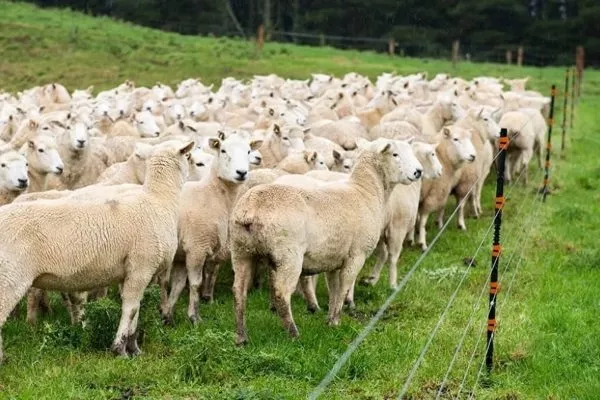
Conditions:
- Provide a watering hole with quality water twice a day;
- rotate pens every week;
- In hot weather, leave the herd on pasture at night;
- alternate rest with grazing;
- introduce mineral and vitamin premixes into the feed;
- Give concentrated feed daily in the amount of 300 g per head.
If you don't have a free-range pasture, use traditional paddocks. Freshly cut grass is brought in daily, and concentrates are added. During periods when the grass is either gone or not yet available, feed roughage, succulent feed, and concentrated feed are used.
Breed feeding characteristics
The techniques described above are not suitable for every breed. Some, such as Romanov and Fat-tailed sheep, have their own specific characteristics that allow for rapid weight gain.
Fattening of Romanov rams
Romanov sheep are characterized by high fertility, but poor weight gain. To speed up lambing, follow these guidelines:
- wean from the female on the 50-60th day;
- Introduce milk substitutes, granulated concentrates and grass meal into the diet;
- reduce the amount of green fodder;
- replace fattening with intensive and enhanced feeding;
- Keep only in walking areas.
These technologies reduce feed costs and allow for twice-yearly litter production. However, keep in mind that slaughter occurs at approximately six months of age, when the live weight reaches 40 kg. If this is not done and fattening continues, growth will be poor, as the gains will be in fat rather than muscle mass.
Fat-tailed breeds
Fat-tailed sheep typically produce not only fat but also meat, which is why Tajik, Sarajin, Hissar, and similar breeds are prized. They are also quite undemanding regarding diet and feed quality. However, they require a warm climate to achieve this.
How to slaughter and butcher a ram properly: instructions
To obtain high-quality meat and minimize discomfort for humans and pain for animals, you need to not only learn how to properly slaughter and butcher sheep but also prepare for the process. Be sure to consider all the important points to avoid making the mistakes common among beginners.
Preparation for slaughter
Preparatory activities include several simple steps:
- Prepare the sheep. This is done some time before slaughter:
- If you need to collect wool, trim the animal;
- A day before slaughter, completely stop feeding, but give the animal unlimited amounts of water.
- Choose the right tools. A curved blade and/or a very sharp knife should be used. The former is easier for skinning, while the latter is necessary for butchering.
- Now prepare the work area. To do this, decide on a slaughtering location – it should be located away from the sheepfold so that the other sheep cannot hear the cries of the slaughtered animal. Be sure to install structures for hanging the ram.
Slaughter
There are three methods of slaughtering rams, each with its own characteristics:
- In the side position. The first involves laying the sheep on its side after immobilization. The key is to position the legs in the opposite direction from the slaughterer.
- In limbo. For this purpose, a special structure consisting of legs and crossbars is constructed or purchased. The main advantage of this method is that the fur and skin remain completely clean, and the blood flows directly into the container.
The method involves tying the limbs together and hanging them upside down. - In Buryat. This method is rarely used in our country because it's inhumane, unpleasant for the slaughterer, and complicated. It involves the following steps:
- a person makes an incision near the heart;
- inserts his hand inside;
- puts pressure on the heart valve.
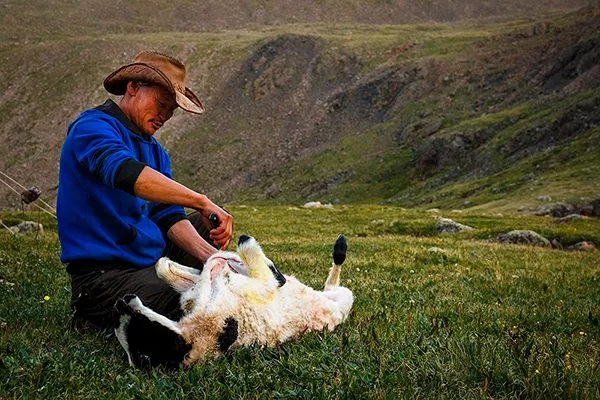
It's crucial to immobilize the animal before slaughter. There are two methods for this: tying the animal's limbs together and stunning it with a blunt object or stun gun. After this, the actual slaughtering process takes place. Regardless of the animal's position, follow these instructions:
- Tilt the sheep's head back.
- Locate a large artery in the neck area.
- Make a quick cut along it - from one ear to the other.
- Hang the ram upside down to drain the blood.
The bleeding process takes about 10-20 minutes, depending on the size of the carcass.
Carcass cutting
The lamb carcass is also butchered in stages. It's important to follow the correct sequence and technique. A table with a clean tablecloth or oilcloth is prepared for butchering, and the lamb is placed on top.
Skinning
The work is quite painstaking because you need to act carefully, otherwise the skin will be impossible to sell. The algorithm:
- Place the carcass on its back on the table surface.
- In the area of each knee, make cuts of 3 cm maximum.
- Insert a rounded dagger between the meat and the skin and carefully separate.
- Turn the ram over and do the same on the back.
Experienced livestock breeders use a tube to facilitate the skinning process. It's inserted into the gap created between the meat and the skin, and air is then blown in. This creates a bubble. This bubble should be spread throughout the entire carcass (but avoid the chest area) by patting it.
Removing the entrails
This procedure is also performed with caution to avoid damaging the gallbladder. Step-by-step instructions:
- Cut the carcass along the entire abdominal cavity so that the knife does not cut through the internal organs.
- Pull out the rectum and tie it.
- Make an incision into the trachea and remove the esophagus.
- Remove the heart, then the lungs.
- Carefully separate the gallbladder and liver with a sharp knife.
- Take out the stomach and remove the omentum from it.
Scheme of cutting
To avoid spoiling the meat, you need to properly butcher it. Follow these rules:
- First, cut the carcass in half crosswise. When the knife reaches the vertebrae, bend the carcass and split it with an axe.
- Remove the fat tail from the back, then cut the legs at the tendons, loosening the joints first. The haunch and femur are separated at the acetabulum.
- The front part is cut from the legs (as well as the back).
- Separate the ribs and vertebrae from the two parts, and cut the meat into pieces.
Preserving the skin
The final step is preserving the hide, if it needs to be preserved. This can be accomplished in two ways:
- Wet and salty. The skin is laid out in a shaded place and generously sprinkled with salt, left for 3-4 days, and then rolled up.
- Salted with flies. After three days of salting, the hide is hung to dry. A special feature is that naphthalene is mixed into the salt.
Interesting facts about the lives of sheep
There are many legends and interesting facts about sheep, fat tails, and mutton. For example:
- Since fat tail fat is considered highly valuable, Turks and Caucasians make a kind of pacifier from it, which they give to babies.
- Sheep can recognize their owner's voice. All they have to do is walk ahead and talk to the animals. For this reason, lambs are considered the only domesticated animals that don't need to be herded from behind.
- Sheep are classified as wool-producing, meat-producing, and dairy-producing, meaning their breeds are categorized by purpose. However, unlike other ungulates, the meat of different species varies from one another.

- In Muslim countries, sheep and rams are used as a sacrifice to Allah during the great holiday of Eid al-Adha. Before slaughter, two rakats and a sermon are recited; failure to do so invalidates the sacrifice. There is a special requirement: the animal must be at least one year old and free of any illnesses or abnormalities.
- Sheep's wool is considered the most sought-after and warmest, so wool-producing rams are often raised by farmers. There is still no exact equivalent to natural sheep's wool, even in artificial form.
- Sheep have the same number of teeth as humans (regardless of breed).
- The maximum recorded weight of a sheep is 247 kg 200 g.
- Sheep need to be kept in a herd, otherwise single sheep develop anxiety-type depression, which can lead to madness.
- The eyes of rams resemble the pupils of goats in shape – they are almost rectangular.
- Sheep are more likely than other animals to produce twins.
- Depending on the breed, horns may be present only in males or in both sexes.
- The maximum lifespan is 25 years, and only in special breeds – wild snow cats.
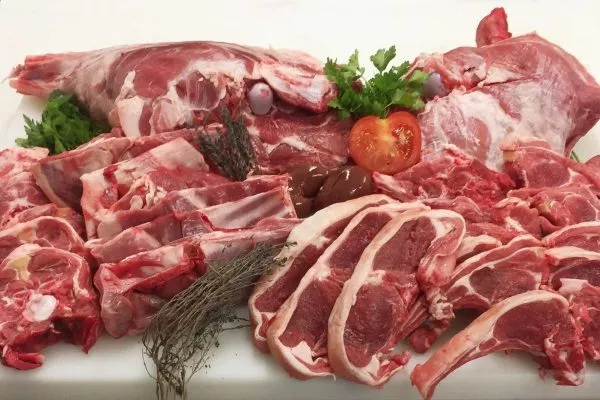
Sheep meat is valuable, nutritious, and healthy, but fat tail fat is very high in fat. Lamb also has some contraindications, which should be taken into account when consuming it regularly. If you want to raise sheep at home, learn how to slaughter and butcher the carcasses properly—it's not difficult at all if you follow all the rules.