
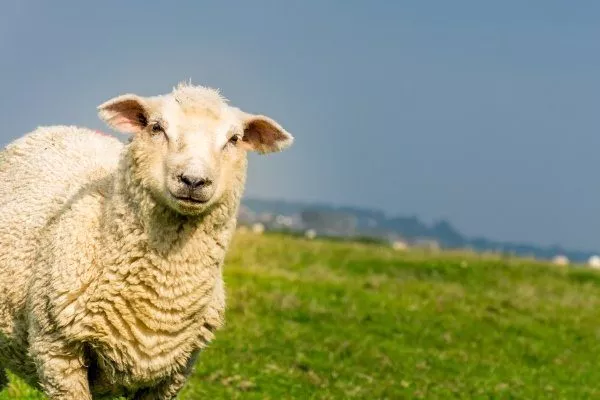
The Romney Marsh breed originated in southeastern England, in the area known as the Romney Plain. The type of plain in this area is called "marsh," meaning "swamp." The Romney Marsh sheep breed was named after this name. The breed is robust and highly productive.
History and description of the breed
Since 1890, hardy, large, and fast-maturing sheep have been crossed with Leicesters (a meat and wool breed), resulting in the Romney Marsh breed, renowned for its abundant wool and high-quality meat and fat. It wasn't until 1895 that the breed was registered and a herd book was established—only breeding animals that meet standards are entered into it to record their productive qualities.
Compared to other English long-wool breeds, Romney Marsh sheep are hardier and more resistant to various diseases and foot rot, even when grazing on wet pastures. However, there are areas where sheep suffer from vitamin deficiencies, such as areas with sparse vegetation. Because of this, they reproduce less frequently and produce weak or even dead lambs.
The following characteristics are characteristic of Romney Marsh sheep:
- large, narrow head, white in color;
- dark nostrils;
- straight back;
- a muzzle with hair growing up to the eyes;
- fibers 20 centimeters long;
- the sacrum is wide;
- pupils are rectangular;
- thick neck;
- semicircular ribs.
Males can gain weight up to 140 kilograms, and females up to 70 kilograms of live weight.
| Indicator | Rams | Ewes |
|---|---|---|
| Average weight | 100-140 kg | 60-70 kg |
| Wool shearing | 8-13 kg | 4-6 kg |
| Fiber length | 15-20 cm | 15-20 cm |
| Meat yield | 52-54% | 50-52% |
A six-month-old lamb weighs 30-35 kilograms. This depends on feeding, care, and how long the sheep have been out on pasture. Their fleece is dense, curly, and 15 mm thick. Male lambs can shear approximately 8 kilograms of wool, while female lambs can shear 4 kilograms.
Sheep productivity
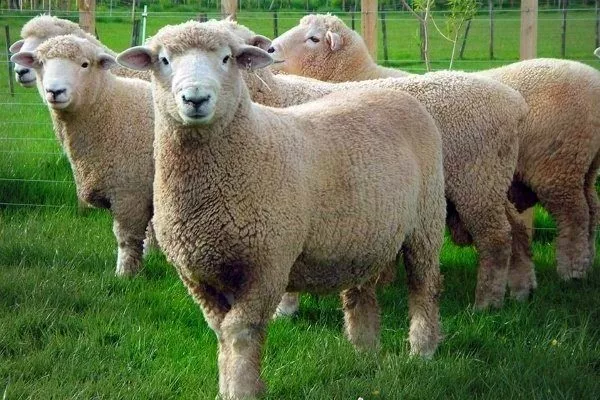
Sheep are less in demand on farms than cows or pigs, but they are the leading producers of wool.
Meat
Meat quality directly depends on the following factors: genetics, care, housing, and health. The most important factor is nutrition: if an animal receives all the necessary nutrients and vitamins, it will grow a shiny, white coat and the meat will have a more delicate flavor. The English breed is precocious, and a four-month-old lamb already weighs 40 kilograms. The meat yield per animal is 54%.
Milk
During lactation, ewes first produce colostrum, then milk. If they had one or two lambs in their womb, they will have enough milk and some left over for sale. The milk of a lactating ewe is very nutritious and rich, but the quantity is small. Raising this breed solely for milk is unprofitable.
Wool
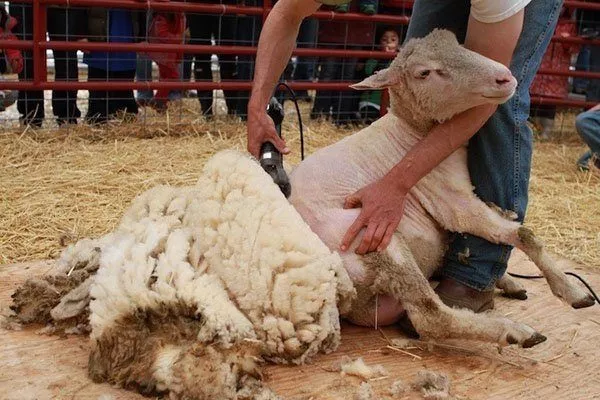
Romney Marsh wool is dense and not very thick. The fibers themselves are crimped, and the fleece is staple. A ram can yield about 13 kilograms of wool in 12 months. Females produce less wool, but their finer wool is much more valuable than that of males.
Care and maintenance
Thanks to the special structure of their wool, this breed of sheep can easily withstand both extreme heat and severe frost. Sheep should be kept separate from other livestock. Humidity should be kept to a minimum.
Because these sheep are hardy, they can graze in pastures far from their "home" even at night. Romney Marsh sheep can run for long periods, which contributes to their robust health and valuable wool.
Sheep have a good memory, so they can be aggressive towards people who have previously offended them, and be “friendly” with people who are worried about them.
The herd should spend most of its time outdoors, which improves the quality of its wool, meat, immunity, and overall health. The rest of the time, they stay in their "house," which should be built of red brick, wood, or shell rock.
The area where the animals will eat must be kept clean, and the feeders and waterers must be convenient for them. Sheep should have access to water 24 hours a day, both summer and winter. Lighting shouldn't be too bright, but dim lighting isn't good for the animals either—moderate lighting is essential.
Although sheep are resistant to diseases, like all animals, they still need preventative vaccinations, which a veterinarian specializing in sheep will tell you about.
Feeding
In summer, the herd will look for food on its own in the pasture, but in winter the owner should take care of this, offering them hay, concentrates, food scraps, wheat, bran and vegetables (potatoes, beets).
It's important to remember that pregnant sows require a slightly different diet. During the first half of pregnancy, they should be offered more hay. Straw and concentrates should be completely eliminated. Vegetables should be doubled.
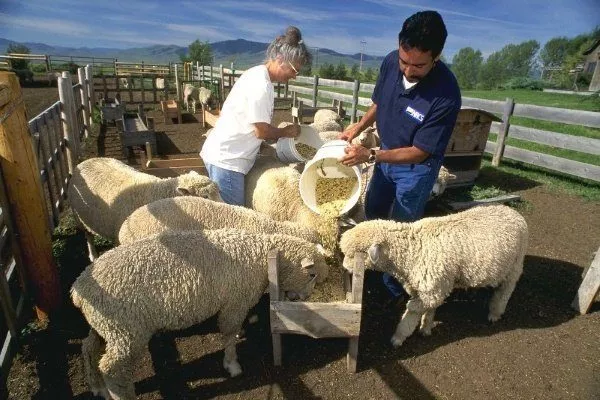
During the second half of pregnancy, hay should be abundant in the diet, and concentrates, small amounts of compound feed, and vegetables should be included. Water should be available 24 hours a day; one ewe drinks approximately 4 liters of water per day.
| Period | Staple food | Supplements | Norm (kg/head/day) |
|---|---|---|---|
| Lactation | Legume hay | Monocalcium phosphate | 3.5-4.0 |
| Fattening | Barley + corn | Premix PKK-60 | 2.8-3.2 |
| Pregnancy | Corn silage | Salt lick | 2.5-3.0 |
Reproduction
Reproductive cycle chart
- Preparation of rams (July): vitaminization, increasing protein to 16%
- Heat control (August-September): vaginal speculum every 12 hours
- Ultrasound diagnostics (45 days after mating)
- Diet correction (3rd month of pregnancy): +15% energy
- Preparation for lambing (10 days in advance): isolation, disinfection
Romney Marsh ewes and rams are often crossed with other breeds to improve meat quality and produce more and better wool. A female can be mated with a male when she weighs approximately 65 kilograms (approximately 1 year and 4 months). If the animals are mated too early, all the nutrients will go directly to the female, not the lamb, resulting in weak offspring with low productivity.
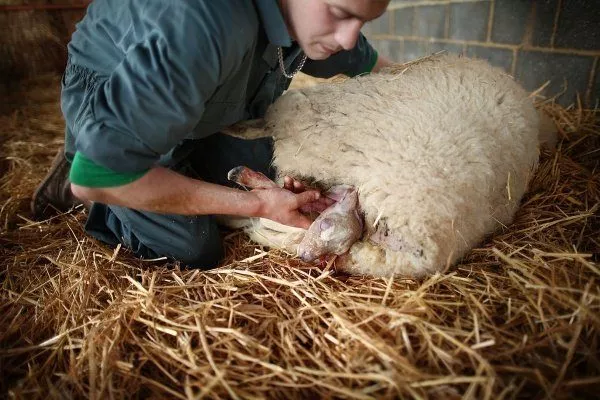
These ewes become pregnant once a year, giving birth to 1-2 lambs. Lambing occurs spontaneously, without assistance, at 4-4.5 kilograms, after which the newborn lambs rapidly gain weight. A breastfed lamb gains about half a kilogram per day.
If a ram and ewe mate in late summer/early fall, the lamb is born in early winter. The gestation period for a lamb is approximately five months. The mother's nutrition during pregnancy, her living conditions, the amount of time spent on pasture, and the sheepfold's layout all significantly influence the newborn lambs.
The best time for mating is August or September, during this period, rams quickly inseminate ewes on pasture and they produce more offspring than when mating in winter.
Advantages and disadvantages
Each breed of sheep is different from the others in some way: some produce a lot of tasty and tender meat, others are famous for their high-quality wool, and others for their lard.
The following are some of the advantages of the Romney Marsh breed:
- early maturity;
- massive body;
- endurance;
- tasty meat;
- lots of quality wool.
There are also several disadvantages of this breed:
- Compared to other breeds that can produce up to 7 lambs at a time, the Romney Marsh can produce only two;
- They cannot be kept in areas with little vegetation, as this will cause the sheep to become vitamin deficient and weaker, which will affect their productivity.
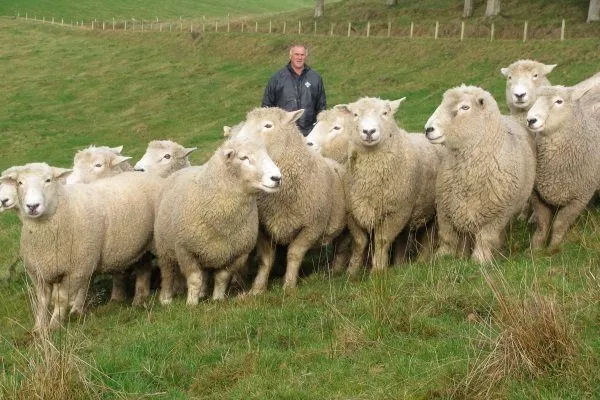
As you can see, there are very few disadvantages, so it is profitable to breed such sheep for wool and valuable meat.
Romney Marsh sheep are easy to care for, making them profitable to raise. They don't require constant supervision, and good care will reward them with healthy fertility, high-quality wool, and delicious meat. Before acquiring a particular breed of sheep, it's important to learn more about it to avoid making mistakes in its care and management.